Category Archives: ecology

Introducing the Eco-Scale rating system for cleaning products

Wholefoods has recently introduced its new Eco-Scale rating system, a color-coded system under which products will be rated, red, orange, yellow or green based on the sp
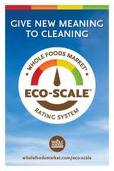
ecific set of environmental and sourcing standards each product meets.

The company said it is committed to working with vendors to evaluate and independently audit every product in its cleaning category.  Red-rated products do not meet the Eco-Scale standards and will not be sold at Whole Foods Market.

Naturally, the green color code is the highest possible rating, ensuring that products have all of these features:

  • ✓ Full transparency, disclosure of ingredients on packaging by April 2012
  • ✓ Independent 3rd party verified compliance to standards
  • ✓ No ingredients with significant environmental or safety concerns
  • ✓ No formaldehyde-donors, preservatives which have the potential to release formaldehyde
  • ✓ No phosphates, chlorine, or synthetic colors
  • ✓ No animal testing
  • ✓ 100% natural fragrances
  • ✓ No ingredients with moderate environmental or safety concerns
  • ✓ No DEA, MEA or TEA—surfactants that have the potential to contain nitrosamines and other impurities
  • ✓ No synthetic, petroleum-derived thickeners made from nonrenewable sources
  • ✓ Only 100% natural ingredients
  • ✓ No petroleum- derived ingredients

Under current law, manufacturers do not have to disclose all ingredients in cleaning products. Under the Eco-Scale Rating System, Whole Foods Market’s household cleaning vendors will be required to list every ingredient on product packaging. To ensure compliance of the standards, all products will be audited through an independent third-party for verification before they are color-rated and labeled on shelves.

“Shoppers have a right to know what’s actually in the products they use to clean their homes,” said Jim Speirs, global vice president of procurement for Whole Foods Market. “We’ve always carefully monitored ingredients. Now, with Eco-Scale, we’re able to help shoppers buy eco-friendly products with confidence and provide safer alternatives for their households and for the planet as a whole.”

What is striking in fact is that almost three out of four (73 percent) adults falsely believe that the U.S.  government requires household cleaning products to provide a list of ingredients on the label, according to an online survey commissioned by Whole Foods and conducted by Harris Interactive in April among 2,483 U.S. adults aged 18 and older. Another two-thirds (64 percent) believe that many household cleaning brands opt to disclose the full list of ingredients on packaging, when in fact few provide this information on product labels. (Source: GreenRetail decisions, Wholefoods)

Low-carbon products: when there will be a mass mass-market demand for them?

As stated in the last CBI report about UK consumers and low-carbon products, three quarters of the UK’s greenhouse gas emissions either directly or indirectly attributable to consumer actions. Companies are taking action to drive up standards and setting up pilot initiatives for green products. Energy efficiency and carbon labels and descriptions currently adorn many of our shopping shelves, increasing transparency. But many consumers do remain skeptical about sustainability being a MUST for our future.

The report shows that there is no trade-off between sustainability and profitability but, as we are always stressing in our ECOFFEE communication projects,”(Many business leaders acknowledge that) it is not sufficient to operate in a sustainable way – they also have a responsibility to inform consumers about green choices”. Business cannot boost demand for low-carbon products without the appropriate communication. Let’s take for instance Procter & Gamble’s successful Turn to 30 campaign with Ariel linked the financial benefits to consumers of washing at lower temperatures with the positive environmental impact. This campaign successfully create a link between a product, a consumer personal behaviour and the resulting more sustainable impact on environment.
Once a company has created a demand for its green products, gains arrive very fast.

Philips’ success in energy efficient lighting is an excellent example: the strategic decision to develop the energy efficient lighting side of its business led to successful positioning
at the forefront of innovation.

Retail plays a very important role in raising awareness among consumers and empower them to make greener choices. Tesco for example has worked to highlight the carbon
footprint of its products to help consumers understand the impact of their purchasing decisions. And it worked great.

Now the question is: why there is not such a mass-market demand for green products? It seems that there is a missing link between the consumer and the environmental impact of purchasing a green product versus a not-so green one. When asked about the top three or four factors shaping their choice of purchase, UK consumers top rated one is cost to buy, followed by quality and reliability and brand. The environmental impact is ranked 10 (8%). It seems that there is a disconnection between consumers and the environmental impact of their choices, especially when carbon emissions are concerned. Nearly half (48%) of survey respondents could see the link between low-carbon and helping to tackle climate change, whereas less than a third (30%) identified the link between climate change and energy efficiency.

Labelling plays an important role in raising consumers’ awareness and A-G labelling has been a particular success, being well recognised among those aged between 35-64 (76%) and those earning over £25,000 a year (83%). It is no coincidence that products where the energy efficiency story is most developed for consumers tend to be those where the A-G label is displayed, such as fridges.

To answer to the question “When there will be a mass-market demand for green products?”, it all relies on clear communication and on educating consumers about the impact of their shopping and daily habits on the environment.

Italians and sustainability in the retail business: the buzz is online!

Italians speak about sustainability online.This is the result of a recent survey led by Blogmeter from October 1st, 2010 to January 31st, 2011 recording approximately more than 9 thousand post about environmental sustainability related to the major retail chains. Social media proved to be the ideal and most followed communication tool  to promote eco- initiatives, facilitating the construction of  a real “green image” for the retail business sector.

Retailers mentioned by Italians on online conversations about sustainability

When it comes to environmental sustainability Coop and Ikea and are the most discussed with over 40% of the citations. This happened for example with the Sportello Ambiente initiative,  a collaboration between Ikea and Legambiente to offer advice to consumers about home energy efficiency, and with the Coop campaign to promote the consumption of tap water in place of the bottled one.

In general, web users are showing an increaside sensitivity to organic and low-
environmental impact products:  in the online communities dedicated to women, users positively report about the presence of automatic distributors to refill detergents inside the supermarket. Retailers brands are the most mentioned ones, most widely quoted and commented by users because always available on the shelf – like Esselunga Bio, Bio of Auchan, Coop Viviverde. Lidl, for example, is particularly discussed for its range of ecological detergents W5 (on 42 over 199 posts mentioning the retailer) considered to be of good quality and highly recommended among users.

The network also tells us that attention to a more responsible consumption is steadily increasing and influencing the purchase process in different ways: users are more sensitive to labels and the presence of the Ecolabel certification is considered increasingly important for those who are looking for products with a low environmental impact.

The research also showed that a balanced relationship between quality and price of organic and /or eco products is a key criterion in the buying process: very often consumers who are interested in green products do desist because selling prices are too high. (Source: GDO Week)

A greener wine for happier wine connaisseurs

Vinitaly 2011 ended with excellent results, an increase of 10% in visitors confirmed once again that good wine never goes out of fashion. Good wines, not only for the undisputed quality of the products, but also because of its being good for the environment and  for the community. The bio wine, produced by following the precepts of organic agriculture, with no sulfur and, above all, free of chemical residues and pesticides, is not new thing on the market.
But what is innovative is that sustainability in the wine industry is becoming more and more popular and required by wine consumers. A recent WineNews / Vinitaly survey showed that “green” labelled wine, the one ensuring the environmental commitment of the winery, would be an added value for 55% of the interviewed. The survey results were collected in a sort of handbook of the sustainable wine drinking, whose must are: locally grown wine, organic and biodynamic viticulture, ISO 14001 or EMAS certified wineries, lighter bottles, recycled paper labels, use of recycled or recyclable packaging, low-impact in terms of carbon footprint of production.
There are several Italian producers who understand the importance of sustainability to adequately respond to consumer demands. Zonin for instance, is already eliminating herbicides, fertilizers and chemical treatments, using only those permitted by the organic or biodynamic agriculture. “Approaching a more sustainable production also requires us to use a more precise viticulture, an aspect that we can no longer overlook in the vineyards where we bring this new philosophy. A lot of attention is paid to the fertility of the soil which must not only be maintained but improved over time without the use of chemicals, “says Franco Giacosa, technical director of the Zonin company in Gambellara (Vicenza, Italy).
It is not a suprise to find the Zonin name amont the list of the 73 Italian companies participating to the Bayer CropScience Magis project  for social and economic sustainability in the wine industry: from Caviro to Planeta,  Barone Ricasoli and Castello Banfi, to name some of the companies appearing in the Magis list. The aim of the Magis project is to provide companies with a common objective and measurable parameters and elements of communication to meet the demands of industry and consumers in terms of sustainability.
Obviously, the added value of a wine produced accordingly to the Magis criteria, will be lost if the supply chain and bars, restaurants and hotels do not abide to the same sustainable and responsible criteria. And this is what the ECOFFEE project is working at!

What is Masdar and why it is so important for our future?

Masdar is a familiar word to all of us who are concerned about the future of our dear planet Earth. But for the few of you who have never heard of it, please allow us the pleasure to introduce you this incredible project.

Masdar is first of all a company, notably a Mubadala – Abu Dhabi government owned company, based in Abu Dhabi, UAE. As stated in the company’s website ” Masdar is a commercially driven enterprise that operates to reach the broad boundaries of the renewable energy and sustainable technologies industry – there by giving it the necessary scope to meet these challenges.  Masdar operates through five integrated units, including an independent, research-driven graduate university (Masdar Institute, other units are Masdar Capital, Masdar Power, Masdar Carbon, Masdar City cfr.) and seeks to become a leader in making renewable energy a real, viable business and Abu Dhabi a global centre of excellence in the renewable energy and clean technology category. The result is an organisation greater than the sum of its parts and one where the synergies of shared knowledge and technological advancement provide this commercial and results-driven company with a competitive advantage that includes an ability to move with agility and intelligence within an industry that is evolving at great speed.
This holistic approach keeps Masdar at the forefront of this important global industry, while ensuring it remains grounded in the pursuit of pioneering technologies and systems that also are feasible. As a result, it delivers innovation to the market while deriving profits for its shareholders.”

This huge project deals with all the aspects of sustainability: research, energy, finance, architecture, urbanism. Last but not least, retail. Because of its importance in the life of all the people who will live in Masdar City and for “its contribution to the city’s appeal as a renewable energy and clean-technology hub“, retail in Masdar “will provide valuable lessons regarding commercial activities (…) increasing our understanding of how retail activities can be conducted in a sustainable manner”. The list of the companies who have already been involved in the Masdar City retail project includes Caribou Coffee, health insurance provider Daman, telecom provider Etisalat, Sumo Sushi, express delivery company Aramex, Omeir Travel, Organic Foods & Cafe and National Bank of Abu Dhabi. The first commercial building, the Courtyard Building,  has been planned to be finished by 2012, therefore there is enough time for this list to become a very long one.

In the meanwhile, many are the people who are praizing the incredible urban project designed by Foster and Partners, but to be fair, there are also critics like New York Times journalist Nicolai Ouroussof  who wrote that “…its design also reflects the gated-community mentality that has been spreading like a cancer around the globe for decades. Its utopian purity, and its isolation from the life of the real city next door, are grounded in the belief — accepted by most people today, it seems — that the only way to create a truly harmonious community, green or otherwise, is to cut it off from the world at large“.

Our point of view and what we are always stressing in our ECOFFEE projects, is that sustainability is too important for our future and each and every project that has a little bit of sustainability in it is important to raise people awareness. To be too critical towards sustainability-related projects, requiring their perfection – which at this stage is quite hard to achieve – postpones any action and creates confusion among people, these two being the worst enemies of sustainability. (Picture credits: Masdar.ae)

Italian consumers love sustainable products but need better product information.

One of the findings of the “For a Sustainable Supply Chain: business and consumers point of view” survey conducted by the GfK Eurisko and promoted by the Sodalitas Foundation,  the product/service sustainability is ranked fourth among the criterias used by consumers when choosing, but if better communicated, will become an increasingly important requirement. During the investigation 500 consumers and 183 businesses were interviewed . To more than a third of the companies, sustainability is very important. However, only a minority (29%) in the interviewed sample declares to be thoroughly familiar with this concept, while a substantial percentage (45%) say they have “enough information”, confirming the gradual integration of this concept in the corporate culture .
The majority of consumers (63%) had heard of sustainability, even if only 19% of them (mostly young and with a high level of education) believe to know well its meaning, with a prevalence of the environmental (83% ) on the social aspects (64%).

The responsibility for a “sustainable development” is primarily attributed to the central Government (86%) and to local governments (82%), but a very high percentage of respondents (over 70%)  thinks businesses and citizens responsible to ensure the sustainability of the development. The opinions about the companies’ commitment to sustainability is different: one third of the sample (35%) expressed a positive opinion, a  third is critical and another third has no a definite opinion about it.

Only a third of consumers (32%) had heard of “sustainability of the supply chain” (a percentage that is growing in those aged more mature and – especially – among those with a higher education degree). But after the concept was briefly explained a large majority (76%) said to believe that companies must ensure the sustainability of their supply chain. Today, already one quarter of Italian consumers are chosing which products to buy also using supply chain sustainability criterias. Three quarters of consumers also agreed to pay more for a product which is guaranteed in terms of its sustainability. The focus is on all product categories but in particular on food (71%) and detergents (65%). And, at least in theory, the majority of consumers (76%) would be willing to pay more for a guaranteed product in terms of sustainability (though – the majority said to be ready to pay only “little” or “very little” more). (Source: GfK Eurisko, Image credits: Transocean)

Sustainable Coffee: what is it and is it really profitable?

Sustainability in the Retail & Ho.Re.Ca Business, what our ECOFFEE project is about, is based on a main concept: communication to consumers and customers must be clear and simple to make them better understand what are the added values of buying/consuming sustainable products.

For instance, let’s talk about Fairtrade, organic, Rain Forest Alliance or UTZ certified coffee. These are some of the labels with which coffee is traded nowadays and consumers can be quite confused by this abundance of sometimes not well explained terms. 

Among the many information source we always refer to when asked “What is sustainable coffee about?” we found that the Imbibe magazine one is the most consumer-friendly one, covering all main aspects of sustainability in the coffee business.

The other well known issue to our blog readers is “Is it really worth investing in sustainable coffee?”. Commodity traders know the answer, and this is “Yes, of course”. A recent publication by Intracen organization (International Trade Center), shows that “Demand for conventional (i.e. non-certified) coffee is largely stagnant in these markets, whilst it is thriving in emerging markets. Certified coffee, however, is showing strong growth and higher retail prices, particularly in mature markets. This trend is also followed by other commodities, including tea, cocoa and cotton. A new industry of inspectors and technicians has emerged to service the sustainability segment of the market”. 

A greener Novotel by 2012

PARIS Accor’s midscale Novotel brand is on pace to meet its goal of becoming 100% environmentally sustainable by next year, the group says.

To date, 78 of Novotel’s portfolio of more than 400 hotels have been certified as sustainable by EarthCheck, the organization formerly known as Green Globe. Novotel’s commitment to sustainable development has enabled the brand to achieve the following green results as of year-end 2010:

  • 98% of hotels apply and monitor the 65 actions in the Accor Hotel Environment Charter
  • 80% have installed energy-efficient light bulbs in areas that stay lit 24 hours a day
  • 92% have installed flow regulators on faucets and in showers
  • 89% recycle paper and cardboard packaging
  • 86% dispose of compact fluorescent tubes and light bulbs safely
  • 60% serve organic products
  • 60% offer nutritionally balanced meals for children.

EarthCheck certification is awarded after a preliminary assessment of a hotel’s performance and the deployment of an appropriate management system covering implementation of a sustainable development policy, water use, energy use, waste management, paper consumption, use of pesticides, use of cleaning and sanitation products, and commitments to the local community. At least 10 months are required for a hotel to receive certification, which is awarded by an independent outside auditor and is reevaluated every two years.

“Since 2008, Novotel teams have been actively involved in the EarthCheck certification program so that we can meet our goal of certifying the entire network by 2012,” says Pierre Lagrange, Novotel’s global marketing director. “Novotel’s commitment to the principles of sustainable development is an integral part of the brand’s promise of customer well-being (Source: Ghaward.ie)

Paperless Cafés

Getting green while following technology? Sure! Many Cafés are now offering digital newsstand, which are both green and modern, providing people with paper-free updated news at no cost. Here you can find two examples. The big corporation one, Starbucks, and a small Café in Croatia. 

The Starbucks Digital Network has debuted their exclusive content network to further enhance the customer’s in-store experience. Customers who use the free Wi-Fi at more than 6,800 U.S. Starbucks locations will be greeted with the Starbucks Digital Network. As a channel where consumers will be plugged into a variety of reading sections like news, entertainment and business, this Starbucks Digital Network will keep readers engaged and going back to the famous coffee house for more access

On the other side of the Ocean, the Box Coffee Shop in Split, Croatia is replacing its offer of free newspapers with iPads. While each tablet is free to use, there is a security tag to alert baristas of any theft.
The idea is the same, the scale is a little bit different, but what is important is that the message must be clear: less paper, more green. (Credits: Trendhunter)

Luxury and sustainability… a trend we will see more of in China

URBN Hotels & Resorts announced plans for URBN Hotel Pudong, a new green hotel that will become the first positive-impact hotel in China. The hotel is slated to open Spring 2012.

In collaboration with Vanke, China’s largest residential real estate developer, URBN’s 20,000 square metre boutique hotel is part of a larger commercial, retail and residential development in the Sanlin district of Pudong in Shanghai. They have tapped Fumihiko Maki, the world-acclaimed Japanese architect whose current works include the United Nations building and World Trade Center Tower 4 in New York City, to design the project.

The development, which is estimated to cost RMB 312 million (US$47 million), will include 55 hotel rooms, 50 URBN serviced residences, and 4,500 square metres of dining, wellness and art spaces.

URBN created China’s first carbon-neutral hotel, the chic and hip URBN Shanghai in the Jingan district. URBN Shanghai is passionately committed to the environment and is at the forefront of the growing consumer eco-movement in China. URBN tracks the hotel’s entire carbon footprint and offsets it by purchasing carbon credits or investing in local “green” energy development and emission reduction projects. The hotel provides guests the option to find out their footprint during their stay and by donating trees to Jane Goodall’s Roots and Shoots foundation to offset.

For the new URBN Hotel Pudong, Jules Kwan, Managing Director of URBN Hotels indicated that “the aim is to make this hotel go beyond sustainability … the hotel will increase the biodiversity of the site, and will discharge water that is cleaner than the water from the city’s water supply.” The hotel hopes to get LEED and China Green Star certifications. Also, URBN Hotel Pudong aims to surpass the 35% energy savings target hit by URBN Shanghai. (Source: Red-Luxury)