Category Archives: retail

Online retail: how to turn a negative consumer feedback into a positive one

Retailers who are going to open online shops often fear about negative feedbacks from online shoppers. “What if I receive a negative feedback? Should I ignore it or answer?” The most common retail behaviour is to ignore it, hoping it will be ignored by other consumers too. But this is a great misconception.

Retailers have an opportunity to fight back and use social media to turn unhappy customers into brand advocates, says the Retail Consumer Report, commissioned by RightNow and conducted online by Harris Interactive in January 2011 among 1,605 online US adults. The report shows how retailers are using social media to win back customers and drive buying decisions.

  • 68% of consumers who posted a complaint or negative review on a social networking or ratings/reviews site after a negative holiday shopping experience got a response from the retailer. Of those, 18% turned into loyal customers and bought more.

By listening and proactively responding on the social web, says the report, retailers have a chance to turn disgruntled customers into social advocates.
After a positive shopping experience, half of consumers cited great customer service and/or a previous positive experience as influencing their decision to buy from a specific online retailer.

Social advocacy can also help drive sales, the survey found:

  • Nearly a third of consumers researched what customers said on social networking and reviews websites while shopping online.

For those consumers that had a positive holiday shopping experience with an online retailer during the past holiday shopping season:

  • 21% recommended the retailer to friends.
  • 13% posted a positive online review about the retailer.

The survey found that 38% of consumers turned to the retailer’s website for information or support with online shopping. However, one of the top frustrations consumers had when shopping online was a lack of consistent information from retailers. Specifically, 22% of consumers were frustrated by information that was inconsistent between the retailer’s website and customer service agents.

For further research on how customer experiences impact the bottom line, including the fact that 85% of consumers said they would be willing to pay anywhere between 5-25% over the standard price to ensure a superior customer experience, RightNow makes the Customer Experience Impact Report 2010 available to download. (Source: MediaPost)

How to deliver customized in-store offers to shoppers?

One of the in-store marketing biggest issues ever is how to reach customers with customized offers while they are shopping. U.S.A retailers and consumers are going to have a solution handy in the next future: Shop O’Lot.  

Shop O’ Lot is a self service platform which makes major retailer participation very easy. The model is based on a predictive analysis engine, that builds a customer’s shopping profile, then allows retailers to reach these customers in real-time while they are shopping, offering them customized discount coupons.

The app uses GPS and bar-code scanning for delivering the content and will be released on the iPhone and Android OS platforms.

Bob Pack, CEO says, “major retailers are now competing with product search and comparison apps that can actually drive a customer to buy from a competitor, a practice known as “scan and scram.” We have a complete solution to really help drive retail purchases, this goes well beyond mere Geo- location and focuses on individual target marketing. Once we understand the shoppers tastes, delivering them customized product deals only by the store they are in, will help keep shoppers loyal.”

Shop O’ Lot is still in the testing phase and plans a 2011 launch and retailers and consumers, can sign up now to be part of our beta program directly on Shop O’Lot website. (Source: americanbankingnews.com)

Italian consumers love sustainable products but need better product information.

One of the findings of the “For a Sustainable Supply Chain: business and consumers point of view” survey conducted by the GfK Eurisko and promoted by the Sodalitas Foundation,  the product/service sustainability is ranked fourth among the criterias used by consumers when choosing, but if better communicated, will become an increasingly important requirement. During the investigation 500 consumers and 183 businesses were interviewed . To more than a third of the companies, sustainability is very important. However, only a minority (29%) in the interviewed sample declares to be thoroughly familiar with this concept, while a substantial percentage (45%) say they have “enough information”, confirming the gradual integration of this concept in the corporate culture .
The majority of consumers (63%) had heard of sustainability, even if only 19% of them (mostly young and with a high level of education) believe to know well its meaning, with a prevalence of the environmental (83% ) on the social aspects (64%).

The responsibility for a “sustainable development” is primarily attributed to the central Government (86%) and to local governments (82%), but a very high percentage of respondents (over 70%)  thinks businesses and citizens responsible to ensure the sustainability of the development. The opinions about the companies’ commitment to sustainability is different: one third of the sample (35%) expressed a positive opinion, a  third is critical and another third has no a definite opinion about it.

Only a third of consumers (32%) had heard of “sustainability of the supply chain” (a percentage that is growing in those aged more mature and – especially – among those with a higher education degree). But after the concept was briefly explained a large majority (76%) said to believe that companies must ensure the sustainability of their supply chain. Today, already one quarter of Italian consumers are chosing which products to buy also using supply chain sustainability criterias. Three quarters of consumers also agreed to pay more for a product which is guaranteed in terms of its sustainability. The focus is on all product categories but in particular on food (71%) and detergents (65%). And, at least in theory, the majority of consumers (76%) would be willing to pay more for a guaranteed product in terms of sustainability (though – the majority said to be ready to pay only “little” or “very little” more). (Source: GfK Eurisko, Image credits: Transocean)

Sustainable Coffee: what is it and is it really profitable?

Sustainability in the Retail & Ho.Re.Ca Business, what our ECOFFEE project is about, is based on a main concept: communication to consumers and customers must be clear and simple to make them better understand what are the added values of buying/consuming sustainable products.

For instance, let’s talk about Fairtrade, organic, Rain Forest Alliance or UTZ certified coffee. These are some of the labels with which coffee is traded nowadays and consumers can be quite confused by this abundance of sometimes not well explained terms. 

Among the many information source we always refer to when asked “What is sustainable coffee about?” we found that the Imbibe magazine one is the most consumer-friendly one, covering all main aspects of sustainability in the coffee business.

The other well known issue to our blog readers is “Is it really worth investing in sustainable coffee?”. Commodity traders know the answer, and this is “Yes, of course”. A recent publication by Intracen organization (International Trade Center), shows that “Demand for conventional (i.e. non-certified) coffee is largely stagnant in these markets, whilst it is thriving in emerging markets. Certified coffee, however, is showing strong growth and higher retail prices, particularly in mature markets. This trend is also followed by other commodities, including tea, cocoa and cotton. A new industry of inspectors and technicians has emerged to service the sustainability segment of the market”. 

Paperless Cafés

Getting green while following technology? Sure! Many Cafés are now offering digital newsstand, which are both green and modern, providing people with paper-free updated news at no cost. Here you can find two examples. The big corporation one, Starbucks, and a small Café in Croatia. 

The Starbucks Digital Network has debuted their exclusive content network to further enhance the customer’s in-store experience. Customers who use the free Wi-Fi at more than 6,800 U.S. Starbucks locations will be greeted with the Starbucks Digital Network. As a channel where consumers will be plugged into a variety of reading sections like news, entertainment and business, this Starbucks Digital Network will keep readers engaged and going back to the famous coffee house for more access

On the other side of the Ocean, the Box Coffee Shop in Split, Croatia is replacing its offer of free newspapers with iPads. While each tablet is free to use, there is a security tag to alert baristas of any theft.
The idea is the same, the scale is a little bit different, but what is important is that the message must be clear: less paper, more green. (Credits: Trendhunter)

The Art of display: enhancing customer experience

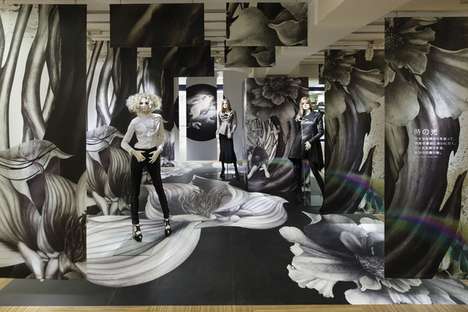
More businesses are incorporating artful accents to their shops, realizing that customers are more likely to enter and spend more time in a store with artistic retail displays than one with basic white walls and grid-like shelves. Everything from oversized art installations to crafty storefronts are giving retailers attention-grabbing elements that are simply too eye-catching for a customer to ignore.

Created by Kahori Maki, ‘Moon Princes’ begins with the window display and then leaks into the store’s interior space. It’s black-and-white coloring contrasts vividly with the relatively vibrant clothing. The result might be considered overwhelming but it charmes the most adventurous shoppers.

On the opposite, the Valencia Munich store, design by Dear Design studio, is very minimal, yet very impressive. Its all white color, the complex X display structure, seem to expand the display surface at libitum, giving to the full range of Munich Shoes on diplay the deserved importance.

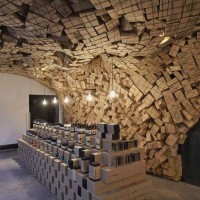
At the famous Merci store in Paris, Aesop has installed a creation designed by the Melbourne-based March studio, which can not passed unnoticed. A wall of stacked Aesop cardboard boxes, held together by a black net, looks like a tornado which is going to wrap over the shopper.

These are only few examples, what is clear is that shoppers now need more stimuli: products are available almost everywhere, what differs is the shopping experience. And art can be the solution. (Credits: Trendhunter)

Is augmented reality the future of retail?

Global revenues from augmented reality (AR) applications and services are projected to reach $1.5 billion by 2015, according to Pocket-lint.com

Augmented reality is a term for a live direct or an indirect view of a physical, real-world environment whose elements are augmented by computer-generated sensory input, such as sound or graphics.

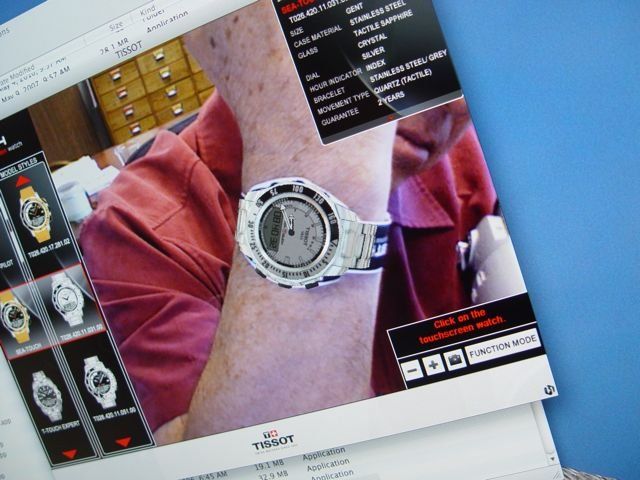
Tissot watches has had success implementing an AR campaign. By placing a dummy watch around your wrist, which has a code on the face, and holding it in front of your webcam, the app displays it on the screen as a virtual, 1:1 scale version. The benefit is you get to “try on” the watches to see which suits you best before purchasing.

Holition, AR, 3D and future technology creative agency, which is based in East London, is responsible for the campaign.

“What we’re trying to do with the worn-on-the-body applications is enable a real business functionality for it. It engages consumers, it enables people to understand the product and therefore it enables them to take that step closer to purchasing the product as well,” said Lynne Murray, brand manager at Holition.

“Tissot’s brand public relations grew 600 percent through the campaign compared to 100 percent growth that they usually expect to achieve. So, even as a communication tool, it’s a hugely engaging way for brands to have another and new point of contact with its audience. AR is a new way of communicating socially, a new way of getting people on board with the brand.”

Murray expects these types of technologies to give way to a fully integrated retail experience in the not too distant future. (Source: Retailcustomerexperience.com)

Luxury and sustainability… a trend we will see more of in China

URBN Hotels & Resorts announced plans for URBN Hotel Pudong, a new green hotel that will become the first positive-impact hotel in China. The hotel is slated to open Spring 2012.

In collaboration with Vanke, China’s largest residential real estate developer, URBN’s 20,000 square metre boutique hotel is part of a larger commercial, retail and residential development in the Sanlin district of Pudong in Shanghai. They have tapped Fumihiko Maki, the world-acclaimed Japanese architect whose current works include the United Nations building and World Trade Center Tower 4 in New York City, to design the project.

The development, which is estimated to cost RMB 312 million (US$47 million), will include 55 hotel rooms, 50 URBN serviced residences, and 4,500 square metres of dining, wellness and art spaces.

URBN created China’s first carbon-neutral hotel, the chic and hip URBN Shanghai in the Jingan district. URBN Shanghai is passionately committed to the environment and is at the forefront of the growing consumer eco-movement in China. URBN tracks the hotel’s entire carbon footprint and offsets it by purchasing carbon credits or investing in local “green” energy development and emission reduction projects. The hotel provides guests the option to find out their footprint during their stay and by donating trees to Jane Goodall’s Roots and Shoots foundation to offset.

For the new URBN Hotel Pudong, Jules Kwan, Managing Director of URBN Hotels indicated that “the aim is to make this hotel go beyond sustainability … the hotel will increase the biodiversity of the site, and will discharge water that is cleaner than the water from the city’s water supply.” The hotel hopes to get LEED and China Green Star certifications. Also, URBN Hotel Pudong aims to surpass the 35% energy savings target hit by URBN Shanghai. (Source: Red-Luxury)

Enoc Retail plans expansion to Middle East

Enoc Retail Systems Holding, the retail division of Emirates National Oil Company (Enoc), plans to franchise its Zoom convenience-stores and Pronto, a fresh food and gourmet coffee concept.
Zoom, which operates six stores at Dubai Metro stations, is looking to expand to 28 stores in total, Enoc stated recently.

The convenience store brand, which is currently also present in eight stores within the Enoc/EPPCO network, is set to expand both as stand alone stores and at more Enoc/EPPCO service stations, it added.

Pronto, established in 2008, currently operates 21 outlets within Enoc/EPPCO service stations. Burhan Al Hashemi, managing director of Enoc Retail, said that expansion plans were part of a long term strategy to establish Zoom and Pronto as premier retail providers across the Middle East.

“Enoc Retail has proven its competencies in a short span of time. We are now open to share our expertise by franchising the successful retail concepts and reach out to a wider audience in the Middle East,” added Al Hashemi.

Enoc/EPPCO is the pioneer of convenience store retailing in the UAE, introducing mini marts in 1988 in Dubai and the Northern Emirates.

Currently, Enoc Retail employs more than 4,500 frontline staff, meeting the needs of over 600,000 customers a week. Enoc Retail operates a network of 170 Enoc and EPPCO service stations in Dubai and the Northern Emirates. (Source: Arabianbusiness.com)

Preparing for the consumer economy of 2020

In a recent super session at Retail’s BIG Show, Ira Kalish, Director of Global Economics for Deloitte Research, gave an all-encompassing overview on the state of the global retail industry ten years from now, as well as his take on what the consumer of the future will look like.
Kalish kicked off with a run through of recent developments in global retailing, noting that it’s always useful to think about the future by reviewing the past.
In particular, Kalish highlighted some of the paths that lead towards the economic crisis of 2008 and 2009 and the lessons that were learned from that crisis: massive consumer leveraging in the U.S., U.K. and Spain; the collapse of the asset price bubble; emerging currencies rising; U.S. consumers paying down debts and saving more; housing no longer being seen as a source of economic growth; China’s move towards consumerism and consumer spending rising as a source of GDP; and the challenges faced in Europe due to imbalances between countries like Germany and Portugal, Ireland and Spain.

As for what retailers can expect in the consumer economy of 2020, Kalish pointed to a number of challenges and opportunities retailers should certainly have on their long term radar, such as the massive increase in emerging middle classes and the disproportionate share of growth in emerging areas of the world like Indonesia, Colombia and Africa.

The effects of an aging population in an increasingly affluent world will also be a key consideration for retailers of all shapes and sizes, while hot markets with younger demographics (India, Middle East and Africa) will also keep global retailers on their toes.

Kalish also noted, the impact of obesity, changing global food market dynamics, an ever-increasing focus on sustainability and the possibility of a social media revolution could play a heavy role within the consumer economy of 2020.

So what can retailers do to prepare for this new consumer outlook? Kalish believes that aligning company values with those of consumers will be critically important, as will leading and listening to customers. Taking care of your brands, your people and your investments will also pay dividends when it comes to engaging with consumers, something that will be fundamental for 2020’s consumer – and not a bad idea for 2011. (Source: NRF)