Tag Archives: sustainability

Sodexo and Costco for a sustainable seafood

Food giants Sodexo and Costco have both committed to improve the sustainability of their seafood.
Sodexo, the $21 billion food service company, has announced a goal for all its contracted seafood to be certified by the Marine Stewardship Council (MSC) or the Global Aquaculture Alliance’s Best Aquaculture Practices (BAP) by 2015.

Under the plan, Sodexo will review all wild caught and farm raised seafood purchases and set short, medium and long-term goals with its contracted seafood vendors.

The target is part of Sodexo’s Better Tomorrow sustainability plan. The Better Tomorrow Plan makes 14 commitments to the environment, health, wellness and community support.

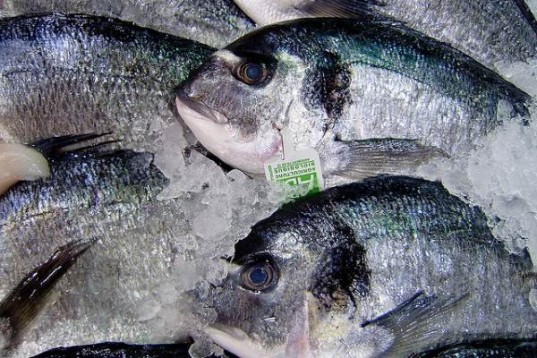
Meanwhile, Greenpeace has announced that after eight months of pressure, the world’s ninth-largest retailer has agreed to remove over a dozen seafood items from sale until the company can find an MSC-certified option. Costco will place a hold on selling Atlantic cod, Atlantic halibut, bluefin tuna, Chilean sea bass, Greenland halibut, grouper, monkfish, orange roughy, redfish, shark, swordfish, skates and rays.

Costco is also in the process of shifting towards more sustainable sources of tuna for fresh, frozen and canned varieties of the fish, Greenpeace said.

Costco will work with the World Wildlife Fund (WWF) to examine its remaining wild-caught species and determine the best way of moving to sustainable alternatives, Greenpeace said.

Costco and WWF have had a partnership since July of last year. Its first goal was to gauge the adherence of Thai-based shrimp farmers to draft standards drawn up by the Shrimp Aquaculture Dialogue, WWF said, and then to develop a strategy to guide those suppliers to full compliance. (Source: Environmentalleader.com, Photo: Thomas Quine)

EuroShop: green is “hot”

Back from the EuroShop, with lots of a ideas and a big certainty: green is “hot”. From Green IT to green supermarkets and green products: retail is now aware of the trend toward sustainable economic management. Obviously, the market is still immature and retailers have lot to learn about what can be really sustainable in the long term – and this is where professional services like the ones we offer can be of a great help.

As stated on the EuroShop website, earlier this year, German Federal Minister of Economics Rainer Brüderle visited the “Klimamarkt” (“climate market”) by Tengelmann, across from the Tengelmann headquarters in Mülheim an der Ruhr. The politician of the FDP party said: “We need pilot projects like this to gather experience on how climate protection and economic efficiency can be reconciled.” Tengelmann deems the “Klimamarkt”, which already opened in December of 2008, to be “Germany‘s first CO2-free supermarket.”

The project admittedly does not stand up to an intense cost effectiveness analysis. “Demolition and new construction would have been cheaper”, Tengelmann spokesperson Jutta Meister admits on inquiry. And this is issue n.1 to take into account: the economics of retail sustainability.

“Particular attention also always needs to be paid to the economical aspect of sustainability”, says Tobias Walter of tegut. “We build beautiful marketplaces for our customers, which thanks to our consolidated know-how generally are not more expensive than the otherwise widely common ‘shoe box buildings’”. Kai Falk, Managing Director of Communication and Sustainability at the German Retail Federation HDE also believes: investments in sustainability in retail have a chance on a larger scale only if they also pay off financially.

And this pay off can be energy savings. In food retail, according to the EHI more than 55 Euros per square meter of sales floor are incurred for energy, in which cooling at 44 percent accounts for the largest electricity consumption. In non-food retail on average 31 Euros per square meter need to be spent. Here the largest portion at 65 percent is caused by lighting expenses.

The EHI notices a large willingness in retail to invest in energy savings practices. 80 percent of polled retailers are said to be willing to invest in energy-saving cooling systems and equipment. This high readiness can be explained by savings expectations of up to 20 percent. Aside from investments in new cooling devices, the choice of cooling agent is also getting more and more important, especially since the old R22-systems have to be converted. Cooling with CO2 was one of the big trade fair topics at the EuroShop 2011.

Many commercial enterprises work on new projects and initiatives about a more sustainable retail. Hardly anybody believes they can afford to not be a part of green topics. The discerning public will intently look at what’s show and what is true concern. But ultimately it is the consumers themselves that have to start rethinking, because they choose where they shop. They choose what they would like to stay away from.

How to add another plus to organic food: this is marketing!

We have always written about communication being the success key to sustainability in the retail business. Thanks to communication retailers can help consumers understand the real value of their efforts when it comes to sustainability: why they choose this product instead of the competitor one, why they are recycling, why they are preferably purchasing locally grown food and so on.

A post on Hive Health Media made me smile, considering it a great example of how to market organic food in a more appealing way. Everywhere, organic food is associated with “not that good-looking food that does not pollutes the Earth” concept. This might be not strong enough to convince the average consumer. But what about saying: “Buy organic and keep in a good shape”?. This was essentially the message broadcasted in that post. Three key points:

– The organic food at the supermarket is often 30-50% more expensive than standard food, doesn’t contain chemicals such as herbicides, pesticides, hormones and antibiotics( This means is healthier and it is true  that consumers buy less because of the price, but in this case, less food means a better shape.)
– Organic food also helps detoxify the body and puts it in a state that makes it easier for the consumer to get in shape.
– As an added bonus, an overall sense of wellness will develop over time when consumers are living organic.

Obviously, there was some marketing in that post, not related to organic food though but to how to cook it, but this is a different story.

The colors of Ikea Italy: blue, yellow and.. green!

Ikea Italy announced an environmental investment of € 20 million: 150,000 solar panels to be installed by the end of August 2011in each store so that to create a small solar power station. Clean, renewable, sustainable.

About 150,000 solar panels modules will be placed on a aluminum structure resting on the Ikea store roofs, and in Catania (Sicily), also on the bus shelters in the parking lot. An area as big as 16 football fields to cover about 10% of the electricity needs of Ikea Italy. The first floor (showroom) of all stores will be then lightened with this renewable energy. A total of 10,000,000 kWh of electricity, equal to the average consumption of 3,300 households will be produced each year with a reliable and innovative technology.

This will prevent the annual emission of approximately 4,000 tons of carbon dioxide, equivalent to the quantity of CO2 absorbed annually by 400 acres of tropical forest and the emissions of 3,300 cars travelling an average of 10,000 km. Another key point of the Company policy is to reduce waste and an effective use of raw materials, recycled materials or easy to recycle ones, natural and renewable energy, CO2 emission reduction thanks to a clever consumption, the optimization of facilities’operational activities and electricity from renewable sources (in 2010 equal to 83% of the total consumption).

When dealing with waste management, the goal is to reduce it thanks to the development of a less bulky packaging and a careful waste disposal collection so that to assure their almost full recycling. Ikea is bio too. In restaurants, the group includes more than 58 recipes and organic products from biological origin. In 2010, Ikea Italy purchased 2,080 tons of organic products (+38% compared to 2009). Ikea Italy is now the third third largest Ikea supplier company in the world after China and Poland, as stated by the managing director of Ikea Italy, Lars Petersson during a meeting in Milan. (Source. Greenbiz.it)

Sustainable Apparel Coalition: what is it?

In the last days there has been a lot of buzz about the Sustainable Apparel coalition, officially launched on March 1st. But what is it?

The Sustainable Apparel Coalition (SAC), which includes* Nike, Gap Inc, H&M, Levi Strauss, Marks & Spencer, and Patagonia, will work to lead the apparel industry towards developing improved sustainability strategies and tools to measure and evaluate sustainability performance. 

The Coalition’s purpose at a higher level has two goals.  First, the member organizations will develop plans to soften the apparel industry’s impact on water and industry consumption, while making commitments to improved waste diversion and the reduction in the use of chemicals. To that end, the Coalition’s members will work with industry peers and supply chain partners to achieve the fullest possible life cycle transparency for clothing. Meanwhile, the SAC seeks to ensure that workplaces throughout the apparel industry adopt fair employment practices and a safe working environment, while eliminating any exposure to toxic chemicals.

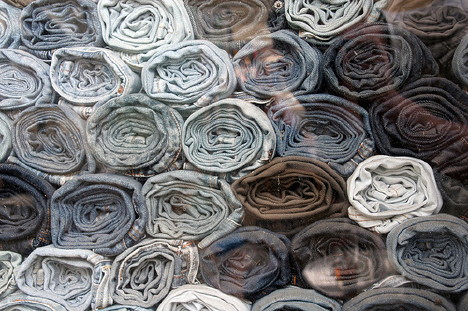
Second, the Coalition will develop a metrics-based tool that will assist companies in the measurement of their environmental and social impacts.  For now described as the Version 1.0 Apparel Index, the tool works similarly to Nike’s Apparel Environmental Design Tool and the Outdoor Industry Association’s Eco Index.  Besides offering an assessment on companies’ usages of energy, water, and chemicals, the index will also evaluate products’ entire life cycles.  Companies will be able to measure their performance, compare them to their peers, and receive guidelines and resources for how they can improve their performance all such metrics.  The Apparel Index is slated to launch next month.(Source: Triplepundit Photo: Treehugger)
*Founding members of the Sustainable Apparel Coalition are based in North America, Asia, Europe and the U.K. They include Adidas, Arvind Mills, C&A, Duke University, Environmental Defense Fund, Esprit, Esquel, Gap Inc., H&M, HanesBrands, Intradeco, JC Penney, Kohl’s Department Stores, Lenzing, Levi Strauss & Co., LF USA, a division of Li & Fung Limited, Marks & Spencer, Mountain Equipment Coop, New Balance, Nike, Nordstrom, Otto Group, Outdoor Industry Association, Patagonia, Pentland Brands, REI, TAL Apparel, Target, Timberland, U.S. Environmental Protection Agency, Verité, VF Corp, and Walmart.

Benetton keeps getting greener

Six hundred fewer tons of plastic in the environment in 2011:  this is the green result that Benetton Group will achieve by introducing innovative, lightweight liquid wood clothes hangers – 100% biodegradable and recyclable – in place of the plastic hangers usually used to display garments. The eco-hangers, developed in partnership with the Fraunhofer-Institut für Chemische Technologie in Pfinztal-Berghausen (Germany), will gradually replace their plastic predecessors throughout the worldwide network of Benetton stores.

The liquid wood hangers are just part of a far broader eco-sustainable business plan launched by Benetton in a context of attention to social issues – and environmental respect in particular – always an important aspect of our corporate identity. Benetton’s green journey includes two other tangible environmental sustainability programmes, involving organic cotton garments and eco-friendly paper shopping bags.

In the Benetton children’s collections, organic cotton already accounts for over 30% of all cotton apparel, and with the spring-summer 2011 collection, organic cotton garments will reach a total of 13 million across the Group’s various brands. These products are all certified according to the GOTS (Global Organic Textile Standard) ethical and environmental criteria, a worldwide benchmark that guarantees adherence to key organic standards in fibre production.

The GOTS standard focuses on ethical and environmental sustainability (ensuring that products are GMO-free and come from low-impact farming). Benetton performs a constant cycle of controls to ensure that the CaMV 35S promoter, indicative of the presence of GMO cottons, is not found within the fibres.

Furthermore, since January 2010, customers buying from United Colors of Benetton stores have been taking their purchases home in a craft-white eco-friendly paper shopping bag, processed using water-based inks only, and sourced from an FSC certified paper factory, ensuring products are made using timber from forests that are controlled and managed according to the principles of social and environmental sustainability. (Benetton Group Official Press Release)

GoodGuide for Good Products for a more sustainable Retail

Yesterday I was reading a post concerning Levi Strauss & Co as the Top Jeans Brand, scoring a 7.4. The brand Prana was listed as the next highest, with a score of 6.3—followed by H&M (6.1), Banana Republic (6.1), and Old Navy (6.1).

I did not know what GoodGuide is – shame on me – so I checked out their very interesting website, which is said to be the world’s largest and most reliable source of information on the health, environmental and social impacts of consumer products. And I think it really is, rating over 95000 products, mainly available on the US market only: from food, toys, personal care to apparel, electronics and appliances. What is really striking is the scientific approach they have on their ratings, which are compiled from three sub-scores addressing Health, Environment and Society.


 Each of these sub-scores are based on an analysis of a set of indicators that GoodGuide has determined are the best-available measures of performance in these areas. Their methodology differs from the product belonging to different categories, each and every one having its own scoring methodology. Amazing. Let’s talk about apparel for example.

Quoting the Good Guide site: “Until (apparel) companies do a better job of providing transparency into their supply chain, our ability to accurately score brands based on their relative performance will be subject to significant uncertainties Environment scores are assigned to apparel brands by combining GoodGuide’s standard company indicators of environmental performance (weighted at 50%) with brand-level environmental indicators that address issues that are specific to the apparel sector (weighted at 50%).(….) Social scores are assigned to apparel brands by combining GoodGuide’s standard company indicators of social performance (50%) with brand-level social indicators that address issues that are specific to the apparel sector (weighted at 50%).(…) Health scores are not assigned to apparel brands because this product category does not generally pose health risks to consumers.”

The Good Guide website is also very good at using the Web 2.0 tools to “spread the word” and improve the accuracy of the product information thanks to a “support product info” page which enables visitors to add further details.

It would be also very interesting to test the effect of this kind of structured and scientific information directly at the point-of-sale, to see how the consumer react when discovering that his/her favourite brand of pasta is not that “good”. Because thanks to GoodGuide mobile App this is possible: consumers can scan the product, check the GoodGuide database and then purchase, or decide to choose another brand.

With this detailed level of “scientific” information, producers and retailers have nothing to hide and their achieving a high/low score can have a boomerang effect on brand reputation which must not be ignored and will not be ignored by consumers. Sustainability pays, and it will pay even more in the future.

Eco packaging: are biodegradable Cans the future?

A few info:
– 4 million tonnes of aluminium is produced annually
– the production of aluminium disrupts the landscape where bauxite ore is mined, consumes large amounts of electricity and produces waste.
– More than 75% of all the aluminium ever produced is still in use
– In the UK 51,000 tonnes of which ends up as packaging  If all cans in the UK were recycled, we would need 14 million fewer dustbins.
– £36,000,000 worth of aluminium is thrown away each year.

We are not condamning aluminium itself, also because it can be 100% recycled, and its use in the automotive industry can help reduce the oil consumption and CO2 emissions. But we would like to point out that consumers must understand that their refusal to recycle aluminium cans impact negatively the environment and create great social costs.

Retailers first should have to explain to their customers the added value in purchasing recycled aluminium packaged goods and/or offer alternatives to the traditional aluminium can.

Right now, the only product we found are these PLA Studio’s biodegradable Tin Cans, whose price does not make them suitable for nowadays industry use, but we are sure that in the future they will. (Photo courtesy of PLA Studio)

Where are the greenest ATMs? In Abu Dhabi!

We are always thought of sustainability in the retail business as related to  production-delivery-waste disposal. But what about the money that we currently use to purchase raw materials, pay delivery, purchase items? Is money really green?
We are not going to get into the sustainability of the “manufacturing process” of money. Not today.  But we are going to talk about how to make dispensing money the greenest ever.

This is what the National Bank of Abu Dhabi (NBAD), the Number One Bank in the UAE, has done last January, becoming the first bank in the UAE to launch a solar-powered ATM. NBAD’s first solar ATM became operational at Al Bateen Branch in Abu Dhabi.

The NBAD’s green ATM, launched in cooperation with Apex Power Concepts, is powered by solar panels installed on the branch’s roof. The panels are connected to a circuit breaker board, which feeds a power controller where part of the collected energy is stored for the ATM’s night operation.
NBAD aims to eventually implement this solution in all NBAD branches as well as at stand alone offsite ATMs. The Bank has one of the largest branch and ATM network in the country with more than 110 branches and 429 ATMs all over the UAE.
“CSR at NBAD is a way of doing business. Therefore, we adopt methods and technologies that are aligned with this strategy,” said Ahmed Al Naqbi, the Head of Channels & Electronic Banking Services at NBAD. “In addition to delivering quality products and services, NBAD differentiates itself in the market by its corporate sustainability credentials.”

Sustainability and retail: a big Italian player point of view

Two days ago a couple of ECOFFEE‘s team members attended an interesting meeting regarding the Retail landscape in Italy, with a special focus on the sunglasses and eyeglasses sector. When the “Any question?” moment arrived, we asked to the speaker “What about sustainability in the Retail business?”. The answer was a HUGE “?”, followed by a: “Maybe in 2015”.

This answer made us smile, because it was the usual answer of those professionals in the Retail field who pretend that a trend does not exist until the trend has changed into an issue to be solved. 

No more than two weeks ago, Andrea Illy, Chairman and CEO of illycaffè S.p.A,  expressed his point of view about sustainability in a very interesting post published by Fastcompany. Here’s a couple of key sentences. “I’m taking about a broader notion of sustainability that includes social and economic equity right alongside environmental responsibility, serving a triple bottom line. (….) The key is acting early–acting now–before the confidence of consumers, investors and other stakeholders is irreparably damaged. The best rescue of sustainability’s meaning and power is one that is never made….Consequently, a genuinely holistic approach to sustainability is required: one that creates value throughout the entire supply chain. And in order to do that we must focus on raising quality. (…) By perpetually seeking higher quality, a cycle goes into motion, creating sustainable value for every player. The result is long-term viability in lockstep with ever-increasing quality in the cup.(…) Broader adoption and smart marketing of a powerful certification symbol (….) will create widespread understanding of what sustainable agriculture means, and place the power to demand genuinely responsible production squarely where it belongs: in the consumer’s hands.” We obviously share Andrea Illy’s point of view, and we wish that knowing his opinion about sustainability, all the skeptical retail professional will make up their minds.