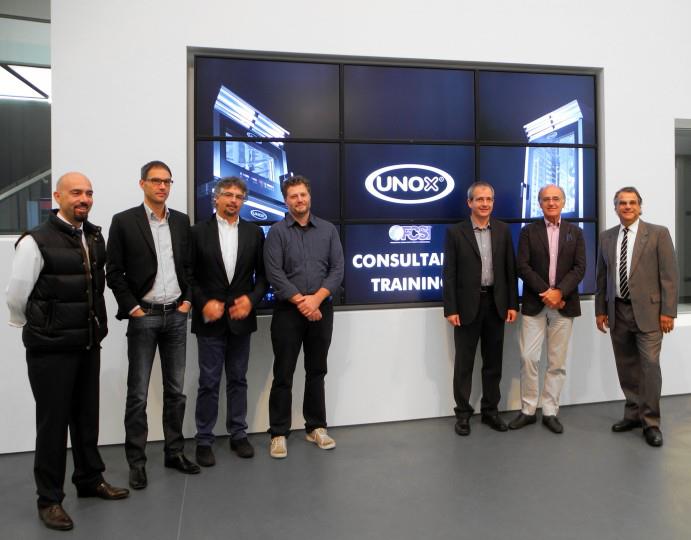
I recently had the pleasure of visiting Unox.
A visit organized by FCSI Italia, the Italian division of the Foodservice Consultants Society International. I am a professional member of it.
Unox gave us a welcome that I could never expect due to a great organization. The Company structure is just fantastic, but technology on a human scale. The respect for the employees is quite deep and you can understand this from the words of those who work with enthusiasm and good attitude.
Nothing seems left to chance. It’s like a little Apple and not just because they develop their software internally.
The training carried out was very interesting and I hope to work with them in more detail, because surely there will be a lot to learn.
Their mission is clear, “Contributing to the Quality, to the Competitiveness and to the Simplification of our customers cooking process.” I agree.
I suggest to all operators in the sector to find a way to visit the company and meet the extraordinary people who work there. If you’ll have this opportunity, don’t forget to stop in Padova for a special dinner in one of its extraordinary places.
What about Unox products? Well, they are the second largest producer of ovens for its sector with lots of happy clients. Their stand during exhibitions are always full of people. I think that’s enough, right?
Breve introduzione al partenariato, una formula commerciale a rete ancora poco nota in Italia, ma che ha preso piede in diversi paesi europei. Soprattutto in Francia.
Il mondo delle reti commerciali è in continua evoluzione, sia in Italia, sia all’estero, in una costante ricerca di adattamento a formule innovative, efficaci e snelle che consentano uno sviluppo, ma anche una stabilità, nei sempre più difficili e turbolenti mercati.
In altri paesi, tale concetto è stato appreso da tempo e le reti commerciali sono riuscite a creare forme di distribuzione adattate alle esigenze degli operatori professionali desiderosi di confrontare le loro conoscenze e le loro esperienze con altri. Tra queste c’è anche il partenariato, che in Italia ancora pochi conoscono.
Alcuni aspetti del partenariato sono riconducibili e presenti in altre formule, come il franchising, ma questa formula è dotata anche di caratteristiche proprie che in alcuni paesi europei, la Francia prima di tutto, le stanno attribuendo un buon successo.
Questa è la conseguenza di un fondamentale equivoco che, nel tempo, è stato trasferito nel nostro paese parlando della legge francese (Loi Dubin) come “normativa sul franchising” per quella nazione. Al contrario, la Loi Dubin, non si applica solo al franchising, ma riguarda l’insieme delle reti del commercio organizzato.
Senza poter entrare nei dettagli, la legge francese non cita mai, contrariamente alla nostra normativa, il know how.
Infatti, l’elemento più importante che differenzia il partenariato rispetto al franchising è il fatto che prevede la rimozione dell’obbligo di presenza e di trasferimento del know how, che nella legge italiana è invece uno dei requisiti normativi essenziali per poter essere in presenza di rapporto di franchising, ma anche uno dei requisiti normativi più difficilmente definibili del rapporto stesso.
Il paternariato è una tecnica di sviluppo e di gestione che unisce dei partners per un accordo di interesse comune in ragione del quale essi si impegnano a cooperare stabilmente condividendo le loro conoscenze e le loro reciproche esperienze. Il partner principale accorda al partner indipendente, in cambio di una compensazione finanziaria diretta o indiretta, il diritto di utilizzare i suoi elementi di proprietà intellettuale, la sua esperienza e le sue conoscenze, allo scopo di commercializzare i prodotti e/o i servizi della formula che egli ha ideato e precedentemente messo a punto. I partners opereranno in comune durante tutta la durata del contratto, allo scopo di uno sviluppo reciproco ed equilibrato, in uno spirito di partenariato, senza qualsiasi manifestazione gerarchica, pur mantenendo l’identità e la reputazione della rete. (definizione ufficiale a cura di Iref Italia)
Nei prossimi articoli, analizzeremo meglio il paternariato e le maggiori differenze col franchising.
Il Franchising “multi-unità” è, senza dubbio, il trend di maggior crescita nel settore, assieme al “paternariato”, di cui scriverò presto.
Dalle mie recenti ricerche, ma anche da input di mercato e feedback avuti dai miei stessi clienti e secondo la società di servizi FRANdata, circa il 50 per cento delle imprese di franchising sono attualmente di franchisee con più di una unità operativa. Tend molto americano, ma che si sta sviluppando anche oltre oceano.
Molti degli imprenditori di franchising di oggi stanno cogliendo l’opportunità di investire in accordi di multi-sviluppo, in quanto questi hanno dimostrato di essere un grande successo sia per il franchisor che per il franchisee. Negli ultimi cinque anni, le statistiche sulle entrate hanno dimostrando che i multiproprietari tendono a massimizzare i loro profitti a un tasso superiore di quello dei singoli proprietari.
Leggendo il rapporto della Small Business Administration (SBA), si evince che i proprietari di più unità sono diventati “il gruppo più prosperoso delle piccole imprese.” La relazione prosegue affermando che circa i tre quarti di questi imprenditori si trovano in una fascia di reddito alta e metà di essi possono essere classificati in una fascia di ricchezza elevata.
Infatti, uno dei motivi di questo aumento della redditività è dovuto al fatto che le “multi-unità” sono in genere gestite dagli investitori più esperti soprattutto in fase di massimizzazione dei profitti.
Inoltre, ma è facile dedurlo, il franchisor preferisce supportare un franchisee già avviato che investire in una nuova operazione.
Quali sono i vantaggi della “multi-unità”?
I multiproprietari di Franchising concordano che, avere più di un franchising sotto la propria gestione può risultare un vantaggio finanziario. Un esempio? Il franchisee Gulam Choudhury, che ha comprato il suo primo franchising Dunkin’ Donuts due decenni fa, ora possiede un pacchetto di sei negozi, multi-unità.
Oltre a maggiori profitti, Choudhury ha affermato che grazie alla sua piccola catena ottiene maggiori risparmi anche dal fatto che ha bisogno di utilizzare solo una cucina per tutti i sei negozi.
Inoltre, i multiproprietari di franchising possono gestire al meglio il personale tra i diversi negozi e sono in grado di offrire maggiori opportunità per il loro avanzamento. Infatti, sempre più spesso, le aziende trovando molto più conveniente gestire e supportare un minor numero di affiliati in possesso di un numero maggiore di unità. Ecco perché una grande azienda preferisce gestire, per esempio, 75 proprietari di franchising che operano 300 unità, piuttosto che la gestione di 300 operatori in franchising separati.
A seguito di questo trend, un numero crescente di imprese offrono solo opportunità di franchising per potenziali franchisee disposti ad accordarsi per un pacchetto minimo di sviluppo.
Sempre negli USA, Dunkin’ Donuts è un caso emblematico, gli investitori devono essere in grado di acquistare un accordo di sviluppo per almeno cinque negozi. Questo, secondo Dunkin’ Donuts è il risultato di un piano strategico di espansione per triplicare i punti vendita per un totale di 15.000 negozi negli Stati Uniti entro il 2020.
Qual’è il rovescio della medaglia?
La realtà è che la maggior parte dei franchisee non sono in grado di investire in più di una unità alla volta e, in molti casi, preferiscono già a priori non espandersi. L’acquisto di un pacchetto minimo, contempla non solo una grande quantità di capitale, ma anche il tempo e le risorse per l’esecuzione più unità, quasi contemporaneamente, quindi si rende necessaria una grande capacità di selezione, una grande capacità organizzativa della rete e un forte coinvolgimento nella governance del sistema.
Nonostante quest’ultimo punto e nonostante l’esborso di denaro, tempo e risorse, l’investendo in “multi-unità” di franchising risulta essere un modo efficace per massimizzare il potenziale di profitto, soprattutto se si sta investendo in un ben consolidato marchio di successo.
Il 29 agosto scorso mi sono recato all’aeroporto di Bologna, per partire alla volta di Catania e quindi raggiungere Messina. Un importante incontro di lavoro mi stava aspettando.
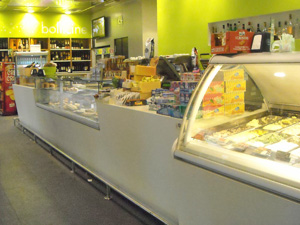
Visto che il mio volo era previsto subito dopo l’ora di pranzo, mi sono avvicinato al bar Bollicine, quello situato proprio frontalmente alla salita delle scale mobili, zona partenze ovviamente. Dopo aver aspettato il barista che doveva monitorare il passaggio delle turiste e dopo essere riuscito a fare lo scontrino per: panino, bibita e caffè, mi sono spostato al lato della cassa per poter consumare il mio “pasto” in tranquillità.
Ecco l’assurdo manifestarsi improvvisamente: dopo aver provato a masticare il panino, impresa ardua dato la sua consistenza – avete presente il pane scongelato e riproposto probabilmente dopo alcuni giorni? – mi sono rivolto al barista dicendo educatamente: “mi scusi, ma questo pane è immangiabile”. Di tutta risposta il barista mi ha lanciato un sguardo di insufficenza, come se il pane fosse cattivo per colpa mia, e dopo aver allargato le braccia come se fosse passato li per caso, se ne è andato dall’altra parte.
Per il nervoso, pur di non aver a che fare con quel cafone, non ho neanche chiesto il caffè. Naturalmente il panino è finito nel bidone.
Andando verso l’imbarco, mi sono detto: quest’episodio è da condividere ed ho incominciato a scrivere col cellulare su Twitter: “Il barista del Bollicine e’ veramente un cafone!!!” Stavo per inviare, quando la provvidenza mi ha portato davanti un cartello dell’aeroporto che invitava i passeggeri a comunicare attraverso Twitter, questo l’indirizzo: @BLQairport
Letto, aggiunto, fatto!
Al mio arrivo a Catania, mi sono piacevolmente trovato la risposta: “@norman_cescut Ci dispiace per l’accaduto, lo segnaliamo subito affinchè non si ripeta più”. Il tutto visibile nella mia Timeline di Twitter.
I famosi “complain form” presenti all’estero, non hanno mai funzionato in Italia, ma finalmente adesso c’è la possibilità di comunicare in diretta con chi d’interesse.
Ora, non ho la certezza che abbiano preso veri provvedimenti, anzi invito l’aeroporto di Bologna a comunicarmelo, ma certo è che comportamenti del genere non possono e non devono passare inosservati.
Aggiungo solo una cosa: saper fare un caffè o allungare un panino al di là del bancone, non significa essere baristi, professione nobile e altamente qualificata ma non è solo colpa del barista ma anche del gestore che non fornisce la formazione adatta o se lo fa, non monitora l’operato.
When H&M unexpectedly opened a new store on the beach of Riccione (Rimini – Italy) I thought this was a smart marketing action. Then I started wondering if this could work. Of course the store would have benefited from massive visibility, but was this enough?
The great adventure of the pop-up store only lasted one week. It seems that those in charge of developing the concept did not have all relevant licenses.
The Italian Guardia di Finanza sealed off the area and confiscated property. Someone thinks H&M violated some provisions, while others state inspections were too severe. It seems evident to me that someone chose to turn a blind eye in order to authorize the opening of this beautiful pop-up store on the beach.
I think that if some licenses were missing works could not have been authorized. And I’m also convinced that if inspections were too severe the shop couldn’t have been inaugurated.
Do you want to know my opinion? I don’t care who is right or wrong, nor which business activities were damaged the most. What really infuriates me is that in order to place the new pop-up store several square metres of “dunes” were destroyed, thus damaging an enchanting protected area gathering fine sand and lush vegetation.
Just for another shop! And I’m saying this in a conflict of interest. This behaviour is really not acceptable, especially because H&M has always been involved in sustainability and conscious collection campaigns, we also spoke about.
I think everyone involved in this matter should deeply reflect on it. Don’t you think so?
Sustainability at retail can be perceived as being illogical if not contradictory. Because according to logic, if the purpose of retail is about promoting only purchase and thereby consumption, then it runs counter to sustainability principles such as reduce, recycle and re-use. But retail in its broadest sense is not just about stores. It also refers to having a physical, local or direct to community business presence (i.e. a bank or post-office would qualify as retail). But in order to bring the concept of “sustainability” out beyond the niche and to the masses, we will need to transcend logic and find more ways to get people to care about life tomorrow – today.
This is why retail is vital. Because the power of retail comes not from logic, but that which inspires emotion. Great retail brands i.e. Nordstrom or Amazon, have the ability to not only respond to needs, but also open our eyes to new ideas through delight and surprise. Retail adds physical and experiential dimension to concepts that would otherwise be too cerebral. And through retail storytelling the principles of sustainability can come to life in ways that can truly excite interest, promote engagement, and quite possibly change behavior.
Skeptics need to remember that only ten years ago when the thought of buying shoes without ever touching or trying them-on seemed incomprehensible. It took a retailer such as Zappos to change behavior and raise the bar on service expectations. Since then, shopping for shoes has never been the same. In fact the experience of shoe shopping (whether online or in-store) has only gotten better because of Zappos’ impact.
Since as much as 80 percent of communication is nonverbal, then what better way to communicate the principles of sustainability than to allow people to experience it first hand. And because human thought and memory is formed not from words but from images and emotions, what better way to get people to care and identify with a new concept than to show them how it can be applied today.
Such principles are the reasons why Chipotle’s “Back to the Start” video is a stellar example of sustainability storytelling. Unsustainable farming is a universal and serious issue. It affects the lives of all in one way or another. The magnitude of the issue is a key reason why people find it hard to connect to the issue. For the general public, systemic issues such as this or climate change and social/community health and well-being are such complex and overwhelming issues. When we are unable to understand, let alone relate, our human instinct is to distance ourselves and possibly disconnect through indifference.
Chipotle’s video does a brilliant job of taking a huge and complex issue and humanizing it to a level that makes us care. The story is powered by pure emotion. It is endearing and enlightening as it illustrates the bigger picture issue while inspiring us all to take part. No words are needed. No voice-over to direct our thoughts (unless you count Willie Nelson singing). No numbers, charts or science is ever used to convey the story.
But even with or without words, there is still the real challenge of overcoming public perception and biases. There is such a limited range in how “sustainability” is articulated today – especially on a local retail level. It is why I believe that “sustainability” has become such a polarizing word. We need to find ways of giving it added dimension and broader relevance. We won’t get sustainable thinking to stick through ubiquitous use of the word. Nor can we expect people who are indifferent to willingly pursue greater understanding of the term. We need to be able to communicate the principles and concepts of sustainability in ways that are not limiting interpretation or opportunities of relevance.
Consider for a moment how “sustainability” principles are brought to the attention of people on a daily basis? In order to gain critical mass support, we need more than reminders i.e “Remember to Recycle,” or ”green” products, eco-friendly materials or responsible choices called out in marketing materials (i.e “We run on clean energy).” Many brand efforts that call out support for the environment is often presented at retail as being more like an FYI or directional signage/labeling.
Promoting sustainability conscious ways at retail must strive to connect – not just be present.
Retail brands must have the courage to not only make a statement, but to do so in a way that transcends the norms of what I refer to in the chart below as the “What” and “How” in sustainability communication.
Humanizing Sustainability :Requires reinterpretation, re-scaling and reconnecting the principles of sustainability to the issues that matter to people today.
Within retail it seems that every store these days features their own line of re-usable shopping bags, or will ask for a donation upon checkout to support a cause. In principle, there is nothing wrong with any of this. But if you look at it through the eyes of someone who may not even care in the first place, all of this “me too” and very predictable promotion of environment and community related causes can eventually dilute if not potentially repel further support or interest.
We need retail brands to leverage their unique storytelling ability to find new ways of manifesting sustainability principles on a humanized, physical and local level. There is far more room for sustainability storytelling and expression. Retail has the unique ability to expose new ideas, experiences and opportunities to engage. We need all of this and more so that people will not only understand, but also care enough to actively apply such principles going forward.
I believe the shift in expanding retail’s relationship with sustainability needs to begin with how we think about “retail.”
Retail brands who understand and embrace the social role they play in a community’s well being will act with a greater sense of duty and civic responsibility. Through their active participation they will not only contribute to improving the local ecosystem, but also benefit from community trust and loyalty.
Retailers need to enrich the community, not degrade or overpower their identity. Retail that is thoughtfully managed and conscientiously integrated into the social ecosystem can become an enduring source of local pride. Sustainability on a local level means “me” becomes “we.” Consumers are now valued and regarded as people. Retail becomes a citizen of the community and conduit for the endurance of social well-being.
I mention this example not because Steiner & Associates, the developers of Easton, is a client of E.B. Alliance, but because of the integrity of their development and management ethos.
It exemplifies the symbiotic relationship that retail can have with its local community. Since the opening of Easton ten years ago, it has evolved into becoming not only the benchmark for the development of mixed-use property (retail, entertainment, office and hospitality). More importantly, it gave residents outside of the city of Columbus a true sense of community identity and a meaningful sense of “place.” In fact, Easton has become a beacon for the central region of Ohio because of the yearly traditions (i.e. Summer Concerts, Outdoor Movies, Holiday Parades etc.), community access to green and open spaces, and generous philanthropic support of local causes. Easton has become a truly beloved retail brand (even though it is not even a store) so much so that Easton has earned a net promoter score that is even higher than Apple!
(…)
Here are some examples of how retail brands have brought the principles of humanizing sustainability to life in the form of actions, commitments and support of citizens/local communities. Their bold actions and dedication towards community building and environment enrichment are great examples of how to express “sustainability” without using the same language or means of communicating reinforcing ideas.
Restore, Enrich and Revitalize
Zappos & Downtown LasVegas – Zappos & Downtown LasVegas – “Return on Community” is Tony Hsieh’s (CEO of Zappos) guiding philosophy. And given the success and impact Zappos has had in retail within the last decade, there should be no doubt as to the merits of such an approach. In fact, late 2011 Tony committed $350 million towards the revitalization of downtown Las Vegas. The goal is to build “The most community focused large city in the world” and to do so within five years!
Loren Becker, of Zappos – is responsible for stewarding the move of the company into downtown Las Vegas over the next year and a half. I’m thrilled to have Loren join me at Sustainable Brands c0nference this coming June for our talk on “Retail with Purpose.” Loren will be sharing more about how the community minded culture of Zappos has now become a physical and culture lifestyle reality.
Climate Change, Waste, Sustainable Raw Materials, Health & Fair Partnerships
Marks & Spencer’s Plan A CSR program was launched in 2007 with 100 commitments to achieve in five years. They were so effective in their efforts that they increased their commitments to 180 by 2015. The retail brand’s ultimate goal is to become the world’s most sustainable major retailer. What is refreshing to see in their execution is the amount of personality, wit and even humor put into their communication efforts. For example, just the name of their CSR program is crafted to make the point via the punchline “Plan A –we believe it’s the only way to do business – because there is no Plan B.”
Recently Joanna Lumley, the iconic actress and TV personality launched ”M&S “Shwopping” an effort to raise awareness about the impact of wasteful attitudes towards clothes. The goal is to reduce the 1 billion items being dumped into UK landfills each year by encouraging shoppers to drop off their unwanted clothes at M&S for recycling or resell by Oxfam.
Lumley was quoted as saying “I think young people have been encouraged to buy something, wear it for months and throw it out.” So perhaps M&S with the help of Lumley will be able to discourage enough people to make a sustainable difference. Although the use of retail as recycling centers is not a new idea, it is the way in which such ideas are communicated and brought to life that make even old ideas seem new again! It’s OK to re-use and recycle campaign ideas – only if it is done in a way that gets notice and drives emotional appeal.
I’m looking forward to having Gwen Morrison, Co-CEO of WPP Retail also joining me at SB’12 for my “Retail with Purpose” session. Gwen’s talk at NRF in 2010 about retail innovation in emerging markets was so inspiring that I felt compelled to write about it a year go. Gwen will be sharing more about M&S as well as some of the examples mentioned in my earlier post. What retailers are doing throughout South America or South Africa serve as great reminders that you don’t have to be a big brand or have big budgets to make a big sustainable difference in people’s lives.
It is in the best interest of every retailer to be amongst a thriving and enduring community. It is also smart business. Retail can only endure if the economic and emotional health of its local community is sustainable.
Now more than ever, retailers need to bring to bear all the magic of storytelling and experiential communication that can give people more reasons to care and engage a more eco-conscious way of living.
If a retail brand such as Zappos can even get shoe fanatics such as I to change the way I shop for shoes, then why would it be difficult to imagine that retail can inspire the change in people’s attitudes and behaviors towards sustainability? (Anneliza Humlen for Sustainablebrands.com )
Peter Madden for the Guardian Professional Network
I was on a panel this week to launch BT’s Retailtopia, a study event which examines the immense impact that information technology is likely to have on shopping over the next 10 years. On current trends, online shopping will account for over half of all purchases in a decade, with Amazon set to overtake Walmart as the planet’s biggest retailer. And although UK companies are currently world leaders in online and digitally-enabled shopping, I think that very few of the big retail players are really prepared for the scale of the changes to come.
We are likely to see not just more online shopping, but a blurring of the online and physical experience, with shoppers at home able to visit virtual changing rooms and shoppers in store able to access a cloud of information about products.
We are likely to see the arrival of the “internet of things” with every product given a digital identity, every movement mapped, and every preference logged. Information will overlay all areas of our lives. This will produce a rich seam of data to be mined, and analysing – and acting on – those data patterns will be key to retail success.
We are also likely to see a whole load of new players enter the game – peer-to-peer sellers, small independents or online farmers’ markets – as new technologies democratise the market and bring down barriers to entry for smaller players.
When people do visit stores, it will be for entertainment and the leisure experience, so expect to see chef demonstrations, children’s entertainers and food tastings.
What could this all mean for sustainability? On the one hand, people will be presented with more opportunities to consume. By 2020 the store will come to the consumer, via whatever handheld device we are using then, with personalised offers to entice us to spend. There will be few physical, technological or geographical boundaries to making purchases. We certainly won’t need to carry cash. We’ll just click for what we want.
On the other hand, this cluster of new technologies does offer the opportunity to reduce the environmental impact of consumption.
Shopping may become way more efficient. With intelligence embedded in everything, retailers can use that intelligence to cut the waste they produce and reduce energy and water use. Logistics will be smarter, and adjustable in real-time. Retailers will probably start to share more infrastructure. And the higher volume and density of home deliveries should allow for efficiency savings.
Shopping could be dematerialised. There will certainly be fewer journeys to physical shops, as more people buy online. And we can also expect a far greater proportion of the nation’s wealth to be generated digitally rather than physically, with many more goods and services to be provided virtually. Just think about how the MP3 file has almost completely replaced record shops or how the Kindle is currently becoming a serious rival to bookshops.
Shopping could be more informed. The new technologies, and the information that they generate could help customers make wiser choices. There will not only be total transparency around products in terms of their ingredients and provenance; but that information can be packaged and communicated in ways that make sense to the individual shopper. The climate-change conscious could get a carbon score for their weekly shop, with suggested adjustments; people with health issues might receive nudges to ensure their purchases fit their dietary plans; while people who care about fair trade will be able to click to watch a live video feed of the farm or factory on their smart phone before buying.
The technological changes are likely to come thick and fast. The consumer experience will probably be more seamless, more personalised, more ubiquitous. And if these technologies are applied in the right ways, I hope that it might just also be more efficient, more informed, and more sustainable.
The virtual store wall in a South Korea Metro Station by Tesco/Homeplus was last year big hit. Now the concept has evolved, and World’s first virtual shopping store – using the walls of Seonreung subway station in downtown Seoul – displays over 500 product, ranging from food to tissue papers.
Customers can choose the delivery time and date – for orders placed before 1 p.m delivery can be effected the same day – and delivery cost is the same as more traditional online stores.
“A major perk of this concept is that consumers don’t have to be anywhere near the virtual store to place an order. So, if you want to order replacements of a bottle of water that you have in your hand, you don’t have to stop by the subway station’s store. You just have to scan the bottle’s barcode with the Homeplus app., and then the products are delivered later to home or office.”- Quoted Sitch News
We are sure consumers in Far East markets – like Korea and Japan – welcome this kind of technology and are at their ease with mobile barcode scanning and m-payments, but what about all the other markets? Would for istance consumers in France or Spain quickly adopt this kind of purchasing behaviour? What is your opinion about this?
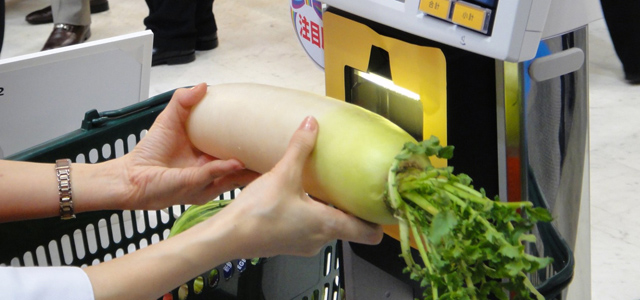
Toshiba Tec has recently created the Object Recognition Scanner, which reads items without the use of barcodes.
According to the Japanese company, barcodes can sometimes fail to register with scanners in supermarkets, leading to longer waiting times for customers and requiring checkout assistants to enter the code by hand. DigInfo report that the Toshiba Tec scanner, which is still in development, uses alternative technology which scans items based on their appearance, doing away with the need for barcodes altogether.
This is particularly useful for fresh produce, where barcodes are often absent. The firm says the device processes items based on color and pattern and is nuanced enough to tell the difference between two types of apples. It can rapidly separate the object from its surroundings and can scan items when they are in motion.
The video below from DigInfo offers a demonstration of the device in action:
Cairo Festival Centre is one of the new retail developments in the pipeline.
Major retail complexes in countries including the UAE, Qatar, Egypt and Lebanon are among new shopping malls set to open in the Middle East over the next three years.
From the new Fujairah City Centre mall in the UAE to Muscat’s Grand Mall in Oman, each promises to offer the region’s consumers a vast array of shopping, restaurant and entertainment amenities.
Among the major new developments are Al Futtaim Group’s US$1.65bn Doha Festival City, slated for completion in 2014, which will feature well-known retail names including Toys R Us and Marks & Spencer. The complex will cover 433,847sqm and includes parking for 8,500 vehicles.
This slideshow requires JavaScript.
Despite missing its initial delivery date of 2011, the 235,000 sqm Yas Mall in Abu Dhabi has signed up a number of heavyweight retail partners, including the Landmark Group, Dubai Holding Group and Liwa Trading.
While the economic situation may be faltering, consumers’ retail appetites are not, it would seem




 normancescut.com