Category Archives: trends and forecasts

TWG Tea leads the way in tea luxury

TWG is a luxury tea brand like no other.  It is a luxury concept that incorporates an international distribution network to professionals, unique and original retail outlets, exquisite tea rooms and tealeaves of every name for you to take home and enjoy too. The TWG stands for The Wellness Group and anyone who has been to one of their amazing outlets certainly feels good afterwards.
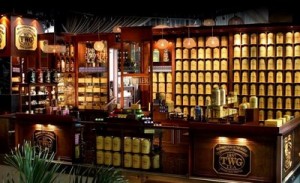
They have recently opened up several new premium and expensive tea rooms at the luxury Shoppes at Marina Bay Sands (Singapore’s premium version of a Las Vegas integrated resort and much more successful). There is no stopping their march to place tea at the heart of all that wealthy Asian residents aspire to. Visitors and wealthy residents alike queue for hours just to experience afternoon tea at TWG.

TWG offers over 800 single estate fine harvest teas and exclusive blends, as well as tea patisseries and other tea infused delicacies. Ironically England, the home of tea, has a long way to go to match the TWG experience. Fortnam and Mason don’t even come close. They have one boutique at Harrods but it’s really a Singaporean experience.

You name it, TWG have a tea called it!

TWG Tea combines the best of Asian and European traditions of elegance and beauty on which it is based and have some of the most amazing names that could possibly be imagined for their products. Drinking tea called Weekend in Casablanca tea or Silver Moon Tea, Christmas Lights tea or  Immortal Moment tea, Geisha Blossom tea or Valentine Breafast tea, Miracluous Mandarin tea or Happy Birthday tea is just so much more refined and exotic than PG Tips or Lipton!

via TWG Tea leads the way in tea luxury | Chris Reed on Partnership Marketing | Brand Republic blogs.

Are virtual walls the future of retail?

The use of digital technology to enhance high-street shopping took a step forward last month when Ocado and Tesco unveiled initiatives aimed at creating a seamless retail experience.

Ocado opened a pop-up shop in London’s One New Change shopping centre in the Square Mile. It featured a printed window display, or ‘virtual wall’, showcasing some of the retailer’s most-bought items and their barcodes.

Consumers who had downloaded Ocado’s ‘On the Go’ app can visit the window display to order the items – by scanning the barcodes with their smartphone – and book a delivery time. The retailer says it will roll out more displays across the country if the trial is successful.

Jason Gissing, co-founder of Ocado, claims that the experiment is a bold move. “We hope this trial is a hit and, based on its success, we’ll be looking at options around continuing this ‘virtual window shopping’ approach in other locations UK-wide,” he says.

Consumers have already been exposed to this new way of shopping.

Tesco has been experimenting there with an interactive shopping wall for its Homeplus brand, by opening a virtual store in a busy underground railway station in South Korea’s capital, Seoul.

More than 500 products are on offer, and all are displayed in a shelf-like appearance, prompting shoppers to scan them with their smartphones.

A spokeswoman for Tesco says: “You place an order when you go to work in the morning and can have the items delivered when you come home at night. This will help increase our sales via smartphones, which will be the next big sales generator.”

Ocado in the UK, then, seems to be catching on to Far Eastern technologies ahead of its domestic retail rivals. But James Tagg, mobile services director for MPG’s Mobext, is unsure that the technology can be implemented successfully in cities such as London.

“I think it’s clear that, here in London, the main value of a similar campaign would be as an awareness-raising tool, rather than an improvement on our everyday shopping experience,” he says. “The lack of mobile reception on large parts of the Tube system would prevent most people from downloading the app in response to seeing the virtual shopping aisles, and placing an order would have to wait until you were above ground at the end of your journey.”

Tesco says it doesn’t plan to launch similar services in the UK, but with Ocado leading the charge, the ‘big four’ supermarkets of Tesco, Asda, Morrisons and Sainsbury’s could well be tempted to follow suit in the future.

Increasing smartphone adoption will help, along with plans to install mobile broadband on London’s Tube network. It could be a while, however, before interactive walls feature significantly in retailers’ growth plans. (Source: Andrew Mccormik/Wallblog.co.uk)

New Sustainability Book Highlights Best Practices in Hotel Development and Operations

Sustainability is an important topic that affects every stage of hotel development and operation. Hotel Sustainable Development: Principles and Best Practices, published by the American Hotel & Lodging Educational Institute (AHLEI), provides hospitality professionals with a wealth of information about key factors to be considered when exploring sustainability.

Editors A.J. Singh, international lodging, finance and real estate associate professor in The School of Hospitality Business at Michigan State University, and Hervé Houdré, general manager of the InterContinental New York Barclay, and leading sustainable development experts identify emerging trends and discuss how sustainability affects regulatory, policy, development, architectural, financial, and operational issues. Each chapter presents important elements in the implementation of sustainable development to provide valuable insights to hotel investors, developers, owners, and lodging operators.

The book is divided into four sections:

  • Historical Context: Local and Global Perspective
  • Development and Investment Perspective
  • Hotel Corporate and Property Perspective
  • Operating Perspective

The overarching theme of the book follows John Elkington’s approach of the “Triple Bottom-line.” This is the most commonly accepted perspective of sustainable development by most businesses, as it comprehensively looks at sustainable development from three perspectives: People, Planet and Profit. The common theme across all the chapters is “value creation.” While value creation addresses all stakeholders in a hotel development or operation, the primary question that each chapter addresses is whether sustainable development metrics indicate financial incentives for investors, developers, owners, and lodging operators.

A number of hospitality organizations supported the publication of this book, including the International Society of Hospitality Consultants (ISHC), Hospitality Sales and Marketing Association International (HSMAI), Green Meetings Industry Council (GMIC), National Association of Hotel and Lodging Engineers (NAHLE), the U.S. Green Building Council (USGBC), and the Hotel Asset Managers Association (HAMA). (Source: Hotelnewsresource.com)

Upcoming Events: our agenda

Here’s a list of all the leading events that we will follow in the next months.

8th-11th September, 2011: Sana, Bologna IT.
15th-17th September, 2011: FCSI FAME Conference, Stockholm SW
8th -12th October 2011: Anuga, Cologne D
16th – 18th October 2011: Qatar International Environment Protection, Doha
17th-19th October 2011:  Green Middle East, Sharjah, UAE
21th -25 October 2011: Host Milan, IT
4th-7th November, 2011: Salone Franchising Milano, Milan IT
9th-12th November, 2011: Ecomondo, Rimini IT
16th – 18th Nomber: Mapic, Cannes FR
22nd-24th November: Diyafa, Qatar
24th November, 2011: Green Awards, London UK
5th-7th December: World Green Tourism, Abu Dhabi

Meeting you will be a great pleasure: just sent me an email norman(at)ecoffee(dot)it to synch our agendas.

Retailers, get ready for tablet computer shopping revolution!

Shopping search engine Shopzilla recently published a research showing that the “tablet revolution”, as online shopping via iPads and similar tablet devices is set to climb high in popularity, just as it has done in the US.
 
The research reveals that although the iPad was only launched 12 months ago, 6% of European shoppers already own a tablet and a further 20% are considering buying a device in the next year. The majority of owners said it was as easy to use for online purchases as a personal computer.
 
This trend is set to mirror the US where the iPad is driving a revolution in e-commerce.  A recent US Shopzilla study showed that 12% of consumers now have a tablet device, and a further quarter plan to buy one in the next year. In the European survey, an overwhelming 5-to-1 ratio name the iPad as their tablet of choice.

The Shopzilla research was conducted in Europe’s three largest online retail markets: the UK, France and Germany.  It also revealed that almost 80% of current tablet owners view their device as an addition to their technology arsenal rather than as a replacement for an existing device.
 
The research by Shopzilla of almost 5,000 online shoppers, also revealed:
 
– Nearly two thirds (61%) of iPad or tablet users said it was as easy to shop online with their hand-held device as it was with their personal computer;
– The majority, 71%, had bought or would buy online using their device;
– Dual-screen technology meant 70% of tablet users even watch TV while browsing shopping sites simultaneously, which is really interesting from a cross-platform marketing point of view;
– 53% of iPad or tablet users surveyed used their device to browse shopping sites and share shopping experiences with friends, showing that social shopping has extented its power in real life too;
– 27% of online shoppers currently used a smartphone to browse shopping sites with friends

Rachel Smith, business services senior director at Shopzilla, said:
“Since their launch in April last year, an astonishing 25 million iPads have been sold worldwide, and with one in five online shoppers telling us they plan to buy a tablet in the next 12 months, this is clearly set to be a huge trend for UK  shoppers.”
 
Smith added: “The year of mobile commerce, which has been predicted for some time, is finally here. With the explosion of the tablet market we are seeing a seismic change, and the opportunity will be for the retailers who are first to get it right.” (Source: The Retail Bulletin, image courtesy of The Belton Group)

A new shop concept by DESITA and …ECOFFEE

I am glad to announce that DESITA is planning a shop concept for the new image of the Saadeddin pastry shops chain located in many states and cities of the Arabian peninsula, whose first restyling project has been planned for one of its Riyadh branches.

After having spent a couple of months briefing with the client in Italy and in Saudi Arabia and after having visited the shop location in Riyadh, we are now defining its layout following the client wishes and our already confirmed inputs about the sale process. The chain’s new brand image will be a young, fresh, trendy and European one.

The pastry shop project will be developed over an area of about 350 square meters and will include an innovative sale formula, for the Saudi habits, which we are sure will generate great interest and attention not limited to the Arab area only.

Thanks also to our fortnightly experience in the foodservice business, to our knowledge of the Arab culture and customer behavior and to the unlimited trust from our Client, we will merge the local traditions and habits into a new shop concept, designing innovative interiors and also a new way to intend the coffee shop area along the “single” (reserved to men only) and the “family” rooms areas.

It is in fact required in Saudi Arabia that food shops with catering facilities have specifically reserved entrances, men-only sitting rooms and other ones for women and families.

Furthermore, in agreement with the client, the concept is going to be developed following, where possible, the ECOFFEE guidelines as per the use of materials, equipment, products and sustainable solutions.

This important client has been collaborating with us for many years and his trust has always been rewarded allowing his company to be a trendsetter one in his area of business. His willingness to embrace sustainability in this new sales formula will grant him a sure competitive advantage. It is a honor for us to collaborate with such of farsighted and open minded client.

The combination of the new business formula and of the ECOFFEE guidelines applied to this first pastry shop will be next used in all the other chain branches, so that to make it a point of reference for the sustainability trend in a geographical area more and more sensitive to this issue.

Lebanon’s hotels need to implement responsible hospitality

A great article by Omar J. Sakr, in the Hospitality News Magazine, gives a detailed picture of Lebanon’s Hotel industry as per the introduction of environmental practices.

The author talks about the major findings of his recent field research conducted in Lebanon between June 2010 and January 2011, which show that international hotel chains in Lebanon are more likely to implement environmental practices than local ones. This research also identified different barriers that are not allowing hotels to fully adopt environmentally friendly practices. The major identified barriers were the financial resources of the hotel, the lack of national infrastructure, the lack of awareness among managers and staff, the lack of awareness among guests, the lack of expertise in applying EMS (Environmental Management Systems), and finally the lack of compliance with the existing legislation, which is not compulsory in most of the cases.

75% of international chain hotels in Lebanon are implementing environmental practices with 50% of them implementing formal EMS; the results of the local and regional hotels have shown that only 16% of these hotels are implementing some types of environmental practices and the remaining hotels of this category are mostly implementing energy saving measures.

Not all the hotels managed by international chains are implementing what their mother companies have already achieved in other markets. They are likely to introduce different environmental practices and at varying levels. One of these hotels had not introduced any environmental action, while another hotel has a Responsible Business Manager; other hotels generally assigned environmental policies and practices to the engineering manager

The managers of international hotel chains showed more interest in implementing environmental practices then the managers of local hotels, mainly as a result of the culture of the mother company and the economies of scale at which their companies operate. It is worth pointing out that none of the rurally located hotels, which are individually owned, participated in the survey. The lack of environmental management is the most probable reason for this. The full article is available here.

A comparative analysis about Multichannel Retail in US and UK

Last month Econsultancy surveyed 2,000 consumers in the UK and 2,000 consumers in the US, to unearth attitudes to multichannel shopping and service.

The majority of consumers would find it useful to have a choice of retail channels, and a significant 33.5% felt this was very important. The results were very similar for both US and UK respondents, so the charts show aggregated data.

How important is it to be able to purchase from a retailer using different channels?

Quite a difference between US and UK consumers, with the latter far more likely to reserve items for in-store collection. Many of the biggest multichannel retailers in the UK are offering this service, (Argos, John Lewis, Halfords etc) with some success. For example, Argos’ multichannel sales grew to £1.9bn in the year up to February 26 2011, representing almost half (46%) of its total sales. The reserve and collect iPhone app accounted for 1% of total sales.

Do you reserve products online before collecting them from an offline store?

The use of mobile when shopping offline represents a growing challenge for retailers, as these stats show.

Use of Mobile Websites

US consumers are slightly more likely to use barcode scanners and compare prices via mobile, but a significant minority of US and UK respondents are using mobile as an offline shopping aid. Multichannel returns The vast majority of both US and UK respondents expect to be able to return items bought online to a local store.

However, as Snow Valley’s recent Online Returns Report found, just half of the multichannel retailers studied allow customers to do this. 

If you buy something online, do you expect to be able to return it to a local store?

Use of catalogues Percentage of customers that have used catalogues at least once in the past year before buying online or in store – aggregated US and UK results. (Source: Econsultancy)

Where are Retail’s Hottest Emerging Markets?

Wondering whether to open your new fashion store in China or in Brazil but you don’t have any clue? The annual A.T. Kerney’s Retail Index  provides you with a detailed list of the most emerging countries for apparel retail.

The A.T. Kearney Global Retail Development Index (GRDI)™ ranks the top 30 emerging countries for retail development and identifies windows of opportunity for global retailers to invest in developing markets. The GRDI is unique because it doesn’t just identify which markets are bigger or richer, but rather which markets are hotter and bursting with opportunity. The full annual report can be read at this link, but let’s take a quick look at what the report shows.


China ranks as the most attractive emerging market for apparel retailers according to a study by global management consulting firm A.T. Kearney. Its first place ranking was driven by the country’s large population and the growing disposable income of the middle class. With its compound annual growth rate of more than 20 percent in recent years, apparel retail in China has grown at a rapid pace, and this trend is expected to continue for the next five years.

China was followed in the ranking by two Middle East Countries, U.A.E. and Kuwait, then by Russia and Saudi Arabia.

The United Arab Emirates holds the second position in the 2011 Apparel Index, driven by a population with a high disposable income and immense fashion consciousness. The expatriate populace and tourism in particular are driving forces of consumption in this market. Additionally, the UAE is a regional commerce center in the Middle East, and is a preferred market for entering the Middle East as well as testing new products and retail formats.

Kuwait is ranked #3 in the Apparel Index. Key factors driving retail growth in Kuwait are a favorable long-term economic outlook, a sophisticated consumer base with high levels of disposable income and fashion awareness, more women entering the workforce, and a significant expansion in retail real estate. The gross leasable retail space in Kuwait has expanded from 345,000 square meters in 2006 to 1.15 million square meters in 2010.

The remaining top ten markets in the 2011 A.T. Kearney Retail Apparel Index are Russia, Saudi Arabia, India, Brazil, Turkey, Vietnam and Chile. (Source: A.T.Kerney)

Coffee and tea drinking habits in Asia: when culture matters.

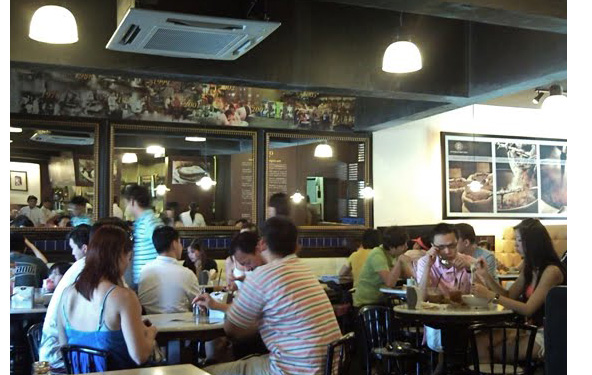
Evening drinking habits differ from country to country, and this is very important when creating customer-centric food Retail concepts, as our DESITA and ECOFFEE projects are. In Singapore, for example it’s not unusual to see coffee shops packed at 11pm/12 midnight every night of the week including weekends. This experience is replicated across many countries in the region from India to Malaysia, Vietnam to Indonesia.

The culture of drinking in Asia is not about alcohol it’s about coffee and tea. It’s still about friends but it’s sober conversation as oppose to drunken ones. There are more coffee shops in Singapore than bars. Coffee shops are growing at a faster rate in India than any other form of F&B outlet. This appears to be down to more affluence, a desire to eat and drink out and a predominantly non-drinking culture. Of course there are a mass of bars in Singapore and across Asia but these tend to be filled with expats and Chinese and focused on certain areas and linked to Karaoke.

Religiously Muslims, Hindus and Buddhists – the main religions across the region – actively prescribe non-drinking of alcohol to their followers. Singaporean’s are just not brought up to get drunk in the way their English and American counterpart’s inparticular are. This in turn leads to a more civilized society, there are no drink related injuries for hospitals to deal with and society to pay for. There is not the violence that happens every weekend in most towns in the UK, no alcohol means that it just doesn’t happen, it’s just not accepted and not desired.

From a marketing point of view it means that if you want to target these people you have to think in a more sophisticated and creative way. Starbucks may be much maligned but they, Costa and other Western brands are growing in Asia at a rate of knots and along with the monster Asia coffee brands like Gloria Jean’s,Café Coffee Day and Coffee Bean are more effective at reaching many Asians than marketing through bars and alcohol. (Source: BrandRepublic; Picture: 4theloveoffood).