One of the in-store marketing biggest issues ever is how to reach customers with customized offers while they are shopping. U.S.A retailers and consumers are going to have a solution handy in the next future: Shop O’Lot.
Shop O’ Lot is a self service platform which makes major retailer participation very easy. The model is based on a predictive analysis engine, that builds a customer’s shopping profile, then allows retailers to reach these customers in real-time while they are shopping, offering them customized discount coupons.
The app uses GPS and bar-code scanning for delivering the content and will be released on the iPhone and Android OS platforms.
Bob Pack, CEO says, “major retailers are now competing with product search and comparison apps that can actually drive a customer to buy from a competitor, a practice known as “scan and scram.” We have a complete solution to really help drive retail purchases, this goes well beyond mere Geo- location and focuses on individual target marketing. Once we understand the shoppers tastes, delivering them customized product deals only by the store they are in, will help keep shoppers loyal.”
Shop O’ Lot is still in the testing phase and plans a 2011 launch and retailers and consumers, can sign up now to be part of our beta program directly on Shop O’Lot website. (Source: americanbankingnews.com)
One of the findings of the “For a Sustainable Supply Chain: business and consumers point of view” survey conducted by the GfK Eurisko and promoted by the Sodalitas Foundation, the product/service sustainability is ranked fourth among the criterias used by consumers when choosing, but if better communicated, will become an increasingly important requirement. During the investigation 500 consumers and 183 businesses were interviewed . To more than a third of the companies, sustainability is very important. However, only a minority (29%) in the interviewed sample declares to be thoroughly familiar with this concept, while a substantial percentage (45%) say they have “enough information”, confirming the gradual integration of this concept in the corporate culture .
The majority of consumers (63%) had heard of sustainability, even if only 19% of them (mostly young and with a high level of education) believe to know well its meaning, with a prevalence of the environmental (83% ) on the social aspects (64%).
The responsibility for a “sustainable development” is primarily attributed to the central Government (86%) and to local governments (82%), but a very high percentage of respondents (over 70%) thinks businesses and citizens responsible to ensure the sustainability of the development. The opinions about the companies’ commitment to sustainability is different: one third of the sample (35%) expressed a positive opinion, a third is critical and another third has no a definite opinion about it.
Only a third of consumers (32%) had heard of “sustainability of the supply chain” (a percentage that is growing in those aged more mature and – especially – among those with a higher education degree). But after the concept was briefly explained a large majority (76%) said to believe that companies must ensure the sustainability of their supply chain. Today, already one quarter of Italian consumers are chosing which products to buy also using supply chain sustainability criterias. Three quarters of consumers also agreed to pay more for a product which is guaranteed in terms of its sustainability. The focus is on all product categories but in particular on food (71%) and detergents (65%). And, at least in theory, the majority of consumers (76%) would be willing to pay more for a guaranteed product in terms of sustainability (though – the majority said to be ready to pay only “little” or “very little” more). (Source: GfK Eurisko, Image credits: Transocean)
Sustainability in the Retail & Ho.Re.Ca Business, what our ECOFFEE project is about, is based on a main concept: communication to consumers and customers must be clear and simple to make them better understand what are the added values of buying/consuming sustainable products.
For instance, let’s talk about Fairtrade, organic, Rain Forest Alliance or UTZ certified coffee. These are some of the labels with which coffee is traded nowadays and consumers can be quite confused by this abundance of sometimes not well explained terms.
Among the many information source we always refer to when asked “What is sustainable coffee about?” we found that the Imbibe magazine one is the most consumer-friendly one, covering all main aspects of sustainability in the coffee business.
The other well known issue to our blog readers is “Is it really worth investing in sustainable coffee?”. Commodity traders know the answer, and this is “Yes, of course”. A recent publication by Intracen organization (International Trade Center), shows that “Demand for conventional (i.e. non-certified) coffee is largely stagnant in these markets, whilst it is thriving in emerging markets. Certified coffee, however, is showing strong growth and higher retail prices, particularly in mature markets. This trend is also followed by other commodities, including tea, cocoa and cotton. A new industry of inspectors and technicians has emerged to service the sustainability segment of the market”.
Global revenues from augmented reality (AR) applications and services are projected to reach $1.5 billion by 2015, according to Pocket-lint.com
Augmented reality is a term for a live direct or an indirect view of a physical, real-world environment whose elements are augmented by computer-generated sensory input, such as sound or graphics.
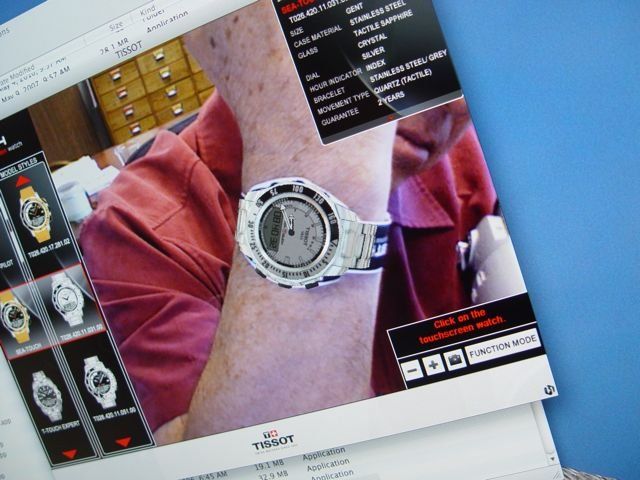
Tissot watches has had success implementing an AR campaign. By placing a dummy watch around your wrist, which has a code on the face, and holding it in front of your webcam, the app displays it on the screen as a virtual, 1:1 scale version. The benefit is you get to “try on” the watches to see which suits you best before purchasing.
Holition, AR, 3D and future technology creative agency, which is based in East London, is responsible for the campaign.
“What we’re trying to do with the worn-on-the-body applications is enable a real business functionality for it. It engages consumers, it enables people to understand the product and therefore it enables them to take that step closer to purchasing the product as well,” said Lynne Murray, brand manager at Holition.
“Tissot’s brand public relations grew 600 percent through the campaign compared to 100 percent growth that they usually expect to achieve. So, even as a communication tool, it’s a hugely engaging way for brands to have another and new point of contact with its audience. AR is a new way of communicating socially, a new way of getting people on board with the brand.”
Murray expects these types of technologies to give way to a fully integrated retail experience in the not too distant future. (Source: Retailcustomerexperience.com)
We have always written about communication being the success key to sustainability in the retail business. Thanks to communication retailers can help consumers understand the real value of their efforts when it comes to sustainability: why they choose this product instead of the competitor one, why they are recycling, why they are preferably purchasing locally grown food and so on.
A post on Hive Health Media made me smile, considering it a great example of how to market organic food in a more appealing way. Everywhere, organic food is associated with “not that good-looking food that does not pollutes the Earth” concept. This might be not strong enough to convince the average consumer. But what about saying: “Buy organic and keep in a good shape”?. This was essentially the message broadcasted in that post. Three key points:
– The organic food at the supermarket is often 30-50% more expensive than standard food, doesn’t contain chemicals such as herbicides, pesticides, hormones and antibiotics( This means is healthier and it is true that consumers buy less because of the price, but in this case, less food means a better shape.)
– Organic food also helps detoxify the body and puts it in a state that makes it easier for the consumer to get in shape.
– As an added bonus, an overall sense of wellness will develop over time when consumers are living organic.
Obviously, there was some marketing in that post, not related to organic food though but to how to cook it, but this is a different story.
Ikea Italy announced an environmental investment of € 20 million: 150,000 solar panels to be installed by the end of August 2011in each store so that to create a small solar power station. Clean, renewable, sustainable.
About 150,000 solar panels modules will be placed on a aluminum structure resting on the Ikea store roofs, and in Catania (Sicily), also on the bus shelters in the parking lot. An area as big as 16 football fields to cover about 10% of the electricity needs of Ikea Italy. The first floor (showroom) of all stores will be then lightened with this renewable energy. A total of 10,000,000 kWh of electricity, equal to the average consumption of 3,300 households will be produced each year with a reliable and innovative technology.
This will prevent the annual emission of approximately 4,000 tons of carbon dioxide, equivalent to the quantity of CO2 absorbed annually by 400 acres of tropical forest and the emissions of 3,300 cars travelling an average of 10,000 km. Another key point of the Company policy is to reduce waste and an effective use of raw materials, recycled materials or easy to recycle ones, natural and renewable energy, CO2 emission reduction thanks to a clever consumption, the optimization of facilities’operational activities and electricity from renewable sources (in 2010 equal to 83% of the total consumption).
When dealing with waste management, the goal is to reduce it thanks to the development of a less bulky packaging and a careful waste disposal collection so that to assure their almost full recycling. Ikea is bio too. In restaurants, the group includes more than 58 recipes and organic products from biological origin. In 2010, Ikea Italy purchased 2,080 tons of organic products (+38% compared to 2009). Ikea Italy is now the third third largest Ikea supplier company in the world after China and Poland, as stated by the managing director of Ikea Italy, Lars Petersson during a meeting in Milan. (Source. Greenbiz.it)
Biometrics, methods for uniquely recognizing humans based upon one or more intrinsic physical or behavioural traits, is very important when evaluating the efficacy of a retail store design or display and assessing counter actions to make the retail environment more customer friendly. According to NY Times, IBM is currently testing a revolutionary biometrics method in two location in downtown Milan – a fashion company flagship’s store and an electronic store.
The I.B.M. solution, involves tracking biometrics through a mini camera in a mannequin’s eye or placed somewhere in a store and the collected data will be aggregated so that not to be traced to any individual.
“We started with fashion because it is a creative and innovative industry, but it’s clear that people have to be educated so they know their privacy will not be compromised,” said Enrico Bozzi, the manager of I.B.M. Forum Milano, the department that developed the technology. “It is a question of changing people’s perception.”
The IBM biometric test is already showing its first results. At the pilot in the Milan fashion store, for example, the client noticed that almost all Asian customers enter the store through one particular door, even though five are available. “We thought it was a mistake, but we checked it out and it was right and it continues to happen,” Mr. Bozzi said. “We don’t know why yet but, in the meantime, the store is considering positioning products by that door that are known to appeal particularly to Asian shoppers.”
I.B.M.is now also working on software that will let clients try on jewelry and makeup wirelessly thanks to a mobile phone or computer, with an iPad application likely to debut soon.
Yesterday I was reading a post concerning Levi Strauss & Co as the Top Jeans Brand, scoring a 7.4. The brand Prana was listed as the next highest, with a score of 6.3—followed by H&M (6.1), Banana Republic (6.1), and Old Navy (6.1).
I did not know what GoodGuide is – shame on me – so I checked out their very interesting website, which is said to be the world’s largest and most reliable source of information on the health, environmental and social impacts of consumer products. And I think it really is, rating over 95000 products, mainly available on the US market only: from food, toys, personal care to apparel, electronics and appliances. What is really striking is the scientific approach they have on their ratings, which are compiled from three sub-scores addressing Health, Environment and Society.
Each of these sub-scores are based on an analysis of a set of indicators that GoodGuide has determined are the best-available measures of performance in these areas. Their methodology differs from the product belonging to different categories, each and every one having its own scoring methodology. Amazing. Let’s talk about apparel for example.
Quoting the Good Guide site: “Until (apparel) companies do a better job of providing transparency into their supply chain, our ability to accurately score brands based on their relative performance will be subject to significant uncertainties Environment scores are assigned to apparel brands by combining GoodGuide’s standard company indicators of environmental performance (weighted at 50%) with brand-level environmental indicators that address issues that are specific to the apparel sector (weighted at 50%).(….) Social scores are assigned to apparel brands by combining GoodGuide’s standard company indicators of social performance (50%) with brand-level social indicators that address issues that are specific to the apparel sector (weighted at 50%).(…) Health scores are not assigned to apparel brands because this product category does not generally pose health risks to consumers.”
The Good Guide website is also very good at using the Web 2.0 tools to “spread the word” and improve the accuracy of the product information thanks to a “support product info” page which enables visitors to add further details.
It would be also very interesting to test the effect of this kind of structured and scientific information directly at the point-of-sale, to see how the consumer react when discovering that his/her favourite brand of pasta is not that “good”. Because thanks to GoodGuide mobile App this is possible: consumers can scan the product, check the GoodGuide database and then purchase, or decide to choose another brand.
With this detailed level of “scientific” information, producers and retailers have nothing to hide and their achieving a high/low score can have a boomerang effect on brand reputation which must not be ignored and will not be ignored by consumers. Sustainability pays, and it will pay even more in the future.
Once upon a time, the customer experience depended largely upon luck: the mood of a shop assistant, the time spent waiting at the checkout, being able to find the right product. All of these could make a difference between a boycott or a customer for life. But with consumers more selective than ever about where to spend their hard earned cash, improving the customer experience has become even more critical. According to Ivano Ortis, International Director of leading analyst and trend forecasting agency IDC Retail Insights, customer service is only the latter part of the customer experience. “There is an increasing focus on ‘immersive shopping’ which is the next generation of shopping experience for the customer,” says Ortis. “This is not only about providing an inspirational range of products and displays but also about the instant and accurate delivery of information from the retailer.” It’s an experience that “can, and indeed must, be generated across any retail platform, be that in-store, online or even on a mobile device”. That means a strong multi-channel presence is essential for retailers looking to maximise profitability in the coming decade and that customers have the best experience within those platforms, he adds. One of the key challenges for retailers is to use IT in precision retailing strategies which target the marketing down to individual one-on-one customer communication and interaction. “The point is for retailers to change from a mass-market type of operating company to a very targeted operation, by analysing the intricate characteristics of their customers in order to ensure the customer is seeing the right product, with the right price at the right time to ensure a sale. In other words, that the customer is having the best possible experience,” says Ortis. As with any targeted marketing strategy, it doesn’t matter which platform the retailer is operating from. “It really depends on the customer you’re talking to, what time of the day it is, where the consumer is. I think the underlying technology infrastructure that needs to be put in place should be working regardless of the channels.” Ultimately, though, the key to success is for retailers to utilise technology to gather feedback and use that to develop a positive customer experience. “An immersed and interactive experience for the customer can only mean improved revenues for the retailer. Those retailers who use different platforms to support and enhance the customer experience will truly reap the benefits,” concludes Ortis. (Source: GDS International)
Two days ago a couple of ECOFFEE‘s team members attended an interesting meeting regarding the Retail landscape in Italy, with a special focus on the sunglasses and eyeglasses sector. When the “Any question?” moment arrived, we asked to the speaker “What about sustainability in the Retail business?”. The answer was a HUGE “?”, followed by a: “Maybe in 2015”.
This answer made us smile, because it was the usual answer of those professionals in the Retail field who pretend that a trend does not exist until the trend has changed into an issue to be solved.
No more than two weeks ago, Andrea Illy, Chairman and CEO of illycaffè S.p.A, expressed his point of view about sustainability in a very interesting post published by Fastcompany. Here’s a couple of key sentences. “I’m taking about a broader notion of sustainability that includes social and economic equity right alongside environmental responsibility, serving a triple bottom line. (….) The key is acting early–acting now–before the confidence of consumers, investors and other stakeholders is irreparably damaged. The best rescue of sustainability’s meaning and power is one that is never made….Consequently, a genuinely holistic approach to sustainability is required: one that creates value throughout the entire supply chain. And in order to do that we must focus on raising quality. (…) By perpetually seeking higher quality, a cycle goes into motion, creating sustainable value for every player. The result is long-term viability in lockstep with ever-increasing quality in the cup.(…) Broader adoption and smart marketing of a powerful certification symbol (….) will create widespread understanding of what sustainable agriculture means, and place the power to demand genuinely responsible production squarely where it belongs: in the consumer’s hands.” We obviously share Andrea Illy’s point of view, and we wish that knowing his opinion about sustainability, all the skeptical retail professional will make up their minds.





 normancescut.com