Tag Archives: green

Hospitality Industry Leaders Launch Sustainable Purchasing Consortium

A group of leaders in the hotel industry representing brands, hotel suppliers, architecture firms, purchasing companies, and sustainability experts today launched the Hospitality Sustainable Purchasing Consortium.  The Consortium, led by MindClick SGM™, will work collaboratively to facilitate greening the furniture, fixture and equipment (FF&E) supply chain for hotels by: 

  • Leading the industry in development of an industrywide Hospitality Sustainable Purchasing Index (HSPI) to comprehensively measure the sustainability of FF&E suppliers and the products they sell;
  • Collaborating to establish consistent measures of sustainable purchasing performance for brands, owners and FF&E manufacturers; and 
  • Establishing key performance indicators that enhance the environmental and social impact of the hotel industry while continuing to provide the highest levels of quality and service for hotel guests.

With nearly 51,000 lodging properties in the United States alone, and billions of dollars spent in FF&E purchasing annually, the hospitality industry has an important role to play in its path toward greater sustainability.  Industry leaders recognize that reducing their environmental footprint can only be accomplished through the combination of sustainable buildings, operations and greening the supply chain.  

The goal of the Consortium is to provide the industry with a unified approach to greening the global supply chain through customization of an industrywide purchasing index (HSPI) that measures and reports on the sustainability performance of suppliers.  Beginning with FF&E, the HSPI will set the standard for sustainable purchasing and create a repository of supplier performance, including corporate social responsibility, product, and environmental sustainability.

Consortium founding members include Marriott International, Audit Logistics, Benjamin West, Delta Faucet Company, Innvision, InterfaceFLOR, PE INTERNATIONAL Inc., RTKL, SERA Architects, and Valley Forge Fabrics.

“Marriott has a more than 20-year commitment to environmental sustainability,” said Dave Lippert, Marriott vice president of architecture & construction procurement.  “Our membership in this consortium will help us meet our aggressive goals to continue to reduce our global footprint.”

MindClick SGM™ and Consortium members will work together to facilitate alignment of HSPI with industry accepted sustainability standards including the LEED® rating system and various product category standards. ( Source: HSPI Press Release)
Green Certification Awarded to French Supermarket in China

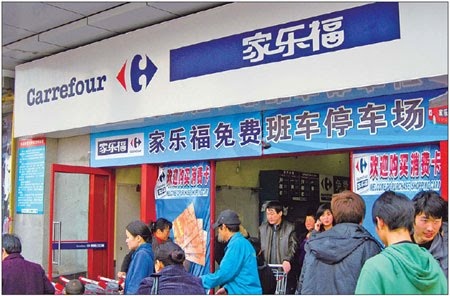
China Certification & Inspection Group has reportedly issued the Green Market Certification to Carrefour’s six stores in Beijing, making the French supermarket one of the first retailers to gain the certification in the Beijing region.

20110607-135536.jpg

Liu Shengming, chairman of CCIC, told local media that the Green Market Certification has been fully launched in the retail sector of Beijing. Green Market Certification is a national certification system co-developed by the Ministry of Commerce together with the Certification & Accreditation Administration of China. Organizations that have obtained the Green Market Certification are allowed to use the uniform certification board. The Green Market Certification logo can be used in their marketing materials or other relevant information.

Luc Vandevelde, chairman of the Supervisory Board of Carrefour, has revealed the plan for Carrefour’s first green shopping center, where rainwater and energy can be recycled. Compared with a regular architecture, the green shopping center can save up to 30% in water and energy. In addition, it will use efficient materials to reduce the consumption of resources.

China Certification & Inspection Group, Shenzhen Company Ltd. operates a wide network of over 300 offices and laboratories which are located in major ports and cargo distribution centers around the world. With over 20 years’ experience in the inspection and certification field, CCIC has established cooperation relationships with more than 120 inspection and certification companies in over 60 countries and regions, including foreign organizations such as UL, CSA, and TUV Rhineland.(Source: China Sourcing News)

Walmart and its Green Revolution: a book talks about it

A new book, published this month, reveals Walmart’s struggle to redefine what it means to be green in the world of big business.

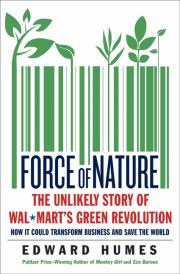
“Force of Nature: The Unlikely Story off Wal-Mart’s Green Revolution” by Pulitzer Prize-winning journalist and bestselling author Edward Humes, recounts the collaboration between Walmart’s former CEO H. Lee Scott, and later Mike Duke, Scott’s successor as CEO, and white water expert-turned Blu Skye sustainability consultant Jib Ellison.

20110531-154357.jpg

Humes, author of Eco Barons, tells of a small project initially intended to insulate Walmart from environmental criticism into a massive sustainability makeover, which now has snowballed beyond the retailer to influence whole industries, from apparel to dairy to banking, according to Amazon.com.

Ellison instituted a project at Walmart called “The Index” that challenged suppliers to root out inefficiency and waste, which the book details. Packaging shrank, saving millions of gallons of water, millions of pounds of cardboard, not to mention diesel fuel. Walmart’s sheer size, coupled with its lowest-pricing mission, means that producers are forced to take steps toward sustainability — and make natural, organic, and earth-friendly products widely available, according to Publisher’s Weekly.

Walmart’s switch to common household products in smaller packaging saved cardboard and the diesel fuel necessary to transport larger boxes.

Other changes including switching from non-recyclable boxes for frozen food to recyclable packaging that then could be sold as a commodity to recyclers.

The collaboration with Ellison engendered far-reaching changes as executives at the world’s largest retail company realized that a clean, green, efficient, less-wasteful, less polluting way of doing business can also be the most profitable way of doing business. (Source: GreenRetail Decisions)

Introducing the Eco-Scale rating system for cleaning products

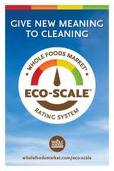
Wholefoods has recently introduced its new Eco-Scale rating system, a color-coded system under which products will be rated, red, orange, yellow or green based on the sp

ecific set of environmental and sourcing standards each product meets.

The company said it is committed to working with vendors to evaluate and independently audit every product in its cleaning category.  Red-rated products do not meet the Eco-Scale standards and will not be sold at Whole Foods Market.

Naturally, the green color code is the highest possible rating, ensuring that products have all of these features:

  • ✓ Full transparency, disclosure of ingredients on packaging by April 2012
  • ✓ Independent 3rd party verified compliance to standards
  • ✓ No ingredients with significant environmental or safety concerns
  • ✓ No formaldehyde-donors, preservatives which have the potential to release formaldehyde
  • ✓ No phosphates, chlorine, or synthetic colors
  • ✓ No animal testing
  • ✓ 100% natural fragrances
  • ✓ No ingredients with moderate environmental or safety concerns
  • ✓ No DEA, MEA or TEA—surfactants that have the potential to contain nitrosamines and other impurities
  • ✓ No synthetic, petroleum-derived thickeners made from nonrenewable sources
  • ✓ Only 100% natural ingredients
  • ✓ No petroleum- derived ingredients

Under current law, manufacturers do not have to disclose all ingredients in cleaning products. Under the Eco-Scale Rating System, Whole Foods Market’s household cleaning vendors will be required to list every ingredient on product packaging. To ensure compliance of the standards, all products will be audited through an independent third-party for verification before they are color-rated and labeled on shelves.

“Shoppers have a right to know what’s actually in the products they use to clean their homes,” said Jim Speirs, global vice president of procurement for Whole Foods Market. “We’ve always carefully monitored ingredients. Now, with Eco-Scale, we’re able to help shoppers buy eco-friendly products with confidence and provide safer alternatives for their households and for the planet as a whole.”

What is striking in fact is that almost three out of four (73 percent) adults falsely believe that the U.S.  government requires household cleaning products to provide a list of ingredients on the label, according to an online survey commissioned by Whole Foods and conducted by Harris Interactive in April among 2,483 U.S. adults aged 18 and older. Another two-thirds (64 percent) believe that many household cleaning brands opt to disclose the full list of ingredients on packaging, when in fact few provide this information on product labels. (Source: GreenRetail decisions, Wholefoods)

Low-carbon products: when there will be a mass mass-market demand for them?

As stated in the last CBI report about UK consumers and low-carbon products, three quarters of the UK’s greenhouse gas emissions either directly or indirectly attributable to consumer actions. Companies are taking action to drive up standards and setting up pilot initiatives for green products. Energy efficiency and carbon labels and descriptions currently adorn many of our shopping shelves, increasing transparency. But many consumers do remain skeptical about sustainability being a MUST for our future.

The report shows that there is no trade-off between sustainability and profitability but, as we are always stressing in our ECOFFEE communication projects,”(Many business leaders acknowledge that) it is not sufficient to operate in a sustainable way – they also have a responsibility to inform consumers about green choices”. Business cannot boost demand for low-carbon products without the appropriate communication. Let’s take for instance Procter & Gamble’s successful Turn to 30 campaign with Ariel linked the financial benefits to consumers of washing at lower temperatures with the positive environmental impact. This campaign successfully create a link between a product, a consumer personal behaviour and the resulting more sustainable impact on environment.
Once a company has created a demand for its green products, gains arrive very fast.

Philips’ success in energy efficient lighting is an excellent example: the strategic decision to develop the energy efficient lighting side of its business led to successful positioning
at the forefront of innovation.

Retail plays a very important role in raising awareness among consumers and empower them to make greener choices. Tesco for example has worked to highlight the carbon
footprint of its products to help consumers understand the impact of their purchasing decisions. And it worked great.

Now the question is: why there is not such a mass-market demand for green products? It seems that there is a missing link between the consumer and the environmental impact of purchasing a green product versus a not-so green one. When asked about the top three or four factors shaping their choice of purchase, UK consumers top rated one is cost to buy, followed by quality and reliability and brand. The environmental impact is ranked 10 (8%). It seems that there is a disconnection between consumers and the environmental impact of their choices, especially when carbon emissions are concerned. Nearly half (48%) of survey respondents could see the link between low-carbon and helping to tackle climate change, whereas less than a third (30%) identified the link between climate change and energy efficiency.

Labelling plays an important role in raising consumers’ awareness and A-G labelling has been a particular success, being well recognised among those aged between 35-64 (76%) and those earning over £25,000 a year (83%). It is no coincidence that products where the energy efficiency story is most developed for consumers tend to be those where the A-G label is displayed, such as fridges.

To answer to the question “When there will be a mass-market demand for green products?”, it all relies on clear communication and on educating consumers about the impact of their shopping and daily habits on the environment.

A new sustainable design policy for Fairmont Hotels & Resorts

Fairmont Hotels & Resorts is expanding its green commitments through a new sustainable design policy. In addition to promoting the use of recognized green building certification systems such as LEED, the policy includes new environmental criteria and checklists for renovation and retrofit projects, environmental consultation during the design brief and construction process, and the creation of a green-build best practices repository for use by Fairmont’s hotels, engineers, developers, project leads, and architects.

“We literally wrote the book on hotel sustainability and have been focused on making our properties as environmentally sound as possible, says president, Chris Cahill. “Now, we’re instituting formal design and construction guidelines for our pipeline of new hotel projects and ongoing capital agenda. Environmental stewardship is part of Fairmont’s DNA and we want to ensure it’s evident in all phases of our business.”

The program has been implemented at two Fairmont hotels. Fairmont Pittsburgh, the brand’s first LEED-certified hotel, incorporates energy efficient lighting and appliances; enzyme waste systems; furnishings and other guestroom amenities made from recycled, organic, or sustainable material; and the use of paints, adhesives, sealants, carpets, and fabrics with no or low emissions. Meanwhile, the Savoy in London (pictured) has a waste management system, as well as a heat and power plant that reduces the hotel’s reliance on the national grid by approximately 50 percent.

The policy is part of The Fairmont Green Partnership program, allowing the Group to meet and exceed guest expectations of operational sustainability. It focuses on improvements in waste management, sustainability, and energy and water conservation at Fairmont’s properties, and innovative community outreach programs involving local groups and partnership. (Source: Hospitality design.com)

Italians and sustainability in the retail business: the buzz is online!

Italians speak about sustainability online.This is the result of a recent survey led by Blogmeter from October 1st, 2010 to January 31st, 2011 recording approximately more than 9 thousand post about environmental sustainability related to the major retail chains. Social media proved to be the ideal and most followed communication tool  to promote eco- initiatives, facilitating the construction of  a real “green image” for the retail business sector.

Retailers mentioned by Italians on online conversations about sustainability

When it comes to environmental sustainability Coop and Ikea and are the most discussed with over 40% of the citations. This happened for example with the Sportello Ambiente initiative,  a collaboration between Ikea and Legambiente to offer advice to consumers about home energy efficiency, and with the Coop campaign to promote the consumption of tap water in place of the bottled one.

In general, web users are showing an increaside sensitivity to organic and low-
environmental impact products:  in the online communities dedicated to women, users positively report about the presence of automatic distributors to refill detergents inside the supermarket. Retailers brands are the most mentioned ones, most widely quoted and commented by users because always available on the shelf – like Esselunga Bio, Bio of Auchan, Coop Viviverde. Lidl, for example, is particularly discussed for its range of ecological detergents W5 (on 42 over 199 posts mentioning the retailer) considered to be of good quality and highly recommended among users.

The network also tells us that attention to a more responsible consumption is steadily increasing and influencing the purchase process in different ways: users are more sensitive to labels and the presence of the Ecolabel certification is considered increasingly important for those who are looking for products with a low environmental impact.

The research also showed that a balanced relationship between quality and price of organic and /or eco products is a key criterion in the buying process: very often consumers who are interested in green products do desist because selling prices are too high. (Source: GDO Week)

McDonald’s opens its first green restaurant in Italy

Ho.Re.Ca and sustainability: in Italy there are still people who do not like to match these two words or that asserts that “the time has not yet come,” and this is the great challenge we are – successfully – addressing  with ECOFFEE. We strongly believe that the Italian consumer is able to perceive and reward the added value of sustainable products and services, and the news that McDonald’s has just opened its first green restaurant in Italy, in Lainate (near Milan) do prove that we are not wrong. This green McDonald’s was designed to be completely self-sufficient in energy: thanks to solar, wind and biomass. The project costed € 5 million, 20% more than a traditional restaurant but at the end of the year it will certainly pay off in terms of increased brand reputation, reduced  environmental and social impact, not to add the reduced costs due to the energy saving architecture and technological process. 
At the end of 2011, the results coming from the adoption of these policies will be evaluated by an Italian green environmental consulting company ECOFFEE has already established a business connection with a while ago.  Meanwhile, McDonald’s aims to achieve the European certification EN 16001, which will help the company to organize systems and processes aimed at improving the economic benefits of energy efficiency and reducing emissions of greenhouse gases.

But let’s talk about the “McGreen” in Lainate – a project whose details are available at the McDonald’s site www.persapernedipiu.info Currently, the restaurant is able to produce up to 90% of the energy needed, but within three months it is said to reach 100%, thanks to a pioneering trigeneration plant that use the exhausted cooking oil as fuel. The building structure is earthquake resistant, and thanks to the “Einstein”system  customers are always updated with real-time data regarding energy consumption and savings thanks to a monitor positioned at the entrance of the restaurant. Particular attention was paid to the restaurant supply chain and to the ingredients used in the menu, where customers can also find “local” ingredients belonging to the traditional Italian cuisine, like the Alto Adige IGP Speck, Parmigiano-Reggiano DOP, IGP oranges from Sicily, to name a few. The coffee served will not be the one of the Italian companies Illy or Lavazza, which are known for their sustainable products, but the one certified by the international organization Rainforest Alliance.

On the outside of the building, ecoattivo asphalt – when struck by sunlight it triggers a  reduction of pollutants- energy-efficient refrigerators and incentives for the customers using electric cars.
“Lainate is not a departure or arrival point, but a stage of a journey that McDonald’s sets out a while ago. For the Expo 2015 we will be able to implement a reduction of 15% of our CO2 emissions, an increase of 15% of our energy savings and another 15% increase of the energy we use from renewable sources. In 2020, these percentages will rise up to 20% allowing us to meet the Kyoto Protocol parameters”said Roberto Masi, McDonald’s Italy CEO.

In fact, McDonald’s Italy is not new to these kind of sustainable initiatives. As early as 2010, in fact, it adopted new standards for construction and renovation, with the use of building materials with high environmental sustainability, solar panels, heat pumps, roof ventilation and, where it was possible, photovoltaic. But not only that: technologically advanced machinery, power management systems, occupancy sensors, insulation and LED lighting fixtures to reduce air pollutant emissions. All new openings have already been planned to include some or all of these technologies. The 2012 politics has already been planned aiming at using certified renewable energy in all McDonald’s restaurants, building a fleet of delivery vehicles composed by 100% biodiesel  and a company’s car pool with low dioxide carbon emissions . (Source: MarketingOggi)

Greenburgers guide: Greenopia

EVOS, Le Pain Quotidien and Pizza Fusion received the highest marks of any fast food restaurants in the latest ratings issued by Greenopia.
 
The three chains each received four green leafs, meaning they met at least 90% of the criteria across five categories: green building design, supply chain, recycling/take-back programs, stock and sustainability reporting.
 
Greenopia said EVOS is the “greenest burger chain in the US.” The company sells a variety of organic and fair trade products; incorporates green building design into its locations; uses recycled-content items; and purchases wind credits to offset its energy footprint.
 
Bakery and sandwich shop Le Pain Quotidien uses organic and local ingredients; incorporates green building design; composts food waste; and uses its spent food oil for biodiesel.
 
Pizza Fusion “tackled an incredible amount of green projects for a food chain” Greenopia said. All of its projects are LEED certified; their pizza is made with organic ingredients and delivered by hybrid delivery vehicles; employees wear organic cotton uniforms; and they have a take back incentive for their used pizza boxes.
 
Further down in the rankings Chipotle and Starbucks received three leafs, and McDonald’s improved to two leafs this year. With more than 32,000 stores worldwide other major chains should look to McDonald’s to see how to properly begin to incorporate green initiatives, Greenopia said.
 
Below is the full description of the company’s efforts and shortcomings, as cited by Greenopia:
 
Green Efforts:
McDonald’s has begun to incorporate some green elements into its culture. McDonald’s has 2 green stores, with more on the way. In fact, McDonald’s has been one of the more aggressive chains in incorporating green building designs into its locations. McDonald’s uses some recycled content in their packaging and has a comprehensive waste diversion program. It also only gets its beef from responsible sources (especially in regard to rainforest degradation) and has taken steps to green its seafood and coffee sourcing. Finally, McDonald’s has begun analyzing and scoring its supply chain to search for environmental efficiencies (as well as conducting audits) and publishes one of the better sustainability reports in the industry.
 
Green Issues:
In the green spectrum, McDonald’s is at least light green in every category. What we have listed above is good, but there is still room for improvement. For starters it would be nice to see natural and/or organic products offered and some more widespread and consistent green building design elements as well as some renewable energy sourcing. McDonald’s deserves to be applauded for what it has done (especially when compared with other major burger chains) and we hope to see improved commitment as time goes on.

Retail, web 2.0 and sustainability:an analysis

A recent Zumer and Sustainable Life Media research is helping medium to small size retailers to better understand what is the connection among sustainability, consumers and web 2.0 tools.

The survey analizes the behaviour of 50 of the biggest companies leader in sustainability, at a worlwide level. Names such as Chevron, McDonald’s, PepsiCo, Coca-Cola, Campbell’s Soup, Microsoft, Toyota, Starbucks appear in the list of the companies whose online conduct on the three top social media, Facebook, Twitter and YouTube was analyzed for six weeks between December 2010 and January 2011.

We have found three key points that can be summerized as follows:

1. Authenticity: sustainability must permeate the whole company and must involve the company’s stakeholders so that ensure an authentic online communication, a more effective management of external reputation and brand perception. This is perfectly in line with the Cone research we have posted a while ago: consumers DO PUNISH not authentic communication about sustainability.

2. Sustainability helps acquiring new market share: almost three quarters of the professional interviewed stated that sustainability-themed social media are the channels to be in in order to get the attention of new market segment and reinforce the company’s position in the more traditional ones

3.Mix platforms to get the best results: although Facebook is still the most favourite platform among the big 50 companies in the survey, with investments rising in 2011 too. Tweeting about sustainability is becoming very common too -investments will double by 2015, as well as are CSR dedicated company’s websites, while YouTube actions are still fragmented. Blogging about sustainability might be a very powerful tool, not yet fully implemented by companies (1-2% of total blog posts).