Category Archives: sustainability

Fairtrade Italia and ECOFFEE: a sustainable partnership for a better future

I am very happy to announce that last Tuesday, July 19th DESITA and Fairtrade Italia have signed a bilateral agreement providing mutual support for the dissemination of the principles of environmental sustainability, fair trade and social responsibility on the entire Italian market  through a focus on in-store actions.

DESITA, thanks to its ECOFFEE project, will promote Fairtrade products and will support  Fairtrade licensees through its wide range of retail-oriented services and solutions: from architectural design, branding, process analysis, franchise creation. The Fairtrade certified products will also find a privileged placement among the products available at the ECOFFEE franchise cafés.

On the other hand, Fairtrade Italia has committed to share with its stakeholders- Retail business licensees, Association members and consumers – all the services offered by DESITA and   ECOFFEE.

“I am very happy to have reached this agreement,” states Paolo Pastore, Managing Director of Fairtrade Italia “This agreement is very different from the usual one and I am  sure that it will bring a much wider scope and visibility to Fairtrade certified products, the only Fair Trade certification that has deserved consumers’ trust all around the world. “

Being supported by such an important organization as Fairtrade Italia has once again confirmed that what I have created, the ECOFFEE service platform, is a requirement for a better future.This gives me the strength to keep on working in what is still an immature industry, that of sustainability in the Italian Retail and Horeca panorama. I am convinced that this partnership will actually contribute to the creation and dissemination of a more responsible consumption on the Italian market.

The Green Sheikh is ECOFFEE’s worldwide Goodwill Ambassador

Following the meeting with the Green Sheikh (see “Amazing Meeting with the Green Sheikh”) we are very happy to inform all our readers that HH Abdulaziz bin Al Nuaimi, also known as the Green Sheikh, offered to become ECOFFEE’s Goodwill Ambassador worldwide and, as stated in an official letter,  to support ECOFFEE “wherever our activities will bring me, accordingly to your values and mission”.

The Green Sheikh is certain that ECOFFEE “will help our youth and entrepreneurs worldwide to approach what both of us decided to call sustainable entrepreneurship” and honoured us by considering ECOFFEE and Norman Cescut  “… as a gateway to be my representative in sustainability business”.

Our industry is experiencing a time of general change originated by the recent economic crisis and by new trends: sustainability and technological applications first. ECOFFEE integrates these new trends within a platform of services, products and projects that generate new jobs and a better future, starting with the idea that a more participatory, more accountable and sustainable shopping experience is the key for being able to spread the sustainability and responsibility culture.

This is why the Green Sheikh is supporting all our activities and services, whether they are for entrepreneurs willing to develop new concept stores or to create a franchising of ECOFFEE cafés. There are also many other projects to come, but we will disclose them later on.

In the meanwhile, the Green Sheikh has just come back from Brasil  where he supported the environmental cause, but before leaving he make a speech during a convention of Young Entrepreneurs, presenting the ECOFFEE project. A great speech that created enthusiasm and generated a strong interest, testified by the many requests that followed.

For those of you who would like to contact the Green Sheikh, please write to:
greensheikh@ecoffee.it

Lebanon’s hotels need to implement responsible hospitality

A great article by Omar J. Sakr, in the Hospitality News Magazine, gives a detailed picture of Lebanon’s Hotel industry as per the introduction of environmental practices.

The author talks about the major findings of his recent field research conducted in Lebanon between June 2010 and January 2011, which show that international hotel chains in Lebanon are more likely to implement environmental practices than local ones. This research also identified different barriers that are not allowing hotels to fully adopt environmentally friendly practices. The major identified barriers were the financial resources of the hotel, the lack of national infrastructure, the lack of awareness among managers and staff, the lack of awareness among guests, the lack of expertise in applying EMS (Environmental Management Systems), and finally the lack of compliance with the existing legislation, which is not compulsory in most of the cases.

75% of international chain hotels in Lebanon are implementing environmental practices with 50% of them implementing formal EMS; the results of the local and regional hotels have shown that only 16% of these hotels are implementing some types of environmental practices and the remaining hotels of this category are mostly implementing energy saving measures.

Not all the hotels managed by international chains are implementing what their mother companies have already achieved in other markets. They are likely to introduce different environmental practices and at varying levels. One of these hotels had not introduced any environmental action, while another hotel has a Responsible Business Manager; other hotels generally assigned environmental policies and practices to the engineering manager

The managers of international hotel chains showed more interest in implementing environmental practices then the managers of local hotels, mainly as a result of the culture of the mother company and the economies of scale at which their companies operate. It is worth pointing out that none of the rurally located hotels, which are individually owned, participated in the survey. The lack of environmental management is the most probable reason for this. The full article is available here.

ECOFFEE by DESITA in the 2011 Sodalitas Libro d’Oro della Responsabilità Sociale d’Impresa – ninth edition

The Sodalitas Social Award every year prizes the most significant social responsibility initiatives implemented in Italy either by large, medium and small companies operating in any branch of activity, or by business associations, by industrial districts and by government agencies. This award differs from other initiatives for its high social value – also recognized by the President of the Republic – and the growing acceptance and engagement. To participate to the Sodalitas Social Award means to be part of a selected group of companies which have distinguished themselves for their careful attention to the citizens needs, to market trends, to innovation as a tool to allow the grow of the society and to sustainability.

ECOFFEE by DESITA has been published in the Sodalitas Libro d’Oro della Responsabilità Sociale d’Impresa (Golden Book of Corporate Social Responsibility), collecting all the companies which applied to the Sodalitas Social Award and that have been recognized by the Sodalitas organization as  worth a mention for their actions towards a more sustainable world.

ECOFFEE by DESITA has been published in the “Sodalitas Libro d’Oro della Responsabilità Sociale d’Impresa”, collecting all the companies which applied to the Sodalitas Social Awards and that have been recognized by the Sodalitas organization as  worth a mention for their actions towards a more sustainable world.

To have participated to the Sodalitas Social Awards and to have been published in their Libro d’Oro sulla Responsabilità Sociale d’Impresa is a great honour for all of us who are involved in the ECOFFEE by DESITA project. This is further stimulating our daily actions towards an always greater and constant attention to those practices that can change the way we all do business, towards a better business. Our commitment to sustainability is the result of a deep belief and of continuous improvement. It is not easy, but we’re going all out.

Whole Foods, Trade Joe’s and Apple ranked in the U.S. top 10

Trader Joe’s took the No. 5 slot with Apple coming in at No. 9. Other top 10 brands were Tom’s of Maine, Burt’s Bees, The Walt Disney Company, S.C. Johnson, Dove and Starbucks and Microsoft, which tied for No. 10. Consumers said that what makes a green brand is its commitment to green products, corporate actions and values. Other top attributes of green companies is the offer good value, are responsible and reliable, are trustworthy and care about their customers.

“When we analyzed the approach of the top ten brands companies, using our Esty Environmental Scorecard, it was clear that the winners achieve a product-value-information trifecta,” said Amy Longsworth, partner at Esty Environmental Partners. “The top brands offer clear price value through co-benefits: a great innovative product that meets my functional needs plus green attributes that meet my values needs. These companies also tend to have robust life-cycle insight and complete sustainability strategies across their value chains, which enable them to draw from rich experience and data for their consumer communications.”

The seventh annual Green Brands study polled more than 9,000 people in eight and was conducted by WPP agencies Cohn & Wolfe, Landor Associates and Penn Schoen Berland Associates, as well as independent sustainability strategy consulting firm Esty Environmental Partners.

The study also found that consumers’ appetite for green products has increased significantly over the past year, with special interest around environmental products in the auto, energy and technology sectors.

When it comes to current usage of green products or services, the 2011 study reveals that the household products and grocery categories have the highest consumer adoption rates in all countries except China, where packaged goods/beverages and personal care are the most used categories.

“We’re seeing a shift in the ‘In Me, On Me, Around Me’ mentality when it comes to purchasing green products,” said Russ Meyer, Chief Strategy Officer of Landor Associates. “Consumers have a good understanding of how green choices in personal care, food and household products directly affect their families, and they are now seeing benefits like costs savings that attract them to higher cost items like cars and technology.” (Source: GreenRetail decisions)

Amazing meeting with the “Green Sheikh”

It was a nice February morning in Dubai when my attention was captured by an article published on BuildGreen magazine. It was about Sheikh Abdul Aziz bin Ali Al-Nuaimi , member of the ruling Royal Family of Ajman, UAE. I was stroked by the words of Sheikh Abdul Aziz, also known worldwide as the Green Sheikh, who choose to use his influence and connections to create a better world through faith, charity and sustainability.

I said to myself: “This is a man I absolutely have to know”. And thanks to his openness, this happened at the end of May.

He agreed to meet me in a three-day long meeting in Ajman, suggesting me where to stay and setting up a flexible schedule to adjust his previously scheduled meetings. My idea was to share with this big influencer all the information, projects and ideas which form ECOFFEE to have his highly reputable opinion about. What happened was that I did not only have the opportunity to have the Green Sheikh commenting what I have been building during the last year, but he also wanted me to join all his meetings and conference calls, introducing me to his world. And it is a big, very interesting one.

Sheikh Abdul Aziz today is Vice President and CEO of the Al Ihsan Charity Centre which supplies food and essentials to the needy. He has a life mission which is guided by Islam: “to achieve all manners of excellent deeds for the satisfaction of Allah (Muslim and Non-Muslim God).” In that mission is protecting the environment and thanks to his education (MA in environmental management, PhD in clean production) and his zealousness, he has activated and coordinated the formation of environmentally and socially responsible non-governmental organizations; created partnerships between public, private and local communities; has advised and raised awareness among decision makers, has participated in steering committees for strategic sustainability in major sectors, and have promoted these issues in the media in the regions of the United Arab Emirates, the GCC (Arabian Gulf Region), and in some other Arab countries, like Jordan. Last but not least, he believes that supporting and educating young generations is a must to create a better, sustainable future.

 As you might guess, I was a little bit intimidated when I first met him, but he was incredibly welcomed and “Down to Earth”, letting me feel at my ease straightaway. “Come with me, I show you the Al Ihsan Charity Centre”. He guided me to Centre, introducing me to his office manager Mr. Khalid, a smart and cleaver young future businessman, and Dr. Haki before leaving for an important meeting. Dr. Haki carefully explained me what the Center is about and what are the activities that takes place in that premise.

The Al Ihsan Charity Center, provides financial, health care and many others support to 9,000 families, 25% of local Emiratis and where each afternoon food is distributed to those who are in need. I was speechless and said to myself: “This is a great man who speaks with his actions, not only with wise words”. Back from the meeting, the Green Sheikh drove me to his house to have dinner with his kids – can you imagine how honored I was to be welcomed to his house too? After a delicious meal, we sat down in the living room and it was my turn to start talking to introduce him ECOFFEE. The knowledge and expertise of the Green Sheikh about the issues of sustainability and responsibility, much wider than mine and much at a worldwide level, brought a new perspective inside the ECOFFEE project. There are quite a lot of similarities between the ECOFFEE project and what Sheikh Abdul Aziz is fighting for. He has directly and indirectly influenced a ban on petroleum-based plastic bags, a new recycling program in Ajman, and an initiative to install sensors that will help reduce energy and water consumption. Although supportive of Masdar City as a hub for R&D in the UAE, the Green Sheikh prefers more modest initiatives, believing that “if 20% of the people had little Masdars and the government gave incentives that would make a difference.” As in ECOFFEE, small everyday gestures can make a big difference.

Surprise was not over that day, because our conversation had to be interrupted for a scheduled conference call with Terry Waghorn, CEO of Katerva, a charity organization registered out of the United Kingdom which delivers the Katerva Awards—the pinnacle of global sustainability recognition – and which acknowledge Sheikh Abdul Aziz among its Goodwill Ambassadors for his ability to take his ’holistic living’ message to the world, activating his moral networks worldwide and galvanizing people of all ages, religions and backgrounds. I was invited to assist at that conference, during which the Sheikh showed once again his being a great, “down-to-earth”, big influencer.

The day after, Sheikh Abdul Aziz had to attend the GITSI conference. GITSI is the Global Initiative Towards a Sustainable Iraq. He did not change his schedule because of my presence, much better: he kindly asked to change the conference schedule to allow me to introduce ECOFFEE to all the participants. That was a great opportunity given me by Sheikh Abdul Aziz and I was able to shrink my usually 40 minute long presentation into a dense 15 minutes span. All his supporting and sharing really made me understand what he meant by ” I am following the core values of an Islamic philosophy based on appreciation and respect. My holistic living message describes one as being connected to the daily circle of life; balancing the spiritual, the intellectual, the physical, the emotional, the aesthetic, the environmental and my own inner peace to help spread peace throughout the world and in the process achieve wisdom.”, values that we often forget about and that should instead permeate our lives.

The conference was over and we left the International guests towards another interesting meeting with the upcoming Dubai HUB managing partners. The time came to pray – and the Sheikh Abdul Aziz wanted to share with me that experience too, allowing me to follow him at the Mosque, another great new experience I have to thank him for. He told me: I will teach you the Wudhu, how to act in the Mosque and how to follow us in the prayer movements but you will be totally free to pray yours and our God. Another sign of his open mind. Meetings with big influencers and great inspiring conversations took place the last day too, and again the Sheikh introduced me to his world and network reinforcing my belief that it is possible to create a better business, a better life and a better world through collaboration, sharing and deep respect.

A more sustainable coffee begins with a more sustainable water use

Coffee is one of the world’s most valuable commodities, and global annual sales reach up to $70bn (£43bn). The small green bean that has its origins in Ethiopia has long been the brew of choice throughout Europe. Across the pond, office workers clutching towering cups of coffee are a routine morning sight throughout the US.

Even in places known for their tea culture, coffee has transformed social life. Coffee requires only two ingredients – ground roasted coffee beans and water – but in the coming years, the latter ingredient will vex companies that source and market the product.

Coffee is both a labour – and resource-intensive crop to grow. The Dutch NGO Water Footprint Network estimates that a standard European cup of coffee or espresso (125 ml) requires 140 litres of water – which is to say that one part of coffee consumes 1100 parts of water. Meanwhile, droughts in Brazil and Colombia, two of the world’s largest coffee producers, could spark price increases that, in the short term, may contribute to profits, but in the long term will force companies to develop programmes that ensure water conservation throughout their supply chains and especially at the source: farms.

Much of coffee’s water footprint results from the beans’ cultivation. To that end, NGOs such as Rainforest Alliance and Fair Trade USA engage farmers across the globe to work together on reforestation projects. While “shade grown” coffee makes for fancy labelling, Rainforest Alliance’s work both preserves the watersheds that provide drinking water while preventing erosion. These programmes provide farmers modest financial returns that encourage them to plant more trees – and reverse the deforestation that resulted in part from the expansion of massive coffee plantations. Companies, like Kraft Foods, with its brands of coffee that includes Kenco, Gevalia, and Maxwell House, have promised to source more sustainable coffee certified by Rainforest Alliance and other third-party certification groups.

Companies that rely on coffee sales to boost their bottom line have responded in kind by becoming engaged at the source. Nestlé UK, for example, funds responsible farming practices in Ethiopia. Coffee farmers in the village of Hama, 310 miles south of Addis Ababa, for years struggled financially and faced declining yields even though the quality of their coffee beans was high. A Nestlé team realised one issue was a wasteful process that separated coffee beans from their pulp. The pulp was a potentially valuable source of compost for the farmers, but instead the farmers discharged it into the local river – where the pulp became a toxin that polluted local water supplies. A pulping machine from South America separated the lucrative bean from the pulp and provided farmers a source of compost, while slashing the ratio of litres of water to kilogram of coffee from 60-1 to 3-1.

Meanwhile, the global giant coffee retailer Starbucks has focused on its water performance within its stores. Three years ago the Seattle-based chain committed to a 25% reduction in water use throughout its stores by 2015. So far the company has reported a decrease in stores’ water consumption by 22%. Much of that decrease has resulted from discontinuing the use of dipper wells, fixtures that constantly stream water to clean utensils and eliminate food residues. That move alone cut Starbucks’ water consumption by about 100 gallons (378 litres) of water per day, per store.

Despite Starbucks’ success, however, companies must work on more efficient coffee sourcing processes throughout their supply chains. Pilot projects like those of Nestlé’s and of Rainforest Alliance’s are templates from which companies can learn if they want their future coffee businesses to not only be sustainable and profitable, but also survive as the global demand for water surges. (Source:Leon Kaye/GuardianUK – Image by © Royalty-Free/Corbis)

ECOFFEE approved by Green Maven

It is with a great pleasure that we announce that our ECOFFEE project for responsible business has been officially approved by GreenMaven, the Green Search Engine.


GreenMaven.com, the world’s largest Green Search Engine, was launched in 2006 by Joey Shepp, a green maven and founder of Earthsite, new media for sustainable brands.


GreenMaven.com currently searches over 1 million pages.  Everything searchable by Green Maven has been approved by Green Maven editors using Green Maven Approval Policy.


The guiding principles on which the editors base their decisions are the following:


1. Green Values – The site must demonstrate green values clearly on the homepage. GreenMaven.com does not necessarily determine whether a business, organization or individual is Green, rather its editors consider how the website addresses green issues, ideas or principles. Green Maven editors take special care to select websites that resonate with green consumers.


2. Quality – The site must be complete, fully functioning, and demonstrate an acceptable level of quality according to today’s web standards. No offensive material is permitted, including obscenity or nudity.


3. Green certifications – Third-party validation, such as Co-op America green business certification, are considered and can boost a site’s chances of inclusion.


The approval by Green Maven is a great result for ECOFFEE, just the first step towards a brighter future for sustainability in the Retail business. Thanks to all of you for your support and help!

Groceries stores getting greener with roof hydroponic gardens

This great idea comes directly from the United States – and it is the best way for selling REAL locally grown products in grocery stores.


It’s in fact no secret that most produce purchased in grocery stores is far from “green,” grown in far away states and countries and transported hundreds, even thousands of miles, adding costs and carbon footprint along the way.

A New York City start-up called BrightFarms hopes to changes all that, one grocery store rooftop at a time. The company plans to design, build, finance and operate hydroponic greenhouse farms on supermarket rooftops, eliminating time, distance and cost from the food supply chain.

“It’s better food, better for the environment and better for business,” CEO Paul Lightfoot told Greener Design during a recent interview. “The idea of growing veggies on the roof of a supermarket struck me as cute, but what I wanted to know was whether it could become a real business, with scale. One of my reservations about local food is that small farms (and most farms near cities are small) can’t compete on price with big ones. So food at many farmer’s markets tends to be a pleasant indulgence for those of us who can afford it.”

 The business premise is that BrightFarms can deliver better, fresher, more nutritious produce. Secondarily, Lightfoot said, it is better for the environment. The hydroponic greenhouses (which uses only water and nutrients, no soil) would focus on high-volume vegetables such as lettuces, tomatoes, herbs, cucumbers and peppers, typically at a cheaper cost.

“In some instances, we’re actually selling for less,” Lightfoot said. “We can pretty much match the market’s wholesale tomato costs. We can beat the market’s loose leaf lettuce costs.”

Although he would not reveal which grocers BrightFarms is currently speaking to about installing the rooftop greenhouses, Lightfoot said seven large retailers have signed letters of intent, noting that he expects a few of them to be built before the end of the year.

BrightFarms grew out of New York Sun Works (WYSW), a non-profit organization set up in 2006 by environmental engineer and urban farming visionary Dr. Ted Caplow. Its mission was to design and promote ecologically responsible systems for the production of energy, water and food in the urban environment. In 2007 NYSW launched the renowned Science Barge, prototype urban farm.

Last month, BrightFarms announced the completion of another round of financing through private investors, however it did not disclose the amount of money raised. (Source: GreenRetailDecisions)

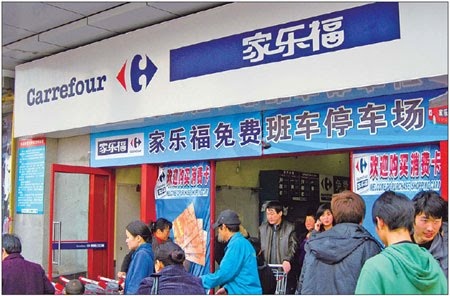
Green Certification Awarded to French Supermarket in China

China Certification & Inspection Group has reportedly issued the Green Market Certification to Carrefour’s six stores in Beijing, making the French supermarket one of the first retailers to gain the certification in the Beijing region.

20110607-135536.jpg

Liu Shengming, chairman of CCIC, told local media that the Green Market Certification has been fully launched in the retail sector of Beijing. Green Market Certification is a national certification system co-developed by the Ministry of Commerce together with the Certification & Accreditation Administration of China. Organizations that have obtained the Green Market Certification are allowed to use the uniform certification board. The Green Market Certification logo can be used in their marketing materials or other relevant information.

Luc Vandevelde, chairman of the Supervisory Board of Carrefour, has revealed the plan for Carrefour’s first green shopping center, where rainwater and energy can be recycled. Compared with a regular architecture, the green shopping center can save up to 30% in water and energy. In addition, it will use efficient materials to reduce the consumption of resources.

China Certification & Inspection Group, Shenzhen Company Ltd. operates a wide network of over 300 offices and laboratories which are located in major ports and cargo distribution centers around the world. With over 20 years’ experience in the inspection and certification field, CCIC has established cooperation relationships with more than 120 inspection and certification companies in over 60 countries and regions, including foreign organizations such as UL, CSA, and TUV Rhineland.(Source: China Sourcing News)