Category Archives: retail food

Italian restaurant chain discounts pull in consumer spend

The How Britain Eats survey, by Allegra Strategies, revealed that eating habits have changed over the past year, and are influenced by the fortunes of high-street brands.One of the key findings was the resurgence of Italian food.

It was identified as the countrys favourite national cuisine to eat out of home this year, having been third in 2010. Traditional British food occupied the top spot last year, but has dropped to number two.The reason for the change, according to Allegra Strategies, is the increased number of Italian restaurant chains, such as Zizzi, PizzaExpress, Carluccios and Jamies Italian, on the UKs high streets.

The study claimed that pizza chains, in particular, are benefiting from strong promotional activity, which can result in eating out becoming cheaper than eating at home. Another major finding of the study was that Marks & Spencers Meal for two for £10 deal was more popular than Tescos Meal for Two for £9 and Asdas Indian Meal for £4. One of the reasons for the popularity of such purchases, according to the study, is that they are cheaper than eating out or take-away, and are helped by the bottle of wine often available as part of such deals.

The research placed Sainsburys 18% ahead of Asda 15% in terms of consumer visit share. Tesco was confirmed as the dominant supermarket, with 31% share.Convenience emerged as the major motivator when consumers select their main food-shopping destination, ahead of value for money and ease of car parking, the survey found.Other considerations included the lure of special offers and whether the supermarket is a pleasant place to shop.The study was based on a survey of 2000 UK consumers.

via Italian restaurant chain discounts pull in consumer spend – Marketing news – Marketing magazine.

Food displays in 800 co-op stores get Nualight LED lighting

A multi-million dollar deal has been recently signed between Co-op UK and Nualight,  a specialist in LED lighting for the food retail sector,  to install its LED lighting in freezers and ice-cream cabinets throughout 800 UK-based stores owned by the Co-operative Group.  LED lighting will be installed in the doors in low-temperature merchandising cabinets and in ice-cream display cabinets throughout the stores.

Liam Kelly, CEO of Nualight said, “Our lighting delivers significant energy savings of over 70% when compared with fluorescent technology and it is also maintenance-free. We’re delighted that our technology can play an important part in The Co-operative Group’s ambitious ethos of responsible retailing.”

“The motivation for introducing Nualight’s LED lighting solutions to our stores arose primarily from our unique commitment to sustainable retailing practices,” explained Alex Pitman, Energy and Carbon Manager at the Co-operative Group.

The Co-operative has over 3000 food stores and supermarkets around the UK. It focuses on quality with honest, ethically sourced products and has an ambitious Corporate Social Responsibility (CSR) program. A survey in 2008 found The Co-operative to be Britain’s greenest supermarket. The company has the toughest carbon reduction targets of any major business in the UK. (Source: LEDsmagazine.com)


Norman Cescut’s Tweets: August 2011

In case you missed my tweets, here’s a summary of the most important ones.                  You are more than welcome to follow me on Twitter @norman_cescut to get real-time updates. Enjoy!

You are more than welcome to follow me on Twitter @norman_cescut to get real-time updates!

Retailers, get ready for tablet computer shopping revolution!

Shopping search engine Shopzilla recently published a research showing that the “tablet revolution”, as online shopping via iPads and similar tablet devices is set to climb high in popularity, just as it has done in the US.
 
The research reveals that although the iPad was only launched 12 months ago, 6% of European shoppers already own a tablet and a further 20% are considering buying a device in the next year. The majority of owners said it was as easy to use for online purchases as a personal computer.
 
This trend is set to mirror the US where the iPad is driving a revolution in e-commerce.  A recent US Shopzilla study showed that 12% of consumers now have a tablet device, and a further quarter plan to buy one in the next year. In the European survey, an overwhelming 5-to-1 ratio name the iPad as their tablet of choice.

The Shopzilla research was conducted in Europe’s three largest online retail markets: the UK, France and Germany.  It also revealed that almost 80% of current tablet owners view their device as an addition to their technology arsenal rather than as a replacement for an existing device.
 
The research by Shopzilla of almost 5,000 online shoppers, also revealed:
 
– Nearly two thirds (61%) of iPad or tablet users said it was as easy to shop online with their hand-held device as it was with their personal computer;
– The majority, 71%, had bought or would buy online using their device;
– Dual-screen technology meant 70% of tablet users even watch TV while browsing shopping sites simultaneously, which is really interesting from a cross-platform marketing point of view;
– 53% of iPad or tablet users surveyed used their device to browse shopping sites and share shopping experiences with friends, showing that social shopping has extented its power in real life too;
– 27% of online shoppers currently used a smartphone to browse shopping sites with friends

Rachel Smith, business services senior director at Shopzilla, said:
“Since their launch in April last year, an astonishing 25 million iPads have been sold worldwide, and with one in five online shoppers telling us they plan to buy a tablet in the next 12 months, this is clearly set to be a huge trend for UK  shoppers.”
 
Smith added: “The year of mobile commerce, which has been predicted for some time, is finally here. With the explosion of the tablet market we are seeing a seismic change, and the opportunity will be for the retailers who are first to get it right.” (Source: The Retail Bulletin, image courtesy of The Belton Group)

Tailoring local retailing is the trend

The UK retail industry has been on the receiving end of a lot of criticism over recent years, particularly with regard to the role it has played in homogenising Britain’s high streets and creating a nation of so-called ‘identikit’ towns.

However, Marks & Spencer chief executive Marc Bolland announced last month that the retailer was on a mission to redesign its stores to suit local preferences, based on factors such as affluence, demographics, local competition as well as regional and ethnic differences, rather than on store size.

Tailoring ranges for local demographics is, of course, nothing new, particularly within grocery. Asda, for example, redesigned its Hounslow store in 2009 to better cater for the 70% of shoppers there who were of Asian, Mediterranean, Polish or Afro-Caribbean descent. More retailers are similarly starting to realise that catering for local tastes is critical for success.

James Daunt, incoming managing director of Waterstone’s, appointed after new owner Alexander Mamut bought the chain from HMV Group last month, has implied that the bookseller’s 300-strong chain will be adopting a tailored approach to retail, with ‘bookshops that mirror the tastes of customers as closely as possible’.

Ian Thurman, vice-president of location at data consultancy CACI, which has recently completed a store-segmentation project for footwear brand Clarks, says retailers are putting a bigger focus on locality – and not just in terms of the differences between big cities and the provinces.

‘The demographic differences between a Middlesbrough and a Guildford have become wider over the past few years, even for a retailer such as M&S,’ he says.

In its drive to better appeal to local preferences, M&S will use data from an array of sources, such as attitudinal insights gleaned from focus groups and information from online purchases, all of which will paint a much more detailed picture of who is buying what and where.

Bolland says work on segmentation has already been completed. ‘All stores have been grouped into clusters using several criteria including affluence and age,’ he said when M&S revealed its results last month. ‘In the autumn, we will begin to catalogue pilot stores according to one of these segments.’

Thurman says he is surprised that M&S did not adopt a segmentation approach years ago. Daunt, who joins Waterstone’s next month, is equally adamant that all retailers must prioritise the issue.

‘The best have done it,’ he says. ‘The degree to which they do so is dependent upon what they sell. Starbucks, with 50 products, can differentiate only so much; a supermarket with 20,000 lines much more; a bookshop that can draw from a million titles lies at the extreme end of this scale.’

Nonetheless, the fact that many retailers, including less salubrious ones, have made inroads into segmentation begs the question: why has it taken until now for M&S to adopt a store-segmentation approach?

A spokeswoman for the retailer says it is a case of evolution. ‘Over the past five to six years, we have a made a lot of progress in terms of the logistics of our stores,’ she says, referring to redesigned stores, new structures and layouts.

‘The new chief executive presented his business strategy in November. A big part of that focus is on UK operations, to look at stores and inject further inspiration into them. We’re not looking at ceilings and floors again, we’re looking at the way stores are shopped by customers.’

Beware bespoke

While creating tailored ranges for every store would appear to be the goal for retailers, Tim Greenhalgh, chief creative officer at retail consultancy Fitch, warns that ‘going local’ is not right for every brand.

‘Consumers don’t want everything to be local,’ he says. ‘People get quite excited about what the likes of Zara or Urban Outfitters have coming into their stores. The local thing does work particularly well when you touch people’s everyday lives.’

Mark Dickens, retail innovations consultant at customer communications specialist Wanda Communications, says that consumers should not expect to notice dramatic differences at their local M&S.

‘You might see changes, but they will be subtle,’ he says. ‘The trick is to ensure customers don’t notice. Put simply, customers aren’t interested in brand – they’re interested in buying stuff.’

And customers buying more stuff is what Bolland hopes will be the result of his strategy. If it is, and more retailers follow suit, could such moves reinvigorate the ailing high street?

‘Yes,’ says Daunt. ‘Nothing is more dull than the identikit parade of multiple retailers. Localism within these same retailers would reintroduce the sense of discovery that a diverse high street offers.’ (Source: Ben Bold for Marketingmagazine.co.uk)

Groceries stores getting greener with roof hydroponic gardens

This great idea comes directly from the United States – and it is the best way for selling REAL locally grown products in grocery stores.


It’s in fact no secret that most produce purchased in grocery stores is far from “green,” grown in far away states and countries and transported hundreds, even thousands of miles, adding costs and carbon footprint along the way.

A New York City start-up called BrightFarms hopes to changes all that, one grocery store rooftop at a time. The company plans to design, build, finance and operate hydroponic greenhouse farms on supermarket rooftops, eliminating time, distance and cost from the food supply chain.

“It’s better food, better for the environment and better for business,” CEO Paul Lightfoot told Greener Design during a recent interview. “The idea of growing veggies on the roof of a supermarket struck me as cute, but what I wanted to know was whether it could become a real business, with scale. One of my reservations about local food is that small farms (and most farms near cities are small) can’t compete on price with big ones. So food at many farmer’s markets tends to be a pleasant indulgence for those of us who can afford it.”

 The business premise is that BrightFarms can deliver better, fresher, more nutritious produce. Secondarily, Lightfoot said, it is better for the environment. The hydroponic greenhouses (which uses only water and nutrients, no soil) would focus on high-volume vegetables such as lettuces, tomatoes, herbs, cucumbers and peppers, typically at a cheaper cost.

“In some instances, we’re actually selling for less,” Lightfoot said. “We can pretty much match the market’s wholesale tomato costs. We can beat the market’s loose leaf lettuce costs.”

Although he would not reveal which grocers BrightFarms is currently speaking to about installing the rooftop greenhouses, Lightfoot said seven large retailers have signed letters of intent, noting that he expects a few of them to be built before the end of the year.

BrightFarms grew out of New York Sun Works (WYSW), a non-profit organization set up in 2006 by environmental engineer and urban farming visionary Dr. Ted Caplow. Its mission was to design and promote ecologically responsible systems for the production of energy, water and food in the urban environment. In 2007 NYSW launched the renowned Science Barge, prototype urban farm.

Last month, BrightFarms announced the completion of another round of financing through private investors, however it did not disclose the amount of money raised. (Source: GreenRetailDecisions)

Sustainability in Italy: what big retail players are doing.

Italians are virtuous, with a constantly growing attention towards the environment among young people. This is the picture that emerges from the research about Italian Sustainability and emerging lifestyles: 2,500 interviews, a sample of the Italian population aged between 15 and 74 years. Objective: To identify the most common habits among Italians to reduce their environmental impact.

“The majority of Italians, 50.9%, is sensitive to issues related to sustainability, 48.6% said they buy environmentally friendly products. There is a 36.4% claiming to not care and a 12.7% which is almost hostile to the subject”, “explains Monica Fabris, sociologist, currently president of the Episteme institute of research. “Sustainability is primarily a response to unconscious needs: fear, for example. And the international crisis in this sense was crucial because it demonstrated the unsustainability of many behaviors, limited resources and has spread the importance of having more conservative attitudes. ”

This explanation of Fabris, that the sensitivity of the Italian added: “We are not the most attentive of Europe, but we have a different kind of sustainability. In the research we have identified four types of “green” attitudes. There are “promoters of a shared involvment” (10.9%) who practice a sort of militant environmentalism, they think that everyone can do something and that sustainability is a value. Then there are the “those who judge” (10.4%), people who feel the need to see polluters and waste producers being legally punished. The vision of “eco-nostalgic” (14.8%) is about a return to the past and considering saving and reducing consumption real goals. Finally, there is “the vanguard of sustainable consumption” (63,9%) who have a key to modern, pragmatic and are willing to pay for more virtuous behaviours” This last category direct their purchases mainly to products of the big market, identified as guarantors of attitudes ecofriendly.

“All the big brands have sustainable programs. The projects are very varied and range from research to packaging more easily disposable and recyclable materials to reduce water consumption, the increasing presence of photovoltaic systems to supplement the energy needs of the factories to the use of new production technologies with low environmental impact ” says Ivo Ferrario, director of communications Centromarca, the association of the most important companies active in Italy brand. “Huge efforts are also undertaken to provide consumers with a better information, and to educate companies’employees thanks to specific activities regarding the environmental and sustainability issues.” In this direction is the Total Quality Day organized by Coca-Cola HBC Italy: each year, employees spend a day and a half attending comprehensive educational programs about safety and environment. “We talk about the correct control of raw materials, top quality production processes, optimization of cargo handling and a more effective waste management,” says Alessandro Magnoni, Communication and External Relations Manager. “About sustainability, last June we put into operation a large cogeneration plant in Nogales (Vr), which has already reduced CO2 emissions by 66% and increased energy efficiency up to 83%. But this is just the beginning, we plan to equip all eight Italian plants with photovoltaic systems, an operation that will avoid the emission of 11,500 tons of CO2. ”

Another international brand is following the same path, Heineken, which in 2010 presented a ten-year plan Brewing a better future. “The aim is to reduce CO2 emissions resulting from production processes by 40% and to fall by 25% on water consumption. All by 2020 “explains Alfredo Pratolongo, Communication and Institutional Affairs Manater at Heineken Italy. A strong commitment to social responsibility is also the mission of Procter & Gamble, a leader in consumer products which collects 300 brands: “We have halved the production of waste and CO2 in our plants and use alternative energy generated by wind and photovoltaic systems “says the head of Italy’s sustainability policies, Renato Sciarrillo. He adds: “For those of us who handles many products – we have 140 factories in 80 countries -logistics is crucial: we want to move 30% by rail transport. But that’s not all. “Concentrated” products ensure reductions in packaging up to 45% and the research is aiming at finding new materials to replace plastics. ”

About packaging, Nestlé has a dedicated team that study sizes and materials to reduce environmental impact. “In 2010, in Italy we have avoided the use of 147 tons of materials including metal, paper and plastic. Our objective is to optimize weight and volume, to use materials that you can recover properly, to develop materials from renewable sources and to support initiatives to recycle and recover energy from used packaging “explains Manuela Kron, Nestlé Group Italy Corporate Affairs manager. “To do this we have added a cogeneration and regeneration power plant in San Sisto (PG) and Moretta (CN), which allow us to cut the emission of around 13 000 tonnes of CO2 per year.”

Investments in the study of eco packaging and using alternative energy are also key points for L’Oréal. “We have been working on green chemistry for over ten years and thanks to our research we have recently discovered cosmetic effects of natural sugars. This year we launched a major center for predictive evaluation in Gerland (Lyon) where more than 99% of our ingredients are animal-free tested. Our packaging use a high percentage of recyclable material, we only use wood fiber from certified forests. The Garnier brand, for example, in 2012 will cut the weight of packaging by 15%, “says Giorgina Gallo, managing director of L’Oréal Italy. And the future? “The global goal for 2015 is a reduction of 50% in CO2 emissions, 50% of water consumption and waste generated per unit of finished product. In particular, our factory in Settimo Torinese, in the forefront on sustainability issues, is finalizing two projects that use alternative energy to become, by the end of 2012, a zero emissions plant. ”

Always in Italy, another brand which is very attentive to sustainability is Barilla. “Over 92% of our packaging is recyclable and now we want to exceed 95% in advance to target set for 2014. In recent years we have supplied cogeneration pasta plants, developed energy saving projects and replaced the electricity used in the production of Mulino Bianco products by Renewable Energy Certificate System certificates. This has reduced by about 10% the CO2 emissions for each unit of finished product, “explains Barilla’s Head of Communications and Media, Giuseppe Cocconi. This anticipates the future: “We want to reduce the impact of our products in a timely manner ensuring production processes throughout the supply chain.”

And as we have already informed you about, another worlwide known Italian company, Illy, have been awarded for its sustainable approach during the production processes, receiving the DNV Green Coffee Responsible Supply Chain Process certification. A certificate that emphasizes respect for the ecosystem through the use of recycled packaging and non-polluting practices.
In Danone are applying a very tight control system too. “In 2011 we will reach the goal of being the only company in this market segment to use thermoformed plastic, a new generation made much lighter and with less plastic, for the entire range of products ” explains Gianluca Mormino, director of Danone factory in Casale Cremasco . “This system also allows you to sell the pots which are welded together, avoiding the secondary packaging. And we are studying biodegradable packaging. ”

There is another sector which is very eco-friendly, and Philips is one of the brands involved. “We have to meet annual targets tied to packaging, water and energy savings,” explains Sergio Tonfi head of communications. “In 2010, the” green “products accounted for 38% of our total revenues, in 2007 were 20%: this is the result of three years long investment in innovation worth about 1 billion euros” (Source: Manuela Croci -Corriere.it)

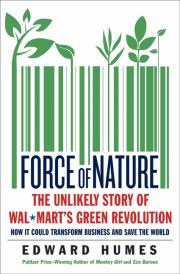
Walmart and its Green Revolution: a book talks about it

A new book, published this month, reveals Walmart’s struggle to redefine what it means to be green in the world of big business.

“Force of Nature: The Unlikely Story off Wal-Mart’s Green Revolution” by Pulitzer Prize-winning journalist and bestselling author Edward Humes, recounts the collaboration between Walmart’s former CEO H. Lee Scott, and later Mike Duke, Scott’s successor as CEO, and white water expert-turned Blu Skye sustainability consultant Jib Ellison.

20110531-154357.jpg

Humes, author of Eco Barons, tells of a small project initially intended to insulate Walmart from environmental criticism into a massive sustainability makeover, which now has snowballed beyond the retailer to influence whole industries, from apparel to dairy to banking, according to Amazon.com.

Ellison instituted a project at Walmart called “The Index” that challenged suppliers to root out inefficiency and waste, which the book details. Packaging shrank, saving millions of gallons of water, millions of pounds of cardboard, not to mention diesel fuel. Walmart’s sheer size, coupled with its lowest-pricing mission, means that producers are forced to take steps toward sustainability — and make natural, organic, and earth-friendly products widely available, according to Publisher’s Weekly.

Walmart’s switch to common household products in smaller packaging saved cardboard and the diesel fuel necessary to transport larger boxes.

Other changes including switching from non-recyclable boxes for frozen food to recyclable packaging that then could be sold as a commodity to recyclers.

The collaboration with Ellison engendered far-reaching changes as executives at the world’s largest retail company realized that a clean, green, efficient, less-wasteful, less polluting way of doing business can also be the most profitable way of doing business. (Source: GreenRetail Decisions)

Social responsibility, food and Government: the responsibility deal

The responsibility deal signed by the UK governement, backed by 170 companies such as Tesco, Unilever, Sainsbury’s, Carlsberg and Mars and Diageo, is going to rise a lot of controversy for a long time.

A key pledge outlined in the deal is the development of a new sponsorship code on responsible drinking while McDonald’s, Pizza Hut and KFC have agreed to place calories on their menus from September this year.

Other pledges include:
– Reducing salt in food so people eat 1g less per day by the end of 2012
– Removal of artificial trans-fats by the end of the year
– Rolling out Change4Life branding to 1,000 convenience stores

Achieving clear unit labelling on more than 80% of alcohol by 2013 is also pledged but this was a commitment made last year by drinks brands under work initiated by the last government.

Health secretary Andrew Lansley said: ‘Public health is everyone’s responsibility and there is a role for all of us, working in partnership, to tackle these challenges.’ He claimed that regulation is ‘costly and is often only determined at an EU-wide level anyway’.

ISBA’s director of public affairs Ian Twinn also adds “It has also been inclusive – businesses have volunteered to reinforce public health through their product development and marketing and health pressure groups have pledged to contribute through their campaigning activities.

The responsibility deal seems a great step toward the introduction of a more socially responsible fast-food industry, but not all the companies do have the same advise. Cafe Rouge, Bella Italia and Strada are expected to follow Subway and PizzaExpress by not signing up to the government’s health initiative. Subway, which already provides calorie counts on in-store posters, said the scheme was unsuitable for its stores. It is conducting a trial intended to establish the most effective way of displaying the information.

Meanwhile, a PizzaExpress source argued that displaying calorie levels is not consumer-friendly and clutters its menus.

One factor that will no doubt deter businesses, particularly smaller inde-pendents, is the costs involved. London restaurant chain The Real Greek says that, on average, it costs about £100 to test and certify each dish.

Being one of the first to make a move has its risks, not least the fear of being criticized in the press for selling high-calorie-content food. On the other side, being part of a movement that gives consumers greater transparency can deliver positive press coverage.

Toby Southgate, managing director of branding agency The Brand Union, believes the risks are worth taking. ‘Those brands that adopt early could win out, provided they handle the move carefully,’ he says.

Southgate cites McDonald’s, which has made efforts to ‘re-educate’ its con-sumers about healthier eating, arguing that disclosing calories on its menu board could provide incentive to consumption. (Source: BrandRepublic)

Ben & Jerry’s Fair Tweets for World Fair Trade Day


May 14th is the World Fair Trade Day, the first global campaign for The Fair Trade movement connecting producers and customers around the world and is endorsed by WFTO.
Ben & Jerry’s, known for its activism, has just launched this great campaign. The video explains how the “Fair Tweets” campaign works, a very simple but effective use of Twitter to help promote the Fair Trade Day.  
Just download the Fair Tweets application from www.fairtweets.com and the unused characters in your tweets will be automatically create relevant messages, or better, “Fair Tweets”!