Category Archives: Hospitality

Norman Cescut’s Tweets: August 2011

In case you missed my tweets, here’s a summary of the most important ones.                  You are more than welcome to follow me on Twitter @norman_cescut to get real-time updates. Enjoy!

You are more than welcome to follow me on Twitter @norman_cescut to get real-time updates!

Lebanon’s hotels need to implement responsible hospitality

A great article by Omar J. Sakr, in the Hospitality News Magazine, gives a detailed picture of Lebanon’s Hotel industry as per the introduction of environmental practices.

The author talks about the major findings of his recent field research conducted in Lebanon between June 2010 and January 2011, which show that international hotel chains in Lebanon are more likely to implement environmental practices than local ones. This research also identified different barriers that are not allowing hotels to fully adopt environmentally friendly practices. The major identified barriers were the financial resources of the hotel, the lack of national infrastructure, the lack of awareness among managers and staff, the lack of awareness among guests, the lack of expertise in applying EMS (Environmental Management Systems), and finally the lack of compliance with the existing legislation, which is not compulsory in most of the cases.

75% of international chain hotels in Lebanon are implementing environmental practices with 50% of them implementing formal EMS; the results of the local and regional hotels have shown that only 16% of these hotels are implementing some types of environmental practices and the remaining hotels of this category are mostly implementing energy saving measures.

Not all the hotels managed by international chains are implementing what their mother companies have already achieved in other markets. They are likely to introduce different environmental practices and at varying levels. One of these hotels had not introduced any environmental action, while another hotel has a Responsible Business Manager; other hotels generally assigned environmental policies and practices to the engineering manager

The managers of international hotel chains showed more interest in implementing environmental practices then the managers of local hotels, mainly as a result of the culture of the mother company and the economies of scale at which their companies operate. It is worth pointing out that none of the rurally located hotels, which are individually owned, participated in the survey. The lack of environmental management is the most probable reason for this. The full article is available here.

Hospitality Industry Leaders Launch Sustainable Purchasing Consortium

A group of leaders in the hotel industry representing brands, hotel suppliers, architecture firms, purchasing companies, and sustainability experts today launched the Hospitality Sustainable Purchasing Consortium.  The Consortium, led by MindClick SGM™, will work collaboratively to facilitate greening the furniture, fixture and equipment (FF&E) supply chain for hotels by: 

  • Leading the industry in development of an industrywide Hospitality Sustainable Purchasing Index (HSPI) to comprehensively measure the sustainability of FF&E suppliers and the products they sell;
  • Collaborating to establish consistent measures of sustainable purchasing performance for brands, owners and FF&E manufacturers; and 
  • Establishing key performance indicators that enhance the environmental and social impact of the hotel industry while continuing to provide the highest levels of quality and service for hotel guests.

With nearly 51,000 lodging properties in the United States alone, and billions of dollars spent in FF&E purchasing annually, the hospitality industry has an important role to play in its path toward greater sustainability.  Industry leaders recognize that reducing their environmental footprint can only be accomplished through the combination of sustainable buildings, operations and greening the supply chain.  

The goal of the Consortium is to provide the industry with a unified approach to greening the global supply chain through customization of an industrywide purchasing index (HSPI) that measures and reports on the sustainability performance of suppliers.  Beginning with FF&E, the HSPI will set the standard for sustainable purchasing and create a repository of supplier performance, including corporate social responsibility, product, and environmental sustainability.

Consortium founding members include Marriott International, Audit Logistics, Benjamin West, Delta Faucet Company, Innvision, InterfaceFLOR, PE INTERNATIONAL Inc., RTKL, SERA Architects, and Valley Forge Fabrics.

“Marriott has a more than 20-year commitment to environmental sustainability,” said Dave Lippert, Marriott vice president of architecture & construction procurement.  “Our membership in this consortium will help us meet our aggressive goals to continue to reduce our global footprint.”

MindClick SGM™ and Consortium members will work together to facilitate alignment of HSPI with industry accepted sustainability standards including the LEED® rating system and various product category standards. ( Source: HSPI Press Release)

A new sustainable design policy for Fairmont Hotels & Resorts

Fairmont Hotels & Resorts is expanding its green commitments through a new sustainable design policy. In addition to promoting the use of recognized green building certification systems such as LEED, the policy includes new environmental criteria and checklists for renovation and retrofit projects, environmental consultation during the design brief and construction process, and the creation of a green-build best practices repository for use by Fairmont’s hotels, engineers, developers, project leads, and architects.

“We literally wrote the book on hotel sustainability and have been focused on making our properties as environmentally sound as possible, says president, Chris Cahill. “Now, we’re instituting formal design and construction guidelines for our pipeline of new hotel projects and ongoing capital agenda. Environmental stewardship is part of Fairmont’s DNA and we want to ensure it’s evident in all phases of our business.”

The program has been implemented at two Fairmont hotels. Fairmont Pittsburgh, the brand’s first LEED-certified hotel, incorporates energy efficient lighting and appliances; enzyme waste systems; furnishings and other guestroom amenities made from recycled, organic, or sustainable material; and the use of paints, adhesives, sealants, carpets, and fabrics with no or low emissions. Meanwhile, the Savoy in London (pictured) has a waste management system, as well as a heat and power plant that reduces the hotel’s reliance on the national grid by approximately 50 percent.

The policy is part of The Fairmont Green Partnership program, allowing the Group to meet and exceed guest expectations of operational sustainability. It focuses on improvements in waste management, sustainability, and energy and water conservation at Fairmont’s properties, and innovative community outreach programs involving local groups and partnership. (Source: Hospitality design.com)

QATAR FOUNDATION to develop local luxury brands

Qatar Luxury Group (QLG), the first venture of Qatar Foundation in the luxury segment, will unveil a series of all-new Qatari brands this year in the fashion, hospitality and lifestyle sectors. Gregory Couillard, Chief Executive Officer of Qatar Luxury Group, said that two years after the Group started it is creating a structured portfolio of culturally informed high-end brands that offer exclusive experiences and timeless products.

The press release posted in the CPP website does not mention whether the Qatar Luxury Group will embrace sustainability and responsibility- a big must now in the Middle East countries, as shown by the Masdarcity  and the many project requests ECOFFEE receive everyday. We will investigate about and keep you updated.

CPP-Luxury, an online business magazine, adds that the Group is currently active in two main sectors — fashion and hospitality. Fashion represents the core activity of the Group, which has invested heavily in world-class design and engineering equipment for in-house development of product lines. Prototyping units on jewellery, luxury ready-to-wear apparel, shoes, leather goods and accessories are all located at the QLG’s headquarters and soon a manufacturing facility will be opened for mass production of the unique product lines which is not only meant for the local market but for the international sphere as well.

The first initiative of the Group will be the launch of a restaurant later this year in collaboration with an internationally recognised 3-star Michelin French chef, two more restaurants in 2012 and one luxury fashion brand alongside the Group’s development of projects in the lifestyle sector. Couillard is optimistic QLG will contribute considerably in the country’s thrust toward diversifying its economy. The Group has a strong team with members from 14 nationalities including designers from Belgium, Chile, Qatar and US.

The press release posted in the CPP website does not mention whether this huge project will embrace sustainability and responsibility- a big must now in the Middle East countries.

An agreement to boost Lebanon HoReCa business

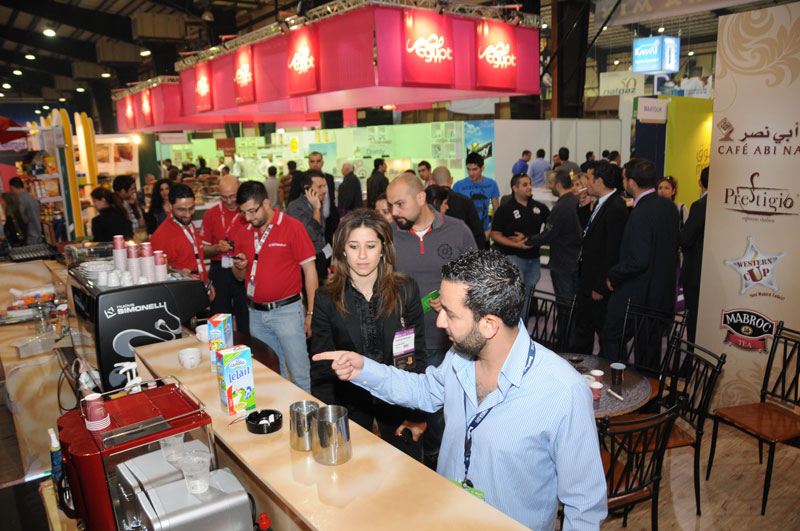
Among the exhibitions and trade shows we attended to during these first months of 2011, Beirut’s HORECA 2011 was the most surprising.

Despite the turmoil hitting the region, HORECA 2011 welcomed its many visitors – almost 6,000 a day – with a great number of exhibitors and many interesting meetings.  But what is more important for the whole Ho.Re.Ca regional business, was the signing of an agreement that will certainly boost the turnover in the Lebenon region: the Beirut Capital of Taste Charter. 

In doing so, Mr. Fady Abboud, Minister of Tourism, Mr. Mouhamad Choucair, President of Commerce, Industry, and Agriculture of Beirut and Mount Lebanon, Mr. Nehmat Frem, President of the Association of Lebanese Industrialists, Mr. Pierre Ashkar, President of the Federation for Tourism Association and President of Lebanese Hotel Association, Mr. Paul Ariss, President of the Syndicate of Owners of Restaurants, Cafes, Night Clubs and Pastries, Mr. Georges Nassrawi, President of the Syndicate of Lebanese Food Industries, Mr. Nouhad Dammous, President of ADFTH, and Mrs. Joumana Salame, Managing Director of Hospitality Services, all united to put Beirut on the map as a world leader with its international standards in terms of innovation, inspiration, know-how and conviviality.

We are very thrilled to have this charter finally signed”, said Mrs. Joumana Salame, Managing Director of Hospitality Services. “We have been working on this plan for the past 3 years, and we strongly believe that Lebanon will be up to the title it has been awarded

By bringing together European and Middle Eastern countries and strengthening Lebanon’s international bonds, Horeca serves not only as an economic boost adding to the development of the country, but also as a tourism attraction, by enticing hundreds of thousands of visitors yearly.

DESITA, showfood and ECOFFEE are among the companies who have already benefited from the Beirut Capital of Taste Charter, with great projects done and to come and the foreseen participation at HORECA 2012, where we will present the best Italian shop concept design, the best catering equipment products and the most innovative practices to bring sustainability in the Ho.Re.Ca. & Hospitality sectors, food Retail and Franchising. (Picture Credit: Hospitalitynewsmagazine)

A greener Novotel by 2012

PARIS Accor’s midscale Novotel brand is on pace to meet its goal of becoming 100% environmentally sustainable by next year, the group says.

To date, 78 of Novotel’s portfolio of more than 400 hotels have been certified as sustainable by EarthCheck, the organization formerly known as Green Globe. Novotel’s commitment to sustainable development has enabled the brand to achieve the following green results as of year-end 2010:

  • 98% of hotels apply and monitor the 65 actions in the Accor Hotel Environment Charter
  • 80% have installed energy-efficient light bulbs in areas that stay lit 24 hours a day
  • 92% have installed flow regulators on faucets and in showers
  • 89% recycle paper and cardboard packaging
  • 86% dispose of compact fluorescent tubes and light bulbs safely
  • 60% serve organic products
  • 60% offer nutritionally balanced meals for children.

EarthCheck certification is awarded after a preliminary assessment of a hotel’s performance and the deployment of an appropriate management system covering implementation of a sustainable development policy, water use, energy use, waste management, paper consumption, use of pesticides, use of cleaning and sanitation products, and commitments to the local community. At least 10 months are required for a hotel to receive certification, which is awarded by an independent outside auditor and is reevaluated every two years.

“Since 2008, Novotel teams have been actively involved in the EarthCheck certification program so that we can meet our goal of certifying the entire network by 2012,” says Pierre Lagrange, Novotel’s global marketing director. “Novotel’s commitment to the principles of sustainable development is an integral part of the brand’s promise of customer well-being (Source: Ghaward.ie)

Luxury and sustainability… a trend we will see more of in China

URBN Hotels & Resorts announced plans for URBN Hotel Pudong, a new green hotel that will become the first positive-impact hotel in China. The hotel is slated to open Spring 2012.

In collaboration with Vanke, China’s largest residential real estate developer, URBN’s 20,000 square metre boutique hotel is part of a larger commercial, retail and residential development in the Sanlin district of Pudong in Shanghai. They have tapped Fumihiko Maki, the world-acclaimed Japanese architect whose current works include the United Nations building and World Trade Center Tower 4 in New York City, to design the project.

The development, which is estimated to cost RMB 312 million (US$47 million), will include 55 hotel rooms, 50 URBN serviced residences, and 4,500 square metres of dining, wellness and art spaces.

URBN created China’s first carbon-neutral hotel, the chic and hip URBN Shanghai in the Jingan district. URBN Shanghai is passionately committed to the environment and is at the forefront of the growing consumer eco-movement in China. URBN tracks the hotel’s entire carbon footprint and offsets it by purchasing carbon credits or investing in local “green” energy development and emission reduction projects. The hotel provides guests the option to find out their footprint during their stay and by donating trees to Jane Goodall’s Roots and Shoots foundation to offset.

For the new URBN Hotel Pudong, Jules Kwan, Managing Director of URBN Hotels indicated that “the aim is to make this hotel go beyond sustainability … the hotel will increase the biodiversity of the site, and will discharge water that is cleaner than the water from the city’s water supply.” The hotel hopes to get LEED and China Green Star certifications. Also, URBN Hotel Pudong aims to surpass the 35% energy savings target hit by URBN Shanghai. (Source: Red-Luxury)

M’Illumino di meno: awakening Italy to sustainability

Today is the M’Illumino di Meno 2011 day organized by Italian Rai2 Caterpillar radio program. The campaign aims to the awaken public attention toward the energy issues by inviting people, companies and public structures (schools and municipalities) to reduce the waste of energy during this day. Many companies and municipalities have adhered to the campaign – the whole list is available here.
NH Hoteles Italia sustains this event by turning off all the facade lights of its Italian Hotels, and switching off unused energy appliances  for the whole day (Source: NH Hoteles and Caterpillar)

NH Eco Conscious

Last January 10th, NH Hoteles, the leading Spanish chain of cool design hotels, has presented to the Italian market its Ecomeeting product, which is perfectly in line with the Company’s 2008 to 2012 Strategic Environmental Plan to reduce CO2 emission, water and energy consumption, waste generation by 20% within 2012.
The plan, principally a gathering of people for information exchange purposes, but also characterized by four distinguishing parameters:
•Efficiency in the usage of energy and water
•Low impact materials
•Fair-trade products
•carbon offsetting on client demand. Offsetting carbon strives to reduce greenhouse gas emissions. Companies’ offsets are typically achieved through financial support of projects that reduce the emission of greenhouse gases in the short or long term. For this purpose NH Hotels preferred choice and what they consider the best way is through renewable energy projects.

This is why NH hotels financially support a hydropower plant located in the Rôndonia, Brazil. This renewable energy river hydropower project reduces greenhouse gas emissions by displacing power from higher emission fossil fuel sources on the national electric grid.

NH Hotels clients can now choose to offset the emissions created as a result of their meeting, by including carbon offsetting in the Ecomeeting purchase agreement. The fixed extra cost is 1€ per person for low or medium travelling impacts, 2€ for meeting where attendees are coming from long distances and 3€ for transoceanic.

The client can also opt for a more detailed analysis of their meeting and the offsetting needed, NH Hoteles can calculate the offset required for the specific client. NH provides all this information for the client: client origin, destination and transportation used. Clients under this special purchase agreement will receive an official certificate issued by Carbon Clear, stating the specific amount of CO2 equivalent, compensated by the hydropower plant project (Source: NH hoteles)