Category Archives: Ho.Re.Ca

Barista, lei è proprio un cafone!

Il 29 agosto scorso mi sono recato all’aeroporto di Bologna, per partire alla volta di Catania e quindi raggiungere Messina. Un importante incontro di lavoro mi stava aspettando.

Visto che il mio volo era previsto subito dopo l’ora di pranzo, mi sono avvicinato al bar Bollicine, quello situato proprio frontalmente alla salita delle scale mobili, zona partenze ovviamente. Dopo aver aspettato il barista che doveva monitorare il passaggio delle turiste e dopo essere riuscito a fare lo scontrino per: panino, bibita e caffè, mi sono spostato al lato della cassa per poter consumare il mio “pasto” in tranquillità.
Ecco l’assurdo manifestarsi improvvisamente: dopo aver provato a masticare il panino, impresa ardua dato la sua consistenza – avete presente il pane scongelato e riproposto probabilmente dopo alcuni giorni? – mi sono rivolto al barista dicendo educatamente: “mi scusi, ma questo pane è immangiabile”. Di tutta risposta il barista mi ha lanciato un sguardo di insufficenza, come se il pane fosse cattivo per colpa mia, e dopo aver allargato le braccia come se fosse passato li per caso, se ne è andato dall’altra parte.

Per il nervoso, pur di non aver a che fare con quel cafone, non ho neanche chiesto il caffè. Naturalmente il panino è finito nel bidone.

Andando verso l’imbarco, mi sono detto: quest’episodio è da condividere ed ho incominciato a scrivere col cellulare su Twitter: “Il barista del Bollicine e’ veramente un cafone!!!” Stavo per inviare, quando la provvidenza mi ha portato davanti un cartello dell’aeroporto che invitava i passeggeri a comunicare attraverso Twitter, questo l’indirizzo: @BLQairport

Letto, aggiunto, fatto!

Al mio arrivo a Catania, mi sono piacevolmente trovato la risposta: “@norman_cescut Ci dispiace per l’accaduto, lo segnaliamo subito affinchè non si ripeta più”. Il tutto visibile nella mia Timeline di Twitter.

I famosi “complain form” presenti all’estero, non hanno mai funzionato in Italia, ma finalmente adesso c’è la possibilità di comunicare in diretta con chi d’interesse.

Ora, non ho la certezza che abbiano preso veri provvedimenti, anzi invito l’aeroporto di Bologna a comunicarmelo, ma certo è che comportamenti del genere non possono e non devono passare inosservati.

Aggiungo solo una cosa: saper fare un caffè o allungare un panino al di là del bancone, non significa essere baristi, professione nobile e altamente qualificata ma non è solo colpa del barista ma anche del gestore che non fornisce la formazione adatta o se lo fa, non monitora l’operato.

Fino a prova contraria, mai più al bar Bollicine!

Oliva e Marino – The pop-up store of Pavesi, Barilla.

It sometimes happens to find something new just around the corner.  Just think about Bottega di Oliva e Marino, Pavesi pop-up store that opened in Riccione on June 28.  At first glance, it seemed interesting to me for both its stylish design and brilliant business marketing strategy.

Everything revolves around “aperitivo”, the happy hour.
A very successful Italian format that is currently being copied everywhere else abroad.  But how did Pavesi pop-up store by Barilla impact Riccione?  Tourists certainly enjoy it because of its highly competitive promotional prices, but the managers of nearby restaurants and bathing establishments are far from being happy.

In fact, the pop-up store is situated just in front of two beach bars and next to a highly popular restaurant. But there is more.  It is located just in the heart of one of the most convenient paying car parks of the sea front, the best place for tourists to leave their car without worrying.  

Was local government good at promoting equality? What would have happened if the same proposal had been presented by an ordinary citizen rather than by Barilla?   Would the proposal have been welcomed?

I don’t think so.

Chefs asked: how green is your kitchen?

Does a British apple have a smaller carbon footprint than an imported one if it has to be refrigerated for up to a year after harvest? And how do you design a kitchen so your chefs are naturally working in an energy efficient manner?

These are just some of the questions explored in a new guide launched on May 31st by the Sustainable Restaurant Association (SRA) and Space Catering to help the catering industry reduce its energy bills and drive down greenhouse gas emissions.

According to The Carbon Trust, energy used in catering accounts for 4-6 per cent of operating costs, while around 20 million tonnes of food waste is created every year in the UK food service sector.

The National Restaurant Association 2008 survey also found that 62 per cent of diners would prefer to eat in an environmentally-friendly restaurant.

“Chefs and restaurateurs are always looking for simple solutions to difficult challenges,” said Mark Linehan, managing director of the SRA.

“This guide provides them with a straightforward, easy to read guide to sustainable kitchen equipment that the SRA believes will be of huge interest and practical use to any restaurant that takes seriously its environmental responsibilities.”

The 20-page guide will be free for anyone to download from the Space Catering website, covering topics such as food waste, water consumption, energy efficiency and “green cuisine.”

via Chefs asked: how green is your kitchen?  News from BusinessGreen.

Otarian eco-minded restaurant lists carbon footprint for each menu item

Much the way French Europcar shows customers the carbon emissions associated with each of its rental cars, so a new restaurant chain includes such information for every item on its vegetarian menu.

With two restaurants in each of New York and London, Australia-based Otarian bills itself as “the first ever low-carbon restaurant chain, using a cradle-to-grave analysis in the carbon footprinting of every menu item.”

Almost everything in Otarian’s restaurants—from the floor to the tables and chairs—is made from recycled materials. They use the most energy-efficient equipment available, and all the electricity powering them comes from wind, water or sun. Water use is minimised, and local supplies are selected whenever possible.

Targeting the heavy emissions associated with the livestock industry, meanwhile, the restaurant offers no meat on its menu. Most interesting of all, however, is that Otarian uses international standards like BSI PAS 2050 to carbon footprint its entire menu; it has also been selected to road test the new Greenhouse Gas Protocol product standard.

Its “Eco2tarian Labelling” shows the difference in greenhouse gas emissions between its veggie meals and similar dishes containing meat, fish or egg. Otarian even goes so far as to reward consumers for the carbon they save by eating at its restaurants.

Specifically, every purchase earns them “Carbon Karma” credits, which are tracked by way of the restaurant’s Carbon Karma cards; consumers can track both their credits and their carbon savings online. After 100 credits, they are treated to a free Choco Treat off the menu.

As legions of eco-minded consumers begin tracking their impact on the environment, there’s no shortage of opportunities for companies to stand out by offering the eco intel they need to do that.

via Eco-minded restaurant lists carbon footprint for each menu item | Springwise.


Say it with an espresso!

We’ve seen numerous ways to add personalized messages to products ranging from chocolate bars to cookies to cans of soup, but recently we came across one that has an interesting new twist.

Created by Seattle cloud texting company Zipwhip, Textspresso is an espresso machine that can not only send and receive text messages, but can also print those messages on coffee foam using edible ink.

To create the Textspresso device, Zipwhip installed a Jura Impressa Xs90 espresso machine with SMS and printing capabilities using an Android app, servo motors, an Arduino microcontroller and a retrofitted Canon printer. Users can text their order to the device, which will then brew their coffee and keep it hot on a warming plate until they pick it up. Perhaps most interesting of all, though, is that the machine can use edible ink to print text on the coffee’s foam, opening the door to a world of personalization possibilities. For example, the machine can be used to text the last digits of a customer’s phone number, enabling them to easily identify their coffee when they go to pick it up. The video below explains the premise in more detail:

Zipwhip actually created its Textspresso machine as a way to showcase its cloud texting service, and it has no plans to produce more of them, it says. The code and plans for making the device are open source, however, and available to anyone seeking to make their own. Tech-minded entrepreneurs and coffee shop owners worldwide: time to build one for yourself?

via Espresso machine can print text messages on coffee foam with edible ink | Springwise.

Hoppit: highly curated recommendations for restaurants based on ambience

Tourists already have a variety of options when trying to work out what to do based on their mood. In the US, UK and Canada the I Feel London site, which groups activities by participant mood — energetic, sophisticated, hungover — is one such example. hoppit

Taking a similar concept and applying it to restaurants, Hoppit is the first site to provide a dining-out search engine which filters its results based on the ambience of venues.

Based in Manhattan and currently available in 25 cities in the US, each restaurant in the Hoppit database is tagged with one of ten “vibes” or types of atmosphere. These include ‘classy & upscale’, ‘hipster’, ‘romantic’ and ‘cozy & quaint’, among others. Users can manage their search results based on these categories, as well as the type of people they will be dining with – whether friends, family, business associate or date — the food they would like to eat, and the noise volume they would like to experience. Hoppit then displays a list of the nearby restaurants suited to the user’s plans and mood.

The service uses “natural language processing technology and algorithms” to sort its data, which draws on existing online reviews. Search results are complemented by food and drink deals through sites such as Groupon and Gilt City, which are shown beside the restaurant options.

via Site helps users choose restaurants based on atmosphere | Springwise.

How to achieve Sustainability in the Restaurant Industry

The notion of sustainability will remain for countless years to come. No matter if you’re talking about the product design, agriculture, construction, food or restaurant industries, sustainability is at the forefront.

While most industries are developing more sustainable approaches to products and services, the food and restaurant industries are making tremendous headway, in alliance with health and environmentally-conscious consumers.

Nowadays, consumers are taking note of how they eat and are taking strides to make changes. Not only do they want healthier foods on their tables, they want a cleaner, healthier planet. In fact, an increased portion of food dollars are being spent at local farmers markets, as well as an overwhelming number of consumers taking part in Community-Supported Agriculture (CSA) programs.

Furthermore, the One Green Score for One Earth sustainability research study revealed some 63% of those surveyed said they were extremely committed to buying sustainable goods. It doesn’t stop there. More and more, consumers are taking on the task of self-farming. In fact, Forbes predicts that by the year 2018, 20% of all food consumed in U.S. cities will come from rooftop and parking lot farms.

The restaurant industry, one of the most wasteful industries in the world, as a whole is seemingly tackling sustainability in its own way as well. By adopting certain practices such as utilizing solutions like Foodem to purchase sustainable, organic food products, putting food education at the heart of their businesses, realizing industry partnerships are mandatory, creating ways to reduce and reuse food waste and being environmentally-conscious when designing and building dining locations, the restaurant industry has finally wrapped its head around what needs to be done, even though there remains tons to accomplish.

To put the vision of sustainability and the restaurant industry into perspective, check out Chef Arthur Potts-Dawson’s enlightening Ted Talk.

via Sustainability and the Restaurant Industry: It Can Be Achieved | Foodem.com.

S. Pellegrino’s 2011 World’s 50 Best Restaurants

The 2011 S. Pellegrino “World’s 50 Best Restaurants List” is out, with Denmark’s Noma landing on top for the second year in a row, and Spain’s El Celler de Can Roca and Mugaritz capturing second and third.

The annual award, organized by Restaurant magazine and now in its tenth year, is widely considered to be the Oscars of the restaurant world. Results are voted by a 837-member panel of industry experts from 27 regions around the world, including chefs, food writers and restaurateurs. There are no set criteria for judging and votes are cast based on personal dining experiences.

Noma, headed by chef Rene Redzepi, is famed for its imaginative treatment of regional ingredients. CNN reported that a day after the best restaurants list came out in 2010, Noma received more than 100,000 requests for a table.

The list is dominated by restaurants in Europe, with only five restaurants in Asia-Pacific cracking the top 50 list.

China made its first appearance on the list: Chef Richard Ekkebus’ modern French restaurant Amber at Landmark Mandarin Oriental in Hong Kong was placed 37th.

Japan’s Les Creations De NARISAWA, which serves unorthodox French cuisine cooked with organic soil and charcoal, is placed at number 12, claiming the Best in Asia award for the third year running.

Nihonryori Ryugin, at number 20, is the fasting rising restaurant on the list, up 28 places from last year.

Other entrants in the Asia-Pacific region including Quay Restaurant in Sydney, placed 26th, and Iggy’s in Singapore following close behind at number 27.

Restaurants from Peru and Russia also made the list for the first time. Peruvian restaurant Astrid Y Gaston was placed at number 42 and restaurant Varvary in Moscow, Russia, appears at 48.

Five-time chart topper elBulli in Spain is missing from the list this year as chef Ferran Adrià will serve its last meal as a restaurant on July 20, 2011.

It will reopen as a nonprofit gastronomy think tank in 2014.

The top 50 list:

1. Noma (Copenhagen, Denmark)

2. El Celler de Can Roca (Girona, Spain)

3. Mugaritz (Errenteria, Spain)

4. Osteria Francescana (Modena, Italy)

5. The Fat Duck (Bray, England)

6. Alinea (Chicago, Illinois)

7. D.O.M. (São Paulo, Brazil)

8. Arzak (San Sebastián, Spain)

9. Le Chateaubriand (Paris, France)

10. Per Se (New York)

11. Daniel (New York)

12. Les Créations de Narisawa (Tokyo, Japan)

13. L’Astrance (Paris, France)

14. L’Atelier de Joël Robuchon (Paris, France)

15. Hof Van Cleve (Kruishoutem, Belgium)

16. Pierre Gagnaire (Paris, France)

17. Oud Sluis (Sluis, Netherlands)

18. Le Bernardin (New York)

19. L’Arpege (Paris, France)

20. Nihonryori RyuGin (Tokyo, Japan)

21. Vendôme (Bergisch Gladbach, Germany)

22. Steirereck (Vienna, Austria)

23. Schloss Schauenstein (Fürstenau, Switzerland)

24. Eleven Madison Park (New York)

25. Aqua (Bath, England)

26. Quay Restaurant (Sydney, Australia)

27. Iggy’s (Singapore)

28. Combal Zero (Rivoli, Italy)

29. Martín Berasategui (Lasarte-Oria, Spain)

30. Bras (Laguiole, France)

31. Biko (Mexico City, Mexico)

32. Le Calandre (Rubano, Italy)

33. Il Ristorante Cracco (Milan, Italy)

34. The Ledbury (London, England)

35. Chez Dominique (Helsinki, Finland)

36. Le Quartier Français (Franschhoek, South Africa)

37. Amber (Hong Kong, China)

38. Dal Pescatore (Mantova, Italy)

39. Il Canto (Siena, Italy)

40. Momofuku Ssäm Bar (New York)

41. St. John (London, England)

42. Astrid y Gastón (Lima, Perú)

43. Hibiscus (London, England)

44. La Maison Troisgros (Roanne, France)

45. Alain Ducasse Au Plaza Athénée (Paris, France)

46. De Librije (Zwolle, Netherlands)

47. Restaurant de l’Hôtel de Ville (Crissier, Switzerland)

48. Varvary (Moscow, Russia)

49. Pujol (Mexico City, Mexico)

50. Asador Etxebarri (Atxondo-Bizkaia, Spain)

via S. Pellegrino’s 2011 World’s 50 Best Restaurants | CNNGo.com.

Willing to enter the fastest growing tourism market? Come to the 20th HOSTECH in Istanbul!

Turkey ranked as Eighth Highest tourism earner in the word in 2010 and hosted 28,632,204 foreign tourist in its 3,379 hotels and holiday villages which has 786,453 bed capacity.

hostech by tusid

With its strategic location between Europe & Asia, Turkey offers a trading platform to the world’s hospitality industry players to faciliate the sourcing and selling of global quality products. Here other amazing facts about this fast growing market:

  • Total sales of large cooking appliances is 867 million USD and grow by 10% in retail volume terms and 13 % in current value terms in 2010.
  • Large cooking appliances is expected to grow by a 13 % volume CAGR and a 12 % constant value CAGR over the forecast period.
  • In 2010, durable goods retailers accounted for an 82% share of retail volume sales. Within durable goods retailers, electrical goods retailers independents held a 69% share of sales.
  • Small kitchen appliances (non-cooking) sales increase by 12% in both retail volume and current value terms in 2010 and is expected to grow by a 15% retail volume CAGR over the forecast period

Spanning over an area of 55.000 m2, HOSTECH by TUSİD, taking place fromMarch 28th to  April 1st at Istanbul CNR Expo, is expected to bring together 550 companies from 6 continent with 45,000 professionals mainly from Middle East, (CIS) Commonwealth of Independent States and Western Europe.

Main supporter of the 20th Hospitality Technologies Exhibition will be TUSID -Turkish Food Service, Laundry & Service Equipment Manufacturers and Businessmen Association. Fair also supported by KOSGEB – Small and Medium Sized Industry Development Organization (Turkey) TÜRSAB – Association of Turkish Travel Agencies (Turkey), TUROB – Touristic Hotels and Investors Association (Turkey) and TAFED – The Federation of Turkish Cooks (Turkey), SYRITEL -Societe Syrienne Des Hoteliers (Syria), IHA Israel Hotel Association (Israel) , FIHR – Romanian Hotel Industry Federation (Romania) , BHRA – Bulgarian Hotel and Restaurant Association (Bulgaria) and GHA – Greek Hotels Association (Greece)

As active  member of FCSI, FoodService Consultant Society International, I am glad to invite you to come and visit us at the FCSI booth – please do contact me norman|at|desita|dot|it to schedule a meeting.

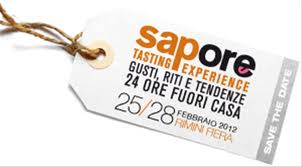
SAPORE Trade Expo: a Tasting Experience

The next event in our hectic February agenda is SAPORE Tasting Experience (at Rimini Fiera from 25th to 28th February) is more than a trade expo. It is the event dedicated to all those wanting to know the future of foodservice for eating out.

At its disposal, there are eight halls of the west wing of the Rimini expo centre for updating on tastes, rites and trends in a world with a continuously changing demand. The inauguration ceremony is scheduled for 10.30 am on Saturday 25th in the south foyer. Maurizio Melucci, Emilia Romagna Regional Councillor for Tourism, will take part in the ribbon-cutting ceremony.

Two important events will follow: the assignment of the 2012 Innovation Awards for the most innovative products on the market and the appointment with the inauguration conference organized by Fipe Confcommercio. Business unit manager Patrizia Cecchi confirms, ´Rather than a showcase, SAPORE will be a real… tasting experience, thanks to the new products on show and the countless appointments to innovate the Horeca channel´s business (show cooking with award-winning chefs, Sapore University courses, guided tasting sessions of wine and Italian craft beers, fresh and dry pasta and brewery specialities from all over the world, as well as conferences to analyze the latest trends and the presentation of interesting successful cases in the foodservice world.´

The expo therefore features a complete showcase of products and technologies from the world of catering, pasta, beer, seafood, pizza, oil, wine, regional specialities and frozen produce. Each of these sectors will be represented by the excellence of the enterprises and their proposals, alongside events and opportunities for discovering first-hand new experiences of business formats. Approximately 400 foreign buyers are awaited at the exhibition, where they will meet exhibitors according to an agenda scheduled online during the days before the expo.

This is a very effective innovative system for increasing opportunities for business between companies and foreign markets, as well as optimizing buyers´ visits to the expo. Among the key events, the Large-scale Distribution Buyers´ Day scheduled for Monday 27th and dedicated to the new trend ´AYCE´ All You Can Eat – the format with which restaurants charge a fixed price for access to food, then allow customers to consume as much as they want at no additional charge) and the debut of the Sapore Chef Grand Prix Contest

SAPORE 2012 will be held with the patronage of the Ministry of Agriculture, Food and Forestry Policies, Emilia-Romagna Regional Government, Rimini Provincial Government and CNA Alimentare.

And if you had already planned to visit the SAPORE exhibition, please  know that we will be there the whole time meeting prospects and clients. It will be a great pleasure to meet you in person: just send us an email at norman|at|desita|dot|it to set up an appointment.