Category Archives: Eng

Now available for purchase on selected stores in Italy and
on our Facebook store!

We were amazed by the final result – and even though these ECOFFEE tShirts were meant to be a concept, we received so many requests from our customers and supporters so that we were “compelled” to create a limited edition, capsule collection to be sold in selected stores and on our Facebook store.

T-shirts are available in khaki and brown colors for both male and female sizes. We also printed a very small quantity on yellow t-shirts, just for kids!

This slideshow requires JavaScript.

As we previously mentioned, for each t-shirt sale we will proceed 1 euro to  GreenAdsBlue.org Foundation, thus supporting  water sanitation projects in 10 Masai villages.

And we are glad we decided to do that!
Hurry up or you will miss the opportunity to buy one (or more) of these unique ECOFFEE tShirts!

How to make your hotel greener: 40 easy steps to follow

Hotel Management Asia recently published a list supplied by Pineapple Hospitality we found really interesting and useful if you aim to make your hotel a greener one.green_hotel_image

1. Programmable and digital control of your HVAC systems: Use electronic thermostats in guestrooms with pre-set settings to minimize energy consumption.

2. Key Card Energy Management System turn off lights when guests are not in room.

3. A linen and towel reuse program is a must.

4. Consider either Organic Cotton Linens or Linens made with Tencel+Plus™

5. Ozone laundry systems reduce the Water, Energy and Chemicals used by the wash.

6. Advance Laundry Solutions also has new drying technology that reduces energy consumption by up to 90%, yet requires no vent and extends textile life.

7. In-room recycling.

8. Recycling containers in all public areas.

9. Use compact florescent light (CFL) bulbs and energy-saving lighting fixtures

10. Install motion sensor-activated lights in areas that are infrequently used.

11. Use natural light as much as possible in common areas, restaurants and meeting rooms. Consider changing window coverings or installing skylights to improve to reduce artificial lighting.

12. “Green roofs” create energy savings by acting as super insulators, keeping buildings warm in the winter and cool in the summer. They also serve as a storm water management systems, catching pollutants as they drain off the roofs.

13. If not plants, how about installing solar panels on your roof?

14. Improve window and door seals. You will save on heating and cooling costs, reduce noise levels and decrease dust circulation.

15. Improve air quality by circulating outside air into guestrooms.

16. Identify something that is being discarded and find re-use for that item – such as reusing old tablecloths to make napkins.

17. Turn off all lighting/equipment/computers when not in use.

18. Make guest registration paperless.

19. Scan and email instead of fax.

20. When you do need to print, use recycled paper, soy-based inks and print double-sided.

21. Biodegradable 100% recycled room keys.

22. Use biodegradable and all-natural bathroom amenities, such as soaps, lotions, shampoos and conditioners.

23. Use bathroom amenity dispensers rather than individually packaged amenities.

24. Buy amenities, food and cleaning products in bulk to reduce waste and transportation costs.

25. 1.6 gallon per flush toilets installed in all rooms and guest areas.

26. Low-flow faucet aerators installed throughout the building and in all guestrooms.

27. Use of environmentally friendly (low VOC) paints.

28. Check with your pest management company to ensure use of integrated pest management (IPM) products and policies that are environmentally friendly and reduce the use of chemicals.

29. Use groundcover and drought-resistant plants to reduce amount of mow-able grass on your properties.

30. Go Smoke-Free!

31. Serve meals buffet style to reduce packaging and waste.

32. Use electric buffet warmers rather than canned fuels.

33. Serve water by each guest’s request rather than pre-pouring.

34. Stop using plastic water bottles.

35. Offer guests bicycles for short trips instead of driving.

36. Consider hybrid or electric vehicles for your fleet.

37. Used recycled rubber for the cardio room floor, or recycled tiles for pool floors.

38. Upcycle or recycle items you no longer need or use for their original purpose – such as in-room furnishings.

39. Give leftover food and/or amenities to charities.

40. Plant a garden and harvest organically-grown vegetables for your restaurant.

This is a a very Good and Generous Pop-Up store!

Chocolatier Anthon Berg recently enabled customers to pay with a good deed, rather than cash, at a pop-up location called The Generous Store.

Conceived by ad agency Robert/Boison & Like-minded, the project featured a temporary outlet in Denmark – open for one day only – which labeled each of its products with a task the consumer must perform in order to ‘buy’ the chocolate.

Designed to spread generosity, the tasks typically included a good deed to someone else, such as ‘Serve breakfast in bed to your loved one’ or ‘Help clean a friend’s house’.
Cashiers were replaced by staff carrying iPads, where chocolate-buyers could log into their Facebook accounts and pledge to carry out the favor via a branded post on their wall.

Anthon Berg was able to view the results of the promises when visitors to the store then posted pictures and comments on the company Facebook Page. The video below features footage from the pop-up shop:

The Generous Store’s innovative payment system, while only employed for one day, helped to portray Anthon Berg as a generous and socially-minded brand. An idea to adapt for your own projects, possibly over a longer period of time or in conjunction with a pay-what-you-want pricing system?

via Pop-up store sells chocolate for good deeds, not money | Springwise.

At Babochki Anticafé, patrons pay by the minute

At Babochki Anticafé consumers pay nothing for their refreshments. Instead, they arebabochki anticafe 1 charged by the minute for the time they spend there.

The Concept

The concept is quite simple yet striking: customers pay one ruble and 50 kopecks for each minute they stay. Drinks and snacks, on the other hand, are free.

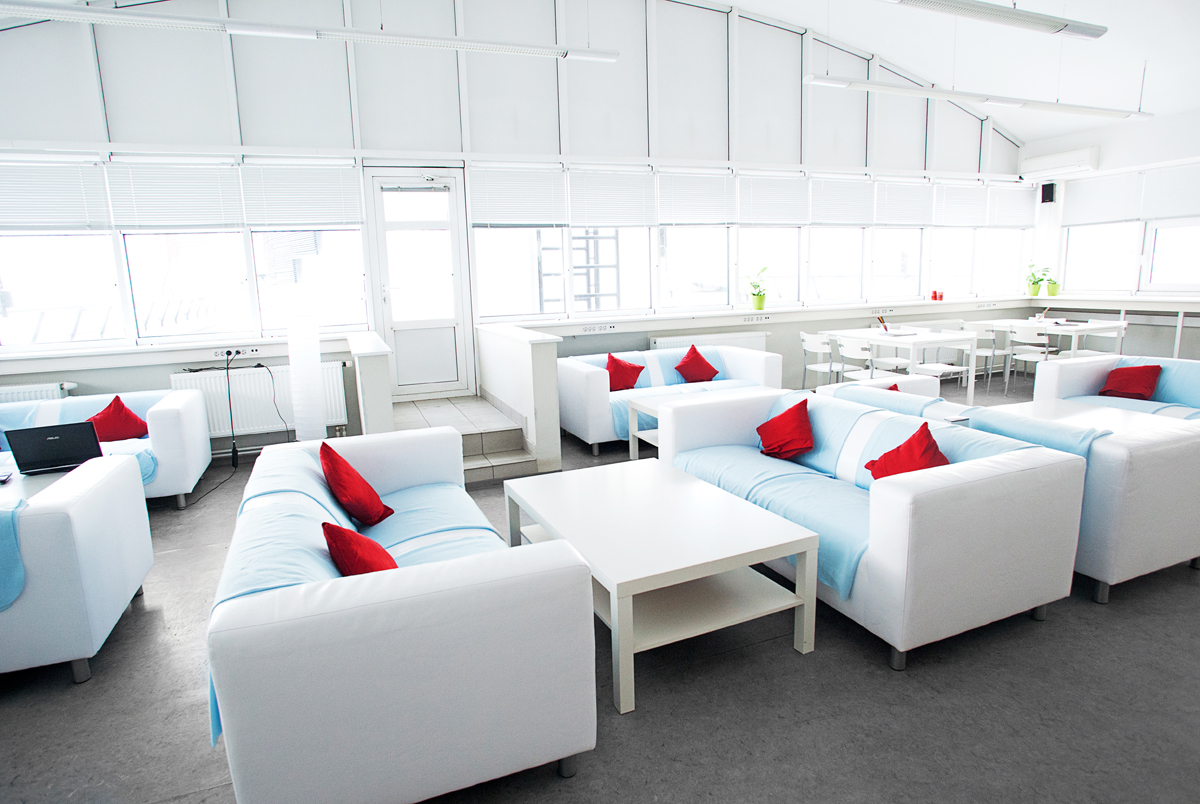
Aiming to create a space where consumers can relax and pursue their favorite diversions, the venue offers tea, coffee and desserts at no charge, and patrons can bring their own refreshments as well. An assortment of board games are on hand for entertainment, meanwhile, as are Xbox games, wifi and a cinema hall.

As in our ECOFFEE’s projects, the café (or Anticafé) has been designed as a place where conversation is central and where people can meet and spend time together – a place where people pay for entertaining themselves.

via Free food and drinks at Moscow café, where patrons pay by the minute | Springwise.

Next: Norman Cescut’s speech at the Expo Livorno

What are the opportunities offered to new entrepreneurs willing to enter the Retail business? What is Franchising and how to create a Franchising project? What are the tools that can help new entrepreneurs willing to become part of a Franchising network? What is the role of a Franchising consultant?

These are just a  few of the many questions that will find a professional answer during a seminar that will take place at the upcoming Expo Livorno – Livorno (Italy), March 17th-18th (you can find the whole program here)

As a member of FCSI  and professional consultant working in the Food Retail and Franchising business for more than a decade, I have been asked to participate at this seminar as a speaker.

On Sunday March 18th, from 11 to 12.30 am, I will get into full details about the consultant role and about how to build a successful and qualified Franchising project.

I am very excited to have been granted this opportunity,  and it will be a great pleasure to  meet you personally at this event. Do not hesitate to contact me norman|at|desita|dot|it to set up a meeting during that day.

Where is the future of coffee shops? EVERYWHERE!!

We have never agreed that much to a future scenario such as the one depicted by Steven Gordon of the Speculist. Gordon writes about the “coffeeshopification” of many public venues –  bookstores, museums, libraries and retail stores. His point of view is very interesting to the projects we have been developing so far with DESITA and ECOFFEE.

Here it is what Gordon writes in his very interesting article

Universities Will Become Coffee Shops

As reported by TreeHugger “The traditional university lecture is a completely anachronistic institution; there is no reason my Ryerson University students couldn’t watch my lectures on their computers at home or in a coffee shop. Most do; rarely more than 50% of the class shows up, because they know I post the lectures on the school website. As you can see in the photo above, even the students that show up have their noses in their computers. It is all a silly leftover from the days before books were printed and were too expensive for students, so the lecturer would stand up at the front and read from them. The reason for showing up these days is for, as Gordon notes, to “seek tutoring, network, and socialize.”- pretty much a big coffee shop.”

Book Stores Will Shrink to Coffee Shops

Ebooks are coming of age – for many reasons. You can keep your library in your pocket. You can annotate and share your thoughts within social networks. Writers can publish more directly to their audience. Once completed, the unit cost of each ebook sold is essentially $0. Those savings can (and sometimes are) passed on to the customer. Also, an ebook doesn’t have to be limited to the written word. An ebook can incorporate video, audio and other methods of presentation. Your book store is always with you and has every book ready to sell. Nothing ever goes out of print because there are no print runs.

Compare that with your local Barnes and Nobel. Those stores are huge but can accommodate only a small fraction of the titles available in the Kindle store. They require expensive real estate, buildings, and employees.

If you don’t like reading from an ereader, there are new on-demand printing options like the Espresso Book Machine that can print a book within minutes.

Between ebooks and print-on-demand, Barnes and Nobel sized stores shrink down to just their coffee shops – or maybe Starbucks takes over their business. Either way, custormers keep the experience of reading with coffee and those big comfortable chairs.

The Coffee Shop Will Displace Most Retail Shops

My Christmas shopping this year was 90% through Amazon Prime. Not having to fight the crowds and having it delivered free of charge to my home is a big plus, but as with the Kindle store, the online retail selection is much better that even the largest retail outlet.

Which is more enjoyable: Starbucks or Walmart?  For the sane: Starbucks.  So if you can accomplish your Walmart shopping at Starbucks, why do it any other way?

Also, imagine the 3D print shop of the future. You put in your order, probably from your smart phone, and then go pick it up. What does the lobby of such a business look like?  Again: a coffee shop.

Offices Become Coffee Shops… Again

We’re going back to the future: the modern office was birthed in 17th century coffee shops. Steven Johnson has argued that coffee fueled the enlightenment. It was certainly a more enlightening beverage than the previous choice of alcohol.

The need for offices grew as the equipment for mental work was developed starting in the late 19th centuries. That need appears to have peaked about 1980. It was a rare person who could afford the computers, printers, fax machines, and mailing/shipping equipment of that time.

Now a single person with $500 can duplicate most of those functions with a single laptop computer.  So the remaining function of the office is to be that place that clients know to find you… and that kids and the other distractions of home can’t.

Going forward the workplace will need the same sort of flexibility that I described for education. Groups for one project will form and then disband and then reform with new members for the next project. What will that workplace look like? Probably closer to Starbucks than Bob Par’s cubicle.

What will remain other than coffee shops? Upscale retail will remain – people paying as much for the experience as for the goods purchased. Restaurants remain. Grocery stores remain.

Brick and mortar retail stores will be converted to public spaces. Multi-use space will be in increasing demand as connectivity tools allow easy coordination of impromptu events. Some large retail stores will be converted to industrial 3D printer factories. These heavy-duty fab labs will fabricate products that are too big or complicated to fabricate at home.