Tag Archives: green

Thirty-one percent of 18- to 24-year-olds says YES to Green Products

Harris Interactive found that while concern and awareness around environmental issues has slipped since 2009, it has not affected how consumers say environmental issues influence their purchasing behavior. Young adults are the exception – those18 to 24, are actually more likely to consider the environment in their spending now than than before.

Adults between the ages of 18 and 24 show the biggest change in shopping behavior when it comes to environmental awareness and responsibility:

  • 35 percent said they are willing to pay extra for a green product, an increase from 27 percent in 2010 and 25 percent in 2009.
  • Although just 4 percent of all U.S. adults seek out green products and services regardless of the cost—virtually unchanged from 3 percent in 2010 and 2009 – 18- to 24-year-olds are at 11 percent, far above the 3 percent rate in 2010 and 2009.
  • However, 51 percent of this youngest adult age group said they are not willing to pay extra for green products.

Among total adults, however, the survey found that consumers are now less likely to do each of the following activities in their daily life:

  • Reuse things they have instead of throwing them away or buying new items (65 percent in 2009 vs. 61 percent in 2012).
  • Make an effort to use less water (60 percent in 2009 vs. 57 percent in 2010 and 2012).
  • Buy food in bulk (33 percent in 2009 vs. 30 percent in 2012).
  • Purchase all-natural products (18 percent in 2009 vs. 16 percent in 2012); and Purchase organic products (17 percent in 2009 vs. 15 percent in 2010 and 2012).

A quarter of U.S. adults (26 percent) said that environmental issues are either “extremely” or “very” important to them when deciding which products or services to purchase. This number remains consistent across gender, geography, education and income, according to the study. The percentage has moved little over the years: 27 percent of U.S. adults said environmental issues were extremely or very important to their purchasing decisions in 2010 and 26 percent said the same in 2009.

Americans also show a preference for products and services that are “green,” with 79 percent seeking out green products, slightly up from 78 percent in 2010 and 76 percent in 2009. Additionally, 31 percent of U.S. adults said they are willing to pay extra for a green product, up from 28 percent in 2010. Thirty-two percent said the same in 2009.

More than 2,451 U.S. adults aged 18 and older were polled for this survey.

via Harris Poll: Young Adults Willing to Pay Extra for Green Products – Green Retail Decisions.

How to make your hotel greener: 40 easy steps to follow

Hotel Management Asia recently published a list supplied by Pineapple Hospitality we found really interesting and useful if you aim to make your hotel a greener one.green_hotel_image

1. Programmable and digital control of your HVAC systems: Use electronic thermostats in guestrooms with pre-set settings to minimize energy consumption.

2. Key Card Energy Management System turn off lights when guests are not in room.

3. A linen and towel reuse program is a must.

4. Consider either Organic Cotton Linens or Linens made with Tencel+Plus™

5. Ozone laundry systems reduce the Water, Energy and Chemicals used by the wash.

6. Advance Laundry Solutions also has new drying technology that reduces energy consumption by up to 90%, yet requires no vent and extends textile life.

7. In-room recycling.

8. Recycling containers in all public areas.

9. Use compact florescent light (CFL) bulbs and energy-saving lighting fixtures

10. Install motion sensor-activated lights in areas that are infrequently used.

11. Use natural light as much as possible in common areas, restaurants and meeting rooms. Consider changing window coverings or installing skylights to improve to reduce artificial lighting.

12. “Green roofs” create energy savings by acting as super insulators, keeping buildings warm in the winter and cool in the summer. They also serve as a storm water management systems, catching pollutants as they drain off the roofs.

13. If not plants, how about installing solar panels on your roof?

14. Improve window and door seals. You will save on heating and cooling costs, reduce noise levels and decrease dust circulation.

15. Improve air quality by circulating outside air into guestrooms.

16. Identify something that is being discarded and find re-use for that item – such as reusing old tablecloths to make napkins.

17. Turn off all lighting/equipment/computers when not in use.

18. Make guest registration paperless.

19. Scan and email instead of fax.

20. When you do need to print, use recycled paper, soy-based inks and print double-sided.

21. Biodegradable 100% recycled room keys.

22. Use biodegradable and all-natural bathroom amenities, such as soaps, lotions, shampoos and conditioners.

23. Use bathroom amenity dispensers rather than individually packaged amenities.

24. Buy amenities, food and cleaning products in bulk to reduce waste and transportation costs.

25. 1.6 gallon per flush toilets installed in all rooms and guest areas.

26. Low-flow faucet aerators installed throughout the building and in all guestrooms.

27. Use of environmentally friendly (low VOC) paints.

28. Check with your pest management company to ensure use of integrated pest management (IPM) products and policies that are environmentally friendly and reduce the use of chemicals.

29. Use groundcover and drought-resistant plants to reduce amount of mow-able grass on your properties.

30. Go Smoke-Free!

31. Serve meals buffet style to reduce packaging and waste.

32. Use electric buffet warmers rather than canned fuels.

33. Serve water by each guest’s request rather than pre-pouring.

34. Stop using plastic water bottles.

35. Offer guests bicycles for short trips instead of driving.

36. Consider hybrid or electric vehicles for your fleet.

37. Used recycled rubber for the cardio room floor, or recycled tiles for pool floors.

38. Upcycle or recycle items you no longer need or use for their original purpose – such as in-room furnishings.

39. Give leftover food and/or amenities to charities.

40. Plant a garden and harvest organically-grown vegetables for your restaurant.

Lack of co-operation may kill Retail Sustainability Projects

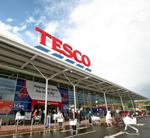
In 2007, Tesco’s CEO Sir Terry Leahy pledged to track and put carbon labels on all the chain’s products as part of a “green revolution,” but has backed off the plan

In February 2011, Leahy called on governments around the world to work more efficiently with private companies to ensure that low-carbon growth innovation is not unnecessarily hindered by bureaucratic red tape. Now it seems, the lack of cooperation among companies to help defray the costs of carbon labeling contributed to killing the program.

Tesco told the U.K. trade magazine The Grocer it planned to discontinue the program after and wind down the project after finding research for each product involved months of work. Currently 500 of Tesco’s products have carbon labels while more than 1,000 have been researched.

“We expected that other retailers would move quickly to do it as well, giving it critical mass, but that hasn’t happened,” Tesco’s climate change director, Helen Fleming told The Grocer. But other retailers failed to get involved or share information to help reduce the costs of the program, making it to costly to continue.

Tesco was named the best U.K. company for its efforts in tackling climate change by the FTSE 350 Carbon Disclosure Project in 2011 and was awarded top retailer globally for two years running. The retailer opened its fourth zero carbon footprint store in January.

The chain may be backing off the labeling program for now, but hasn’t given up its commitment to the concept. “There are an enormous amount of companies that research the carbon footprints of their products,” Fleming told The Grocer. “But how do you ramp that up to the top level? We now need to make the right long-term decision and we’re talking about what we do next.”

via Tesco Gives Up On Carbon Labeling – Green Retail Decisions.

Green Mountain Aims to Brew Energy with Coffee Waste

Green Mountain Coffee has teamed with the University of North Dakota and bioenergy specialist Wynntryst LLC to convert waste from its coffee processing plant to energy.

Specifically, the coffee company — best known for its single-serve Keurig brewers and coffee pods — is working with the Energy & Environmental Research Center (EERC) at the university, which is leading a project to develop an efficient renewable electricity technology for coffee-processing plants. Wynntryst, LLC, based in South Burlington, Vt., will develop a gasification power system to utilize the waste from a coffee-processing plant to produce energy.

In addition to its Keurig brand, Green Mountain Roasters also distributes many other coffee products to companies around the world, including Starbucks and McDonald’s. Its waste stream includes coffee residues, plastic packaging, paper, cloth or burlap and plastic cups.

“This project is an extension of work performed by the EERC for NASA, which explored the conversion of waste from a space station and future Martian and lunar bases into heat and power,” said Deputy Associate Director for Research Chris Zygarlicke. “This project will similarly utilize a mostly renewable and bio-based waste and convert it into electricity for the coffee industry.”

“The first step of the project is to demonstrate that we can gasify the complex mixture of waste and produce clean synthetic gas, or syngas, by utilizing the EERC’s novel advanced fixed-bed gasifier (AFBG) system on the biomass-residue mixture,” said Project Manager and Research Scientist Nikhil Patel.

The syngas will then either be utilized in an internal combustion engine (or a fuel cell) for efficient production of electricity and heat, or be converted to high-value biofuels or chemicals. The pilot-scale tests will evaluate the quality of syngas that can be produced from the Green Mountain waste.

“Over the years, the EERC has developed and tested numerous small gasifier systems like this on a variety of biomass feedstocks,” Zygarlicke said. “The EERC system has already produced power by gasifying forest residues, railroad tie chips, turkey litter, and other biomass feedstocks and burning the produced syngas in an on-site engine generator. The coffee industry residues will be similarly tested.”

via Green Mountain Aims to Brew Energy with Coffee Waste – Green Retail Decisions.

Will Sustainability be mainstream by 2020? New Report says yes.

Household brands and retailers will play a key role in supporting sustainable lifestyles, helping them become mainstream by 2020, according to a new study.

Sainsbury’s and Unilever launched the Consumer Futures 2020 research in partnership with Forum for the Future, in order to gain insight into how sustainable products and services will impact on global trends and consumer behaviour over the next decade.

As part of the 18-month study, designed as a practical tool to help retailers, brands and manufacturers plan for the future, four fictional scenarios that consider how sustainable consumption could become mainstream were explored, with the aim of ascertaining whether social and environmental pressures drive sustainable goods into the mainstream, or whether consumers actively demand them.

It found that global challenges such as climate change, scarcity of key resources, rapid population growth were likely to affect consumer attitudes and the consumer goods industry. As a result, sustainable practices will become more mainstream as key resources become more highly valued, while and recycling and re-use would increase, the study concluded.

A weak global economy is unlikely to hamper the progression of sustainability, according to Forum for the Future’s chief executive Dr Sally Uren, who said that “smart brands and businesses will make money today by accelerating the transition to a sustainable future”.

Meanwhile, Dr Uren added that the industry must make it easier for consumers to go green by “offering products and services which are not just better for the environment, but healthier, cheaper and longer-lasting.”

However, the study warned that consumer brands will need to innovate to develop sustainable products, services and business models to overcome financial challenges, while also working with consumers to make them a success.

Sainsbury’s and Unilever said they plan to use the results as a platform for collaboration and innovation to develop jointly profitable and sustainable initiatives to help meet commitments in Unilever’s Sustainable Living Plan and Sainsbury’s five corporate responsibility values.

Sainsbury’s chief executive, Justin King, said: “Sustainability will continue to rise higher up the agenda over the coming years, so it is key that brands work to ensure they can respond to consumer demand. Being a sustainable company is not about box ticking, it’s about future-proofing your business and building trust and brand loyalty that will last for years to come.”

The Consumer Futures 2020 toolkit and accompanying resources are available to download free here.

via Will Sustainability be mainstream by 2020? New Report says yes. | Caelus Green Room.

Stockholm hosting the upcoming FCSI Europe–Africa–Middle East Conference

Next September, from 16th to 18th, 2011 Stockholm, the very first Green Capital  will host the FCSI Europe–Africa–Middle East Conference.

Stockholm has been chosen by FCSI for its long-term target green policy, set to make the Swedish capital a fossil fuel free city by 2050.
The Conference speakers are highly recommended and the opening keynote speaker has been awarded speaker of the year 2009.
The program will be of course focused on the relation between sustainability and the Food industry, dealing with important subjects such as “Water and Waste. About water footprints and solutions to global water crisis. Solutions to the lack of sanitation”. Attendees will also have the chance to participate to interesting workshops such as “Food for thought on climate change: Saving our planet one carbon bite at a time!” or “ Why should a SPA be “green”.

Unfortunately, because of previously planned meetings, I will not be able to attend the Conference but I am sure it will be a great successful event and I wish to our FCSI Italia President Mr. Luciano Cattaneo a nice, enjoyable and profitable journey- feedbacks and updates about the Congress are welcomed!.

I also would like to remind all the FCSI members visiting the Milan HOST exhibition (October 21st – 25th ) that FCSI Italia will welcome all of you at Stand A03-C02 – Hall6.

Fairtrade Italia and ECOFFEE: a sustainable partnership for a better future

I am very happy to announce that last Tuesday, July 19th DESITA and Fairtrade Italia have signed a bilateral agreement providing mutual support for the dissemination of the principles of environmental sustainability, fair trade and social responsibility on the entire Italian market  through a focus on in-store actions.

DESITA, thanks to its ECOFFEE project, will promote Fairtrade products and will support  Fairtrade licensees through its wide range of retail-oriented services and solutions: from architectural design, branding, process analysis, franchise creation. The Fairtrade certified products will also find a privileged placement among the products available at the ECOFFEE franchise cafés.

On the other hand, Fairtrade Italia has committed to share with its stakeholders- Retail business licensees, Association members and consumers – all the services offered by DESITA and   ECOFFEE.

“I am very happy to have reached this agreement,” states Paolo Pastore, Managing Director of Fairtrade Italia “This agreement is very different from the usual one and I am  sure that it will bring a much wider scope and visibility to Fairtrade certified products, the only Fair Trade certification that has deserved consumers’ trust all around the world. “

Being supported by such an important organization as Fairtrade Italia has once again confirmed that what I have created, the ECOFFEE service platform, is a requirement for a better future.This gives me the strength to keep on working in what is still an immature industry, that of sustainability in the Italian Retail and Horeca panorama. I am convinced that this partnership will actually contribute to the creation and dissemination of a more responsible consumption on the Italian market.

Whole Foods, Trade Joe’s and Apple ranked in the U.S. top 10

Trader Joe’s took the No. 5 slot with Apple coming in at No. 9. Other top 10 brands were Tom’s of Maine, Burt’s Bees, The Walt Disney Company, S.C. Johnson, Dove and Starbucks and Microsoft, which tied for No. 10. Consumers said that what makes a green brand is its commitment to green products, corporate actions and values. Other top attributes of green companies is the offer good value, are responsible and reliable, are trustworthy and care about their customers.

“When we analyzed the approach of the top ten brands companies, using our Esty Environmental Scorecard, it was clear that the winners achieve a product-value-information trifecta,” said Amy Longsworth, partner at Esty Environmental Partners. “The top brands offer clear price value through co-benefits: a great innovative product that meets my functional needs plus green attributes that meet my values needs. These companies also tend to have robust life-cycle insight and complete sustainability strategies across their value chains, which enable them to draw from rich experience and data for their consumer communications.”

The seventh annual Green Brands study polled more than 9,000 people in eight and was conducted by WPP agencies Cohn & Wolfe, Landor Associates and Penn Schoen Berland Associates, as well as independent sustainability strategy consulting firm Esty Environmental Partners.

The study also found that consumers’ appetite for green products has increased significantly over the past year, with special interest around environmental products in the auto, energy and technology sectors.

When it comes to current usage of green products or services, the 2011 study reveals that the household products and grocery categories have the highest consumer adoption rates in all countries except China, where packaged goods/beverages and personal care are the most used categories.

“We’re seeing a shift in the ‘In Me, On Me, Around Me’ mentality when it comes to purchasing green products,” said Russ Meyer, Chief Strategy Officer of Landor Associates. “Consumers have a good understanding of how green choices in personal care, food and household products directly affect their families, and they are now seeing benefits like costs savings that attract them to higher cost items like cars and technology.” (Source: GreenRetail decisions)

ECOFFEE approved by Green Maven

It is with a great pleasure that we announce that our ECOFFEE project for responsible business has been officially approved by GreenMaven, the Green Search Engine.


GreenMaven.com, the world’s largest Green Search Engine, was launched in 2006 by Joey Shepp, a green maven and founder of Earthsite, new media for sustainable brands.


GreenMaven.com currently searches over 1 million pages.  Everything searchable by Green Maven has been approved by Green Maven editors using Green Maven Approval Policy.


The guiding principles on which the editors base their decisions are the following:


1. Green Values – The site must demonstrate green values clearly on the homepage. GreenMaven.com does not necessarily determine whether a business, organization or individual is Green, rather its editors consider how the website addresses green issues, ideas or principles. Green Maven editors take special care to select websites that resonate with green consumers.


2. Quality – The site must be complete, fully functioning, and demonstrate an acceptable level of quality according to today’s web standards. No offensive material is permitted, including obscenity or nudity.


3. Green certifications – Third-party validation, such as Co-op America green business certification, are considered and can boost a site’s chances of inclusion.


The approval by Green Maven is a great result for ECOFFEE, just the first step towards a brighter future for sustainability in the Retail business. Thanks to all of you for your support and help!

Groceries stores getting greener with roof hydroponic gardens

This great idea comes directly from the United States – and it is the best way for selling REAL locally grown products in grocery stores.


It’s in fact no secret that most produce purchased in grocery stores is far from “green,” grown in far away states and countries and transported hundreds, even thousands of miles, adding costs and carbon footprint along the way.

A New York City start-up called BrightFarms hopes to changes all that, one grocery store rooftop at a time. The company plans to design, build, finance and operate hydroponic greenhouse farms on supermarket rooftops, eliminating time, distance and cost from the food supply chain.

“It’s better food, better for the environment and better for business,” CEO Paul Lightfoot told Greener Design during a recent interview. “The idea of growing veggies on the roof of a supermarket struck me as cute, but what I wanted to know was whether it could become a real business, with scale. One of my reservations about local food is that small farms (and most farms near cities are small) can’t compete on price with big ones. So food at many farmer’s markets tends to be a pleasant indulgence for those of us who can afford it.”

 The business premise is that BrightFarms can deliver better, fresher, more nutritious produce. Secondarily, Lightfoot said, it is better for the environment. The hydroponic greenhouses (which uses only water and nutrients, no soil) would focus on high-volume vegetables such as lettuces, tomatoes, herbs, cucumbers and peppers, typically at a cheaper cost.

“In some instances, we’re actually selling for less,” Lightfoot said. “We can pretty much match the market’s wholesale tomato costs. We can beat the market’s loose leaf lettuce costs.”

Although he would not reveal which grocers BrightFarms is currently speaking to about installing the rooftop greenhouses, Lightfoot said seven large retailers have signed letters of intent, noting that he expects a few of them to be built before the end of the year.

BrightFarms grew out of New York Sun Works (WYSW), a non-profit organization set up in 2006 by environmental engineer and urban farming visionary Dr. Ted Caplow. Its mission was to design and promote ecologically responsible systems for the production of energy, water and food in the urban environment. In 2007 NYSW launched the renowned Science Barge, prototype urban farm.

Last month, BrightFarms announced the completion of another round of financing through private investors, however it did not disclose the amount of money raised. (Source: GreenRetailDecisions)