Tag Archives: food

A Pop-up revival in retail marketing

Over the past 12 months, a growing number of brands has turned to pop-up activity to provide a burst of PR activity and another reason for consumers to interact with their brand – hopefully ensuring that the effect of these events are going to last even after the shutters come down. The last news about a pop-up store is related to Marni, the Italian fashion brand, located at the Ocean Centre in Hong Kong and featuring the whole Marni Edition.

The pop-up phenomenon dates back 2004, when fashion brand Comme des Garcons opened a guerrilla store in Berlin, followed by a long list of known brands, such as ony Ericksson, Levi’s, Breil, Uniqlo or the most recent ones of Apple, Nokia, and Adidas Originals.

The pop-up strategy allows brands to tap into new markets at low cost, as rents are cheap and the ‘concept store’ strategy creates a buzz without investing in advertising.

Even thought they are an excellent way to deliver a brand experience there is a question over their reach, as they engage only those consumers who actually visit. Jeremy Rucker, head of Hotel Retail, experiential agency RPM’s pop-up and retail division, says the growth of pop-up activity is partly in response to the levels of empty retail space on high streets. ‘With so many brands turning to online-only channels, pop-up activity helps bring excitement back to the high street,’ he adds.

The big question for brands is how to drive investment beyond the life span of the pop-up store and the PR generated at that time. ‘Data capture is fundamental, but creating engaging ways for the brand to interact with the consumer that can a develop a life of their own should be considered,’ says Owen Cato, creative director of retail agency Live & Breathe. ‘Extending activity in the pop-up store online and into social-media activity would work well.’

Claire Stokes, managing director of experiential agency The Circle Agency, adds: ‘Previously, when brands have talked about experiential, it has been all about being in the live space. Now it is about building new digital layers to ensure the halo effect of any given event stretches beyond just one single event.’ For example, when EA Games promoted its key Christmas video-game releases in shopping centres, it encouraged consumers to ‘check in’ to win titles. More than 3000 consumers took part, promoting the event far beyond the boundaries of the event venue.

However, industry experts warn against investing in digital at the expense of the core event. Trevor Hardy, founder of creative agency The Assembly, contends that pop-up activity should be viewed as another marketing channel. ‘The more sensory and multichannel the experience, the better it becomes,’ he adds. ‘The risk is that interactive and social media may dilute the experience – 100% of the efforts should be dedicated to ensuring the experience is the best it can be.’

However, the fact that even retail brands with a consistent high-street presence are turning to pop-up activity perhaps suggests that brands should be creating the excitement of a pop-up shop in their existing retail space every day. Hardy argues that this is not possible, as the ‘focus is on getting the maximum return per square foot’.

Caroline Wurfbain, client services director at experiential agency Jack Morton Worldwide, predicts that more brands will launch pop-up activity over the next 12 months. ‘The challenge is that if ideas don’t change, there is a risk that the market will become saturated and consumers will get bored,’ she adds.

Many of the most successful pop-up launches and events of recent years have not been the work of commercial brands, but independent chefs and artists. As a result, a raft of brands has attempted to mimic the halo effect of organic movements such as Hidden Kitchen, a private supper club that serves 16 people a seasonal 10-course tasting menu paired with wines. However, if these brands fail to offer consumers a compelling reason to interact with them, their experiential strategy risks being dangerously insubstantial (Source: Marketing Magazine)

McDonald’s opens its first green restaurant in Italy

Ho.Re.Ca and sustainability: in Italy there are still people who do not like to match these two words or that asserts that “the time has not yet come,” and this is the great challenge we are – successfully – addressing  with ECOFFEE. We strongly believe that the Italian consumer is able to perceive and reward the added value of sustainable products and services, and the news that McDonald’s has just opened its first green restaurant in Italy, in Lainate (near Milan) do prove that we are not wrong. This green McDonald’s was designed to be completely self-sufficient in energy: thanks to solar, wind and biomass. The project costed € 5 million, 20% more than a traditional restaurant but at the end of the year it will certainly pay off in terms of increased brand reputation, reduced  environmental and social impact, not to add the reduced costs due to the energy saving architecture and technological process. 
At the end of 2011, the results coming from the adoption of these policies will be evaluated by an Italian green environmental consulting company ECOFFEE has already established a business connection with a while ago.  Meanwhile, McDonald’s aims to achieve the European certification EN 16001, which will help the company to organize systems and processes aimed at improving the economic benefits of energy efficiency and reducing emissions of greenhouse gases.

But let’s talk about the “McGreen” in Lainate – a project whose details are available at the McDonald’s site www.persapernedipiu.info Currently, the restaurant is able to produce up to 90% of the energy needed, but within three months it is said to reach 100%, thanks to a pioneering trigeneration plant that use the exhausted cooking oil as fuel. The building structure is earthquake resistant, and thanks to the “Einstein”system  customers are always updated with real-time data regarding energy consumption and savings thanks to a monitor positioned at the entrance of the restaurant. Particular attention was paid to the restaurant supply chain and to the ingredients used in the menu, where customers can also find “local” ingredients belonging to the traditional Italian cuisine, like the Alto Adige IGP Speck, Parmigiano-Reggiano DOP, IGP oranges from Sicily, to name a few. The coffee served will not be the one of the Italian companies Illy or Lavazza, which are known for their sustainable products, but the one certified by the international organization Rainforest Alliance.

On the outside of the building, ecoattivo asphalt – when struck by sunlight it triggers a  reduction of pollutants- energy-efficient refrigerators and incentives for the customers using electric cars.
“Lainate is not a departure or arrival point, but a stage of a journey that McDonald’s sets out a while ago. For the Expo 2015 we will be able to implement a reduction of 15% of our CO2 emissions, an increase of 15% of our energy savings and another 15% increase of the energy we use from renewable sources. In 2020, these percentages will rise up to 20% allowing us to meet the Kyoto Protocol parameters”said Roberto Masi, McDonald’s Italy CEO.

In fact, McDonald’s Italy is not new to these kind of sustainable initiatives. As early as 2010, in fact, it adopted new standards for construction and renovation, with the use of building materials with high environmental sustainability, solar panels, heat pumps, roof ventilation and, where it was possible, photovoltaic. But not only that: technologically advanced machinery, power management systems, occupancy sensors, insulation and LED lighting fixtures to reduce air pollutant emissions. All new openings have already been planned to include some or all of these technologies. The 2012 politics has already been planned aiming at using certified renewable energy in all McDonald’s restaurants, building a fleet of delivery vehicles composed by 100% biodiesel  and a company’s car pool with low dioxide carbon emissions . (Source: MarketingOggi)

Greenburgers guide: Greenopia

EVOS, Le Pain Quotidien and Pizza Fusion received the highest marks of any fast food restaurants in the latest ratings issued by Greenopia.
 
The three chains each received four green leafs, meaning they met at least 90% of the criteria across five categories: green building design, supply chain, recycling/take-back programs, stock and sustainability reporting.
 
Greenopia said EVOS is the “greenest burger chain in the US.” The company sells a variety of organic and fair trade products; incorporates green building design into its locations; uses recycled-content items; and purchases wind credits to offset its energy footprint.
 
Bakery and sandwich shop Le Pain Quotidien uses organic and local ingredients; incorporates green building design; composts food waste; and uses its spent food oil for biodiesel.
 
Pizza Fusion “tackled an incredible amount of green projects for a food chain” Greenopia said. All of its projects are LEED certified; their pizza is made with organic ingredients and delivered by hybrid delivery vehicles; employees wear organic cotton uniforms; and they have a take back incentive for their used pizza boxes.
 
Further down in the rankings Chipotle and Starbucks received three leafs, and McDonald’s improved to two leafs this year. With more than 32,000 stores worldwide other major chains should look to McDonald’s to see how to properly begin to incorporate green initiatives, Greenopia said.
 
Below is the full description of the company’s efforts and shortcomings, as cited by Greenopia:
 
Green Efforts:
McDonald’s has begun to incorporate some green elements into its culture. McDonald’s has 2 green stores, with more on the way. In fact, McDonald’s has been one of the more aggressive chains in incorporating green building designs into its locations. McDonald’s uses some recycled content in their packaging and has a comprehensive waste diversion program. It also only gets its beef from responsible sources (especially in regard to rainforest degradation) and has taken steps to green its seafood and coffee sourcing. Finally, McDonald’s has begun analyzing and scoring its supply chain to search for environmental efficiencies (as well as conducting audits) and publishes one of the better sustainability reports in the industry.
 
Green Issues:
In the green spectrum, McDonald’s is at least light green in every category. What we have listed above is good, but there is still room for improvement. For starters it would be nice to see natural and/or organic products offered and some more widespread and consistent green building design elements as well as some renewable energy sourcing. McDonald’s deserves to be applauded for what it has done (especially when compared with other major burger chains) and we hope to see improved commitment as time goes on.

Starbucks Launches 10th Global Responsibility Report

On April 18, 2011 Starbucks Coffee Company has announced the launch of its tenth annual Global Responsibility Report, which outlines fiscal 2010 performance in ethical sourcing, environmental stewardship and community involvement. The interactive report is now available online at www.starbuck.com/2010report

“Our ten years of reporting demonstrates not only commitment to global responsibility, but also to transparency in our business practices,” said Vivek Varma, Starbucks executive vice president of Public Affairs.

The report shows that Starbucks has made significant strides towards the bold goals it set in 2008. In particular, Starbucks exceeded its goals in the following areas:

  • Renewable Energy: Starbucks reached its goal to purchase renewable energy equivalent to half of the electricity used in its North American company-owned stores, by purchasing 58% in 2010; and has been named by the U.S. Environmental Protection Agency as the fourth-largest purchaser of renewable energy in the U.S. The company is raising its sights with a new goal to make 100% of the electricity used in global company-owned stores renewable energy equivalent by 2015.
  • Youth Action Grants: Starbucks exceeded its 2015 community goal to engage 50,000 young people in community activities by engaging more than 53,600 in 2010.

“Starbucks has made significant and meaningful improvements in key areas, and recognizes the need for greater innovation, customer engagement, and policy leadership,” said Ben Packard, Starbucks vice president of Global Responsibility. “We will continue to set new performance standards, reach our ambitious goals and sharpen our focus on areas of greatest impact in communities and the environment.”

In 2010 Starbucks demonstrated progress toward reaching its long term coffee purchasing goals, bringing the company closer to achieving its long-term goal of purchasing 100 percent responsibly grown and ethically traded coffee by 2015.

The company made advances in three key areas:

  • Coffee Purchasing: Increased purchases of coffee sourced under C.A.F.E. Practices from 81% to 84% in 2010.
  • Farmer Support: Provided $14.6 million to organizations that make loans to coffee farmers, nearing its goal of $20 million by 2015.
  • Forest Carbon Programs: Expanded pilots in coffee-growing communities in Chiapas, Mexico and Sumatra, Indonesia through Starbucks partnership with Conservation International to demonstrate how coffee farmers can adapt to and be a solution to addressing climate change while increasing their incomes.

Starbucks also made meaningful improvements in 2010 toward reaching its goals related to renewable energy purchases, recycling, water conservation, and green building. Starbucks is currently on track to reach goals in a number of key areas including:

  • Recyclable Cup Solution: Making progress to develop comprehensive recycling solutions for its paper and plastic cups by 2012 by testing recyclability of cups in a New York pilot.
  • Water Conservation: Reduced water consumption by 21.6% over 2008 levels, nearing the goal 25% reduction.
  • LEED® Certified Stores: Completed pilot phase for the U.S. Green Building Council’s LEED® Volume Certification pilot program. It is the company’s goal to build all new, company-owned stores to achieve LEED® certification beginning in December 2010.

Although much progress has been made, the company still faces challenges in progress against some goals, and is working to achieve them:

  • Community Service: Starbucks partners and customer around the world contributed more than 191,000 hours of community service in 2010. Although this is well short of the company’s 2015 goal of generating one million hours, Starbucks has put new structures in place to improve in 2011, and is dedicating April as a global month of community service in celebration of the company’s 40th anniversary.
  • Front-of-Store Recycling: Starbucks continues to support local market testing and implementation to accelerate future front-of-store recycling.
  • Reusable Cups: Although Starbucks served 6.4 million more beverages in reusable cups in 2010 than 2009, there is a need for considerable innovation and customer engagement to reach the 2015 goal of 25% of beverages made in reusable cups. Starbucks is working to increase awareness by offering a free cup of brewed coffee or tea at participating Starbucks in the U.S. and Canada to customers who bring in a reusable tumbler on Earth Day 2011.
  • Energy Conservation: Starbucks did not achieve its goal to reduce energy consumption by 25% in company-owned stores by 2010. The company is now planning to achieve this goal for 25% energy reduction in 2015. (Source: Businesswire)

An agreement to boost Lebanon HoReCa business

Among the exhibitions and trade shows we attended to during these first months of 2011, Beirut’s HORECA 2011 was the most surprising.

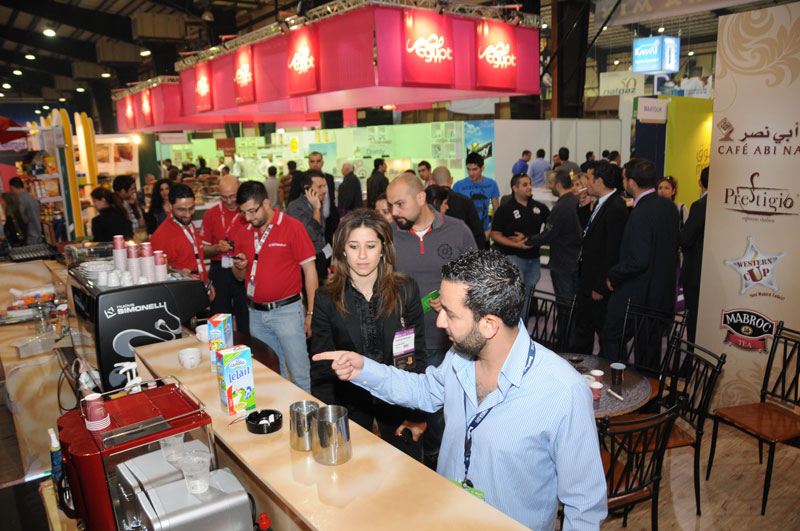
Despite the turmoil hitting the region, HORECA 2011 welcomed its many visitors – almost 6,000 a day – with a great number of exhibitors and many interesting meetings.  But what is more important for the whole Ho.Re.Ca regional business, was the signing of an agreement that will certainly boost the turnover in the Lebenon region: the Beirut Capital of Taste Charter. 

In doing so, Mr. Fady Abboud, Minister of Tourism, Mr. Mouhamad Choucair, President of Commerce, Industry, and Agriculture of Beirut and Mount Lebanon, Mr. Nehmat Frem, President of the Association of Lebanese Industrialists, Mr. Pierre Ashkar, President of the Federation for Tourism Association and President of Lebanese Hotel Association, Mr. Paul Ariss, President of the Syndicate of Owners of Restaurants, Cafes, Night Clubs and Pastries, Mr. Georges Nassrawi, President of the Syndicate of Lebanese Food Industries, Mr. Nouhad Dammous, President of ADFTH, and Mrs. Joumana Salame, Managing Director of Hospitality Services, all united to put Beirut on the map as a world leader with its international standards in terms of innovation, inspiration, know-how and conviviality.

We are very thrilled to have this charter finally signed”, said Mrs. Joumana Salame, Managing Director of Hospitality Services. “We have been working on this plan for the past 3 years, and we strongly believe that Lebanon will be up to the title it has been awarded

By bringing together European and Middle Eastern countries and strengthening Lebanon’s international bonds, Horeca serves not only as an economic boost adding to the development of the country, but also as a tourism attraction, by enticing hundreds of thousands of visitors yearly.

DESITA, showfood and ECOFFEE are among the companies who have already benefited from the Beirut Capital of Taste Charter, with great projects done and to come and the foreseen participation at HORECA 2012, where we will present the best Italian shop concept design, the best catering equipment products and the most innovative practices to bring sustainability in the Ho.Re.Ca. & Hospitality sectors, food Retail and Franchising. (Picture Credit: Hospitalitynewsmagazine)

Sustainable Coffee: what is it and is it really profitable?

Sustainability in the Retail & Ho.Re.Ca Business, what our ECOFFEE project is about, is based on a main concept: communication to consumers and customers must be clear and simple to make them better understand what are the added values of buying/consuming sustainable products.

For instance, let’s talk about Fairtrade, organic, Rain Forest Alliance or UTZ certified coffee. These are some of the labels with which coffee is traded nowadays and consumers can be quite confused by this abundance of sometimes not well explained terms. 

Among the many information source we always refer to when asked “What is sustainable coffee about?” we found that the Imbibe magazine one is the most consumer-friendly one, covering all main aspects of sustainability in the coffee business.

The other well known issue to our blog readers is “Is it really worth investing in sustainable coffee?”. Commodity traders know the answer, and this is “Yes, of course”. A recent publication by Intracen organization (International Trade Center), shows that “Demand for conventional (i.e. non-certified) coffee is largely stagnant in these markets, whilst it is thriving in emerging markets. Certified coffee, however, is showing strong growth and higher retail prices, particularly in mature markets. This trend is also followed by other commodities, including tea, cocoa and cotton. A new industry of inspectors and technicians has emerged to service the sustainability segment of the market”. 

Sodexo and Costco for a sustainable seafood

Food giants Sodexo and Costco have both committed to improve the sustainability of their seafood.

Sodexo, the $21 billion food service company, has announced a goal for all its contracted seafood to be certified by the Marine Stewardship Council (MSC) or the Global Aquaculture Alliance’s Best Aquaculture Practices (BAP) by 2015.

Under the plan, Sodexo will review all wild caught and farm raised seafood purchases and set short, medium and long-term goals with its contracted seafood vendors.

The target is part of Sodexo’s Better Tomorrow sustainability plan. The Better Tomorrow Plan makes 14 commitments to the environment, health, wellness and community support.

Meanwhile, Greenpeace has announced that after eight months of pressure, the world’s ninth-largest retailer has agreed to remove over a dozen seafood items from sale until the company can find an MSC-certified option. Costco will place a hold on selling Atlantic cod, Atlantic halibut, bluefin tuna, Chilean sea bass, Greenland halibut, grouper, monkfish, orange roughy, redfish, shark, swordfish, skates and rays.

Costco is also in the process of shifting towards more sustainable sources of tuna for fresh, frozen and canned varieties of the fish, Greenpeace said.

Costco will work with the World Wildlife Fund (WWF) to examine its remaining wild-caught species and determine the best way of moving to sustainable alternatives, Greenpeace said.

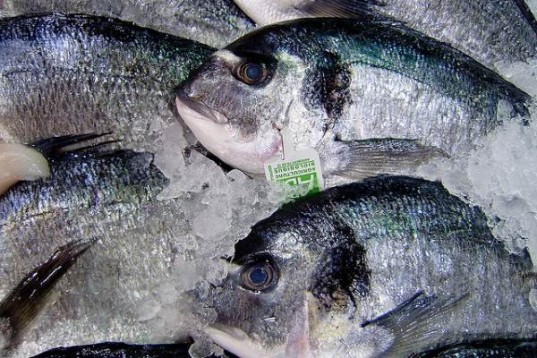
Costco and WWF have had a partnership since July of last year. Its first goal was to gauge the adherence of Thai-based shrimp farmers to draft standards drawn up by the Shrimp Aquaculture Dialogue, WWF said, and then to develop a strategy to guide those suppliers to full compliance. (Source: Environmentalleader.com, Photo: Thomas Quine)

DSE: See-through display showing the way for retail digital signage?

The STRATACACHE PrimaSee system  was what appeared to draw most of the attention at the last Digital Signage Expo in Las Vegas. 
So is the display basically an LCD without a black background? Sort of. PrimaSee showcases high-definition, dynamic video advertisements embedded in a see-through glass panel. These translucent promotional videos would correspond with products visible behind the displays, say in a grocer’s freezer aisle, to convey point-of-purchase or point-of-decision brand messages

“Effectively it’s an LCD technology, (but) the base nature of the screen is different than you’d have in a normal LCD, both because of the background and then the color masks and other things that go into translucency,” STRATACACHE CEO, Chris Riegel said. “But in basic prospect, yes, same kind of idea.”

The content for a translucent panel also has to be different, as is the way it is lit, but the technology of the display isn’t the most important aspect of it, he said.

“I think the most important thing is that it shows an example of — if you look at all the digital signage in the show, too much of it is bolt-on, things that you can tell in a retail environment or a customer service environment after the fact,” he said.

“This is a prime example of where the digital signage industry needs to move, which is integrating the digital experience into that consumer experience so that it’s seamless for that customer and helps to transform or change an existing experience. Everybody can understand going to the freezer in the grocery store, going to the cooler at the convenience store. How do I integrate media into that environment … to have digital media help that experience?” (Source: Retailcustomerexperience.com)


How to add another plus to organic food: this is marketing!

We have always written about communication being the success key to sustainability in the retail business. Thanks to communication retailers can help consumers understand the real value of their efforts when it comes to sustainability: why they choose this product instead of the competitor one, why they are recycling, why they are preferably purchasing locally grown food and so on.

A post on Hive Health Media made me smile, considering it a great example of how to market organic food in a more appealing way. Everywhere, organic food is associated with “not that good-looking food that does not pollutes the Earth” concept. This might be not strong enough to convince the average consumer. But what about saying: “Buy organic and keep in a good shape”?. This was essentially the message broadcasted in that post. Three key points:

– The organic food at the supermarket is often 30-50% more expensive than standard food, doesn’t contain chemicals such as herbicides, pesticides, hormones and antibiotics( This means is healthier and it is true  that consumers buy less because of the price, but in this case, less food means a better shape.)
– Organic food also helps detoxify the body and puts it in a state that makes it easier for the consumer to get in shape.
– As an added bonus, an overall sense of wellness will develop over time when consumers are living organic.

Obviously, there was some marketing in that post, not related to organic food though but to how to cook it, but this is a different story.

GoodGuide for Good Products for a more sustainable Retail

Yesterday I was reading a post concerning Levi Strauss & Co as the Top Jeans Brand, scoring a 7.4. The brand Prana was listed as the next highest, with a score of 6.3—followed by H&M (6.1), Banana Republic (6.1), and Old Navy (6.1).

I did not know what GoodGuide is – shame on me – so I checked out their very interesting website, which is said to be the world’s largest and most reliable source of information on the health, environmental and social impacts of consumer products. And I think it really is, rating over 95000 products, mainly available on the US market only: from food, toys, personal care to apparel, electronics and appliances. What is really striking is the scientific approach they have on their ratings, which are compiled from three sub-scores addressing Health, Environment and Society.


 Each of these sub-scores are based on an analysis of a set of indicators that GoodGuide has determined are the best-available measures of performance in these areas. Their methodology differs from the product belonging to different categories, each and every one having its own scoring methodology. Amazing. Let’s talk about apparel for example.

Quoting the Good Guide site: “Until (apparel) companies do a better job of providing transparency into their supply chain, our ability to accurately score brands based on their relative performance will be subject to significant uncertainties Environment scores are assigned to apparel brands by combining GoodGuide’s standard company indicators of environmental performance (weighted at 50%) with brand-level environmental indicators that address issues that are specific to the apparel sector (weighted at 50%).(….) Social scores are assigned to apparel brands by combining GoodGuide’s standard company indicators of social performance (50%) with brand-level social indicators that address issues that are specific to the apparel sector (weighted at 50%).(…) Health scores are not assigned to apparel brands because this product category does not generally pose health risks to consumers.”

The Good Guide website is also very good at using the Web 2.0 tools to “spread the word” and improve the accuracy of the product information thanks to a “support product info” page which enables visitors to add further details.

It would be also very interesting to test the effect of this kind of structured and scientific information directly at the point-of-sale, to see how the consumer react when discovering that his/her favourite brand of pasta is not that “good”. Because thanks to GoodGuide mobile App this is possible: consumers can scan the product, check the GoodGuide database and then purchase, or decide to choose another brand.

With this detailed level of “scientific” information, producers and retailers have nothing to hide and their achieving a high/low score can have a boomerang effect on brand reputation which must not be ignored and will not be ignored by consumers. Sustainability pays, and it will pay even more in the future.