Category Archives: Technology

Tesco to free up shelf space with augmented reality trial | VIDEO

Tesco is trialling augmented reality technology in its stores and online offering as it looks to sell more bulky products, including consumer electronics, without sacrificing shelf space and to reduce returns.

Consumers can use the in-store technology to generate a 3D image of a product and find out its specifications by holding a product key or Tesco Direct catalogue up to a webcam.

The webcam is connected to a computer terminal, which will display the product information on a screen and remove the necessity for displaying the physical products on shelves.

Software for the technology has been developed by British-based Kishino.
http://www.youtube.com/watch?feature=player_embedded&v=S5QDRoxuHtk

Customers can choose to buy the product in-store or order it to be delivered to their homes via Tesco Direct if it is not in stock.

The strategy behind the concept is to integrate augmented reality into the everyday shopping experience.

Augmented reality-compatible computer terminals are being trialled in the entertainment and electronics sections of Tesco stores.

There are currently seven stores that have the augmented reality terminals in entertainment sections and five that have them in the electronics section.

Their locations include Wembley, Milton Keynes and Boreham Wood.

Some 40 products are being trialled in the augmented reality initiative including televisions and ‘Pirates of the Caribbean’ Lego.

The augmented reality technology will allow customers to spin the virtual TV around to see the connector points on the back and get an idea of the size of the television.

Tesco is also trialling the use of wi-fi in some of its stores, which it claims has been a success and is expected to be rolled out further.

Tesco will also encourage consumers to use the technology on their home computers by holding up the Tesco Direct catalogue to their webcams, after installing an augmented reality plug-in.

The supermarket chain also hopes the use of augmented reality on customers’ home desktops will reduce the number of returns, as customers can get an idea of the size of the product before ordering online.

The software requires a two-way camera meaning, it is currently only compatible with desktop computers or mobile devices that have the two-way capabilities, which includes the iPad and latest iPhones.

via Tesco to free up shelf space with augmented reality trial – Marketing news – Marketing magazine.

Come and visit us at HOST – Milan!

Back from Dubai – but planning to go back soon since many are the projects and the events linked to sustainability and retail in the whole Middle East Area – we are already very busy organizing our participation at the upcoming HOST exhibition taking place in Milan from Oct. 21 to Oct. 25

With its 1445 exhibitors, 40 countries involved, 125.000 trade visitors and visitors from 141 countries, HOST can be certainly defined as the most important event for the HoReCa and Hospitality business sector worldwide. Host confirms itself the leading international date for the b2b system of hospitality with 6 specialized events: Professional restaurant services, Bread/Pizza/Pasta, Bar/Coffee Machines, Ice cream parlors/Confectioner’s, Coffee, Hotel&Spa Emotion.

We have been invited to bring our expertise by three exhibitors: FCSI, Smeg and Emainox.

FCSI (Pavillion 6 – A 03/ C 02) Meet the FCSI expert:  Norman Cescut will be available to offer you a free 30 minutes consultancy. Please check availability at the FCSI booth or contact norman(at)desita(dot)it  previously to fix an appointment.

FCSI has also organized a well balanced set of conferences and public seminars. We would like to bring to your attention the conferences scheduled on Saturday 22nd, where Sustainability will be the protagonist, with the presentation of an interesting case study – NH Hotels – and a public seminar about technology and sustainability in the Catering industry.

Smeg (Pav. 3P Stand B54 C57) Smeg Foodservice Solutions is Smeg division dedicated to satisfying the requirements of catering professionals. As Smeg’s Foodservice agent for the Middle East area with DESITA SHOWFOOD division, we will be available to present you the full line of equipments and new interesting products, providing you with all the requested technical information.

Emainox (Pad. 14 – Stand: H28-H34) – Emainox is specialized in the production of elements for professional use for the distribution and display of food. SHOWFOOD by DESITA is EMAINOX official agent for the Middle East area and our technical knowledge of their production is available to you to reply to all your questions concerning also the newest appealing products.

As you can imagine, our agenda will be a very hectic one, but we will be really happy to meet you – we suggest you to send us an email, contacting Norman directly at norman(at) desita(dot)it with you preferred meeting date and time.

Looking forward meeting you at HOST!

Are virtual walls the future of retail?

The use of digital technology to enhance high-street shopping took a step forward last month when Ocado and Tesco unveiled initiatives aimed at creating a seamless retail experience.

Ocado opened a pop-up shop in London’s One New Change shopping centre in the Square Mile. It featured a printed window display, or ‘virtual wall’, showcasing some of the retailer’s most-bought items and their barcodes.

Consumers who had downloaded Ocado’s ‘On the Go’ app can visit the window display to order the items – by scanning the barcodes with their smartphone – and book a delivery time. The retailer says it will roll out more displays across the country if the trial is successful.

Jason Gissing, co-founder of Ocado, claims that the experiment is a bold move. “We hope this trial is a hit and, based on its success, we’ll be looking at options around continuing this ‘virtual window shopping’ approach in other locations UK-wide,” he says.

Consumers have already been exposed to this new way of shopping.

Tesco has been experimenting there with an interactive shopping wall for its Homeplus brand, by opening a virtual store in a busy underground railway station in South Korea’s capital, Seoul.

More than 500 products are on offer, and all are displayed in a shelf-like appearance, prompting shoppers to scan them with their smartphones.

A spokeswoman for Tesco says: “You place an order when you go to work in the morning and can have the items delivered when you come home at night. This will help increase our sales via smartphones, which will be the next big sales generator.”

Ocado in the UK, then, seems to be catching on to Far Eastern technologies ahead of its domestic retail rivals. But James Tagg, mobile services director for MPG’s Mobext, is unsure that the technology can be implemented successfully in cities such as London.

“I think it’s clear that, here in London, the main value of a similar campaign would be as an awareness-raising tool, rather than an improvement on our everyday shopping experience,” he says. “The lack of mobile reception on large parts of the Tube system would prevent most people from downloading the app in response to seeing the virtual shopping aisles, and placing an order would have to wait until you were above ground at the end of your journey.”

Tesco says it doesn’t plan to launch similar services in the UK, but with Ocado leading the charge, the ‘big four’ supermarkets of Tesco, Asda, Morrisons and Sainsbury’s could well be tempted to follow suit in the future.

Increasing smartphone adoption will help, along with plans to install mobile broadband on London’s Tube network. It could be a while, however, before interactive walls feature significantly in retailers’ growth plans. (Source: Andrew Mccormik/Wallblog.co.uk)

Food displays in 800 co-op stores get Nualight LED lighting

A multi-million dollar deal has been recently signed between Co-op UK and Nualight,  a specialist in LED lighting for the food retail sector,  to install its LED lighting in freezers and ice-cream cabinets throughout 800 UK-based stores owned by the Co-operative Group.  LED lighting will be installed in the doors in low-temperature merchandising cabinets and in ice-cream display cabinets throughout the stores.

Liam Kelly, CEO of Nualight said, “Our lighting delivers significant energy savings of over 70% when compared with fluorescent technology and it is also maintenance-free. We’re delighted that our technology can play an important part in The Co-operative Group’s ambitious ethos of responsible retailing.”

“The motivation for introducing Nualight’s LED lighting solutions to our stores arose primarily from our unique commitment to sustainable retailing practices,” explained Alex Pitman, Energy and Carbon Manager at the Co-operative Group.

The Co-operative has over 3000 food stores and supermarkets around the UK. It focuses on quality with honest, ethically sourced products and has an ambitious Corporate Social Responsibility (CSR) program. A survey in 2008 found The Co-operative to be Britain’s greenest supermarket. The company has the toughest carbon reduction targets of any major business in the UK. (Source: LEDsmagazine.com)


Retailers, get ready for tablet computer shopping revolution!

Shopping search engine Shopzilla recently published a research showing that the “tablet revolution”, as online shopping via iPads and similar tablet devices is set to climb high in popularity, just as it has done in the US.
 
The research reveals that although the iPad was only launched 12 months ago, 6% of European shoppers already own a tablet and a further 20% are considering buying a device in the next year. The majority of owners said it was as easy to use for online purchases as a personal computer.
 
This trend is set to mirror the US where the iPad is driving a revolution in e-commerce.  A recent US Shopzilla study showed that 12% of consumers now have a tablet device, and a further quarter plan to buy one in the next year. In the European survey, an overwhelming 5-to-1 ratio name the iPad as their tablet of choice.

The Shopzilla research was conducted in Europe’s three largest online retail markets: the UK, France and Germany.  It also revealed that almost 80% of current tablet owners view their device as an addition to their technology arsenal rather than as a replacement for an existing device.
 
The research by Shopzilla of almost 5,000 online shoppers, also revealed:
 
– Nearly two thirds (61%) of iPad or tablet users said it was as easy to shop online with their hand-held device as it was with their personal computer;
– The majority, 71%, had bought or would buy online using their device;
– Dual-screen technology meant 70% of tablet users even watch TV while browsing shopping sites simultaneously, which is really interesting from a cross-platform marketing point of view;
– 53% of iPad or tablet users surveyed used their device to browse shopping sites and share shopping experiences with friends, showing that social shopping has extented its power in real life too;
– 27% of online shoppers currently used a smartphone to browse shopping sites with friends

Rachel Smith, business services senior director at Shopzilla, said:
“Since their launch in April last year, an astonishing 25 million iPads have been sold worldwide, and with one in five online shoppers telling us they plan to buy a tablet in the next 12 months, this is clearly set to be a huge trend for UK  shoppers.”
 
Smith added: “The year of mobile commerce, which has been predicted for some time, is finally here. With the explosion of the tablet market we are seeing a seismic change, and the opportunity will be for the retailers who are first to get it right.” (Source: The Retail Bulletin, image courtesy of The Belton Group)

A cool interactive system projects food onto restaurants diners’ plates

When dining at new restaurants, trying to select a meal from an unfamiliar menu can often place patrons in a quandary. A new projection system in London’s Inamo restaurant, however, hopes to alleviate some of this uncertainty by displaying images of meals on diners’ tables as they browse the menu.

The pan-Asian restaurant uses unique technology called E-table, which is designed to give patrons more “control over their dining experience”. Projectors are installed in the venue’s ceiling, which turn the tabletops into the equivalent of a computer monitor. Using a touch mousepad on the table, diners can navigate the interactive ordering system, with images of each meal being projected onto their plate as they browse the menu. The system also enables diners to place their orders themselves, change the pattern of the projection to function as a virtual tablecloth, view a live webcam feed of the kitchen, play games with other diners, find out more about what’s happening the neighborhood, and order taxis. A video with Inamo co-creator Noel Hunwick can be viewed below:

The versatility of the system means there is plenty of potential here both to make the dining experience more entertaining and immediate, as well as for sponsorship and themed events and launches. Whilst we’ve seen numerous restaurants create apps and install tablets on-site, Inamo have bucked that trend to create a dining experience that is truly unique. Food for thought! (Source: Springwise)

Where Fast Food mobile Apps fail, ECOFFEE mobile experience is set to win

A couple of days ago Appolicious published an interesting article about the increasing number of mobile Apps for fast food restaurants and their being mostly not useful. Many are the apps listed, from Taco Bell to McDonald’s.

All these chains offers accurate information on the internet but extremely bare bones restaurant locator apps. In McDonalds’ defense, at least their app offers information on getting a career with McD’s, along with some nutritional information.  Burger King’s lack of an app caught everybody by surprise because they have been so good with marketing their products through games via the Xbox 360 for years that you expected something that appealing on the apps side too.

Useful functionalities and entertainment are a must for nowadays apps, especially in a field – the one of Ho.Re.Ca – where interaction and service have always been a key factor to achieve a high customer satisfaction. Add that customers now are spoiled with information: they love to get informed about the brand and the goods they are going to purchase, about the environment where they are sitting, about the other customers comments and opinions about the “experience” they are going to go through.

We discussed this subject with our partners, a team of skilled UX designers, in order to create a useful, entertaining and carefully designed iPhone/iPad app for DESITA’s Retail and Ho.Re.Ca customers, delivering not only a great user experience but also the  sustainability and responsibility messages which are ECOFFEE’s own. Brainstorming led to the first draft of what is set to become the ECOFFEE mobile experience, the perfect blend among social marketing, in-store advertising and a great user experience to create a stronger bond among the brand, the consumer and the brand’ sustainability and responsibility strategies. Please inquire us directly for further information silvia@ecoffee.it

Green Certification Awarded to French Supermarket in China

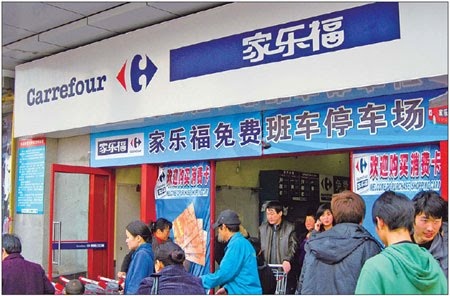
China Certification & Inspection Group has reportedly issued the Green Market Certification to Carrefour’s six stores in Beijing, making the French supermarket one of the first retailers to gain the certification in the Beijing region.

20110607-135536.jpg

Liu Shengming, chairman of CCIC, told local media that the Green Market Certification has been fully launched in the retail sector of Beijing. Green Market Certification is a national certification system co-developed by the Ministry of Commerce together with the Certification & Accreditation Administration of China. Organizations that have obtained the Green Market Certification are allowed to use the uniform certification board. The Green Market Certification logo can be used in their marketing materials or other relevant information.

Luc Vandevelde, chairman of the Supervisory Board of Carrefour, has revealed the plan for Carrefour’s first green shopping center, where rainwater and energy can be recycled. Compared with a regular architecture, the green shopping center can save up to 30% in water and energy. In addition, it will use efficient materials to reduce the consumption of resources.

China Certification & Inspection Group, Shenzhen Company Ltd. operates a wide network of over 300 offices and laboratories which are located in major ports and cargo distribution centers around the world. With over 20 years’ experience in the inspection and certification field, CCIC has established cooperation relationships with more than 120 inspection and certification companies in over 60 countries and regions, including foreign organizations such as UL, CSA, and TUV Rhineland.(Source: China Sourcing News)

Sustainability in Italy: what big retail players are doing.

Italians are virtuous, with a constantly growing attention towards the environment among young people. This is the picture that emerges from the research about Italian Sustainability and emerging lifestyles: 2,500 interviews, a sample of the Italian population aged between 15 and 74 years. Objective: To identify the most common habits among Italians to reduce their environmental impact.

“The majority of Italians, 50.9%, is sensitive to issues related to sustainability, 48.6% said they buy environmentally friendly products. There is a 36.4% claiming to not care and a 12.7% which is almost hostile to the subject”, “explains Monica Fabris, sociologist, currently president of the Episteme institute of research. “Sustainability is primarily a response to unconscious needs: fear, for example. And the international crisis in this sense was crucial because it demonstrated the unsustainability of many behaviors, limited resources and has spread the importance of having more conservative attitudes. ”

This explanation of Fabris, that the sensitivity of the Italian added: “We are not the most attentive of Europe, but we have a different kind of sustainability. In the research we have identified four types of “green” attitudes. There are “promoters of a shared involvment” (10.9%) who practice a sort of militant environmentalism, they think that everyone can do something and that sustainability is a value. Then there are the “those who judge” (10.4%), people who feel the need to see polluters and waste producers being legally punished. The vision of “eco-nostalgic” (14.8%) is about a return to the past and considering saving and reducing consumption real goals. Finally, there is “the vanguard of sustainable consumption” (63,9%) who have a key to modern, pragmatic and are willing to pay for more virtuous behaviours” This last category direct their purchases mainly to products of the big market, identified as guarantors of attitudes ecofriendly.

“All the big brands have sustainable programs. The projects are very varied and range from research to packaging more easily disposable and recyclable materials to reduce water consumption, the increasing presence of photovoltaic systems to supplement the energy needs of the factories to the use of new production technologies with low environmental impact ” says Ivo Ferrario, director of communications Centromarca, the association of the most important companies active in Italy brand. “Huge efforts are also undertaken to provide consumers with a better information, and to educate companies’employees thanks to specific activities regarding the environmental and sustainability issues.” In this direction is the Total Quality Day organized by Coca-Cola HBC Italy: each year, employees spend a day and a half attending comprehensive educational programs about safety and environment. “We talk about the correct control of raw materials, top quality production processes, optimization of cargo handling and a more effective waste management,” says Alessandro Magnoni, Communication and External Relations Manager. “About sustainability, last June we put into operation a large cogeneration plant in Nogales (Vr), which has already reduced CO2 emissions by 66% and increased energy efficiency up to 83%. But this is just the beginning, we plan to equip all eight Italian plants with photovoltaic systems, an operation that will avoid the emission of 11,500 tons of CO2. ”

Another international brand is following the same path, Heineken, which in 2010 presented a ten-year plan Brewing a better future. “The aim is to reduce CO2 emissions resulting from production processes by 40% and to fall by 25% on water consumption. All by 2020 “explains Alfredo Pratolongo, Communication and Institutional Affairs Manater at Heineken Italy. A strong commitment to social responsibility is also the mission of Procter & Gamble, a leader in consumer products which collects 300 brands: “We have halved the production of waste and CO2 in our plants and use alternative energy generated by wind and photovoltaic systems “says the head of Italy’s sustainability policies, Renato Sciarrillo. He adds: “For those of us who handles many products – we have 140 factories in 80 countries -logistics is crucial: we want to move 30% by rail transport. But that’s not all. “Concentrated” products ensure reductions in packaging up to 45% and the research is aiming at finding new materials to replace plastics. ”

About packaging, Nestlé has a dedicated team that study sizes and materials to reduce environmental impact. “In 2010, in Italy we have avoided the use of 147 tons of materials including metal, paper and plastic. Our objective is to optimize weight and volume, to use materials that you can recover properly, to develop materials from renewable sources and to support initiatives to recycle and recover energy from used packaging “explains Manuela Kron, Nestlé Group Italy Corporate Affairs manager. “To do this we have added a cogeneration and regeneration power plant in San Sisto (PG) and Moretta (CN), which allow us to cut the emission of around 13 000 tonnes of CO2 per year.”

Investments in the study of eco packaging and using alternative energy are also key points for L’Oréal. “We have been working on green chemistry for over ten years and thanks to our research we have recently discovered cosmetic effects of natural sugars. This year we launched a major center for predictive evaluation in Gerland (Lyon) where more than 99% of our ingredients are animal-free tested. Our packaging use a high percentage of recyclable material, we only use wood fiber from certified forests. The Garnier brand, for example, in 2012 will cut the weight of packaging by 15%, “says Giorgina Gallo, managing director of L’Oréal Italy. And the future? “The global goal for 2015 is a reduction of 50% in CO2 emissions, 50% of water consumption and waste generated per unit of finished product. In particular, our factory in Settimo Torinese, in the forefront on sustainability issues, is finalizing two projects that use alternative energy to become, by the end of 2012, a zero emissions plant. ”

Always in Italy, another brand which is very attentive to sustainability is Barilla. “Over 92% of our packaging is recyclable and now we want to exceed 95% in advance to target set for 2014. In recent years we have supplied cogeneration pasta plants, developed energy saving projects and replaced the electricity used in the production of Mulino Bianco products by Renewable Energy Certificate System certificates. This has reduced by about 10% the CO2 emissions for each unit of finished product, “explains Barilla’s Head of Communications and Media, Giuseppe Cocconi. This anticipates the future: “We want to reduce the impact of our products in a timely manner ensuring production processes throughout the supply chain.”

And as we have already informed you about, another worlwide known Italian company, Illy, have been awarded for its sustainable approach during the production processes, receiving the DNV Green Coffee Responsible Supply Chain Process certification. A certificate that emphasizes respect for the ecosystem through the use of recycled packaging and non-polluting practices.
In Danone are applying a very tight control system too. “In 2011 we will reach the goal of being the only company in this market segment to use thermoformed plastic, a new generation made much lighter and with less plastic, for the entire range of products ” explains Gianluca Mormino, director of Danone factory in Casale Cremasco . “This system also allows you to sell the pots which are welded together, avoiding the secondary packaging. And we are studying biodegradable packaging. ”

There is another sector which is very eco-friendly, and Philips is one of the brands involved. “We have to meet annual targets tied to packaging, water and energy savings,” explains Sergio Tonfi head of communications. “In 2010, the” green “products accounted for 38% of our total revenues, in 2007 were 20%: this is the result of three years long investment in innovation worth about 1 billion euros” (Source: Manuela Croci -Corriere.it)

Mobile consumers do prefer in-store purchasing, a research says.

According to JiWire’s research 79% of mobile consumers are ‘comfortable’ making purchases from smartphones or tables, even for products over the $1,000 threshold. Mobile shoppers are most likely to make purchases under the $1,000 threshold with about half saying they’ve made purchases over $100. Only 20% report making a purchase over $500 through a mobile device.

However, more important than those actually making mobile purchases is the fact that researchers believe mobile shopping is actually leading to more in-store purchasing. While many mobile shoppers logon to branded websites, many may be simply looking for product information, pricing or to check the availability. From there, they are going to brick-and-mortar stores to complete their purchases.

“What we are seeing with the evolution of mobile commerce is how the combination of mobile and location is transforming shopping behavior, enabling mobile advertising to drive in-store, brick and mortar consumer engagement,” said David Staas, Senior Vice President of Marketing with JiWire. “We are seeing this trend take place across a broad range of retailers and service providers, from national brands to local mom and pop deals.”

Researchers found:

• 31% of mobile shoppers research mobilly and then buy in-store
• 40% of mobile shoppers research mobilly then purchase via PC/desktop
• 20% of mobile shoppers research and then purchase via mobile

In addition to researching purchases, mobile shoppers are looking for local store locations, looking for daily deals or coupons and even sharing deal or product information with friends through email and social networks. (Source: Bizreport)