Category Archives: sustainability

Lack of co-operation may kill Retail Sustainability Projects

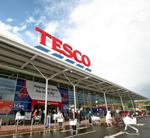
In 2007, Tesco’s CEO Sir Terry Leahy pledged to track and put carbon labels on all the chain’s products as part of a “green revolution,” but has backed off the plan

In February 2011, Leahy called on governments around the world to work more efficiently with private companies to ensure that low-carbon growth innovation is not unnecessarily hindered by bureaucratic red tape. Now it seems, the lack of cooperation among companies to help defray the costs of carbon labeling contributed to killing the program.

Tesco told the U.K. trade magazine The Grocer it planned to discontinue the program after and wind down the project after finding research for each product involved months of work. Currently 500 of Tesco’s products have carbon labels while more than 1,000 have been researched.

“We expected that other retailers would move quickly to do it as well, giving it critical mass, but that hasn’t happened,” Tesco’s climate change director, Helen Fleming told The Grocer. But other retailers failed to get involved or share information to help reduce the costs of the program, making it to costly to continue.

Tesco was named the best U.K. company for its efforts in tackling climate change by the FTSE 350 Carbon Disclosure Project in 2011 and was awarded top retailer globally for two years running. The retailer opened its fourth zero carbon footprint store in January.

The chain may be backing off the labeling program for now, but hasn’t given up its commitment to the concept. “There are an enormous amount of companies that research the carbon footprints of their products,” Fleming told The Grocer. “But how do you ramp that up to the top level? We now need to make the right long-term decision and we’re talking about what we do next.”

via Tesco Gives Up On Carbon Labeling – Green Retail Decisions.

Shipping Containers: a new Solution to Food Deserts?

A group of Seattle entrepreneurs has come up with one solution to the urban food desert problem, and it doesn’t involve adding traditional supermarkets to underserved areas. Their new venture, Stockbox Grocers, is taking the favorite building block of the green-building movement—the shipping container—and adapting it into a miniature food emporium, packed from floor to roof with fresh produce and other staples.

“Our goal is to bring food back to communities, and focus on communities that don’t currently have good access to food and are heavily dependent on public transportation,” says founder and owner Carrie Ferrence. This week, Stockbox celebrates the opening of a 160-square-foot prototype store in a parking lot in a neighborhood where corner stores are the only source of food. Up to five customers can shop at once, said Ferrence, and only one person is needed to staff the operation.

This first store—housed in a temporary structure that’s actually smaller than a shipping container—is intended as a six-to-eight-week experiment to feel out the needs of the community and gather feedback. “A lot of people who come in are breaking down the myth that people of low income and mixed income don’t want access to organic or natural food,” Ferrence says.  By the end of next year, she and partner Jacqueline Gjurgevich hope to have four permanent shipping container stores up and running.

“Everyone’s really excited to have a grocery store in the community,” Ference says. “The community’s been asking for years.”

via Stockbox Grocer’s Food Desert Solution: The Shipping Container – Lifestyle – GOOD.

In Detroit, community soup dinners fund local creative projects

It’s no longer uncommon to see creative endeavors funded by the crowds. What is unusual about Detroit Soup’s approach, however, is that the funding — and selecting — of projects takes place via a monthly public dinner.

Those in the Detroit area who are interested in participating can simply turn up for one of Detroit Soup’s dinners on the second Sunday of the month. For USD 5 they get soup, salad, bread and pie, as well as the opportunity to hear four creative project proposals and vote for the one they think most deserves to be funded. The money raised that night — typically between USD 600 and USD 900 — is then given to the proposal that wins the most votes.

There are actually several other like-minded efforts in the Detroit area, such as The Dearborn Soup, and there is a guide to similar granting dinners around the world at SundaySoup.org. Social entrepreneurs far and wide: time to get involved!

via In Detroit, community soup dinners fund local creative projects | Springwise.

Green Mountain Aims to Brew Energy with Coffee Waste

Green Mountain Coffee has teamed with the University of North Dakota and bioenergy specialist Wynntryst LLC to convert waste from its coffee processing plant to energy.

Specifically, the coffee company — best known for its single-serve Keurig brewers and coffee pods — is working with the Energy & Environmental Research Center (EERC) at the university, which is leading a project to develop an efficient renewable electricity technology for coffee-processing plants. Wynntryst, LLC, based in South Burlington, Vt., will develop a gasification power system to utilize the waste from a coffee-processing plant to produce energy.

In addition to its Keurig brand, Green Mountain Roasters also distributes many other coffee products to companies around the world, including Starbucks and McDonald’s. Its waste stream includes coffee residues, plastic packaging, paper, cloth or burlap and plastic cups.

“This project is an extension of work performed by the EERC for NASA, which explored the conversion of waste from a space station and future Martian and lunar bases into heat and power,” said Deputy Associate Director for Research Chris Zygarlicke. “This project will similarly utilize a mostly renewable and bio-based waste and convert it into electricity for the coffee industry.”

“The first step of the project is to demonstrate that we can gasify the complex mixture of waste and produce clean synthetic gas, or syngas, by utilizing the EERC’s novel advanced fixed-bed gasifier (AFBG) system on the biomass-residue mixture,” said Project Manager and Research Scientist Nikhil Patel.

The syngas will then either be utilized in an internal combustion engine (or a fuel cell) for efficient production of electricity and heat, or be converted to high-value biofuels or chemicals. The pilot-scale tests will evaluate the quality of syngas that can be produced from the Green Mountain waste.

“Over the years, the EERC has developed and tested numerous small gasifier systems like this on a variety of biomass feedstocks,” Zygarlicke said. “The EERC system has already produced power by gasifying forest residues, railroad tie chips, turkey litter, and other biomass feedstocks and burning the produced syngas in an on-site engine generator. The coffee industry residues will be similarly tested.”

via Green Mountain Aims to Brew Energy with Coffee Waste – Green Retail Decisions.

A new open online platform to share knowledge on hotel sustainability by Accor

Accor, the world’s largest hotel group and operator of brands such as Ibis, Novotel and Sofitel, said it had launched the online platform to make information on sustainability, including, research, surveys and case studies of good practice, available to any operator, whatever their size, for free.

The move coincides with the completion of a major piece of new independent research by Ifop on behalf of Accor that shows the vast majority of hotel guests are concerned by sustainable development.

Research findings
Accor’s executive vice president for sustainable development, Sophie Flak, said the findings confirmed there could be no more excuses for hotels not taking action on environmental, social and economic development.

“Sustainability is a very well known concept among hotel guests,” she said. “Discovery has gone; it is time for concrete action.”

The survey of 7,000 Accor guests across six countries, including the UK, France, Germany, Australia, Brazil and China, found that eight out of 10 hotel guests felt sustainable development was important to them. It also revealed that guests had high expectations for hotels to take action across four key areas: water, energy, waste and child protection.

But Flak said one of the most important findings of the survey was that a majority of guests now expect a hotel that implements sustainable policies to be a comfortable one to stay in.

“66 per cent of guests said a responsible hotel was a comfortable hotel,” she said. “No one can tell me now that they can’t set up a sustainable hotel because it will not be comfortable.”

Environmental targets
Accor, which operates 4200 properties across 15 brands in 90 countries and employs 145,000 staff, launched its own five-year sustainability programme, Earth Guest, in 2006. The programme, however, has only been partially successful in meeting its objectives. Accor set itself a target to reduce its energy by by 10 per cent between 2006 and 2010 but missed it by 4.5 per cent, while it only reduced paper waste by 53 per cent against a 70 per cent target. But it exceeded its target on water, cutting it by 12 per cent against a target of 10 per cent. It has yet to set targets on carbon emissions, said Flak, but will be doing so in a new environmental strategy the company will be announcing in early 2012.

Common standards
The release of the data, early next year, will coincide with the planned launch by the £3.7 billion international tourism industry of common standards to calculate and report on the carbon emissions of the sector.

Accor said findings of its latest research were now available on its open platform, Earth Guest Research. It wants other hotels to use it to adopt sustainable policies and said it plans to release several pieces of new research a year. In return, it is calling on other hotels to share their research and methodology so the whole industry can benefit.

“Sustainability can’t be handled by people who know nothing about it,” said Flak. “That is why we need these documents and facts.”

In September, the UN World Tourism Organisation launched an online toolkit to help hotels evaluate energy consumption, find renewable sources and cut their cost through improved efficiency.

via accor news | Accor creates open platform to share knowledge on hotel sustainability.

Start Today: UK brands join forces supporting sustainability

At the beginning of November, each UK based brand participating to the Start Today sustainability initiative has begun rolling out marketing campaigns, carrying the Start Today branding, urging consumers to take ‘one simple step’ toward being more environmentally friendly.

Start Today, which was conceived by integrated agency Meteorite, is led by Start, an initiative to encourage sustainable living, overseen by HRH the Prince of Wales, Business in the Community and The Marketing Society.

Insurer More Th>n, which has signed up to the project, is running activity focusing on ‘greener gardening’.

Through a partnership with broadcaster Classic FM, it is using Blue Peter gardener Chris Collins in a direct, social-media and digital campaign based on offering consumers tips that can make gardening more sustainable.

‘We wanted to do something that was simple and tangible,’ said Pete Markey, chief marketing officer at RSA, which owns More Th>n. He insisted that there was a ‘clear relevance’ to the drive because the insurer has policies covering garden and house plants.

‘This is a real chance to make a statement about how progressive and forward-thinking we are,’ added Markey.

Meanwhile, DIY retailer B&Q is running an in-store and digital promotion aimed at encouraging consumers to switch off household electrical items, and to buy products that can help reduce utility use.

Ian Cheshire, chief executive of B&Q-owner Kingfisher, said: ‘The days of paying a massive premium for sustainability are probably gone. Consumers are interested in helping to save the planet but (want to) save money as well.’

When the plan for the day of action – originally dubbed One Day, 1/11/11 – was revealed earlier this year, the stated aim was for every piece of marketing communications running on 1 November in the UK to include a green message. However, just 10 companies signed up to the scheme.

Cheshire defended the take-up, stating: ‘It’s a great selection of brands. This is only year one; it came around a bit too quickly for many brands to build it into their marketing plans.’

START TODAY CAMPAIGN THEMES

via Major brands join forces in Start Today sustainability initiative – Brand Republic News.

Exclusive from the Abu Dhabi Tourist Green World Forum: where sustainability matters

Posting directly from Abu Dhabi, where I have been invited  by our worldwide ambassador, the Green Sheikh, and our supporter Goumbook, in the person of Mrs. Tatiana Antonelli Abella, to attend to the World Green Tourism event, supporting them during the opening day which took place last Monday, Dec. 5th.

The Green Sheikh and HE Razan Khalifa Al Mubarak at WGT 2011

The morning conference was opened by the introduction of  HE Razan Khalifa Al Mubarak, Secretary General Environment Agency – Abu Dhabi (EAD) who actively supports responsibility and sustainability actions in Abu Dhabi and UAE respectful of the local environment and wildlife.

Immediately after our worldwide Ambassador HH Abdul Aziz bin Ali Al Nuaimi, aka the Green Sheikh, captured the audience with an engaging presentation, merging his life philosophy and his belief together with his support for the environment and with his many travel experiences and encounters with people of all races, cultures and social classes. From Antarctica to Brazil, Iceland and Australia via amusing anecdotes, the Green Sheikh skillfully showed the audience that we are all equal, no matter if men or women, adults or children, Christians or  Muslims or Jews or following other religions, rich or poor.

The presentation was accompanied by amazing images and he used the cardinal points as a guide for his presentation -N, E, S and W- each one having its own enhanced meaning: N as Nature, S as Social, E as Empowerment, and W as World. Because travellers too can make a better world, through a more aware, green and responsible tourism

To my great surprise – and I want to publicly thank the Green Sheikh for this- the Green Sheikh introduced the ECOFFEE platform to the audience, presenting it as a great opportunity for young entrepreneurs.

ECOFFEE as a “Sustainable entrepreneurship platform” was in fact coined together with the Green Sheikh during our first meeting some of months ago, while talking about  ECOFFEE’ services and projects, like the Franchising coffee shop, especially designed for those entrepreneurs who want to run a profitable, responsible and ethical business.

What I am witnessing here at the WGT event is the growing importance of the environment, sustainability and responsibility issues which are now actually transferred into daily business practices even in the Tourism industry – I am glad and proud to be among those who are actively supporting it each and every day with DESITA and ECOFFEE’s business practices.

How to run a sustainable restaurant or pub | VIDEO

It is now almost two years since the Sustainable Restaurant Association launched in a bid to help restaurants, pubs and caterers become more sustainable and hundreds of businesses have since been audited and rated.

BigHospitality has recently published a very interesting video filmed by Hospitality Media about how to run a successful sustainable restaurant. Not to be missed.

Subway Eco-Store Receives Silver LEED Certification

Subway Restaurants has been taking part in a lot of green initiatives lately – such as switching out thousands of incandescent bulbs for energy efficient ones. But the biggest thing they’re doing is building new restaurants according to the US Green Building Council Guidelines in an effort to receive LEED Certification.

Their first Eco Store in Kissimmee, Florida received a Silver Certification this week, by reducing its energy usage, water consumption, and waste production through more efficient equipment, and using more responsible practices. It’s estimated that the Subway Eco Store uses about 20% less energy than a standard Subway store would in a similar location. Look forward to two new Subway Eco Stores opening this week in North Carolina and Louisiana.

via Subway Eco-Store Receives Silver LEED Certification – Greener Ideal.

New Report Details Growth of Sustainable Hospital Food Service Programs

Health care food service programs are rapidly becoming more sustainable, following a conscious decision to provide fresher, more sustainable foods to benefit patients and the planet.

A detailed accounting of these advances can be found in the 2011 Menu of Change report, published by the Health Care Without Harm (HCWH) Healthy Food in Health Care (HFHC) program. This report is the second in a series of reports tracking progress in this area and contains the results of a survey of U.S. hospitals and long-term care facilities that work with HCWH on implementation of sustainable food service practices.

“Many health care facilities are taking extraordinary and creative measures to make their food services more sustainable while providing fresh, nutritious food choices to patients, staff and visitors,” said Emma Sirois, MS, Oregon HCWH Program Director and co-author of the new report. “The 2011 Menu of Change shows that many hospital food service programs are quite far along on their sustainability journey and those that are not as far along are advancing rapidly.”

The survey was conducted in June 2011 and was designed to gather data on advances made in 2010. Eighty-nine facilities completed the survey including many that have signed the HCWH Healthy Food in Health Care Pledge, a commitment to work in a stepwise fashion to source more local and sustainably produced food among other activities. Facilities ranged in size from 11 to 1200 beds with an average size of 300. They served an average of 731 patient meals and 1650 cafeteria meals per day in 2010 and spent approximately $291 million total on food and beverages.

2011 Menu of Change Survey Highlights

Nutrition
Most respondents have taken one or more of the following steps to increase their offerings of fruits and vegetables and nutritionally dense and minimally processed, unrefined foods and to reduce unhealthy (trans and saturated) fats and sweetened foods.

Approximately 97 percent adapted menus to include non-starch vegetable options for lunch and dinner and provide a minimum of one protein-balanced vegetarian menu option during each meal:

  • 87.5 percent have completely eliminated trans-fats (partially hydrogenated/fully hydrogenated) and created a heart-healthy oils purchasing policy
  • 80.5 percent create soup from scratch
  • 74.7 percent serve fresh local produce when available

Sustainable food procurement
Many facilities are choosing to purchase and serve more locally sourced and sustainably produced food and beverages–

  • 94.1 percent purchased and served local food or beverages
  • 80 percent purchased sustainable dairy products
  • 45 percent purchased sustainable beef
  • 36 percent purchased sustainable chicken

Build direct relationships with local farms

  • 81.8 percent of respondents host a farmers’ market, farm stand or community-supported agriculture (CSA program on-site)
  • 60 percent purchased directly from a farm, ranch or farm cooperative

Waste Reduction

  • 66.2 percent of respondents used bio-based non-reusable food service ware and takeout containers
  • 50 percent use a room service model for patient food delivery
  • 39.5 percent had a program in place to compost organic materials (food waste and compostable paper and plastic food ware items)
  • 37.7 percent had a usable food donation program in place

“This Menu of Change report is an excellent introduction for anyone seeking to begin a sustainable foods program at their hospital,” said Marie Kulick, MSEL, HFHC Sustainable Procurement advisor and report co-author. “In addition to the survey data which can be used to set goals, the report includes lively, informative anecdotes from peers, cost cutting strategies, profiles of leading institutions and more.”

The 2011 Menu of Change report also summarizes major HFHC activities taking place in nine states; and describes the HFHC initiatives, including Balanced Menus, Non-Therapeutic Use of Antibiotics Prevention, the HFHC Pledge, the Green Guide for Health Care Food Service Toolkit, and recent efforts to reduce or eliminate Sugar-Sweetened Beverages, among other initiatives promoted by the HCWH. It also contains a listing of contacts for hospital and food service directors or activists to reach out to HFHC program staff for assistance.

“Hospitals are increasingly being seen as anchor institutions that are needed to support healthier communities and a healthier local economy,” stated Gary Cohen, President of HCWH. “If we are to solve the epidemic and escalating costs of obesity in American society, hospitals need to be critical partners in redesigning sustainable food systems and modeling the kind of food choices that the rest of us need to adopt. The Healthy Food Program is creating these models and pointing the way toward this systemic transformation.”

The 2011 Menu of Change report was co-written by Sirois, Kulick and Alyssa Nathanson, M.D., RD, HFHC Vermont coordinator. Results of the survey were used to determine the HCWH HFHC awards given at the organization’s 2011 FoodMed. And award winners are profiled in the report.

The HFHC Program is a national initiative of HCWH, developed in conjunction with its member organizations, which mobilizes advocates to work with hospitals across the country to help improve the sustainability of their food services. For more information about the HCWH Healthy Food in Health Care Program, visit www.healthyfoodinhealthcare.org .

Health Care Without Harm is an international coalition of more than 508 organizations in 53 countries, working to transform the health care industry worldwide, without compromising patient safety or care, so that it is ecologically sustainable and no longer a source of harm to public health and the environment. For more information about HCWH, visit www.noharm.org .

SOURCE Health Care Without Harm