Category Archives: retail

Coffee and tea drinking habits in Asia: when culture matters.

Evening drinking habits differ from country to country, and this is very important when creating customer-centric food Retail concepts, as our DESITA and ECOFFEE projects are. In Singapore, for example it’s not unusual to see coffee shops packed at 11pm/12 midnight every night of the week including weekends. This experience is replicated across many countries in the region from India to Malaysia, Vietnam to Indonesia.

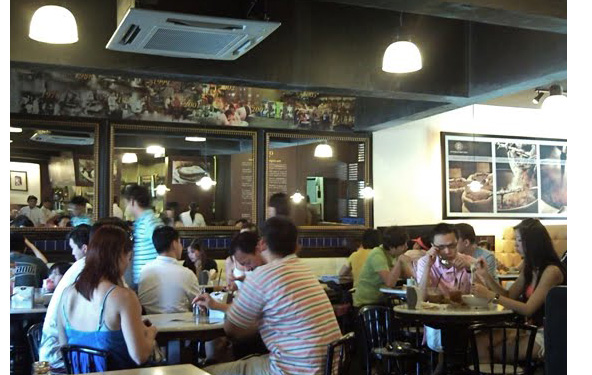
The culture of drinking in Asia is not about alcohol it’s about coffee and tea. It’s still about friends but it’s sober conversation as oppose to drunken ones. There are more coffee shops in Singapore than bars. Coffee shops are growing at a faster rate in India than any other form of F&B outlet. This appears to be down to more affluence, a desire to eat and drink out and a predominantly non-drinking culture. Of course there are a mass of bars in Singapore and across Asia but these tend to be filled with expats and Chinese and focused on certain areas and linked to Karaoke.

Religiously Muslims, Hindus and Buddhists – the main religions across the region – actively prescribe non-drinking of alcohol to their followers. Singaporean’s are just not brought up to get drunk in the way their English and American counterpart’s inparticular are. This in turn leads to a more civilized society, there are no drink related injuries for hospitals to deal with and society to pay for. There is not the violence that happens every weekend in most towns in the UK, no alcohol means that it just doesn’t happen, it’s just not accepted and not desired.

From a marketing point of view it means that if you want to target these people you have to think in a more sophisticated and creative way. Starbucks may be much maligned but they, Costa and other Western brands are growing in Asia at a rate of knots and along with the monster Asia coffee brands like Gloria Jean’s,Café Coffee Day and Coffee Bean are more effective at reaching many Asians than marketing through bars and alcohol. (Source: BrandRepublic; Picture: 4theloveoffood).

Where Fast Food mobile Apps fail, ECOFFEE mobile experience is set to win

A couple of days ago Appolicious published an interesting article about the increasing number of mobile Apps for fast food restaurants and their being mostly not useful. Many are the apps listed, from Taco Bell to McDonald’s.

All these chains offers accurate information on the internet but extremely bare bones restaurant locator apps. In McDonalds’ defense, at least their app offers information on getting a career with McD’s, along with some nutritional information.  Burger King’s lack of an app caught everybody by surprise because they have been so good with marketing their products through games via the Xbox 360 for years that you expected something that appealing on the apps side too.

Useful functionalities and entertainment are a must for nowadays apps, especially in a field – the one of Ho.Re.Ca – where interaction and service have always been a key factor to achieve a high customer satisfaction. Add that customers now are spoiled with information: they love to get informed about the brand and the goods they are going to purchase, about the environment where they are sitting, about the other customers comments and opinions about the “experience” they are going to go through.

We discussed this subject with our partners, a team of skilled UX designers, in order to create a useful, entertaining and carefully designed iPhone/iPad app for DESITA’s Retail and Ho.Re.Ca customers, delivering not only a great user experience but also the  sustainability and responsibility messages which are ECOFFEE’s own. Brainstorming led to the first draft of what is set to become the ECOFFEE mobile experience, the perfect blend among social marketing, in-store advertising and a great user experience to create a stronger bond among the brand, the consumer and the brand’ sustainability and responsibility strategies. Please inquire us directly for further information silvia@ecoffee.it

Sustainability in Italy: what big retail players are doing.

Italians are virtuous, with a constantly growing attention towards the environment among young people. This is the picture that emerges from the research about Italian Sustainability and emerging lifestyles: 2,500 interviews, a sample of the Italian population aged between 15 and 74 years. Objective: To identify the most common habits among Italians to reduce their environmental impact.

“The majority of Italians, 50.9%, is sensitive to issues related to sustainability, 48.6% said they buy environmentally friendly products. There is a 36.4% claiming to not care and a 12.7% which is almost hostile to the subject”, “explains Monica Fabris, sociologist, currently president of the Episteme institute of research. “Sustainability is primarily a response to unconscious needs: fear, for example. And the international crisis in this sense was crucial because it demonstrated the unsustainability of many behaviors, limited resources and has spread the importance of having more conservative attitudes. ”

This explanation of Fabris, that the sensitivity of the Italian added: “We are not the most attentive of Europe, but we have a different kind of sustainability. In the research we have identified four types of “green” attitudes. There are “promoters of a shared involvment” (10.9%) who practice a sort of militant environmentalism, they think that everyone can do something and that sustainability is a value. Then there are the “those who judge” (10.4%), people who feel the need to see polluters and waste producers being legally punished. The vision of “eco-nostalgic” (14.8%) is about a return to the past and considering saving and reducing consumption real goals. Finally, there is “the vanguard of sustainable consumption” (63,9%) who have a key to modern, pragmatic and are willing to pay for more virtuous behaviours” This last category direct their purchases mainly to products of the big market, identified as guarantors of attitudes ecofriendly.

“All the big brands have sustainable programs. The projects are very varied and range from research to packaging more easily disposable and recyclable materials to reduce water consumption, the increasing presence of photovoltaic systems to supplement the energy needs of the factories to the use of new production technologies with low environmental impact ” says Ivo Ferrario, director of communications Centromarca, the association of the most important companies active in Italy brand. “Huge efforts are also undertaken to provide consumers with a better information, and to educate companies’employees thanks to specific activities regarding the environmental and sustainability issues.” In this direction is the Total Quality Day organized by Coca-Cola HBC Italy: each year, employees spend a day and a half attending comprehensive educational programs about safety and environment. “We talk about the correct control of raw materials, top quality production processes, optimization of cargo handling and a more effective waste management,” says Alessandro Magnoni, Communication and External Relations Manager. “About sustainability, last June we put into operation a large cogeneration plant in Nogales (Vr), which has already reduced CO2 emissions by 66% and increased energy efficiency up to 83%. But this is just the beginning, we plan to equip all eight Italian plants with photovoltaic systems, an operation that will avoid the emission of 11,500 tons of CO2. ”

Another international brand is following the same path, Heineken, which in 2010 presented a ten-year plan Brewing a better future. “The aim is to reduce CO2 emissions resulting from production processes by 40% and to fall by 25% on water consumption. All by 2020 “explains Alfredo Pratolongo, Communication and Institutional Affairs Manater at Heineken Italy. A strong commitment to social responsibility is also the mission of Procter & Gamble, a leader in consumer products which collects 300 brands: “We have halved the production of waste and CO2 in our plants and use alternative energy generated by wind and photovoltaic systems “says the head of Italy’s sustainability policies, Renato Sciarrillo. He adds: “For those of us who handles many products – we have 140 factories in 80 countries -logistics is crucial: we want to move 30% by rail transport. But that’s not all. “Concentrated” products ensure reductions in packaging up to 45% and the research is aiming at finding new materials to replace plastics. ”

About packaging, Nestlé has a dedicated team that study sizes and materials to reduce environmental impact. “In 2010, in Italy we have avoided the use of 147 tons of materials including metal, paper and plastic. Our objective is to optimize weight and volume, to use materials that you can recover properly, to develop materials from renewable sources and to support initiatives to recycle and recover energy from used packaging “explains Manuela Kron, Nestlé Group Italy Corporate Affairs manager. “To do this we have added a cogeneration and regeneration power plant in San Sisto (PG) and Moretta (CN), which allow us to cut the emission of around 13 000 tonnes of CO2 per year.”

Investments in the study of eco packaging and using alternative energy are also key points for L’Oréal. “We have been working on green chemistry for over ten years and thanks to our research we have recently discovered cosmetic effects of natural sugars. This year we launched a major center for predictive evaluation in Gerland (Lyon) where more than 99% of our ingredients are animal-free tested. Our packaging use a high percentage of recyclable material, we only use wood fiber from certified forests. The Garnier brand, for example, in 2012 will cut the weight of packaging by 15%, “says Giorgina Gallo, managing director of L’Oréal Italy. And the future? “The global goal for 2015 is a reduction of 50% in CO2 emissions, 50% of water consumption and waste generated per unit of finished product. In particular, our factory in Settimo Torinese, in the forefront on sustainability issues, is finalizing two projects that use alternative energy to become, by the end of 2012, a zero emissions plant. ”

Always in Italy, another brand which is very attentive to sustainability is Barilla. “Over 92% of our packaging is recyclable and now we want to exceed 95% in advance to target set for 2014. In recent years we have supplied cogeneration pasta plants, developed energy saving projects and replaced the electricity used in the production of Mulino Bianco products by Renewable Energy Certificate System certificates. This has reduced by about 10% the CO2 emissions for each unit of finished product, “explains Barilla’s Head of Communications and Media, Giuseppe Cocconi. This anticipates the future: “We want to reduce the impact of our products in a timely manner ensuring production processes throughout the supply chain.”

And as we have already informed you about, another worlwide known Italian company, Illy, have been awarded for its sustainable approach during the production processes, receiving the DNV Green Coffee Responsible Supply Chain Process certification. A certificate that emphasizes respect for the ecosystem through the use of recycled packaging and non-polluting practices.
In Danone are applying a very tight control system too. “In 2011 we will reach the goal of being the only company in this market segment to use thermoformed plastic, a new generation made much lighter and with less plastic, for the entire range of products ” explains Gianluca Mormino, director of Danone factory in Casale Cremasco . “This system also allows you to sell the pots which are welded together, avoiding the secondary packaging. And we are studying biodegradable packaging. ”

There is another sector which is very eco-friendly, and Philips is one of the brands involved. “We have to meet annual targets tied to packaging, water and energy savings,” explains Sergio Tonfi head of communications. “In 2010, the” green “products accounted for 38% of our total revenues, in 2007 were 20%: this is the result of three years long investment in innovation worth about 1 billion euros” (Source: Manuela Croci -Corriere.it)
Walmart and its Green Revolution: a book talks about it

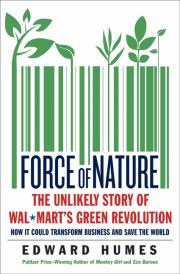
A new book, published this month, reveals Walmart’s struggle to redefine what it means to be green in the world of big business.

“Force of Nature: The Unlikely Story off Wal-Mart’s Green Revolution” by Pulitzer Prize-winning journalist and bestselling author Edward Humes, recounts the collaboration between Walmart’s former CEO H. Lee Scott, and later Mike Duke, Scott’s successor as CEO, and white water expert-turned Blu Skye sustainability consultant Jib Ellison.

20110531-154357.jpg

Humes, author of Eco Barons, tells of a small project initially intended to insulate Walmart from environmental criticism into a massive sustainability makeover, which now has snowballed beyond the retailer to influence whole industries, from apparel to dairy to banking, according to Amazon.com.

Ellison instituted a project at Walmart called “The Index” that challenged suppliers to root out inefficiency and waste, which the book details. Packaging shrank, saving millions of gallons of water, millions of pounds of cardboard, not to mention diesel fuel. Walmart’s sheer size, coupled with its lowest-pricing mission, means that producers are forced to take steps toward sustainability — and make natural, organic, and earth-friendly products widely available, according to Publisher’s Weekly.

Walmart’s switch to common household products in smaller packaging saved cardboard and the diesel fuel necessary to transport larger boxes.

Other changes including switching from non-recyclable boxes for frozen food to recyclable packaging that then could be sold as a commodity to recyclers.

The collaboration with Ellison engendered far-reaching changes as executives at the world’s largest retail company realized that a clean, green, efficient, less-wasteful, less polluting way of doing business can also be the most profitable way of doing business. (Source: GreenRetail Decisions)

Mobile consumers do prefer in-store purchasing, a research says.

According to JiWire’s research 79% of mobile consumers are ‘comfortable’ making purchases from smartphones or tables, even for products over the $1,000 threshold. Mobile shoppers are most likely to make purchases under the $1,000 threshold with about half saying they’ve made purchases over $100. Only 20% report making a purchase over $500 through a mobile device.

However, more important than those actually making mobile purchases is the fact that researchers believe mobile shopping is actually leading to more in-store purchasing. While many mobile shoppers logon to branded websites, many may be simply looking for product information, pricing or to check the availability. From there, they are going to brick-and-mortar stores to complete their purchases.

“What we are seeing with the evolution of mobile commerce is how the combination of mobile and location is transforming shopping behavior, enabling mobile advertising to drive in-store, brick and mortar consumer engagement,” said David Staas, Senior Vice President of Marketing with JiWire. “We are seeing this trend take place across a broad range of retailers and service providers, from national brands to local mom and pop deals.”

Researchers found:

• 31% of mobile shoppers research mobilly and then buy in-store
• 40% of mobile shoppers research mobilly then purchase via PC/desktop
• 20% of mobile shoppers research and then purchase via mobile

In addition to researching purchases, mobile shoppers are looking for local store locations, looking for daily deals or coupons and even sharing deal or product information with friends through email and social networks. (Source: Bizreport)

Introducing the Eco-Scale rating system for cleaning products

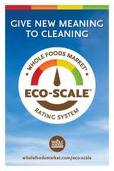
Wholefoods has recently introduced its new Eco-Scale rating system, a color-coded system under which products will be rated, red, orange, yellow or green based on the sp

ecific set of environmental and sourcing standards each product meets.

The company said it is committed to working with vendors to evaluate and independently audit every product in its cleaning category.  Red-rated products do not meet the Eco-Scale standards and will not be sold at Whole Foods Market.

Naturally, the green color code is the highest possible rating, ensuring that products have all of these features:

  • ✓ Full transparency, disclosure of ingredients on packaging by April 2012
  • ✓ Independent 3rd party verified compliance to standards
  • ✓ No ingredients with significant environmental or safety concerns
  • ✓ No formaldehyde-donors, preservatives which have the potential to release formaldehyde
  • ✓ No phosphates, chlorine, or synthetic colors
  • ✓ No animal testing
  • ✓ 100% natural fragrances
  • ✓ No ingredients with moderate environmental or safety concerns
  • ✓ No DEA, MEA or TEA—surfactants that have the potential to contain nitrosamines and other impurities
  • ✓ No synthetic, petroleum-derived thickeners made from nonrenewable sources
  • ✓ Only 100% natural ingredients
  • ✓ No petroleum- derived ingredients

Under current law, manufacturers do not have to disclose all ingredients in cleaning products. Under the Eco-Scale Rating System, Whole Foods Market’s household cleaning vendors will be required to list every ingredient on product packaging. To ensure compliance of the standards, all products will be audited through an independent third-party for verification before they are color-rated and labeled on shelves.

“Shoppers have a right to know what’s actually in the products they use to clean their homes,” said Jim Speirs, global vice president of procurement for Whole Foods Market. “We’ve always carefully monitored ingredients. Now, with Eco-Scale, we’re able to help shoppers buy eco-friendly products with confidence and provide safer alternatives for their households and for the planet as a whole.”

What is striking in fact is that almost three out of four (73 percent) adults falsely believe that the U.S.  government requires household cleaning products to provide a list of ingredients on the label, according to an online survey commissioned by Whole Foods and conducted by Harris Interactive in April among 2,483 U.S. adults aged 18 and older. Another two-thirds (64 percent) believe that many household cleaning brands opt to disclose the full list of ingredients on packaging, when in fact few provide this information on product labels. (Source: GreenRetail decisions, Wholefoods)

Starbucks getting creative about contactless payment

The introduction of contactless payment options at Starbucks dates back on January 2011, when the coffee-shop chain launched mobile payment in all U.S. company-operated stores, allowing customers to pay for in-store purchases with select smartphones.

Building on the earlier introduction of Starbucks Card Mobile App for select BlackBerry® smartphones, iPhone® and iPod® touch and a successful mobile payment test program, USA customers now have access to the largest mobile payment program in the U.S. and the fastest way to pay at Starbucks.

Starbucks Card Mobile App on iPhone (Photo: Business Wire)

Customers can pay with their smartphone by holding their mobile device in front of a scanner on the countertop and scan the Starbucks Card Mobile App’s on-screen barcode to make a purchase. Customers have successfully adopted this technology in test markets in Seattle, Northern California, New York and more than 1,000 Starbucks in U.S. Target stores.

Mobile payment is built on the Starbucks Card platform, which continues to experience significant customer adoption. Customers loaded more than $1.5 billion on Starbucks Cards in 2010, an increase of 21 percent over 2009, driven in part by the My Starbucks Rewards program which provides benefits to customers who pay with a registered Starbucks Card at participating stores. With the introduction of the quick and easy Starbucks Card Mobile App and the mobile payment feature, customer will find yet another reason to use their Starbucks Card for payment.

“Mobile payment is just one example of how we’re continually innovating on behalf of our customers to enhance the Starbucks Experience,” said Brewer. “A growing segment of our customers use smartphones, and through the Starbucks Card Mobile App, we’re providing them with the fastest way to pay.”

Just a couple of days ago, the coffee-shop chain has signed a deal with Barclaycard, in partnership with Visa Europe, allowing consumers to pay for products by scanning their contactless credit or debit card over a payment terminal.

‘[This] follows our successful adoption of other technologies including Facebook Deals and geo-fencing mobile couponing,’ said Brian Waring, vice-president, marketing and category, for Starbucks UK and Ireland.

Whether they are using the same Starbucks Platform in the UK or not is not clear, especially because there is a big difference between the media that is going to be used for paying – QR code on mobile phones in USA, debit/credit card in UK. Let’s wait until 2012 to see what will happen in UK (Source: Starbucks.com)

ECOFFEE at the next goGreen for packaging conference

We are happy to inform you that ECOFFEE is one of the partners of the next goGreen for packaging conference, that is going to take place in Rome next June 28th and wants to act as a catalyst for all those market players who believe sustainability is the future.
In a 20 minutes speech, ECOFFEE founder, Norman Cescut, will talk about the role of sustainability in the Retail business and why it is necessary for Retail to become greener.
Please contact us directly at info@ecoffee.it  for further information about the speech and for scheduling a meeting.

AR is running fast towards the fashion Retail industry

GoldRun is a new platform for retailers that matches mobile, Augmented Reality and social. Enjoy this video, comments are welcomed!

New Technologies for internet sales of beauty products

Irina Barbalova, Head of Beauty and Personal Care research at Euromonitor, explains how the beauty industry spreads its message using new technology. As internet sales of beauty and personal care (BPC) products increase, companies are looking for new ways to interact with consumers. With consumers sharing their experiences all across the web on social networking sites, some companies are more receptive to social interaction than others. A fear of negative reaction is keeping some companies off of sites such as Facebook and Twitter. However, smaller niche brands have accepted social networking as a means to spread their brand when marketing budgets are small. (Source: Euromonitor)