Category Archives: food retail

Sustainable supply chain: how to build it?

At the beginning of March 2011, McDonald’s announced its Sustainable Land Management Commitment (SLMC), a long-term plan to ensure the corporation only serves food (and uses packaging) certified as sustainably sourced. The initial focus is on five high impact products: beef, poultry, coffee, palm oil and packaging.  McDonald’s certainly have all the power to be able to win negotiations with suppliers and reach its goals, but what about small retailers who are buying from overseas?

Shirahime, a UK based ethical fashion consultancy, has published a guide to responsibly sourcing textiles and clothes from India.

Despite its narrow country and industry focus, the guide is packed with advice for any business looking to find responsible goods or services suppliers from overseas. Here’s an excerpt of the Shiraname’s guide.

Be clear about the outcomes you want to achieve
Define aims clearly and build a strategy around the outcomes you want to achieve. Don’t look exclusively for suppliers who have certification. Certification is a costly process and may not guarantee the specific outcomes youwant.

Instead, visit potential suppliers and examine their operations for yourself. If you do this, make sure you have a suitable translator and cultural liaison who can guide your decision making process. In addition, start networking, even if it’s with your competitors. If you do this up front it can vastly increase your chances of success in finding the right supplier.

Consider company size alongside business practices
There can be a correlation between a supplier’s size, the goods or services it provides, and its ability to operate responsibly.

As a broad rule of thumb, the larger the company the more comprehensive their offering will be. Yet the larger the company, the more likely it is that their business is focussed upon financial efficiency, not responsible practice. Therefore, if you’re looking for a responsible supplier it may be worth choosing smaller producers rather than bulk providers as your partners.

Consider alternatives to your preferred goods, service or country
In order to get the most responsible procurement deal, businesses have to change their mindset and be open minded about both the country of origin and the goods or service they’re looking to procure.

Be prepared to invest as well as purchase
Businesses need to think about how they can contribute long term value to their suppliers’ enterprise beyond a simple commercial deal. This is where the value of being clear in your outcomes and partnering with other companies can yield substantial benefits. (Source: Guardian.co.uk)


How to deliver customized in-store offers to shoppers?

One of the in-store marketing biggest issues ever is how to reach customers with customized offers while they are shopping. U.S.A retailers and consumers are going to have a solution handy in the next future: Shop O’Lot.  

Shop O’ Lot is a self service platform which makes major retailer participation very easy. The model is based on a predictive analysis engine, that builds a customer’s shopping profile, then allows retailers to reach these customers in real-time while they are shopping, offering them customized discount coupons.

The app uses GPS and bar-code scanning for delivering the content and will be released on the iPhone and Android OS platforms.

Bob Pack, CEO says, “major retailers are now competing with product search and comparison apps that can actually drive a customer to buy from a competitor, a practice known as “scan and scram.” We have a complete solution to really help drive retail purchases, this goes well beyond mere Geo- location and focuses on individual target marketing. Once we understand the shoppers tastes, delivering them customized product deals only by the store they are in, will help keep shoppers loyal.”

Shop O’ Lot is still in the testing phase and plans a 2011 launch and retailers and consumers, can sign up now to be part of our beta program directly on Shop O’Lot website. (Source: americanbankingnews.com)

Italian consumers love sustainable products but need better product information.

One of the findings of the “For a Sustainable Supply Chain: business and consumers point of view” survey conducted by the GfK Eurisko and promoted by the Sodalitas Foundation,  the product/service sustainability is ranked fourth among the criterias used by consumers when choosing, but if better communicated, will become an increasingly important requirement. During the investigation 500 consumers and 183 businesses were interviewed . To more than a third of the companies, sustainability is very important. However, only a minority (29%) in the interviewed sample declares to be thoroughly familiar with this concept, while a substantial percentage (45%) say they have “enough information”, confirming the gradual integration of this concept in the corporate culture .
The majority of consumers (63%) had heard of sustainability, even if only 19% of them (mostly young and with a high level of education) believe to know well its meaning, with a prevalence of the environmental (83% ) on the social aspects (64%).

The responsibility for a “sustainable development” is primarily attributed to the central Government (86%) and to local governments (82%), but a very high percentage of respondents (over 70%)  thinks businesses and citizens responsible to ensure the sustainability of the development. The opinions about the companies’ commitment to sustainability is different: one third of the sample (35%) expressed a positive opinion, a  third is critical and another third has no a definite opinion about it.

Only a third of consumers (32%) had heard of “sustainability of the supply chain” (a percentage that is growing in those aged more mature and – especially – among those with a higher education degree). But after the concept was briefly explained a large majority (76%) said to believe that companies must ensure the sustainability of their supply chain. Today, already one quarter of Italian consumers are chosing which products to buy also using supply chain sustainability criterias. Three quarters of consumers also agreed to pay more for a product which is guaranteed in terms of its sustainability. The focus is on all product categories but in particular on food (71%) and detergents (65%). And, at least in theory, the majority of consumers (76%) would be willing to pay more for a guaranteed product in terms of sustainability (though – the majority said to be ready to pay only “little” or “very little” more). (Source: GfK Eurisko, Image credits: Transocean)

Sustainable Coffee: what is it and is it really profitable?

Sustainability in the Retail & Ho.Re.Ca Business, what our ECOFFEE project is about, is based on a main concept: communication to consumers and customers must be clear and simple to make them better understand what are the added values of buying/consuming sustainable products.

For instance, let’s talk about Fairtrade, organic, Rain Forest Alliance or UTZ certified coffee. These are some of the labels with which coffee is traded nowadays and consumers can be quite confused by this abundance of sometimes not well explained terms. 

Among the many information source we always refer to when asked “What is sustainable coffee about?” we found that the Imbibe magazine one is the most consumer-friendly one, covering all main aspects of sustainability in the coffee business.

The other well known issue to our blog readers is “Is it really worth investing in sustainable coffee?”. Commodity traders know the answer, and this is “Yes, of course”. A recent publication by Intracen organization (International Trade Center), shows that “Demand for conventional (i.e. non-certified) coffee is largely stagnant in these markets, whilst it is thriving in emerging markets. Certified coffee, however, is showing strong growth and higher retail prices, particularly in mature markets. This trend is also followed by other commodities, including tea, cocoa and cotton. A new industry of inspectors and technicians has emerged to service the sustainability segment of the market”. 

Paperless Cafés

Getting green while following technology? Sure! Many Cafés are now offering digital newsstand, which are both green and modern, providing people with paper-free updated news at no cost. Here you can find two examples. The big corporation one, Starbucks, and a small Café in Croatia. 

The Starbucks Digital Network has debuted their exclusive content network to further enhance the customer’s in-store experience. Customers who use the free Wi-Fi at more than 6,800 U.S. Starbucks locations will be greeted with the Starbucks Digital Network. As a channel where consumers will be plugged into a variety of reading sections like news, entertainment and business, this Starbucks Digital Network will keep readers engaged and going back to the famous coffee house for more access

On the other side of the Ocean, the Box Coffee Shop in Split, Croatia is replacing its offer of free newspapers with iPads. While each tablet is free to use, there is a security tag to alert baristas of any theft.
The idea is the same, the scale is a little bit different, but what is important is that the message must be clear: less paper, more green. (Credits: Trendhunter)

Enoc Retail plans expansion to Middle East

Enoc Retail Systems Holding, the retail division of Emirates National Oil Company (Enoc), plans to franchise its Zoom convenience-stores and Pronto, a fresh food and gourmet coffee concept.
Zoom, which operates six stores at Dubai Metro stations, is looking to expand to 28 stores in total, Enoc stated recently.

The convenience store brand, which is currently also present in eight stores within the Enoc/EPPCO network, is set to expand both as stand alone stores and at more Enoc/EPPCO service stations, it added.

Pronto, established in 2008, currently operates 21 outlets within Enoc/EPPCO service stations. Burhan Al Hashemi, managing director of Enoc Retail, said that expansion plans were part of a long term strategy to establish Zoom and Pronto as premier retail providers across the Middle East.

“Enoc Retail has proven its competencies in a short span of time. We are now open to share our expertise by franchising the successful retail concepts and reach out to a wider audience in the Middle East,” added Al Hashemi.

Enoc/EPPCO is the pioneer of convenience store retailing in the UAE, introducing mini marts in 1988 in Dubai and the Northern Emirates.

Currently, Enoc Retail employs more than 4,500 frontline staff, meeting the needs of over 600,000 customers a week. Enoc Retail operates a network of 170 Enoc and EPPCO service stations in Dubai and the Northern Emirates. (Source: Arabianbusiness.com)

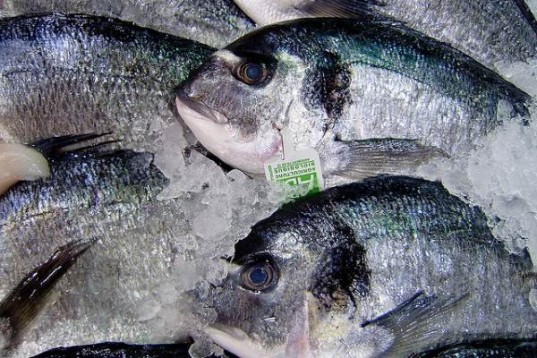
Sodexo and Costco for a sustainable seafood

Food giants Sodexo and Costco have both committed to improve the sustainability of their seafood.

Sodexo, the $21 billion food service company, has announced a goal for all its contracted seafood to be certified by the Marine Stewardship Council (MSC) or the Global Aquaculture Alliance’s Best Aquaculture Practices (BAP) by 2015.

Under the plan, Sodexo will review all wild caught and farm raised seafood purchases and set short, medium and long-term goals with its contracted seafood vendors.

The target is part of Sodexo’s Better Tomorrow sustainability plan. The Better Tomorrow Plan makes 14 commitments to the environment, health, wellness and community support.

Meanwhile, Greenpeace has announced that after eight months of pressure, the world’s ninth-largest retailer has agreed to remove over a dozen seafood items from sale until the company can find an MSC-certified option. Costco will place a hold on selling Atlantic cod, Atlantic halibut, bluefin tuna, Chilean sea bass, Greenland halibut, grouper, monkfish, orange roughy, redfish, shark, swordfish, skates and rays.

Costco is also in the process of shifting towards more sustainable sources of tuna for fresh, frozen and canned varieties of the fish, Greenpeace said.

Costco will work with the World Wildlife Fund (WWF) to examine its remaining wild-caught species and determine the best way of moving to sustainable alternatives, Greenpeace said.

Costco and WWF have had a partnership since July of last year. Its first goal was to gauge the adherence of Thai-based shrimp farmers to draft standards drawn up by the Shrimp Aquaculture Dialogue, WWF said, and then to develop a strategy to guide those suppliers to full compliance. (Source: Environmentalleader.com, Photo: Thomas Quine)

DSE: See-through display showing the way for retail digital signage?

The STRATACACHE PrimaSee system  was what appeared to draw most of the attention at the last Digital Signage Expo in Las Vegas. 
So is the display basically an LCD without a black background? Sort of. PrimaSee showcases high-definition, dynamic video advertisements embedded in a see-through glass panel. These translucent promotional videos would correspond with products visible behind the displays, say in a grocer’s freezer aisle, to convey point-of-purchase or point-of-decision brand messages

“Effectively it’s an LCD technology, (but) the base nature of the screen is different than you’d have in a normal LCD, both because of the background and then the color masks and other things that go into translucency,” STRATACACHE CEO, Chris Riegel said. “But in basic prospect, yes, same kind of idea.”

The content for a translucent panel also has to be different, as is the way it is lit, but the technology of the display isn’t the most important aspect of it, he said.

“I think the most important thing is that it shows an example of — if you look at all the digital signage in the show, too much of it is bolt-on, things that you can tell in a retail environment or a customer service environment after the fact,” he said.

“This is a prime example of where the digital signage industry needs to move, which is integrating the digital experience into that consumer experience so that it’s seamless for that customer and helps to transform or change an existing experience. Everybody can understand going to the freezer in the grocery store, going to the cooler at the convenience store. How do I integrate media into that environment … to have digital media help that experience?” (Source: Retailcustomerexperience.com)


EuroShop: green is “hot”

Back from the EuroShop, with lots of a ideas and a big certainty: green is “hot”. From Green IT to green supermarkets and green products: retail is now aware of the trend toward sustainable economic management. Obviously, the market is still immature and retailers have lot to learn about what can be really sustainable in the long term – and this is where professional services like the ones we offer can be of a great help.

As stated on the EuroShop website, earlier this year, German Federal Minister of Economics Rainer Brüderle visited the “Klimamarkt” (“climate market”) by Tengelmann, across from the Tengelmann headquarters in Mülheim an der Ruhr. The politician of the FDP party said: “We need pilot projects like this to gather experience on how climate protection and economic efficiency can be reconciled.” Tengelmann deems the “Klimamarkt”, which already opened in December of 2008, to be “Germany‘s first CO2-free supermarket.”

The project admittedly does not stand up to an intense cost effectiveness analysis. “Demolition and new construction would have been cheaper”, Tengelmann spokesperson Jutta Meister admits on inquiry. And this is issue n.1 to take into account: the economics of retail sustainability.

“Particular attention also always needs to be paid to the economical aspect of sustainability”, says Tobias Walter of tegut. “We build beautiful marketplaces for our customers, which thanks to our consolidated know-how generally are not more expensive than the otherwise widely common ‘shoe box buildings’”. Kai Falk, Managing Director of Communication and Sustainability at the German Retail Federation HDE also believes: investments in sustainability in retail have a chance on a larger scale only if they also pay off financially.

And this pay off can be energy savings. In food retail, according to the EHI more than 55 Euros per square meter of sales floor are incurred for energy, in which cooling at 44 percent accounts for the largest electricity consumption. In non-food retail on average 31 Euros per square meter need to be spent. Here the largest portion at 65 percent is caused by lighting expenses.

The EHI notices a large willingness in retail to invest in energy savings practices. 80 percent of polled retailers are said to be willing to invest in energy-saving cooling systems and equipment. This high readiness can be explained by savings expectations of up to 20 percent. Aside from investments in new cooling devices, the choice of cooling agent is also getting more and more important, especially since the old R22-systems have to be converted. Cooling with CO2 was one of the big trade fair topics at the EuroShop 2011.

Many commercial enterprises work on new projects and initiatives about a more sustainable retail. Hardly anybody believes they can afford to not be a part of green topics. The discerning public will intently look at what’s show and what is true concern. But ultimately it is the consumers themselves that have to start rethinking, because they choose where they shop. They choose what they would like to stay away from.

MENA: retail sales are still growing

Retail sales in the MENA region jumped 13.2 percent last year, making it the only region in the world to post double digit growth, accountancy firm Deloitte has said.

In its latest retail report, Deloitte said emerging markets were the most promising for consumer sales and marked the Middle East as a stand-out region.
“While global economic growth is on the mend, most of it is taking place in emerging markets, many of which are experiencing rapidly increasing consumer spending,” said Nasser Sagga, audit partner at Deloitte and Touche.
“Within the Middle East there is a number of emerging economies that meet the criteria of strong growth prospects and good demographics – Egypt and Turkey being two such examples.”

The report identified the 250 largest retailers around the world in 2010, more than 11 percent of which were based in the MENA region.
Despite seeing a significant drop in trade and tourism during the financial crisis, the Gulf remains a key a market for retailers.

A report last year by real estate consultancy CB Richard Ellis found Dubai ranked second only to London in terms of the number of global brands with a presence in the city.
In a ranking of 294 of the world’s top retailers, more than half had a presence in Dubai. “Despite continued uncertainty for some retailers across the world, luxury brand retailers have remained active and were responsible for the most new store openings,” said Peter Gold, head of Europe, Middle East and Africa cross-border retail at CBRE. (Source: ArabianBusiness.com, Photo: hadiyahrewardnetwork.com)