All posts by silviaecoffee

Freshly-baked baguettes when bakeries are closed? YES!

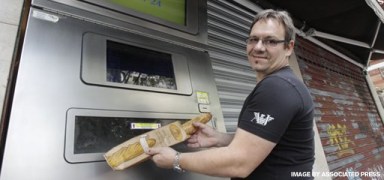
Vending machines are usually associated with long-life and processed packaged foods, to be conveniently purchased at any time. However, an entrepreneurial French baker recently rolled out 24-hour automated baguette dispensers next to his two bakeries in Paris and Hombourg-Haut, which ensure he can sell his baguettes even after his shops have closed.

Jean-Louis Hecht came up with the idea when, living above his boulanger, he was disturbed countless times by people wanting to buy bread after he had closed shop. The bread is partially cooked before being put into the machine — which cost EUR 50,000 — and finished off when a customer orders; delivering a hot, freshly-baked baguette within seconds. Each stick costs EUR 1, and when the machine debuted in January the baker sold 1,600 baguettes, reaching sales of 4,500 in July. Hecht told the Associated Press “This is the bakery of tomorrow. It is answering a real need. People who work at night or early in the morning can get their fresh bread. To me it’s a public utility.” The video below demonstrates how the baguette dispensers work:

Hecht puts himself at a financial advantage to his competitors, who close over public holidays and after business hours. Is there a demand for similar fresh convenient food in your area?

via Vending machine dispenses freshly-baked baguettes | Springwise.

Lack of co-operation may kill Retail Sustainability Projects

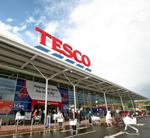
In 2007, Tesco’s CEO Sir Terry Leahy pledged to track and put carbon labels on all the chain’s products as part of a “green revolution,” but has backed off the plan

In February 2011, Leahy called on governments around the world to work more efficiently with private companies to ensure that low-carbon growth innovation is not unnecessarily hindered by bureaucratic red tape. Now it seems, the lack of cooperation among companies to help defray the costs of carbon labeling contributed to killing the program.

Tesco told the U.K. trade magazine The Grocer it planned to discontinue the program after and wind down the project after finding research for each product involved months of work. Currently 500 of Tesco’s products have carbon labels while more than 1,000 have been researched.

“We expected that other retailers would move quickly to do it as well, giving it critical mass, but that hasn’t happened,” Tesco’s climate change director, Helen Fleming told The Grocer. But other retailers failed to get involved or share information to help reduce the costs of the program, making it to costly to continue.

Tesco was named the best U.K. company for its efforts in tackling climate change by the FTSE 350 Carbon Disclosure Project in 2011 and was awarded top retailer globally for two years running. The retailer opened its fourth zero carbon footprint store in January.

The chain may be backing off the labeling program for now, but hasn’t given up its commitment to the concept. “There are an enormous amount of companies that research the carbon footprints of their products,” Fleming told The Grocer. “But how do you ramp that up to the top level? We now need to make the right long-term decision and we’re talking about what we do next.”

via Tesco Gives Up On Carbon Labeling – Green Retail Decisions.

India Lets Starbucks, Ikea Open Wholly Owned Stores After Wal-Mart Reverse

India abandoned a rule against foreign single-brand retailers operating stores without a local partner, paving the way for global companies including Starbucks Corp. and Ikea.

The government ratified a Nov. 24 cabinet decision to raise the ownership limit to 100 percent from 51 percent for single- brand, Trade Minister Anand Sharma said in a statement yesterday. The new rules take effect immediately and require the companies to use smaller Indian companies for at least 30 percent of procurement, he said.

Wal-Mart Stores Inc. , Carrefour SA and other foreign chains are still excluded from India’s $400 billion retail market after an attempt last year to change the law failed. Prime Minister Manmohan Singh’s administration has struggled to advance its initiatives amid opposition from its own allies and a corruption scandal that paralyzed parliament.

“This is a welcome move with a clear potential to lift the general mood in the economy,” Rajan Bharti Mittal, managing director at Bharti Enterprises, Wal-Mart’s Indian partner for wholesale hypermarkets, said in an e-mailed statement. “We hope the initiative is a precursor to further liberalization in the sector in the days to come.”

Pantaloon Retail India Ltd., India’s largest retailer, gained in Mumbai trading after the announcement. The stock rose as much as 10 percent, the most since Nov. 25, while Shoppers Stop Ltd.  surged 20 percent. Trent Ltd., which has a franchise agreement with Tesco Plc, rose as much as 6.9 percent. India’s benchmark Sensitive Index rose 0.4 percent.

Waiting for Multi-Brand

“People think that this would lead to a positive stance on multi-brand retail soon,” Sameer Narang, an Mumbai-based analyst with HDFC Securities Ltd. said in a telephone interview. “My opinion is that it’s not coming any time soon, given the way things went the last time the government tried to introduce it, I doubt a lot of traction will be seen on it.”

Starbucks would compete in India with operators including Lavazza SpA’s Barista Coffee Co. and closely held Cafe Coffee Day. The Seattle-based coffee chain said in November it intended to open its first store in India this year.

“Ikea welcomes the decision from the Indian government to allow 100 percent FDI in single-brand retail,” Nivedeeta Moirangthem, the furniture and housewares retailer’s India spokeswoman said in an e-mailed statement. India is a very interesting potential retail market for the Ikea Group.’’

Calls and e-mails to the Starbucks public-relations team in Seattle weren’t immediately answered. Starbucks signed an agreement with India’s Tata Coffee Ltd. in January 2011 to source beans and consider opening stores.

via India Lets Starbucks, Ikea Open Wholly Owned Stores After Wal-Mart Reverse – Bloomberg.

In Detroit, community soup dinners fund local creative projects

It’s no longer uncommon to see creative endeavors funded by the crowds. What is unusual about Detroit Soup’s approach, however, is that the funding — and selecting — of projects takes place via a monthly public dinner.

Those in the Detroit area who are interested in participating can simply turn up for one of Detroit Soup’s dinners on the second Sunday of the month. For USD 5 they get soup, salad, bread and pie, as well as the opportunity to hear four creative project proposals and vote for the one they think most deserves to be funded. The money raised that night — typically between USD 600 and USD 900 — is then given to the proposal that wins the most votes.

There are actually several other like-minded efforts in the Detroit area, such as The Dearborn Soup, and there is a guide to similar granting dinners around the world at SundaySoup.org. Social entrepreneurs far and wide: time to get involved!

via In Detroit, community soup dinners fund local creative projects | Springwise.

The Future of Retail: trends to be aware of

The following is an anstract from a great article “The Future of Retail” by IDEO‘s Dana Cho and Beau Trincia published on “The Rotman Magazine”, Jan.2012. Full version available here. Enjoy and comments are welcomed!

“TOUGH ECONOMIC TIMES have hit traditional retailers hard, particularly in North America. Circuit City and Borders have filed for bankruptcy; Ann Taylor and Home Depot have closed hundreds of stores; and American Apparel is reportedly millions of dollars in the red, to name but a few. The official reasons for these failures range from overly-aggressive expansion strategies to unfortunate investment decisions – but, in reality, a big driver of this retail upheaval is old-fashioned belt-tightening

Store owners have long believed that the ‘thrill’ of shopping – that visceral, emotional rush that people get when touching or interacting with a product before they buy it – would uphold their popularity. But e-commerce Web sites are disproving this axiom by generating similar excitement online with concepts such as ‘flash sales’ and ‘social shopping’. For example, GILT Groupe offers its members daily flash sales, which feature luxury goods in low quantities for an extremely limited time, giving people only a few minutes to make purchase decisions. The site, which launched in 2007, now has a valuation of US$1 billion. Meanwhile,  Svpply has built a social network around shopping, letting its users track trends, including the items their friends buy. Its popularity has grown seven-fold since its introduction in late 2009.

As online retailers slash shipping times and costs to next to nothing, bricks-and-mortar retailers can no longer depend upon instant gratification as a competitive edge. Online giants Zappos and Amazon now send purchases overnight at a discount and provide second-day service for free. The success of these tactics suggests that virtual storefronts can be at least as effective as physical ones, if not more so. So, how can bricks-and-mortar retailers survive – and thrive – as consumer attitudes and buying habits change?

Although digital channels may be better positioned to provide short-term transactional value, bricks-and-mortar stores still give retailers the best space in which to establish long-term connections with customers. Let’s look at how a few companies are shifting their mindsets and moving from driving transactions to encouraging inspiration and discovery; from featuring ‘expert staff’ to ‘informed enthusiasts’; from targeting shoppers to targeting product owners; and from focusing on revenue generation to R&D.

During the 2010 holiday shopping season, 48 per cent of consumers who used a smartphone in some way said they purchased goods in retail stores, while nearly as many – 45 per cent – bought items online via computer. However, the majority also said that, regardless of how they ultimately acquired the product, they had visited an actual store to browse. This suggests that although consumers often opt for the convenience of digital channels to make purchases, bricks-and-mortar stores continue to play an important role in the shopping journey – primarily where product discovery and inspiration are concerned.

From Driving Transactions to Encouraging Inspiration

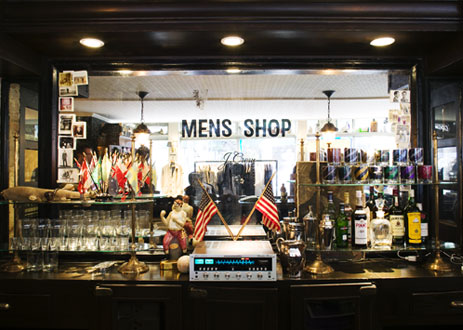
J.Crew’s Liquor Store provides a prime example of doing exactly that. J.Crew opened its first men’s clothing store in 2008 with the goal of inspiring exploratory shoppers – people who weren’t current customers of the brand. At the time, J.Crew’s menswear had little following, and the retailer sought to raise its profile through a dedicated storefront. It took over a historicwatering hole in New York’s TriBeCa neighborhood, and rather than focus on packing in as many items into the 935-square-foot.

Customers today want retailers to be less about well-orchestrated brands and carefully rehearsed answers and more about transparency, authenticity and passion.  Rotman Magazine Winter 2012 / 49 store as possible, J.Crew kept the bar’s atmosphere intact, stocking shelves with bottles and filling the room with vintage furniture and non-J.Crew brands such as Timex,  Red Wing and Mackintosh. Retailers who believe in conventional wisdom would consider this a waste of precious floor space that could have been devoted to as many sellable brand-specific products as possible. However, J.Crew’s goal was to raise awareness of its men’s line – and pique the interest of potential customers. The concept appears to be working: J.Crew has subsequently opened three more Men’s Shops, and although the company declines to provide sales figures for individual stores, CEO Micky Drexler recently told investors, “We are beyond thrilled with the performance of our stand-alone men’s stores.” J.Crew earned $44.7 million in the first quarter of 2010, up from $20.4 million during the same period a year ago. In addition, its chief menswear designer, Frank Muytens, was ranked among the top in his field in GQ’s 2010 Best New Menswear Designers competition.

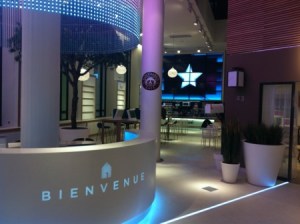
Using physical spaces to drive inspiration rather than transactions isn’t limited to the retail industry. In 2010 Crédit Foncier, a mortgage lender in France, invested in a high-profile store in Paris’s Opera district to inspire people to want to own a home. Most lenders make in-person visits from prospective borrowers as perfunctory and short as possible, gearing information toward people who plan to buy a home in the near future. In contrast, Foncier Home targets anyone who might be thinking about home ownership – even if it’s just a long-term goal or dream. The store includes a café, where people can meet casually with a real estate agent while looking over residential listings. It also includes a section with information about renovations and remodeling – services that Foncier Home doesn’t yet offer but are an exciting, aspirational aspect of home ownership. Although the company sells nothing tangible and has no real need to maintain a large retail space, Foncier is banking on the notion that a discoverybased experience such as the one made possible in its flagship store will encourage more people to become home buyers. And when they do, Foncier Home will be top-of-mind as the go-to lender. Crédit Foncier expects this concept to drive growth in the future and has plans for expansion.
From Expert Staff to Informed Enthusiasts

Powered by social media, peer recommendations are gaining ground in power and influence. The fact is, as consumers rely on friends, social networks and other independent resources for expert information, the role of the store associate is shifting dramatically.

The new purpose of a retail store lies in its ability to represent an organization’s actual culture and values, captured and rendered by its sales associates. Customers today want retailers to be  less about well-orchestrated brands and carefully rehearsed answers and  more about transparency, authenticity and passion. Store associates, therefore, need to evolve from ‘expert staff’ into informed brand enthusiasts who are proud of their organization.

The shift from being an expert to being an enthusiast – someone who believes in the brand and organization they work for and can speak passionately about the products at hand – has less to do with scripted service and more to do with organizational design. Many leading-edge U.S. retailers have taken similar personnel-oriented approaches. Perhaps the best known is Apple, which transformed consumer technology retail with its retail stores. For the Apple Store’s tenth anniversary ‘refresh’ this year, the company invested heavily in supporting its enthusiastic store associates with service-enabling technology rather than in a redesign of the bricks-and-mortar interior

From Targeting Shoppers to Targeting Owners

Retail stores have traditionally been designed for shoppers with the intention to buy and, perhaps as a result, retailers have long depended on in-store marketing and communications to sell the quality and other worthy attributes of their products. Under the new paradigm we are describing, bricks-and-mortar retailers have an opportunity to acknowledge the value of the  product owner’s role as a brand ambassador and key influencer on other shoppers.

As a result, designing the bricks-and-mortar store for the consumer who already owns your products (versus the consumer who is shopping) can have profound effects on a brand. By focusing on participation in the store – through education, trials and membership experiences rather than marketing, promotion and sales – retailers are positioning themselves for a longer-term, more open relationship with customers, helping them successfully evolve with the 21st century.

Nike’s branded stores pull in repeat visits from owners via its Nike+ Run Clubs, which meet at designated shops worldwide. Building on its platform of performance-tracking products and Web site, Nike+ is now the largest running club in the world, with more than three million members. In 2009 alone, membership grew by 50 per cent. Athletes of all skill levels train together and are privy to product trials and expert clinics. Nike motivates owners to use its products as a group, and the group inspires other curious runners to join them – and buy Nike gear – through camaraderie and knowledge-sharing. Taking the concept a step further, in 2010, Nike opened its first ‘category experience store’ dedicated solely to the sport, Nike Running Stanford, in Palo Alto, California.

From Revenue-Generator to R&D Engine

The paradigm shift we are describing questions, at a fundamental level, the role of the physical store in a retail organization’s business. As the channels to buy continue to multiply – from new e-commerce models to mobile-phone payments – traditional retailers face more competition than ever before. If consumers can buy anything anywhere at anytime from anyone, bricks-andmortar stores needs to derive new meaning and value for their business in order to remain a strategic asset.

Fortunately for bricks-and-mortar, not all channels are created equal, and the traditional retail store maintains an important edge over the digital realm: the physical space provides a direct, personal connection with consumers. Smart retailers have begun using the storefront to foster relationships with people, which means going beyond selling products or presenting a well-orchestrated brand experience to understand existing and potential customers and their needs. In short, they are using the retail floor as a platform for learning.

These retailers realize that developing a new offering behind the scenes until it is exactly right is a slow strategy that doesn’t allow for quick adaptation in a rapidly-shifting market. Instead, they ‘beta test’ new offerings and experiences and quickly pivot the offering on the fly as dictated by actual customers. For example, at the height of the recession, Urban Outfitters opened an experimental store in Los Angeles called  Space 15Twenty, which aims to attract – and study – customers other than its typical college student. Brand collaborations with Santa Monica bookseller Hennessey + Ingalls and New York vintage shops What Comes Around Goes Around and Generic Man act as magnets for people who don’t typically shop at Urban Outfitters.

In a sense, it’s a store for tomorrow’s customer, rather than today’s sales. The store is an investment in market reconnaissance, rather than solely a means toward hitting revenue targets and achieving profitability; its primary goal is gathering customer information from which Urban Outfitters can learn. While recession has hit some retailers very hard, in the first quarter of 2010, Urban Outfitters saw a 72 per cent increase in profits.

CEO Glen Senk credits creativity and experimentation. “We don’t go about revenue and profit as a goal. Rather, we focus our energies on the customer experience: innovating, making beautiful products, really pushing the limits of our brand expression and constantly refining how we operate. Revenue per square foot is the result of that focus, rather than the starting point or motivation.”
A new Kinetic-based tool to track shoppers interactions

Nintendo’s Wii platform has already sparked applications well beyond the world of gaming, so it’s not entirely surprising to see Microsoft’s Kinect do much the same thing. Enter Shopperception, a Kinect-based tracking system that gathers data on shoppers’ interactions with the products on retail shelves.

The brainchild of Argentinian development company Agile Route, Shopperception uses Kinect sensors to bring 3D spatial recognition capabilities to market research applications that have traditionally relied on costly and error-prone human observers. Brands, researchers and retailers can then continuously monitor the way shoppers interact with the products on the shelves, including metrics such as how long they spend, which products they touch, which are put back and which are ultimately purchased. They can also use the technology to compare the success of competing shelf layouts or point-of-sale promotions, for example. “Heat map” reports, meanwhile, are available to depict consumers’ interest in different products or shelves. The video below demonstrates Shopperception in action:

One would be hard-pressed to think of a better way to study consumer behavior than by unobtrusively tracking real-world shoppers in a natural retail setting. Brands, retailers and researchers: one to get involved in!

via In retail stores, research tool uses Kinect to track shoppers’ behavior | Springwise.

A new open online platform to share knowledge on hotel sustainability by Accor

Accor, the world’s largest hotel group and operator of brands such as Ibis, Novotel and Sofitel, said it had launched the online platform to make information on sustainability, including, research, surveys and case studies of good practice, available to any operator, whatever their size, for free.

The move coincides with the completion of a major piece of new independent research by Ifop on behalf of Accor that shows the vast majority of hotel guests are concerned by sustainable development.

Research findings
Accor’s executive vice president for sustainable development, Sophie Flak, said the findings confirmed there could be no more excuses for hotels not taking action on environmental, social and economic development.

“Sustainability is a very well known concept among hotel guests,” she said. “Discovery has gone; it is time for concrete action.”

The survey of 7,000 Accor guests across six countries, including the UK, France, Germany, Australia, Brazil and China, found that eight out of 10 hotel guests felt sustainable development was important to them. It also revealed that guests had high expectations for hotels to take action across four key areas: water, energy, waste and child protection.

But Flak said one of the most important findings of the survey was that a majority of guests now expect a hotel that implements sustainable policies to be a comfortable one to stay in.

“66 per cent of guests said a responsible hotel was a comfortable hotel,” she said. “No one can tell me now that they can’t set up a sustainable hotel because it will not be comfortable.”

Environmental targets
Accor, which operates 4200 properties across 15 brands in 90 countries and employs 145,000 staff, launched its own five-year sustainability programme, Earth Guest, in 2006. The programme, however, has only been partially successful in meeting its objectives. Accor set itself a target to reduce its energy by by 10 per cent between 2006 and 2010 but missed it by 4.5 per cent, while it only reduced paper waste by 53 per cent against a 70 per cent target. But it exceeded its target on water, cutting it by 12 per cent against a target of 10 per cent. It has yet to set targets on carbon emissions, said Flak, but will be doing so in a new environmental strategy the company will be announcing in early 2012.

Common standards
The release of the data, early next year, will coincide with the planned launch by the £3.7 billion international tourism industry of common standards to calculate and report on the carbon emissions of the sector.

Accor said findings of its latest research were now available on its open platform, Earth Guest Research. It wants other hotels to use it to adopt sustainable policies and said it plans to release several pieces of new research a year. In return, it is calling on other hotels to share their research and methodology so the whole industry can benefit.

“Sustainability can’t be handled by people who know nothing about it,” said Flak. “That is why we need these documents and facts.”

In September, the UN World Tourism Organisation launched an online toolkit to help hotels evaluate energy consumption, find renewable sources and cut their cost through improved efficiency.

via accor news | Accor creates open platform to share knowledge on hotel sustainability.

Subway Eco-Store Receives Silver LEED Certification

Subway Restaurants has been taking part in a lot of green initiatives lately – such as switching out thousands of incandescent bulbs for energy efficient ones. But the biggest thing they’re doing is building new restaurants according to the US Green Building Council Guidelines in an effort to receive LEED Certification.

Their first Eco Store in Kissimmee, Florida received a Silver Certification this week, by reducing its energy usage, water consumption, and waste production through more efficient equipment, and using more responsible practices. It’s estimated that the Subway Eco Store uses about 20% less energy than a standard Subway store would in a similar location. Look forward to two new Subway Eco Stores opening this week in North Carolina and Louisiana.

via Subway Eco-Store Receives Silver LEED Certification – Greener Ideal.

Tesco to free up shelf space with augmented reality trial | VIDEO

Tesco is trialling augmented reality technology in its stores and online offering as it looks to sell more bulky products, including consumer electronics, without sacrificing shelf space and to reduce returns.

Consumers can use the in-store technology to generate a 3D image of a product and find out its specifications by holding a product key or Tesco Direct catalogue up to a webcam.

The webcam is connected to a computer terminal, which will display the product information on a screen and remove the necessity for displaying the physical products on shelves.

Software for the technology has been developed by British-based Kishino.
http://www.youtube.com/watch?feature=player_embedded&v=S5QDRoxuHtk

Customers can choose to buy the product in-store or order it to be delivered to their homes via Tesco Direct if it is not in stock.

The strategy behind the concept is to integrate augmented reality into the everyday shopping experience.

Augmented reality-compatible computer terminals are being trialled in the entertainment and electronics sections of Tesco stores.

There are currently seven stores that have the augmented reality terminals in entertainment sections and five that have them in the electronics section.

Their locations include Wembley, Milton Keynes and Boreham Wood.

Some 40 products are being trialled in the augmented reality initiative including televisions and ‘Pirates of the Caribbean’ Lego.

The augmented reality technology will allow customers to spin the virtual TV around to see the connector points on the back and get an idea of the size of the television.

Tesco is also trialling the use of wi-fi in some of its stores, which it claims has been a success and is expected to be rolled out further.

Tesco will also encourage consumers to use the technology on their home computers by holding up the Tesco Direct catalogue to their webcams, after installing an augmented reality plug-in.

The supermarket chain also hopes the use of augmented reality on customers’ home desktops will reduce the number of returns, as customers can get an idea of the size of the product before ordering online.

The software requires a two-way camera meaning, it is currently only compatible with desktop computers or mobile devices that have the two-way capabilities, which includes the iPad and latest iPhones.

via Tesco to free up shelf space with augmented reality trial – Marketing news – Marketing magazine.

World Green Tourism leaders meet in Abu Dhabi

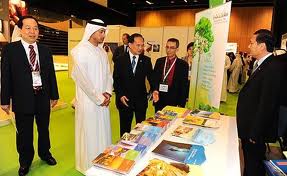
Presented by Abu Dhabi Tourism Authority, World Green Tourism Abu Dhabi (Dec. 5-7) is a global event to provide the much needed platform dedicated to sustainable tourism.World_Green_Tourism

Held over three days, the event is the largest ever gathering of government officials, regional and international tourism authorities, environmental agencies, industry leaders, urban city planners, architects, developers, institutional investors and financiers, airlines and tour operators, green product suppliers, universities and academics to examine this issue.

The event aims to support and further enhance sustainable tourism globally and in the region by creating opportunities where industry leaders can meet and discuss immediate challenges and effectively formulate solutions to pressing environmental issues.

The WGT is a three-day conference with heavyweight keynote speeches and interactive panel debates, workshops and an exhibition that will showcase sustainable products, services and technologies relating to the travel and tourism industry. With visitors including hotel GMs, responsible travel agents and environmental consultants the exhibition is the ideal place to showcase your solutions. In addition the exhibition will feature existing and planned developments, hotels and projects that are taking a sustainable approach.

The dense conference program will start on Dec. 5th. Introduced by a speech by ECOFFEE’s Worlwide Ambassador, H.H Sheikh Abdul Aziz Al Nuaimi (the Green Sheikh), the conference will follow dealing with Industry related themes: How can large scale tourism ever be made sustainable? ,“Empowering consumers to make a responsible choice: What steps should the travel industry take?” , “Whose responsibility is it to green the tourism industry?” ending with “Green branding and marketing: Making sure your values are consistent with your message” panel.

In the next two days, the conference will deal with other important topics, such as Water conservation and energy use and regenerating and developing destinations
using sustainable principles. It will be also possible to book site visits that will take place to sustainable tourism projects in and around the city of Abu Dhabi. Delegates will be accompanied by representatives of the ADTA and EAD as well as the consultants who work with them.

We will attend the event to support the Green Sheikh and to bring back news and ECOFFEE’s new interesting prospects and projects. Please do not hesitate to contact norman|at|ecoffee|dot|it to plan a meeting at the upcoming WGT.