All posts by Norman Cescut

Exclusive from the Abu Dhabi Tourist Green World Forum: where sustainability matters

Posting directly from Abu Dhabi, where I have been invited  by our worldwide ambassador, the Green Sheikh, and our supporter Goumbook, in the person of Mrs. Tatiana Antonelli Abella, to attend to the World Green Tourism event, supporting them during the opening day which took place last Monday, Dec. 5th.

The Green Sheikh and HE Razan Khalifa Al Mubarak at WGT 2011

The morning conference was opened by the introduction of  HE Razan Khalifa Al Mubarak, Secretary General Environment Agency – Abu Dhabi (EAD) who actively supports responsibility and sustainability actions in Abu Dhabi and UAE respectful of the local environment and wildlife.

Immediately after our worldwide Ambassador HH Abdul Aziz bin Ali Al Nuaimi, aka the Green Sheikh, captured the audience with an engaging presentation, merging his life philosophy and his belief together with his support for the environment and with his many travel experiences and encounters with people of all races, cultures and social classes. From Antarctica to Brazil, Iceland and Australia via amusing anecdotes, the Green Sheikh skillfully showed the audience that we are all equal, no matter if men or women, adults or children, Christians or  Muslims or Jews or following other religions, rich or poor.

The presentation was accompanied by amazing images and he used the cardinal points as a guide for his presentation -N, E, S and W- each one having its own enhanced meaning: N as Nature, S as Social, E as Empowerment, and W as World. Because travellers too can make a better world, through a more aware, green and responsible tourism

To my great surprise – and I want to publicly thank the Green Sheikh for this- the Green Sheikh introduced the ECOFFEE platform to the audience, presenting it as a great opportunity for young entrepreneurs.

ECOFFEE as a “Sustainable entrepreneurship platform” was in fact coined together with the Green Sheikh during our first meeting some of months ago, while talking about  ECOFFEE’ services and projects, like the Franchising coffee shop, especially designed for those entrepreneurs who want to run a profitable, responsible and ethical business.

What I am witnessing here at the WGT event is the growing importance of the environment, sustainability and responsibility issues which are now actually transferred into daily business practices even in the Tourism industry – I am glad and proud to be among those who are actively supporting it each and every day with DESITA and ECOFFEE’s business practices.

How to run a sustainable restaurant or pub | VIDEO

It is now almost two years since the Sustainable Restaurant Association launched in a bid to help restaurants, pubs and caterers become more sustainable and hundreds of businesses have since been audited and rated.

BigHospitality has recently published a very interesting video filmed by Hospitality Media about how to run a successful sustainable restaurant. Not to be missed.

New Report Details Growth of Sustainable Hospital Food Service Programs

Health care food service programs are rapidly becoming more sustainable, following a conscious decision to provide fresher, more sustainable foods to benefit patients and the planet.

A detailed accounting of these advances can be found in the 2011 Menu of Change report, published by the Health Care Without Harm (HCWH) Healthy Food in Health Care (HFHC) program. This report is the second in a series of reports tracking progress in this area and contains the results of a survey of U.S. hospitals and long-term care facilities that work with HCWH on implementation of sustainable food service practices.

“Many health care facilities are taking extraordinary and creative measures to make their food services more sustainable while providing fresh, nutritious food choices to patients, staff and visitors,” said Emma Sirois, MS, Oregon HCWH Program Director and co-author of the new report. “The 2011 Menu of Change shows that many hospital food service programs are quite far along on their sustainability journey and those that are not as far along are advancing rapidly.”

The survey was conducted in June 2011 and was designed to gather data on advances made in 2010. Eighty-nine facilities completed the survey including many that have signed the HCWH Healthy Food in Health Care Pledge, a commitment to work in a stepwise fashion to source more local and sustainably produced food among other activities. Facilities ranged in size from 11 to 1200 beds with an average size of 300. They served an average of 731 patient meals and 1650 cafeteria meals per day in 2010 and spent approximately $291 million total on food and beverages.

2011 Menu of Change Survey Highlights

Nutrition
Most respondents have taken one or more of the following steps to increase their offerings of fruits and vegetables and nutritionally dense and minimally processed, unrefined foods and to reduce unhealthy (trans and saturated) fats and sweetened foods.

Approximately 97 percent adapted menus to include non-starch vegetable options for lunch and dinner and provide a minimum of one protein-balanced vegetarian menu option during each meal:

  • 87.5 percent have completely eliminated trans-fats (partially hydrogenated/fully hydrogenated) and created a heart-healthy oils purchasing policy
  • 80.5 percent create soup from scratch
  • 74.7 percent serve fresh local produce when available

Sustainable food procurement
Many facilities are choosing to purchase and serve more locally sourced and sustainably produced food and beverages–

  • 94.1 percent purchased and served local food or beverages
  • 80 percent purchased sustainable dairy products
  • 45 percent purchased sustainable beef
  • 36 percent purchased sustainable chicken

Build direct relationships with local farms

  • 81.8 percent of respondents host a farmers’ market, farm stand or community-supported agriculture (CSA program on-site)
  • 60 percent purchased directly from a farm, ranch or farm cooperative

Waste Reduction

  • 66.2 percent of respondents used bio-based non-reusable food service ware and takeout containers
  • 50 percent use a room service model for patient food delivery
  • 39.5 percent had a program in place to compost organic materials (food waste and compostable paper and plastic food ware items)
  • 37.7 percent had a usable food donation program in place

“This Menu of Change report is an excellent introduction for anyone seeking to begin a sustainable foods program at their hospital,” said Marie Kulick, MSEL, HFHC Sustainable Procurement advisor and report co-author. “In addition to the survey data which can be used to set goals, the report includes lively, informative anecdotes from peers, cost cutting strategies, profiles of leading institutions and more.”

The 2011 Menu of Change report also summarizes major HFHC activities taking place in nine states; and describes the HFHC initiatives, including Balanced Menus, Non-Therapeutic Use of Antibiotics Prevention, the HFHC Pledge, the Green Guide for Health Care Food Service Toolkit, and recent efforts to reduce or eliminate Sugar-Sweetened Beverages, among other initiatives promoted by the HCWH. It also contains a listing of contacts for hospital and food service directors or activists to reach out to HFHC program staff for assistance.

“Hospitals are increasingly being seen as anchor institutions that are needed to support healthier communities and a healthier local economy,” stated Gary Cohen, President of HCWH. “If we are to solve the epidemic and escalating costs of obesity in American society, hospitals need to be critical partners in redesigning sustainable food systems and modeling the kind of food choices that the rest of us need to adopt. The Healthy Food Program is creating these models and pointing the way toward this systemic transformation.”

The 2011 Menu of Change report was co-written by Sirois, Kulick and Alyssa Nathanson, M.D., RD, HFHC Vermont coordinator. Results of the survey were used to determine the HCWH HFHC awards given at the organization’s 2011 FoodMed. And award winners are profiled in the report.

The HFHC Program is a national initiative of HCWH, developed in conjunction with its member organizations, which mobilizes advocates to work with hospitals across the country to help improve the sustainability of their food services. For more information about the HCWH Healthy Food in Health Care Program, visit www.healthyfoodinhealthcare.org .

Health Care Without Harm is an international coalition of more than 508 organizations in 53 countries, working to transform the health care industry worldwide, without compromising patient safety or care, so that it is ecologically sustainable and no longer a source of harm to public health and the environment. For more information about HCWH, visit www.noharm.org .

SOURCE Health Care Without Harm

Waiting for the International Green Awards – Green Sheikh Exclusive

Launched in 2006 to critical acclaim, the INTERNATIONAL GREEN AWARDS™ were set up to recognise strategies that use creativity in an engaging and effective manner, leading to more sustainable outcomes. 

The event became more and more important and widely recognized, so that in 2010 it went completely global and this year it has expanded again and reorganized its categories by looking to support sustainable achievement right across Business, Government & Citizen initiatives that influence change to encompass 360° sustainability projects as well as encompassing it’s heritage to identify best practice with sustainability communications.

As we are demonstrating with this blog, sustainability has become more and more important for Business, and the International Green Awards will showcase the excellence in this field, awarding the Best Green International Business, the Best Green Entrepreneur, the Best Green Product Innovation.

The upcoming event will also see the presentation of the first ‘Green Celebrity Award’ recognizing the efforts of one global media figure to promote sustainability through their public profile.

The celebrity that will receive this award will become a reference for all those who want to actively live and act green. It would be interesting to know how the awarded nominee would like to see people inspired by his or her behavior: different consumer habits,  a come back to old traditional farming methods, recycling and upcycling as part of the daily consumer activities?

We asked this question to our ECOFFEE ambassador, the Green Sheikh, one of the Green  Celebrity Award nominees-and we would like to thank him publicly for his always being prompt to support our project.

“ Celebrities,  famous people and stars are citizen of the World, a world to love, to share and to fight for, no matter who you are or where you are from! Living as “down-to-earth” human beings is the truly and unique way to have a positive impact on people. We are all going set to go back to earth and to become part of it, therefore we should all be respectful to the real wealth and to the blessings from God.

Climate and environmental challenges are very important issues, and their importance should be especially addressed to our younger generations, raising their attention and bringing them into action thanks to more “down-to-earth” role models, whose footsteps can be easily followed.

We need to sustain and to inspire youths, so that they embrace sustainability in their present life style, and responsibility in their future jobs.  

Expeditions to the Antarctica or to the Amazon Forest or to the Grand Sahara or to any other harsh places in the world that had an environmental degradation which can affect us on the shorter or longer terms,  confirmed us the importance of being beyond just green. To witness the damages that had affected the natural resources such as habitats or wildlife areas means to learn, to explore and to appreciate more.

In my humble opinion,  celebrities’ sustainable leadership can influence the mega circle of world communities leaving a footprint – our “legacy” –  encouraging our young leaders/heroes/champions of tomorrow to transform the knowledge and practice they learn today into their future across many fields, thus continuing to pave the road to sustainability and contributing to a better peaceful and living world.”

You might find a little bit of ECOFFEE’s mission in what the Green Sheikh just stated above. That is that even small daily gestures can help spreading the importance of sustainability from the smaller community to a worldwide audience, no matter whether you are a celebrity or a young citizen.

Are pop-up stores a way for fighting retail recession?

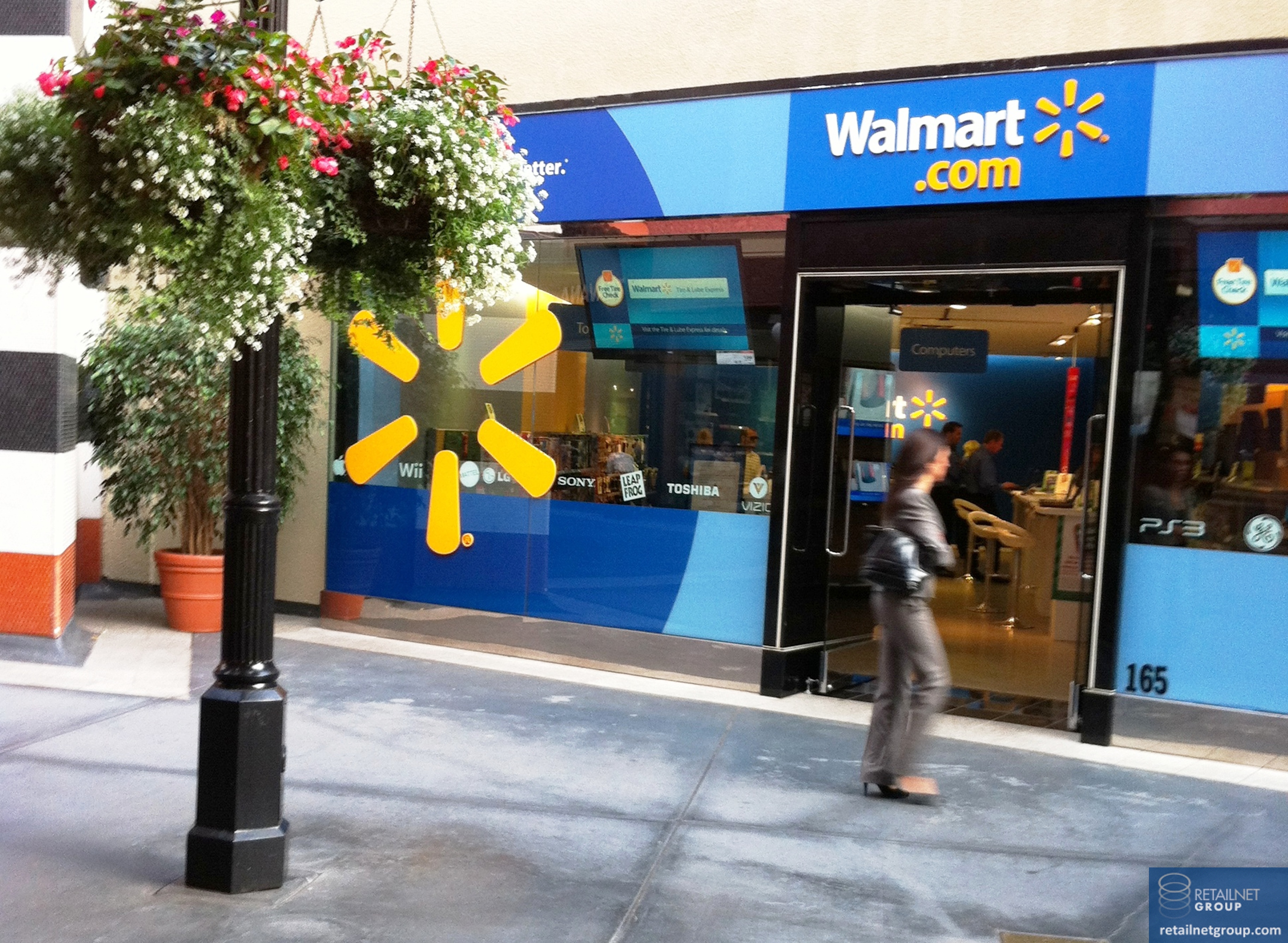
We have already talked about pop-up stores a while ago, but a recent news about Walmart opening pop-up stores hit our attention not because of their being “pop-up”, but because the American giant decided to create small pop-up stores to face the upcoming holiday demand, driving it from a physical location (the pop-up store) to Walmart.com. While Walmart customers will be able to purchase high margin gift solutions directly from the store, they can also pick up items ordered from the retail giant’s website and pick them up in the store with no delivery charge under the Site-to-Store and Pick-Up Today programs.

The stores, located in Souther California,  which bear signs reading Walmart.com, opened November 2 and are expected to remain open through December 31. Unlike its recently launched Walmart Express or its Neighborhood Market small-format stores, this new concept does not feature food or other convenience products.

“This is just a small test we’re conducting during the holiday season to offer local customers easier, more convenient access to quality products at everyday low prices,” Wal-Mart spokesperson Lorenzo Lopez toldCSP Daily News. “These small stores, located in the Topanga Mall in West Los Angeles and Horton Plaza in San Diego, will offer customers access to more than one million general merchandise items currently available through Walmart.com.”

He added, “The store will display key holiday items such as toys, electronics, gaming and home theater. These items can be picked up at the Walmart.com store or nearest Walmart store via the Site to Store and Pick Up Today options. Products can also be delivered to customers’ homes via the standard shipping options currently available through Walmart.com. Customers will also have an opportunity to purchase a small selection of items at the store, mostly accessories.”

Lopez said, “We’re always looking for ways to better serve our customers, so it’s not uncommon for us to test different formats to learn how customers respond to products and services. These stores are just another way to give customers a continuous experience by bringing together our stores, our brand and our footprint through eCommerce.”

A growing number of shoppers are in fact using technology to research and purchase gifts. These test stores are an interesting way to let shoppers research and buy online with the option to “get it now.” The highly targeted assortment and short-term leases are a low-risk way for Walmart to reach new shoppers and capture shopping occasions it may not otherwise have access to. Maybe most importantly, the pop-up stores could drive shoppers that don’t currently shop at Walmart (or Walmart.com) to the retailer’s website.

Is self service the future of retail shopping? | VIDEO

Qthru is one of the many iPhone apps available enabling customers to scan barcodes and QR codes. What is interesting is that it also offers an opportunity to check out and pay thanks to the interaction with a check-out self service station at the local store.

Will Sustainability be mainstream by 2020? New Report says yes.

Household brands and retailers will play a key role in supporting sustainable lifestyles, helping them become mainstream by 2020, according to a new study.

Sainsbury’s and Unilever launched the Consumer Futures 2020 research in partnership with Forum for the Future, in order to gain insight into how sustainable products and services will impact on global trends and consumer behaviour over the next decade.

As part of the 18-month study, designed as a practical tool to help retailers, brands and manufacturers plan for the future, four fictional scenarios that consider how sustainable consumption could become mainstream were explored, with the aim of ascertaining whether social and environmental pressures drive sustainable goods into the mainstream, or whether consumers actively demand them.

It found that global challenges such as climate change, scarcity of key resources, rapid population growth were likely to affect consumer attitudes and the consumer goods industry. As a result, sustainable practices will become more mainstream as key resources become more highly valued, while and recycling and re-use would increase, the study concluded.

A weak global economy is unlikely to hamper the progression of sustainability, according to Forum for the Future’s chief executive Dr Sally Uren, who said that “smart brands and businesses will make money today by accelerating the transition to a sustainable future”.

Meanwhile, Dr Uren added that the industry must make it easier for consumers to go green by “offering products and services which are not just better for the environment, but healthier, cheaper and longer-lasting.”

However, the study warned that consumer brands will need to innovate to develop sustainable products, services and business models to overcome financial challenges, while also working with consumers to make them a success.

Sainsbury’s and Unilever said they plan to use the results as a platform for collaboration and innovation to develop jointly profitable and sustainable initiatives to help meet commitments in Unilever’s Sustainable Living Plan and Sainsbury’s five corporate responsibility values.

Sainsbury’s chief executive, Justin King, said: “Sustainability will continue to rise higher up the agenda over the coming years, so it is key that brands work to ensure they can respond to consumer demand. Being a sustainable company is not about box ticking, it’s about future-proofing your business and building trust and brand loyalty that will last for years to come.”

The Consumer Futures 2020 toolkit and accompanying resources are available to download free here.

via Will Sustainability be mainstream by 2020? New Report says yes. | Caelus Green Room.

Carlsberg Italia introducing a sustainable innovation: Modular 20

Last Sept.28th, Carlsberg Italia has unveiled in Milan- Italy, an innovative technology that will revolutionize the distribution of beer in the Ho.Re.Ca business.  It is called Modular 20 and allows you to tap your beer without using the traditional carbon dioxide tank, with no loss in taste and froth compactness. In addition, the beer is no longer contained in traditional steel drums, but in fully recyclable PET containers – designed and manufactured by Carlsberg – less bulky and lighter to be transported. The beer keeps the its natural level of carbon dioxide, it is easier to be tapped  and, once the container has been opened, its excellent quality lasts up to 31 days.

This new system was presented at the Carlsberg Drink Different area, the first temporary shop of the Danish brand – now closed. The conference, chaired by the Italian journalist Alessandro Cecchi Paone, was attended by the CEO of Carlsberg Italy, Alberto Frausin, by Fabio Iraldo, Research Director at the Institute of Economics and Politics of Energy and
Environment (Iefe) at the Bocconi University, Cosimo Finzi, a researcher at AstraRicerche,  and Luca Giaccone, editor of the Guida alle Birre d’Italia (Italy’s Beer Guide) of Slow Food.

According to studies conducted by the Bocconi University, PET containers, compared to steel ones, reduce energy use by 21%, gas emissions by 28% and even the hazardous waste generated is 47% less than that one created in the manufacturing process of steel containers. If the quantity of total Carlsberg beer distributed in 2010 was conveyed in Modular 20 containers, the energy saved would be equivalent to that required for illuminate a stadium for 2,696 football matches. The benefits are significant, to which we must add that PET containers are recyclable, speed up the service, improve logistics and the handling of shipments.

With Modular 20,  Carlsberg Italy is the first beer company worldwide to have achieved the Environmental Product Declaration, ranked now first in the sector thanks to this  sustainable innovation. (Source: Greennews.info)

Italian restaurant chain discounts pull in consumer spend

The How Britain Eats survey, by Allegra Strategies, revealed that eating habits have changed over the past year, and are influenced by the fortunes of high-street brands.One of the key findings was the resurgence of Italian food.

It was identified as the countrys favourite national cuisine to eat out of home this year, having been third in 2010. Traditional British food occupied the top spot last year, but has dropped to number two.The reason for the change, according to Allegra Strategies, is the increased number of Italian restaurant chains, such as Zizzi, PizzaExpress, Carluccios and Jamies Italian, on the UKs high streets.

The study claimed that pizza chains, in particular, are benefiting from strong promotional activity, which can result in eating out becoming cheaper than eating at home. Another major finding of the study was that Marks & Spencers Meal for two for £10 deal was more popular than Tescos Meal for Two for £9 and Asdas Indian Meal for £4. One of the reasons for the popularity of such purchases, according to the study, is that they are cheaper than eating out or take-away, and are helped by the bottle of wine often available as part of such deals.

The research placed Sainsburys 18% ahead of Asda 15% in terms of consumer visit share. Tesco was confirmed as the dominant supermarket, with 31% share.Convenience emerged as the major motivator when consumers select their main food-shopping destination, ahead of value for money and ease of car parking, the survey found.Other considerations included the lure of special offers and whether the supermarket is a pleasant place to shop.The study was based on a survey of 2000 UK consumers.

via Italian restaurant chain discounts pull in consumer spend – Marketing news – Marketing magazine.

Anuga, the Fair

Anuga, the world´s leading food fair for the retail trade and the food service and catering market, will take place in Cologne (Germany) from next October 8 to 12. My scheduled attendance has been cancelled because I have been urgently required to fly to Dubai to discuss new DESITA and ECOFFEE projects.  As I wrote to all those who contacted me privately to set up meetings at Anuga, I will be more than happy to meet you during the upcoming events, just contact me at norman|at|ecoffee.it

Anuga this year this fair is expected to be very interesting not only for the many – 6.500- exhibitors but for the collateral events that will take place during the 4 days. I am particularly interested in the Wellfood Forum – showcasing the latest trends and the newest developments from all over the world in the areas of Wellfood and Functional Food – and the Fully Organic Special Show.

Organic foods will be expertly presented for the fourth time since Anuga 2003, in cooperation with the editors of bioPress. In addition to the approximately 1,600 exhibitors offering organic products and the more than 300 exhibitors of exclusively organic products in the Anuga Organic hall, visitors will also find more than 2,000 organic products for the food retail trade concentrated in the “Fully Organic” special show.

“Fully Organic” is now becoming the future agenda of food retail traders. And nothing reflects the latest developments in the organic product range of the retail food trade as clearly as the special show at Anuga Organic.

I will follow the Anuga Fair via web, but feel free to comment, send updates and news regarding the show posting comments on this post. Thank you!