All posts by Silvia

Italians and sustainability in the retail business: the buzz is online!

Italians speak about sustainability online.This is the result of a recent survey led by Blogmeter from October 1st, 2010 to January 31st, 2011 recording approximately more than 9 thousand post about environmental sustainability related to the major retail chains. Social media proved to be the ideal and most followed communication tool  to promote eco- initiatives, facilitating the construction of  a real “green image” for the retail business sector.

Retailers mentioned by Italians on online conversations about sustainability

When it comes to environmental sustainability Coop and Ikea and are the most discussed with over 40% of the citations. This happened for example with the Sportello Ambiente initiative,  a collaboration between Ikea and Legambiente to offer advice to consumers about home energy efficiency, and with the Coop campaign to promote the consumption of tap water in place of the bottled one.

In general, web users are showing an increaside sensitivity to organic and low-
environmental impact products:  in the online communities dedicated to women, users positively report about the presence of automatic distributors to refill detergents inside the supermarket. Retailers brands are the most mentioned ones, most widely quoted and commented by users because always available on the shelf – like Esselunga Bio, Bio of Auchan, Coop Viviverde. Lidl, for example, is particularly discussed for its range of ecological detergents W5 (on 42 over 199 posts mentioning the retailer) considered to be of good quality and highly recommended among users.

The network also tells us that attention to a more responsible consumption is steadily increasing and influencing the purchase process in different ways: users are more sensitive to labels and the presence of the Ecolabel certification is considered increasingly important for those who are looking for products with a low environmental impact.

The research also showed that a balanced relationship between quality and price of organic and /or eco products is a key criterion in the buying process: very often consumers who are interested in green products do desist because selling prices are too high. (Source: GDO Week)

Retail, web 2.0 and sustainability:an analysis

A recent Zumer and Sustainable Life Media research is helping medium to small size retailers to better understand what is the connection among sustainability, consumers and web 2.0 tools.

The survey analizes the behaviour of 50 of the biggest companies leader in sustainability, at a worlwide level. Names such as Chevron, McDonald’s, PepsiCo, Coca-Cola, Campbell’s Soup, Microsoft, Toyota, Starbucks appear in the list of the companies whose online conduct on the three top social media, Facebook, Twitter and YouTube was analyzed for six weeks between December 2010 and January 2011.

We have found three key points that can be summerized as follows:

1. Authenticity: sustainability must permeate the whole company and must involve the company’s stakeholders so that ensure an authentic online communication, a more effective management of external reputation and brand perception. This is perfectly in line with the Cone research we have posted a while ago: consumers DO PUNISH not authentic communication about sustainability.

2. Sustainability helps acquiring new market share: almost three quarters of the professional interviewed stated that sustainability-themed social media are the channels to be in in order to get the attention of new market segment and reinforce the company’s position in the more traditional ones

3.Mix platforms to get the best results: although Facebook is still the most favourite platform among the big 50 companies in the survey, with investments rising in 2011 too. Tweeting about sustainability is becoming very common too -investments will double by 2015, as well as are CSR dedicated company’s websites, while YouTube actions are still fragmented. Blogging about sustainability might be a very powerful tool, not yet fully implemented by companies (1-2% of total blog posts).

Mark’s and Spencer opens greenest store ever

On March 1st, 2010 Marks & Spencer announced a programme to be the world’s most sustainable retailer by 2015 launching 80 major new commitments under M&S’ eco and ethical plan, Plan A.

Plan A, started on 2007, had already proven its efficacy achieving these great results in 2009/2010:
• Cost savings of around £50m for M&S;
• New products and services, including 250,000 customers from M&S Energy;
• Cut CO2 emissions by 40,000t;
• Recycled 2 million used garments via Oxfam;
• Reduced 10,000 tonnes of packaging;
• Diverted 20,000 tonnes of waste from landfill;
• Saved 387 million food carrier bags;
• Used 1,500 tonnes of recycled polyester (equivalent to 37 million bottles);
• Saved 100 million litres of water;
• Recycled or re-used over 130 million clothing hangers;
• £15m for charities.

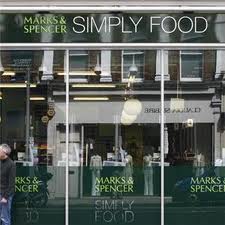
Yesterday, April 18th 2011, Marks & Spencer achieved a new great result opening the retailer’s “greenest-ever” store at Ecclesall Road in Sheffield.

The store is the first of a number of new ‘Sustainable Learning’ stores, that are part of M&S’ drive to become the world’s most sustainable major retailer by 2015.

The new 12,400 sq ft Simply Food store, built from scratch on a former brownfield site, incorporates a host of sustainable design and construction features, including an LED screen giving real-time public transport information, electric car charging points and a green living wall to attract wildlife.

All the bricks used in the build have also been reclaimed from a local mill.

Marc Bolland said:

“We’re delighted to be opening M&S’ greenest-ever store, providing customers with top quality M&S food and drink products in such a convenient location.”

The store is “firmly on course” to achieve a BREEAM rating of Excellent, making it one of the most sustainable retail outlets in the UK.

Its carbon emissions will be 23% lower and energy usage 30% lower than a traditional similarly sized store.

Innovative features include:

  • LED lighting, which is 25% more efficient than standard lighting, is used throughout the store, a first in the UK.
  • Sun pipes bring natural lighting onto the shop floor;
  • 100% of the timber used is FSC certified, a UK first;
  • All the bricks have been reclaimed from an old local mill;
  • Water costs will be reduced by up to 40%, compared with a traditional similarly sized store, by using harvested rainwater;
  • Capturing heat expelled from the store’s refrigeration units to help heat the store;
  • A living green roof of sedum plants and green living wall have created wildlife habitats, as well as insulating the store;
  • Bird boxes have been placed around the perimeter wall of the site;
  • In total, 62 different species of plants have been planted on or around the store;
  • Polished concrete floors have removed the need for floor covering;
  • 100% of the construction waste has been recycled.

All employees at the store have also been fully trained to understand its environmental features and will be encouraged to share this information with customers. (Source: The Food and Drink innovation Network)

Fashionable sustainability or sustainable fashion?

Starting from Edun fashion brand, by Ali Hewson and Bono, whose mission is to encourage trade with Africa, to H&M’s Conscious Collection and Zara’s eco-friendly stores, it seems that “sustainability and responsibility” are now a must in the fashion industry.
The latest news regarding fashion and sustainability is the PPR Group’s (home of GucciPuma,Yves Saint Laurent and Stella McCartney) Sustainability Initiative PPR HOME to Set New Standard in Luxury, Sport & Lifestyle and Retail Sectors.

By moving beyond the traditional Corporate Social Responsibility model, the group launched PPR HOME and is setting a new standard in sustainability and business practice in the Luxury, Sport & Lifestyle and Retail sectors.

My deep conviction that Sustainability creates value is part of my strategic vision for PPR. Sustainability can – and must – give rise to new, highly ambitious business models and become a lever of competitiveness for our brands. PPR HOME will provide us with novel, more sustainable approaches to contribute to a better world for the long run”, said Francois- Henri Pinault, CEO of PPR.

PPR HOME’s first announcements are setting the pace for the Group’s sustainability mission in order to reduce the social and environmental footprint for its Luxury, Sport and Lifestyle brands. These pioneering initiatives include:
-PPR HOME launches the Creative Sustainability Lab to help lead the industry and foster creativity, innovation and sustainability. Its inaugural partnership with Cradle-to-Cradle® will drive PPR HOME to challenge traditional approaches and proactively re-think and re-consider product and business development. The Cradle-to-Cradle® concept believes that ‘good design’ of products and services should move beyond typical measures of quality – cost, performance and aesthetics – to integrate and apply additional objectives addressing environmental and social concerns.
– PPR has offset its 2010 global CO2 emissions from PPR’s Luxury group, PUMA and PPR’s headquarters of 98,729 tons to achieve carbon neutrality in Scopes 1 & 2 of the Greenhouse Gas Protocol and purchased carbon credits from Wildlife Works’ leading REDD (Reduced Emissions from Deforestation and Degradation) offsetting project in Kenya that takes the needs of the local communities and the conservation of biodiversity into account. As the first step in making REDD a reality, Wildlife Works recently provided proof that REDD conforms to the accounting rigor that other carbon credit classes provide, resulting in Wildlife Works project becoming the first-ever Voluntary Carbon Standard (VCS) validated and verified REDD program.
-PPR’s premiere Sportlifestyle brand, PUMA, has applied a groundbreaking methodological approach to measuring and costing their use of ecosystems and their ecological footprint. This is the initial step to measuring the full economic impact on ecosystem services by PUMA and its supply chain and the delivery of the first-ever Environmental Profit and Loss (EP&L) account statement. PPR HOME will take a leadership role in building understanding and support for this corporate shift, encouraging others within the industry to share PUMA’s pioneering efforts towards fully-integrated reporting.

Our opinion as sustainability advocates and retail consultants is that all these strategies, well planned and communicated, must follow the companies products from production to sale. The risk is that fashion consumers do not perceive the real added value of sustainability when in-store communication lacks and when the store itself it is not sustainable. An example? Keep following us: ECOFFEE case studies to come in the next weeks!

Beverage industry and sustainability: TATA beverages

We have previously wrote about how the beverage industry is getting more and more Sustainable, with more sustainable packaging like the Coca-Cola Company PlantBottle packaging, or by taking greater attention to the supply chain, as PepsiCo is doing with its recent committment to purchase only 100% Mexico sustainably grown sunflower crops.

 
Today, we will take a quick insight in what TATA Global Beverages is doing regarding sustainability. But first, a couple of information about the Company: TATA Global Beverages is part of the TATA Group, it currently employs 3,000 people around the world and it reported a 28% profit increase on Q3 2010, with profits being Rs 471.5 million (more than 74 million Euros).
 
If you take a look at Tata beverages website, it is clear that TATA Global Beverages is deeply involved in sustainability: from its mission “to make the world a better place through ‘life enhancing sustainable hydration’ to its long term goals and its collaborating with the Rainforest Alliance.
In a recent interview with The Guardian, TATA Global Beverages Director of Sustainibility Sara Howe, talked about the challenge to balance sustainability with the Company’s present short-term financial and commercial pressures.
She stated to be optimistic about the number of big companies who are now seriously and credibly engaging with the sustainability agenda, setting ambitious sustainability targets and demonstrating progress towards achieving them.
 ” As more companies come to understand the risks and opportunities that issues like climate change, water stress, population growth, health and wealth disparity, represent, then the necessary capacity and capability building will follow” Howe states.
But what is the role of consumers in the process towards a more sustainable business? Howe’s reply: “In a consumer-focused business like ours a particular challenge is getting permission from consumers to act for the future. Traditional research and insight methodologies tend to drive responses based on their current experience and understanding. We need to find a way of showing consumers what the future might look like from a sustainability point of view. Then they can then help us design products and services fit for that future” yet adding that her main concern about the ability to create a more sustainable world is that “That too many people won’t get it until it’s too late“.

Vinitaly opens its doors with interesting data

Vinitaly focus on export and on the Italian market decline.

How to seize the new opportunities coming from abroad, particularly from Asian markets, and how to support the internal Italian market are the two main themes of the 2011 Vinitaly, the most important Italian Wine exhibition,  which is taking place in Verona (Italy), and will end on April 12 .

The Italian wine business is quite a big one, worth € 13.5 billion plus  a €2 billion deriving from induced activities. But there are lights and shadows. For example, on the exports side, 2010 experienced a growth  reaching a +12% equal to 3.93 billion euro, while domestic consumption is decreasing.
For the first time, reports Coldiretti (the Italian association of Agriculture farmers), 2010 showed a stagnation in the internal sales, now at € 3.89 billion. 

Riello, the President of Veronafiere, has stressed even more the wine business critical situation, the decline in domestic consumption, which continues, “was between 100 liters per capita in the Seventies, up to 45 liters in 2007, about 40 liters per person nowadays” showing a “further decreasing trend by 2015. ” The problem, recently highlighted by Giuseppe Martelli, director general of Assoenologi (the Italian Association of oenologists), is that “an oenology structured like the Italian one, cannot rely only on export.”

A couple of data: “in Australia only ten companies produce more than 90% of the wine exported, in Chile of 120 wineries, 100 are working only for export. In Italy, however, companies are more than 450 thousand, with an average size that is below the three hectares, compared to 300 in Chile and Australia. ”

Even a survey Vinitaly Winenews-emerges as foreign markets are critical to revenue growth, a situation that can cope with the larger companies, but few compared to many small enterprises that characterize the Italian production scenario and still have turnover rather weak.

A Vinitaly-Winenews survey on 50 companies among the most representative of the Italian business, show that 2010 ended with an average revenue increase of 8%, driven in particular by exports  (+14%).  As per 2011, the report show a degree of optimism: 75% of the interviewed said to be quite positive, 15% positive while a 10% of wineries that still feels the situation to be critical. The most critical points highlighted by the survey are economy instability, weak consumption, the loss of international competitiveness, the hars internatioanl competition.

The boom in exports, according to Coldiretti, is due largely to the U.S., which in 2010 became the country with the highest consumption of wine in the world. The American market, which is worth about $ 30 billion, is covered for 61% of production in California, but Italian wines are the most consumed ones, growing in value by 11%.

The most important destination of Italian wines are Germany, +4% in 2010, China – exports to this country doubled in 2010 – India, +65%, and Russia, +58%, equal to €104 million.

Coldiretti also analyzed the important value of the employment world of wine: the 250,000 Italian companies create jobs for for 1.2 million people. There are about half a million owners of vineyards, which have about 210,000 employees, of which over 50,000 are young and 30,000 are foreigners. And the wine business does not end in the vineyard, opportunities being in adjacent sectors like trade and catering, glass, cork, label and packaging, as well as research, publishing, finance, wine tourism, health, bio-energy. (Source:manageronline.it)

Illycaffè Earns the First DNV Responsible Supply Chain Process Certification

On March 18, 2011 illycaffè became the world’s first company to receive a Det Norske Veritas (DNV) Responsible Supply Chain Process certification, attesting to the company’s long-running sustainable approach to production and its relations with stakeholders throughout the production chain, particularly with green coffee suppliers.

The illycaffè model is innovative in assigning critical roles to quality and value creation. The certification was officially conferred at illycaffè’s twentieth annual meeting in Brazil, recognizing suppliers for coffee production meeting the company’s industry-leading quality standards.

DNV, an international, independent leader in product and process certification, in part modeled its new certification standard on the illycaffè supply chain model, buttressing it with current and emerging stringent guidelines for sustainability and corporate responsibility, and with standards of reference for certification and accreditation activities. The certification incorporates both pan-industry standards and industry specific standards. Officially, illycaffè received the DNV Green Coffee Responsible Supply Chain Process certification.

The standard developed by DNV is innovative because it marks the passage from the certification of an organization’s supply chain to the certification of an organization’s ability to create value that benefits everyone involved.

“We are proud to have obtained this certification, which recognizes and validates how we have operated over the past 20 years, through protocols and procedures that guarantee the excellence of our final product,” said Andrea Illy, President and Managing Director of illycaffè. “illycaffè has always been a stakeholder company, based on ethics and with the objective of improving quality of life. Quality is a key concept in our company philosophy. Our continuous search for quality creates a virtuous cycle that creates value for everyone involved, from coffee growers to coffee drinkers, in growing magnitude over time.”

Quality and sustainability are for illycaffè inseparable: a truly excellent product cannot be anything but sustainable in three critical aspects: economic, social and environmental. Economic sustainability is achieved through the creation of value for all those involved, from the grower to the final consumer. Social sustainability rests on the concepts of individual growth and self-realization. Environmental sustainability means respect for the ecosystem, through, for example, the use of recyclable shipping and packaging materials and the application of non-polluting practices.

“This supply chain certification standard is particularly innovative in demonstrating a company’s ability to create value over the long term,” said Thomas Vogth-Eriksen, Chief Executive Officer DNV Business Assurance. “The schema focuses on the building of shared value in a context where social development stimulates economic development, recognizing that a business grows in large part through its ability to help its partners and suppliers grow.”

Over the past two decades illycaffè has perfected a system of direct relationships with its suppliers, based on three main pillars: selecting the best growers in coffee producing countries; transferring to these growers, through the company’s Università del Caffè and the daily field work of specialized agronomists, comprehensive knowledge accumulated over 80 years of practical experience and research to produce coffee meeting illy’s high quality standards; and purchasing the best production directly from growers, paying them a premium over the going market price to reward quality achieved, and incentivize ongoing improvement. (Source: BusinessWire)

Sustainable supply chain: how to build it?

At the beginning of March 2011, McDonald’s announced its Sustainable Land Management Commitment (SLMC), a long-term plan to ensure the corporation only serves food (and uses packaging) certified as sustainably sourced. The initial focus is on five high impact products: beef, poultry, coffee, palm oil and packaging.  McDonald’s certainly have all the power to be able to win negotiations with suppliers and reach its goals, but what about small retailers who are buying from overseas?

Shirahime, a UK based ethical fashion consultancy, has published a guide to responsibly sourcing textiles and clothes from India.

Despite its narrow country and industry focus, the guide is packed with advice for any business looking to find responsible goods or services suppliers from overseas. Here’s an excerpt of the Shiraname’s guide.

Be clear about the outcomes you want to achieve
Define aims clearly and build a strategy around the outcomes you want to achieve. Don’t look exclusively for suppliers who have certification. Certification is a costly process and may not guarantee the specific outcomes youwant.

Instead, visit potential suppliers and examine their operations for yourself. If you do this, make sure you have a suitable translator and cultural liaison who can guide your decision making process. In addition, start networking, even if it’s with your competitors. If you do this up front it can vastly increase your chances of success in finding the right supplier.

Consider company size alongside business practices
There can be a correlation between a supplier’s size, the goods or services it provides, and its ability to operate responsibly.

As a broad rule of thumb, the larger the company the more comprehensive their offering will be. Yet the larger the company, the more likely it is that their business is focussed upon financial efficiency, not responsible practice. Therefore, if you’re looking for a responsible supplier it may be worth choosing smaller producers rather than bulk providers as your partners.

Consider alternatives to your preferred goods, service or country
In order to get the most responsible procurement deal, businesses have to change their mindset and be open minded about both the country of origin and the goods or service they’re looking to procure.

Be prepared to invest as well as purchase
Businesses need to think about how they can contribute long term value to their suppliers’ enterprise beyond a simple commercial deal. This is where the value of being clear in your outcomes and partnering with other companies can yield substantial benefits. (Source: Guardian.co.uk)

Online retail: how to turn a negative consumer feedback into a positive one

Retailers who are going to open online shops often fear about negative feedbacks from online shoppers. “What if I receive a negative feedback? Should I ignore it or answer?” The most common retail behaviour is to ignore it, hoping it will be ignored by other consumers too. But this is a great misconception.

Retailers have an opportunity to fight back and use social media to turn unhappy customers into brand advocates, says the Retail Consumer Report, commissioned by RightNow and conducted online by Harris Interactive in January 2011 among 1,605 online US adults. The report shows how retailers are using social media to win back customers and drive buying decisions.

  • 68% of consumers who posted a complaint or negative review on a social networking or ratings/reviews site after a negative holiday shopping experience got a response from the retailer. Of those, 18% turned into loyal customers and bought more.

By listening and proactively responding on the social web, says the report, retailers have a chance to turn disgruntled customers into social advocates.
After a positive shopping experience, half of consumers cited great customer service and/or a previous positive experience as influencing their decision to buy from a specific online retailer.

Social advocacy can also help drive sales, the survey found:

  • Nearly a third of consumers researched what customers said on social networking and reviews websites while shopping online.

For those consumers that had a positive holiday shopping experience with an online retailer during the past holiday shopping season:

  • 21% recommended the retailer to friends.
  • 13% posted a positive online review about the retailer.

The survey found that 38% of consumers turned to the retailer’s website for information or support with online shopping. However, one of the top frustrations consumers had when shopping online was a lack of consistent information from retailers. Specifically, 22% of consumers were frustrated by information that was inconsistent between the retailer’s website and customer service agents.

For further research on how customer experiences impact the bottom line, including the fact that 85% of consumers said they would be willing to pay anywhere between 5-25% over the standard price to ensure a superior customer experience, RightNow makes the Customer Experience Impact Report 2010 available to download. (Source: MediaPost)

How to deliver customized in-store offers to shoppers?

One of the in-store marketing biggest issues ever is how to reach customers with customized offers while they are shopping. U.S.A retailers and consumers are going to have a solution handy in the next future: Shop O’Lot.  

Shop O’ Lot is a self service platform which makes major retailer participation very easy. The model is based on a predictive analysis engine, that builds a customer’s shopping profile, then allows retailers to reach these customers in real-time while they are shopping, offering them customized discount coupons.

The app uses GPS and bar-code scanning for delivering the content and will be released on the iPhone and Android OS platforms.

Bob Pack, CEO says, “major retailers are now competing with product search and comparison apps that can actually drive a customer to buy from a competitor, a practice known as “scan and scram.” We have a complete solution to really help drive retail purchases, this goes well beyond mere Geo- location and focuses on individual target marketing. Once we understand the shoppers tastes, delivering them customized product deals only by the store they are in, will help keep shoppers loyal.”

Shop O’ Lot is still in the testing phase and plans a 2011 launch and retailers and consumers, can sign up now to be part of our beta program directly on Shop O’Lot website. (Source: americanbankingnews.com)