The following is an anstract from a great article “The Future of Retail” by IDEO‘s Dana Cho and Beau Trincia published on “The Rotman Magazine”, Jan.2012. Full version available here. Enjoy and comments are welcomed!
“TOUGH ECONOMIC TIMES have hit traditional retailers hard, particularly in North America. Circuit City and Borders have filed for bankruptcy; Ann Taylor and Home Depot have closed hundreds of stores; and American Apparel is reportedly millions of dollars in the red, to name but a few. The official reasons for these failures range from overly-aggressive expansion strategies to unfortunate investment decisions – but, in reality, a big driver of this retail upheaval is old-fashioned belt-tightening
Store owners have long believed that the ‘thrill’ of shopping – that visceral, emotional rush that people get when touching or interacting with a product before they buy it – would uphold their popularity. But e-commerce Web sites are disproving this axiom by generating similar excitement online with concepts such as ‘flash sales’ and ‘social shopping’. For example, GILT Groupe offers its members daily flash sales, which feature luxury goods in low quantities for an extremely limited time, giving people only a few minutes to make purchase decisions. The site, which launched in 2007, now has a valuation of US$1 billion. Meanwhile, Svpply has built a social network around shopping, letting its users track trends, including the items their friends buy. Its popularity has grown seven-fold since its introduction in late 2009.
As online retailers slash shipping times and costs to next to nothing, bricks-and-mortar retailers can no longer depend upon instant gratification as a competitive edge. Online giants Zappos and Amazon now send purchases overnight at a discount and provide second-day service for free. The success of these tactics suggests that virtual storefronts can be at least as effective as physical ones, if not more so. So, how can bricks-and-mortar retailers survive – and thrive – as consumer attitudes and buying habits change?
Although digital channels may be better positioned to provide short-term transactional value, bricks-and-mortar stores still give retailers the best space in which to establish long-term connections with customers. Let’s look at how a few companies are shifting their mindsets and moving from driving transactions to encouraging inspiration and discovery; from featuring ‘expert staff’ to ‘informed enthusiasts’; from targeting shoppers to targeting product owners; and from focusing on revenue generation to R&D.
During the 2010 holiday shopping season, 48 per cent of consumers who used a smartphone in some way said they purchased goods in retail stores, while nearly as many – 45 per cent – bought items online via computer. However, the majority also said that, regardless of how they ultimately acquired the product, they had visited an actual store to browse. This suggests that although consumers often opt for the convenience of digital channels to make purchases, bricks-and-mortar stores continue to play an important role in the shopping journey – primarily where product discovery and inspiration are concerned.
From Driving Transactions to Encouraging Inspiration
J.Crew’s Liquor Store provides a prime example of doing exactly that. J.Crew opened its first men’s clothing store in 2008 with the goal of inspiring exploratory shoppers – people  who weren’t current customers of the brand. At the time, J.Crew’s menswear had little following, and the retailer sought to raise its profile through a dedicated storefront. It took over a historicwatering hole in New York’s TriBeCa neighborhood, and rather than focus on packing in as many items into the 935-square-foot.
Customers today want retailers to be less about well-orchestrated brands and carefully rehearsed answers and more about transparency, authenticity and passion. Rotman Magazine Winter 2012 / 49 store as possible, J.Crew kept the bar’s atmosphere intact, stocking shelves with bottles and filling the room with vintage furniture and non-J.Crew brands such as Timex, Red Wing and Mackintosh. Retailers who believe in conventional wisdom would consider this a waste of precious floor space that could have been devoted to as many sellable brand-specific products as possible. However, J.Crew’s goal was to raise awareness of its men’s line – and pique the interest of potential customers. The concept appears to be working: J.Crew has subsequently opened three more Men’s Shops, and although the company declines to provide sales figures for individual stores, CEO Micky Drexler recently told investors, “We are beyond thrilled with the performance of our stand-alone men’s stores.” J.Crew earned $44.7 million in the first quarter of 2010, up from $20.4 million during the same period a year ago. In addition, its chief menswear designer, Frank Muytens, was ranked among the top in his field in GQ’s 2010 Best New Menswear Designers competition.
Using physical spaces to drive inspiration rather than transactions isn’t limited to the retail industry. In 2010 Crédit Foncier, a mortgage lender in France, invested in a high-profile store in Paris’s Opera district to inspire people to want to own a home. Most lenders make in-person visits from prospective borrowers as perfunctory and short as possible, gearing information toward people who plan to buy a home in the near future. In contrast, Foncier Home targets anyone who might be thinking about home ownership – even if it’s just a 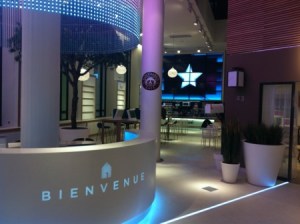 long-term goal or dream. The store includes a café, where people can meet casually with a real estate agent while looking over residential listings. It also includes a section with information about renovations and remodeling – services that Foncier Home doesn’t yet offer but are an exciting, aspirational aspect of home ownership. Although the company sells nothing tangible and has no real need to maintain a large retail space, Foncier is banking on the notion that a discoverybased experience such as the one made possible in its flagship store will encourage more people to become home buyers. And when they do, Foncier Home will be top-of-mind as the go-to lender. Crédit Foncier expects this concept to drive growth in the future and has plans for expansion.
From Expert Staff to Informed Enthusiasts
Powered by social media, peer recommendations are gaining ground in power and influence. The fact is, as consumers rely on friends, social networks and other independent resources for expert information, the role of the store associate is shifting dramatically.
The new purpose of a retail store lies in its ability to represent an organization’s actual culture and values, captured and rendered by its sales associates. Customers today want retailers to be less about well-orchestrated brands and carefully rehearsed answers and more about transparency, authenticity and passion. Store associates, therefore, need to evolve from ‘expert staff’ into informed brand enthusiasts who are proud of their organization.
The shift from being an expert to being an enthusiast – someone who believes in the brand and organization they work for and can speak passionately about the products at hand – has less to do with scripted service and more to do with organizational design. Many leading-edge U.S. retailers have taken similar personnel-oriented approaches. Perhaps the best known is Apple, which transformed consumer technology retail with its retail stores. For the Apple Store’s tenth anniversary ‘refresh’ this year, the company invested heavily in supporting its enthusiastic store associates with service-enabling technology rather than in a redesign of the bricks-and-mortar interior
From Targeting Shoppers to Targeting Owners
Retail stores have traditionally been designed for shoppers with the intention to buy and, perhaps as a result, retailers have long depended on in-store marketing and communications to sell the quality and other worthy attributes of their products. Under the new paradigm we are describing, bricks-and-mortar retailers have an opportunity to acknowledge the value of the product owner’s role as a brand ambassador and key influencer on other shoppers.
As a result, designing the bricks-and-mortar store for the consumer who already owns your products (versus the consumer who is shopping) can have profound effects on a brand. By focusing on participation in the store – through education, trials and membership experiences rather than marketing, promotion and sales – retailers are positioning themselves for a longer-term, more open relationship with customers, helping them successfully evolve with the 21st century.
Nike’s branded stores pull in repeat visits from owners via its Nike+ Run Clubs, which meet at designated shops worldwide. Building on its platform of performance-tracking products and Web site, Nike+ is now the largest running club in the world, with more than three million members. In 2009 alone, membership grew by 50 per cent. Athletes of all skill levels train together and are privy to product trials and expert clinics. Nike motivates owners to use its products as a group, and the group inspires other curious runners to join them – and buy Nike gear – through camaraderie and knowledge-sharing. Taking the concept a step further, in 2010, Nike opened its first ‘category experience store’ dedicated solely to the sport, Nike Running Stanford, in Palo Alto, California.
From Revenue-Generator to R&D Engine
The paradigm shift we are describing questions, at a fundamental level, the role of the physical store in a retail organization’s business. As the channels to buy continue to multiply – from new e-commerce models to mobile-phone payments – traditional retailers face more competition than ever before. If consumers can buy anything anywhere at anytime from anyone, bricks-andmortar stores needs to derive new meaning and value for their business in order to remain a strategic asset.
Fortunately for bricks-and-mortar, not all channels are created equal, and the traditional retail store maintains an important edge over the digital realm: the physical space provides a direct, personal connection with consumers. Smart retailers have begun using the storefront to foster relationships with people, which means going beyond selling products or presenting a well-orchestrated brand experience to understand existing and potential customers and their needs. In short, they are using the retail floor as a platform for learning.
These retailers realize that developing a new offering behind the scenes until it is exactly right is a slow strategy that doesn’t allow for quick adaptation in a rapidly-shifting market. Instead, they ‘beta test’ new offerings and experiences and quickly pivot the offering on the fly as dictated by actual customers. For example, at the height of the recession, Urban Outfitters opened an experimental store in Los Angeles called Space 15Twenty, which aims to attract – and study – customers other than its typical college student. Brand collaborations with Santa Monica bookseller Hennessey + Ingalls and New York vintage shops What Comes Around Goes Around and Generic Man act as magnets for people who don’t typically shop at Urban Outfitters.
In a sense, it’s a store for tomorrow’s customer, rather than today’s sales. The store is an investment in market reconnaissance, rather than solely a means toward hitting revenue targets and achieving profitability; its primary goal is gathering customer information from which Urban Outfitters can learn. While recession has hit some retailers very hard, in the first quarter of 2010, Urban Outfitters saw a 72 per cent increase in profits.
CEO Glen Senk credits creativity and experimentation. “We don’t go about revenue and profit as a goal. Rather, we focus our energies on the customer experience: innovating, making beautiful products, really pushing the limits of our brand expression and constantly refining how we operate. Revenue per square foot is the result of that focus, rather than the starting point or motivation.”
 Bollicine, quello situato proprio frontalmente alla salita delle scale mobili, zona partenze ovviamente. Dopo aver aspettato il barista che doveva monitorare il passaggio delle turiste e dopo essere riuscito a fare lo scontrino per: panino, bibita e caffè, mi sono spostato al lato della cassa per poter consumare il mio “pasto” in tranquillità.


 In fact, the pop-up store is situated just in front of two beach bars and next to a highly popular restaurant. But there is more. It is located just in the heart of one of the most convenient paying car parks of the sea front, the best place for tourists to leave their car without worrying.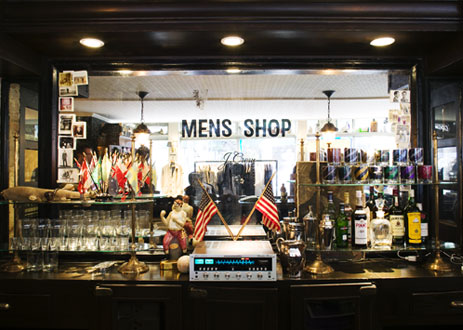



 normancescut.com
