When H&M unexpectedly opened a new store on the beach of Riccione (Rimini – Italy) I thought this was a smart marketing action. Then I started wondering if this could work. Of course the store would have benefited from massive visibility, but was this enough?
The great adventure of the pop-up store only lasted one week. It seems that those in charge of developing the concept did not have all relevant licenses.
The Italian Guardia di Finanza sealed off the area and confiscated property. Someone thinks H&M violated some provisions, while others state inspections were too severe. It seems evident to me that someone chose to turn a blind eye in order to authorize the opening of this beautiful pop-up store on the beach.
I think that if some licenses were missing works could not have been authorized. And I’m also convinced that if inspections were too severe the shop couldn’t have been inaugurated.
Do you want to know my opinion? I don’t care who is right or wrong, nor which business activities were damaged the most. What really infuriates me is that in order to place the new pop-up store several square metres of “dunes” were destroyed, thus damaging an enchanting protected area gathering fine sand and lush vegetation.
Just for another shop! And I’m saying this in a conflict of interest. This behaviour is really not acceptable, especially because H&M has always been involved in sustainability and conscious collection campaigns, we also spoke about.
I think everyone involved in this matter should deeply reflect on it. Don’t you think so?
It sometimes happens to find something new just around the corner. Just think about Bottega di Oliva e Marino, Pavesi pop-up store that opened in Riccione on June 28. At first glance, it seemed interesting to me for both its stylish design and brilliant business marketing strategy.
Everything revolves around “aperitivo”, the happy hour.
A very successful Italian format that is currently being copied everywhere else abroad. But how did Pavesi pop-up store by Barilla impact Riccione? Tourists certainly enjoy it because of its highly competitive promotional prices, but the managers of nearby restaurants and bathing establishments are far from being happy.
In fact, the pop-up store is situated just in front of two beach bars and next to a highly popular restaurant. But there is more. It is located just in the heart of one of the most convenient paying car parks of the sea front, the best place for tourists to leave their car without worrying.
Was local government good at promoting equality? What would have happened if the same proposal had been presented by an ordinary citizen rather than by Barilla? Would the proposal have been welcomed?
Last month Econsultancy surveyed 2,000 consumers in the UK and 2,000 consumers in the US, to unearth attitudes to multichannel shopping and service.
The majority of consumers would find it useful to have a choice of retail channels, and a significant 33.5% felt this was very important. The results were very similar for both US and UK respondents, so the charts show aggregated data.
How important is it to be able to purchase from a retailer using different channels?
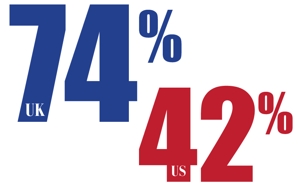
Quite a difference between US and UK consumers, with the latter far more likely to reserve items for in-store collection. Many of the biggest multichannel retailers in the UK are offering this service, (Argos, John Lewis, Halfords etc) with some success. For example, Argos’ multichannel sales grew to £1.9bn in the year up to February 26 2011, representing almost half (46%) of its total sales. The reserve and collect iPhone app accounted for 1% of total sales.
Do you reserve products online before collecting them from an offline store?
The use of mobile when shopping offline represents a growing challenge for retailers, as these stats show.
Use of Mobile Websites
US consumers are slightly more likely to use barcode scanners and compare prices via mobile, but a significant minority of US and UK respondents are using mobile as an offline shopping aid. Multichannel returns The vast majority of both US and UK respondents expect to be able to return items bought online to a local store.
However, as Snow Valley’s recent Online Returns Report found, just half of the multichannel retailers studied allow customers to do this.
If you buy something online, do you expect to be able to return it to a local store?
Use of catalogues Percentage of customers that have used catalogues at least once in the past year before buying online or in store – aggregated US and UK results. (Source: Econsultancy)
Dealing with customer engagement has never been easy – especially today when customers are all inter-connected and receive all kind of information from all kind of media. This is why the rules that apply to old media such as TV and press can not work with nowadays consumers.
CDJ by McKinsey
McKinsey devised a model, the Consumer Decision Journey (CDJ), whose simple four steps can be applied to companies belonging to different fields, retail too. Its implementation is not easy but as stressed by McKinsey, rewards can be worth the effort.
But let’s get into the four CDJ steps a little deeper, quoting the McKinsey study which can be fully downloaded on their website.
“Align: Invest marketing resources where consumers spend their time. In most cases, this will involve shifting resources from the “consider” and “buy” stages of the CDJ to the “evaluate” and “advocate” stages. Many companies will also have to shift their investments from paid media (channels owned by other companies, such as print or online newspapers) to self-owned media (such as the brand’s Web sites) and earned media (customer-created channels, such as communities of brand enthusiasts).
Link: Make sure that your messages reinforce each another. Given the proliferation of channels, this can be challenging and many companies have been disconcerted to discover that information about their products— including model numbers, descriptions, images, and promotions—isn’t the same across online channels and even within their stores. Coordinating your message might require new techniques. Apple, for example, took steps to eliminate jargon, align product descriptions, create a rich library of explanatory videos, and institute off-line Genius Bars to ensure consistency, accuracy, and integration across touchpoints.
Lock: Keeping your customers’ attention is key. To do so, companies need to develop direct, opt-in channels, such as e-mail promotions, Twitter and Facebook feeds, and apps. One good example comes from Nike, which progressed from simply exhorting consumers to “just do it” to helping them act on its motto. Nike+ gear records and transmits customer workout data, holds global fund-raising races, and provides customized online training programs. For its part, McDonald’s has enticed millions of Japan’s mobile-savvy consumers to sign up for mobile alerts with discount coupons, contest opportunities, special-event invitations, and other brand-specific content.
Loop: Mine content created by consumers and experts for insights into customers and the brand, and use data collected about customers to create content that will engage them. Consumer-generated content is particularly valuable because it reveals their wants and needs. A classic example comes from Amazon, which allows customers to rate products, and makes these ratings available to shoppers. Amazon doesn’t stop there, though; it also uses this data to decide how it presents its products. This creates an information-rich loop—from data to content and back to data—that strengthens Amazon’s value chain and contributes to product development and customer support. Data loops can also help companies personalize communications, thus deepening the customer relationship.”
A recent Zumer and Sustainable Life Media research is helping medium to small size retailers to better understand what is the connection among sustainability, consumers and web 2.0 tools.
The survey analizes the behaviour of 50 of the biggest companies leader in sustainability, at a worlwide level. Names such as Chevron, McDonald’s, PepsiCo, Coca-Cola, Campbell’s Soup, Microsoft, Toyota, Starbucks appear in the list of the companies whose online conduct on the three top social media, Facebook, Twitter and YouTube was analyzed for six weeks between December 2010 and January 2011.
We have found three key points that can be summerized as follows:
1. Authenticity: sustainability must permeate the whole company and must involve the company’s stakeholders so that ensure an authentic online communication, a more effective management of external reputation and brand perception. This is perfectly in line with the Cone research we have posted a while ago: consumers DO PUNISH not authentic communication about sustainability.
2. Sustainability helps acquiring new market share: almost three quarters of the professional interviewed stated that sustainability-themed social media are the channels to be in in order to get the attention of new market segment and reinforce the company’s position in the more traditional ones
3.Mix platforms to get the best results: although Facebook is still the most favourite platform among the big 50 companies in the survey, with investments rising in 2011 too. Tweeting about sustainability is becoming very common too -investments will double by 2015, as well as are CSR dedicated company’s websites, while YouTube actions are still fragmented. Blogging about sustainability might be a very powerful tool, not yet fully implemented by companies (1-2% of total blog posts).
Retailers who are going to open online shops often fear about negative feedbacks from online shoppers. “What if I receive a negative feedback? Should I ignore it or answer?” The most common retail behaviour is to ignore it, hoping it will be ignored by other consumers too. But this is a great misconception.
Retailers have an opportunity to fight back and use social media to turn unhappy customers into brand advocates, says the Retail Consumer Report, commissioned by RightNow and conducted online by Harris Interactive in January 2011 among 1,605 online US adults. The report shows how retailers are using social media to win back customers and drive buying decisions.
68% of consumers who posted a complaint or negative review on a social networking or ratings/reviews site after a negative holiday shopping experience got a response from the retailer. Of those, 18% turned into loyal customers and bought more.
By listening and proactively responding on the social web, says the report, retailers have a chance to turn disgruntled customers into social advocates.
After a positive shopping experience, half of consumers cited great customer service and/or a previous positive experience as influencing their decision to buy from a specific online retailer.
Social advocacy can also help drive sales, the survey found:
Nearly a third of consumers researched what customers said on social networking and reviews websites while shopping online.
For those consumers that had a positive holiday shopping experience with an online retailer during the past holiday shopping season:
21% recommended the retailer to friends.
13% posted a positive online review about the retailer.
The survey found that 38% of consumers turned to the retailer’s website for information or support with online shopping. However, one of the top frustrations consumers had when shopping online was a lack of consistent information from retailers. Specifically, 22% of consumers were frustrated by information that was inconsistent between the retailer’s website and customer service agents.
For further research on how customer experiences impact the bottom line, including the fact that 85% of consumers said they would be willing to pay anywhere between 5-25% over the standard price to ensure a superior customer experience, RightNow makes the Customer Experience Impact Report 2010 available to download. (Source: MediaPost)
One of the in-store marketing biggest issues ever is how to reach customers with customized offers while they are shopping. U.S.A retailers and consumers are going to have a solution handy in the next future: Shop O’Lot.
Shop O’ Lot is a self service platform which makes major retailer participation very easy. The model is based on a predictive analysis engine, that builds a customer’s shopping profile, then allows retailers to reach these customers in real-time while they are shopping, offering them customized discount coupons.
The app uses GPS and bar-code scanning for delivering the content and will be released on the iPhone and Android OS platforms.
Bob Pack, CEO says, “major retailers are now competing with product search and comparison apps that can actually drive a customer to buy from a competitor, a practice known as “scan and scram.” We have a complete solution to really help drive retail purchases, this goes well beyond mere Geo- location and focuses on individual target marketing. Once we understand the shoppers tastes, delivering them customized product deals only by the store they are in, will help keep shoppers loyal.”
Shop O’ Lot is still in the testing phase and plans a 2011 launch and retailers and consumers, can sign up now to be part of our beta program directly on Shop O’Lot website. (Source: americanbankingnews.com)
Biometrics, methods for uniquely recognizing humans based upon one or more intrinsic physical or behavioural traits, is very important when evaluating the efficacy of a retail store design or display and assessing counter actions to make the retail environment more customer friendly. According to NY Times, IBM is currently testing a revolutionary biometrics method in two location in downtown Milan – a fashion company flagship’s store and an electronic store.
The I.B.M. solution, involves tracking biometrics through a mini camera in a mannequin’s eye or placed somewhere in a store and the collected data will be aggregated so that not to be traced to any individual.
“We started with fashion because it is a creative and innovative industry, but it’s clear that people have to be educated so they know their privacy will not be compromised,” said Enrico Bozzi, the manager of I.B.M. Forum Milano, the department that developed the technology. “It is a question of changing people’s perception.”
The IBM biometric test is already showing its first results. At the pilot in the Milan fashion store, for example, the client noticed that almost all Asian customers enter the store through one particular door, even though five are available. “We thought it was a mistake, but we checked it out and it was right and it continues to happen,” Mr. Bozzi said. “We don’t know why yet but, in the meantime, the store is considering positioning products by that door that are known to appeal particularly to Asian shoppers.”
I.B.M.is now also working on software that will let clients try on jewelry and makeup wirelessly thanks to a mobile phone or computer, with an iPad application likely to debut soon.
Yesterday I was reading a post concerning Levi Strauss & Co as the Top Jeans Brand, scoring a 7.4. The brand Prana was listed as the next highest, with a score of 6.3—followed by H&M (6.1), Banana Republic (6.1), and Old Navy (6.1).
I did not know what GoodGuide is – shame on me – so I checked out their very interesting website, which is said to be the world’s largest and most reliable source of information on the health, environmental and social impacts of consumer products. And I think it really is, rating over 95000 products, mainly available on the US market only: from food, toys, personal care to apparel, electronics and appliances. What is really striking is the scientific approach they have on their ratings, which are compiled from three sub-scores addressing Health, Environment and Society.
Each of these sub-scores are based on an analysis of a set of indicators that GoodGuide has determined are the best-available measures of performance in these areas. Their methodology differs from the product belonging to different categories, each and every one having its own scoring methodology. Amazing. Let’s talk about apparel for example.
Quoting the Good Guide site: “Until (apparel) companies do a better job of providing transparency into their supply chain, our ability to accurately score brands based on their relative performance will be subject to significant uncertainties Environment scores are assigned to apparel brands by combining GoodGuide’s standard company indicators of environmental performance (weighted at 50%) with brand-level environmental indicators that address issues that are specific to the apparel sector (weighted at 50%).(….) Social scores are assigned to apparel brands by combining GoodGuide’s standard company indicators of social performance (50%) with brand-level social indicators that address issues that are specific to the apparel sector (weighted at 50%).(…) Health scores are not assigned to apparel brands because this product category does not generally pose health risks to consumers.”
The Good Guide website is also very good at using the Web 2.0 tools to “spread the word” and improve the accuracy of the product information thanks to a “support product info” page which enables visitors to add further details.
It would be also very interesting to test the effect of this kind of structured and scientific information directly at the point-of-sale, to see how the consumer react when discovering that his/her favourite brand of pasta is not that “good”. Because thanks to GoodGuide mobile App this is possible: consumers can scan the product, check the GoodGuide database and then purchase, or decide to choose another brand.
With this detailed level of “scientific” information, producers and retailers have nothing to hide and their achieving a high/low score can have a boomerang effect on brand reputation which must not be ignored and will not be ignored by consumers. Sustainability pays, and it will pay even more in the future.
 Of course the store would have benefited from massive visibility, but was this enough?
 In fact, the pop-up store is situated just in front of two beach bars and next to a highly popular restaurant. But there is more. It is located just in the heart of one of the most convenient paying car parks of the sea front, the best place for tourists to leave their car without worrying.


 normancescut.com