Category Archives: social responsibility

6 steps towards a healthier Google Cafeteria

Much has changed since Google earned a reputation for fattening its staffers with food on demand. These days, the company is focused on advancing its healthy eating initiatives. Explains Jennifer Kurkoski, who has a PhD in organizational behavior and runs a division of Google’s HR department called People Analytics, “When employees are healthy, they’re happy. When they’re happy, they’re innovative.” google cafeteria

In pursuit of that healthiness, happiness, and innovation, Google has turned to “nudges”: simple, subtle cues that prompt people to make better decisions. Behavioral economists have shown the idea works, but Google has taken it out of the lab and into the lunchroom. This is a sampling of the encouragement you’d get during trips through the company’s eateries–and naturally, Google is measuring the results.

HARD CANDY

No longer are M&Ms in clear hanging dispensers. If you’re in Google’s New York office, you now have to reach into opaque bins. The grab takes effort; the obscuring vessel quells enticement. The switch led to a 9% drop in caloric intake from candy in just one week.

SALAD GAZE

Waiting for you as you enter the cafeteria is the salad bar. According to Jessica Wisdom, a member of the People Analytics team, studies show that people tend to fill their plates with whatever they see first. Thus, leafy greens get the most visible real estate. Desserts, meanwhile, are down another line of sight.

SIZING DOWN

While grabbing a plate to load up on grub, you see a sign informing you that people with bigger dishes are inclined to eat more. It doesn’t tell you what to do, but it affects your behavior. This simple “meta nudge” caused small plate usage to increase by half, to 32% of all plate traffic.

COLORING OPINIONS

Harvard recently revamped its food pyramid, and those lessons in metered portions have translated into a colored tag system in the cafeterias. you see green labels paired with veggies, giving you liberty to dig in. Most desserts have red ones, warning potential gluttons to proceed in moderation.

DESERTING DESSERTS

So you’ve had a bad day, and even a glaring red tag isn’t enough to discourage you from indulging in a treat. Fortunately, desserts are designed to be downed in just three bites. By making people think about having to take a second dessert plate, Google is nixing potential binges.

WATERWORKS

You’re back at your desk and thirst is setting in. You head to the kitchen. In the past, water was on tap and soda was in the fridge. Now bottled water is at eye level in the cooler, while soda has been moved to the bottom. That shift in placement increased water intake by 47%, while calories from drinks fell by 7%. Taking a sip of agua, you feel better already.

via 6 Ways Google Hacks Its Cafeterias So Googlers Eat Healthier | Co.Design: business + innovation + design.

Accor launches PLANET 21 Sustainability Program

Accor is taking sustainable development to new heights, with the launch of PLANET 21.

The name is a direct reference to Agenda 21, the environmental action plan signed at the Rio Earth  Summit in 1992, and reminds us of the urgent concern that face our planet in the 21st century and the  need to change our methods of production and consumption logo_planet21_accor_hotelspatterns to preserve human beings and  eco-systems. With PLANET 21, Accor is making 21 commitments and the same number of quantified  goals for the year 2015, including:

  • employees trained in disease prevention in 95% of hotels;
  • 80% of  properties promoting balanced meals ;
  • 85% of hotels using eco-labelled products;
  • a 15% reduction in  water consumption;
  • 10% decrease in energy use at Accor’s owned and leased hotels worldwide.

“At a time when the Group is embarking on a phase of brisk expansion, with the aim of becoming the  global reference in hotel industry, we are reaffirming our choice of responsible growth capable of  generating shared value for all”, said Denis Hennequin, Chairman and Chief Executive Officer of  Accor.

“With the PLANET 21 program, we are putting sustainable hospitality at the core of the
Group’s strategy, development and innovation. I am convinced that sustainable development will  lead us towards a new business model. PLANET 21 gives us a fantastic driver of competitiveness for  our brands, attractiveness for our customers and partners and loyalty for our employees”.

Since 1994, when Accor first established its Environment Department, the Group has adopted  numerous solutions to contribute to the development of local communities, reduce water and energy  consumption and limit the environmental footprint of its hotels. With PLANET 21, Accor is reinforcing  its determination to put sustainable development at the heart of its activities: 21 commitments that  involve customers, partners and employees in order to improve Accor’s sustainability performance.

For these reasons, the new PLANET 21 strategy includes a program to engage customers, inviting  them to contribute to the hotels’ actions and achievements. From making a reservation to staying  and or dining in Accor hotels, customers will discover a rich and diverse array of messages that will  encourage them to contribute actively to the hotel’s action through a few simple gestures.

The tone of the messages will be friendly and thoughtful, aimed at encouraging customers to participate without  ever making them feel guilty.

Seventeen Retailers awarded World’s Most Ethical Companies

The Ethisphere Institute, an international think-tank dedicated to the creation, advancement and sharing of best practices in business ethics, corporate social responsibility, anti-corruption and sustainability, named 145 companies to its sixth annual selection of the World’s Most Ethical (WME) Companies, 17 of which are retailers.world-most-ethical companies

In the retail food stores category are Safeway, Wegmans, Whole Foods Market, SONAE of Portugal, Kesko of Finland and the U.K.’s The Co-operative Group. Named in the general retail category are Costco, Target and the U.K.’s Marks and Spencer. In the specialty retail category are Best Buy, OfficeMax, Petco and Ten Thousand Villages, and in the apparel category Gap, Patagonia, Timberland and Comme Il Fau of Israel were recognized.

This year’s list covers more than three dozen industries, from aerospace to wind power, with 43 of the WME winners headquartered outside the U.S. Each 2012 honoree was chosen for promoting ethical business standards and practices by exceeding legal minimums for compliance, introducing innovative ideas that benefit the public and forcing their competitors to follow suit, according to Ethisphere Institute.

They demonstrate how corporate citizenship is undoubtedly tied to the success of a company’s brand and bottom line. “Each year the competition for World’s Most Ethical Companies intensifies as the number of nominations submitted for consideration grows,” said Alex Brigham, executive director of Ethisphere.

“This year’s winners know that a strong ethics program is a key component to a successful business model, and they continue to scrutinize their ethical standards to keep up with an ever-changing regulatory environment. Corporate ethics has become much more important globally, as well, and that is reflected in the truly global nature of this year’s honorees.”

Twenty-three companies have been honored each of the six years the WME has been awarded, including Patagonia and Starbucks. The evaluation and selection process for the WME Companies is based on a proprietary rating system, the corporate Ethics Quotient, consisting of five core categories — Ethics and Compliance Program (25 percent), Reputation, Leadership and Innovation (20 percent), Governance (10 percent), Corporate Citizenship and Responsibility (25 percent) and Culture of Ethics (20 percent). New York City-based Ethisphere Institute is dedicated to the creation, advancement and sharing of best practices in business ethics, corporate social responsibility, anti-corruption and sustainability.

via Seventeen Retailers Recognized as the World’s Most Ethical Companies – Green Retail Decisions.

This is a a very Good and Generous Pop-Up store!

Chocolatier Anthon Berg recently enabled customers to pay with a good deed, rather than cash, at a pop-up location called The Generous Store.

Conceived by ad agency Robert/Boison & Like-minded, the project featured a temporary outlet in Denmark – open for one day only – which labeled each of its products with a task the consumer must perform in order to ‘buy’ the chocolate.

Designed to spread generosity, the tasks typically included a good deed to someone else, such as ‘Serve breakfast in bed to your loved one’ or ‘Help clean a friend’s house’.
Cashiers were replaced by staff carrying iPads, where chocolate-buyers could log into their Facebook accounts and pledge to carry out the favor via a branded post on their wall.

Anthon Berg was able to view the results of the promises when visitors to the store then posted pictures and comments on the company Facebook Page. The video below features footage from the pop-up shop:

The Generous Store’s innovative payment system, while only employed for one day, helped to portray Anthon Berg as a generous and socially-minded brand. An idea to adapt for your own projects, possibly over a longer period of time or in conjunction with a pay-what-you-want pricing system?

via Pop-up store sells chocolate for good deeds, not money | Springwise.

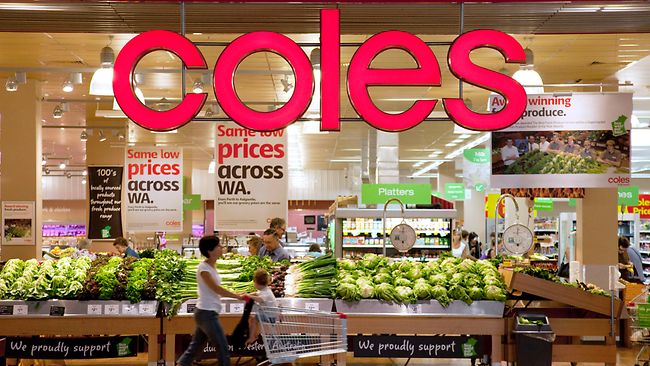
A more natural Coles for healthier consumers

Despite extensive research conducted by the Food Standards Australia proving there are no adverse affects to consuming products with added MSG (monosodium glutamate) and artificial colourings, Coles has removed both ingredients in direct response to consumer concerns.

Lydia Buchtmann, communication adviser at Food Standards Australia, told FoodNavigator-Asia that the government food regulator has conducted “rigorous safety reviews of MSG and colours showing that they are safe for the general population.”

She added that it is possible a few consumers may experience intolerances but that they would not be life threatening like major allergies.

The retail giant’s private label range is now entirely free from artificial colours and MSG, following a five-year project to reformulate all of its own food and beverage brands.

‘Listening to our consumers’
“Our customers are clearly concerned by food additives and the effect they believe they have on their health. A significant number have indicated that they or their children have experienced reactions to artificial colours and MSG,” Jackie Healing, quality manager for Coles said.

This move is simply a reaction to this, Healing added.

The supermarket noted that research showed 91% of customers were worried about consuming products with added MSG and artificial colours, with 76% avoiding such products.

Vanessa Walles, marketing manager at natural ingredients supplier Chr Hansen Australia, said “Coles are being pro-active by taking this stance, it is not because they have to,” and consumers will appreciate this.“It certainly sends a very positive message that Coles is listening to consumer needs and moving with the market expectation of natural colours,” Walles said.

Natural moves
There are no laws against the use of MSG and artificial colourings in food and beverage products in Australia.

Food manufacturers are just required to label a food when MSG is added, either by name or by its food additive code number 621. Walles noted however, that consumer pressure fuelled by media focus on artificial colours and MSG has created a market demand for products free from these additives.

“Natural is the way the colours market is moving”, Walles said.

Add to this, the Southampton Six ruling in the EU where manufacturers using artificial colours have to provide the warning label, ‘may have an adverse effect on activity and attention in children’, and there is a burgeoning pressure towards natural products, she said.

Similarly Aldi’s removal of artificial colours may have been an influencing factor, she added.

“Many branded products have already made the switch from artificial to natural colours, however there are still many products to follow suit,” Walles said.

via Coles ‘goes natural’ for consumers.

Shipping Containers: a new Solution to Food Deserts?

A group of Seattle entrepreneurs has come up with one solution to the urban food desert problem, and it doesn’t involve adding traditional supermarkets to underserved areas. Their new venture, Stockbox Grocers, is taking the favorite building block of the green-building movement—the shipping container—and adapting it into a miniature food emporium, packed from floor to roof with fresh produce and other staples.

“Our goal is to bring food back to communities, and focus on communities that don’t currently have good access to food and are heavily dependent on public transportation,” says founder and owner Carrie Ferrence. This week, Stockbox celebrates the opening of a 160-square-foot prototype store in a parking lot in a neighborhood where corner stores are the only source of food. Up to five customers can shop at once, said Ferrence, and only one person is needed to staff the operation.

This first store—housed in a temporary structure that’s actually smaller than a shipping container—is intended as a six-to-eight-week experiment to feel out the needs of the community and gather feedback. “A lot of people who come in are breaking down the myth that people of low income and mixed income don’t want access to organic or natural food,” Ferrence says.  By the end of next year, she and partner Jacqueline Gjurgevich hope to have four permanent shipping container stores up and running.

“Everyone’s really excited to have a grocery store in the community,” Ference says. “The community’s been asking for years.”

via Stockbox Grocer’s Food Desert Solution: The Shipping Container – Lifestyle – GOOD.

In Detroit, community soup dinners fund local creative projects

It’s no longer uncommon to see creative endeavors funded by the crowds. What is unusual about Detroit Soup’s approach, however, is that the funding — and selecting — of projects takes place via a monthly public dinner.

Those in the Detroit area who are interested in participating can simply turn up for one of Detroit Soup’s dinners on the second Sunday of the month. For USD 5 they get soup, salad, bread and pie, as well as the opportunity to hear four creative project proposals and vote for the one they think most deserves to be funded. The money raised that night — typically between USD 600 and USD 900 — is then given to the proposal that wins the most votes.

There are actually several other like-minded efforts in the Detroit area, such as The Dearborn Soup, and there is a guide to similar granting dinners around the world at SundaySoup.org. Social entrepreneurs far and wide: time to get involved!

via In Detroit, community soup dinners fund local creative projects | Springwise.

Exclusive from the Abu Dhabi Tourist Green World Forum: where sustainability matters

Posting directly from Abu Dhabi, where I have been invited  by our worldwide ambassador, the Green Sheikh, and our supporter Goumbook, in the person of Mrs. Tatiana Antonelli Abella, to attend to the World Green Tourism event, supporting them during the opening day which took place last Monday, Dec. 5th.

The Green Sheikh and HE Razan Khalifa Al Mubarak at WGT 2011

The morning conference was opened by the introduction of  HE Razan Khalifa Al Mubarak, Secretary General Environment Agency – Abu Dhabi (EAD) who actively supports responsibility and sustainability actions in Abu Dhabi and UAE respectful of the local environment and wildlife.

Immediately after our worldwide Ambassador HH Abdul Aziz bin Ali Al Nuaimi, aka the Green Sheikh, captured the audience with an engaging presentation, merging his life philosophy and his belief together with his support for the environment and with his many travel experiences and encounters with people of all races, cultures and social classes. From Antarctica to Brazil, Iceland and Australia via amusing anecdotes, the Green Sheikh skillfully showed the audience that we are all equal, no matter if men or women, adults or children, Christians or  Muslims or Jews or following other religions, rich or poor.

The presentation was accompanied by amazing images and he used the cardinal points as a guide for his presentation -N, E, S and W- each one having its own enhanced meaning: N as Nature, S as Social, E as Empowerment, and W as World. Because travellers too can make a better world, through a more aware, green and responsible tourism

To my great surprise – and I want to publicly thank the Green Sheikh for this- the Green Sheikh introduced the ECOFFEE platform to the audience, presenting it as a great opportunity for young entrepreneurs.

ECOFFEE as a “Sustainable entrepreneurship platform” was in fact coined together with the Green Sheikh during our first meeting some of months ago, while talking about  ECOFFEE’ services and projects, like the Franchising coffee shop, especially designed for those entrepreneurs who want to run a profitable, responsible and ethical business.

What I am witnessing here at the WGT event is the growing importance of the environment, sustainability and responsibility issues which are now actually transferred into daily business practices even in the Tourism industry – I am glad and proud to be among those who are actively supporting it each and every day with DESITA and ECOFFEE’s business practices.

Fairtrade Italia and ECOFFEE: a sustainable partnership for a better future

I am very happy to announce that last Tuesday, July 19th DESITA and Fairtrade Italia have signed a bilateral agreement providing mutual support for the dissemination of the principles of environmental sustainability, fair trade and social responsibility on the entire Italian market  through a focus on in-store actions.

DESITA, thanks to its ECOFFEE project, will promote Fairtrade products and will support  Fairtrade licensees through its wide range of retail-oriented services and solutions: from architectural design, branding, process analysis, franchise creation. The Fairtrade certified products will also find a privileged placement among the products available at the ECOFFEE franchise cafés.

On the other hand, Fairtrade Italia has committed to share with its stakeholders- Retail business licensees, Association members and consumers – all the services offered by DESITA and   ECOFFEE.

“I am very happy to have reached this agreement,” states Paolo Pastore, Managing Director of Fairtrade Italia “This agreement is very different from the usual one and I am  sure that it will bring a much wider scope and visibility to Fairtrade certified products, the only Fair Trade certification that has deserved consumers’ trust all around the world. “

Being supported by such an important organization as Fairtrade Italia has once again confirmed that what I have created, the ECOFFEE service platform, is a requirement for a better future.This gives me the strength to keep on working in what is still an immature industry, that of sustainability in the Italian Retail and Horeca panorama. I am convinced that this partnership will actually contribute to the creation and dissemination of a more responsible consumption on the Italian market.

ECOFFEE by DESITA in the 2011 Sodalitas Libro d’Oro della Responsabilità Sociale d’Impresa – ninth edition

The Sodalitas Social Award every year prizes the most significant social responsibility initiatives implemented in Italy either by large, medium and small companies operating in any branch of activity, or by business associations, by industrial districts and by government agencies. This award differs from other initiatives for its high social value – also recognized by the President of the Republic – and the growing acceptance and engagement. To participate to the Sodalitas Social Award means to be part of a selected group of companies which have distinguished themselves for their careful attention to the citizens needs, to market trends, to innovation as a tool to allow the grow of the society and to sustainability.

ECOFFEE by DESITA has been published in the Sodalitas Libro d’Oro della Responsabilità Sociale d’Impresa (Golden Book of Corporate Social Responsibility), collecting all the companies which applied to the Sodalitas Social Award and that have been recognized by the Sodalitas organization as  worth a mention for their actions towards a more sustainable world.

ECOFFEE by DESITA has been published in the “Sodalitas Libro d’Oro della Responsabilità Sociale d’Impresa”, collecting all the companies which applied to the Sodalitas Social Awards and that have been recognized by the Sodalitas organization as  worth a mention for their actions towards a more sustainable world.

To have participated to the Sodalitas Social Awards and to have been published in their Libro d’Oro sulla Responsabilità Sociale d’Impresa is a great honour for all of us who are involved in the ECOFFEE by DESITA project. This is further stimulating our daily actions towards an always greater and constant attention to those practices that can change the way we all do business, towards a better business. Our commitment to sustainability is the result of a deep belief and of continuous improvement. It is not easy, but we’re going all out.