Category Archives: retail food

Business Retail: a global view

Retail is big, but how big it is and is it equally distributed worldwide or are there countries where retail is at its best?  

The last CB Richard Ellis Survey  about the business of Retail, reveals how fluctuating this market is, measuring how the most important 323 retailers changed their strategies in 73 countries during the last year.

The survey findings are very interesting, showing us that Dubai is the most favorite city for both American (61%) and European (63%) retailers, while only 23% of retailers from the Asia-Pacific area are present in that city – not because of lack of interest, but just because the Asia-Pacific consumer market is the fastest growing, therefore retailers from those countries do not need to branch out abroad.
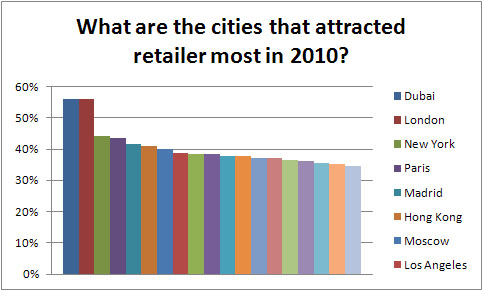
Retail expansion rate saw a decrease during 2010, only a 2%, compared with 4% in 2009 and 12% in 2008, with new target countries being India (8 new retailers) and Turkey (7). United Arab Emirates (UAE), Kuwait, Ireland, Romania, and Belgium all attracted six new retailers.

Online retail is becoming more and more important for retailers: 82% of the brands in the survey do have an online catalogue, even though only a smaller percentage (46%) offers to consumers the chance to purchase goods online, with Value&Denim being the most active (43%) followed by mid-range fashion  (26%) and Luxury & Business Fashion (32%). To have an online retail shop is the favored choice by those brands who already have a physical store (46%), while in more advanced market such as the U.S.A., there is a slight percentage of online seller (24%) who do not have a physical store, and that are using online sales platform to test the market before opening a physical point of sale.


Beverage industry and sustainability: TATA beverages

We have previously wrote about how the beverage industry is getting more and more Sustainable, with more sustainable packaging like the Coca-Cola Company PlantBottle packaging, or by taking greater attention to the supply chain, as PepsiCo is doing with its recent committment to purchase only 100% Mexico sustainably grown sunflower crops.

 
Today, we will take a quick insight in what TATA Global Beverages is doing regarding sustainability. But first, a couple of information about the Company: TATA Global Beverages is part of the TATA Group, it currently employs 3,000 people around the world and it reported a 28% profit increase on Q3 2010, with profits being Rs 471.5 million (more than 74 million Euros).
 
If you take a look at Tata beverages website, it is clear that TATA Global Beverages is deeply involved in sustainability: from its mission “to make the world a better place through ‘life enhancing sustainable hydration’ to its long term goals and its collaborating with the Rainforest Alliance.
In a recent interview with The Guardian, TATA Global Beverages Director of Sustainibility Sara Howe, talked about the challenge to balance sustainability with the Company’s present short-term financial and commercial pressures.
She stated to be optimistic about the number of big companies who are now seriously and credibly engaging with the sustainability agenda, setting ambitious sustainability targets and demonstrating progress towards achieving them.
 ” As more companies come to understand the risks and opportunities that issues like climate change, water stress, population growth, health and wealth disparity, represent, then the necessary capacity and capability building will follow” Howe states.
But what is the role of consumers in the process towards a more sustainable business? Howe’s reply: “In a consumer-focused business like ours a particular challenge is getting permission from consumers to act for the future. Traditional research and insight methodologies tend to drive responses based on their current experience and understanding. We need to find a way of showing consumers what the future might look like from a sustainability point of view. Then they can then help us design products and services fit for that future” yet adding that her main concern about the ability to create a more sustainable world is that “That too many people won’t get it until it’s too late“.

A greener wine for happier wine connaisseurs

Vinitaly 2011 ended with excellent results, an increase of 10% in visitors confirmed once again that good wine never goes out of fashion. Good wines, not only for the undisputed quality of the products, but also because of its being good for the environment and  for the community. The bio wine, produced by following the precepts of organic agriculture, with no sulfur and, above all, free of chemical residues and pesticides, is not new thing on the market.
But what is innovative is that sustainability in the wine industry is becoming more and more popular and required by wine consumers. A recent WineNews / Vinitaly survey showed that “green” labelled wine, the one ensuring the environmental commitment of the winery, would be an added value for 55% of the interviewed. The survey results were collected in a sort of handbook of the sustainable wine drinking, whose must are: locally grown wine, organic and biodynamic viticulture, ISO 14001 or EMAS certified wineries, lighter bottles, recycled paper labels, use of recycled or recyclable packaging, low-impact in terms of carbon footprint of production.
There are several Italian producers who understand the importance of sustainability to adequately respond to consumer demands. Zonin for instance, is already eliminating herbicides, fertilizers and chemical treatments, using only those permitted by the organic or biodynamic agriculture. “Approaching a more sustainable production also requires us to use a more precise viticulture, an aspect that we can no longer overlook in the vineyards where we bring this new philosophy. A lot of attention is paid to the fertility of the soil which must not only be maintained but improved over time without the use of chemicals, “says Franco Giacosa, technical director of the Zonin company in Gambellara (Vicenza, Italy).
It is not a suprise to find the Zonin name amont the list of the 73 Italian companies participating to the Bayer CropScience Magis project  for social and economic sustainability in the wine industry: from Caviro to Planeta,  Barone Ricasoli and Castello Banfi, to name some of the companies appearing in the Magis list. The aim of the Magis project is to provide companies with a common objective and measurable parameters and elements of communication to meet the demands of industry and consumers in terms of sustainability.
Obviously, the added value of a wine produced accordingly to the Magis criteria, will be lost if the supply chain and bars, restaurants and hotels do not abide to the same sustainable and responsible criteria. And this is what the ECOFFEE project is working at!

China retail luxury: a long-term insight

China: a market that is continuously growing, a very rich but still unknown to the many. What is clear is that China is set to become the most powerful economy in the world, and this will happen in a very short time. Many are the companies that have already sucessfully entered the Chinese market, luxury good brands being the pioneers.

A McKinsey survey over 1.500 Chinese luxury consumers during spring 2010, shows interesting trends which are basically telling to the world that the “consumer culture” is changing at a very high speed, following the changes in the society and urban landscape. For those who are interested, the whole report can be downloaded here, but three are main facts:

  • “Rapid increases in wealth, and shifting social mores that sanction the display of that wealth, are driving a growing infatuation for luxury goods among Chinese consumers.”
  • “Access to an explosion of information on the Internet, an increasing penchant for overseas travel, and first-hand experience purchasing and consuming luxury goods are contributing to a substantial rise in sophistication among luxury consumers in China. Contrary to popular belief, a growing number of Chinese luxury consumers are exhibiting a noticeable trend away from overt displays of wealth, and towards more understated forms of luxury consumption.”
  • “Rapid urbanization and growing wealth outside of China’s largest cities is driving the emergence of several new geographic markets with sizable pools of luxury goods consumers. Over the next 5 years, [McKinsey] expects that the number of such cities will double from 30 to 60.”

Other key findings are social-demographics related. Not only traditional luxury brands consumers, but also 13 million upper-middle-class households (earning $15,000 to $30,000), which are stretching their budgets to buy luxury watches, jewelry, handbags, shoes and clothing. This segment represented 12% of Chinese luxury consumption in 2010, but is expected to reach 22% by 2015.

The survey also shows that approximately 73% of luxury consumers in China are under age 45, significantly younger than their counterparts in western nations or even nearby Japan. 

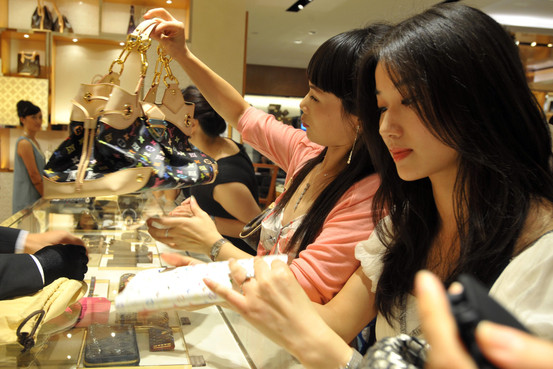
All these findings essentially reinforce the widespread idea that if this trend is going to be followed in 2011 too, China will become the biggest retal luxury market in the close future. (Source: McKinsey, Picture credits: TheChinaObserver)

Sustainable supply chain: how to build it?

At the beginning of March 2011, McDonald’s announced its Sustainable Land Management Commitment (SLMC), a long-term plan to ensure the corporation only serves food (and uses packaging) certified as sustainably sourced. The initial focus is on five high impact products: beef, poultry, coffee, palm oil and packaging.  McDonald’s certainly have all the power to be able to win negotiations with suppliers and reach its goals, but what about small retailers who are buying from overseas?

Shirahime, a UK based ethical fashion consultancy, has published a guide to responsibly sourcing textiles and clothes from India.

Despite its narrow country and industry focus, the guide is packed with advice for any business looking to find responsible goods or services suppliers from overseas. Here’s an excerpt of the Shiraname’s guide.

Be clear about the outcomes you want to achieve
Define aims clearly and build a strategy around the outcomes you want to achieve. Don’t look exclusively for suppliers who have certification. Certification is a costly process and may not guarantee the specific outcomes youwant.

Instead, visit potential suppliers and examine their operations for yourself. If you do this, make sure you have a suitable translator and cultural liaison who can guide your decision making process. In addition, start networking, even if it’s with your competitors. If you do this up front it can vastly increase your chances of success in finding the right supplier.

Consider company size alongside business practices
There can be a correlation between a supplier’s size, the goods or services it provides, and its ability to operate responsibly.

As a broad rule of thumb, the larger the company the more comprehensive their offering will be. Yet the larger the company, the more likely it is that their business is focussed upon financial efficiency, not responsible practice. Therefore, if you’re looking for a responsible supplier it may be worth choosing smaller producers rather than bulk providers as your partners.

Consider alternatives to your preferred goods, service or country
In order to get the most responsible procurement deal, businesses have to change their mindset and be open minded about both the country of origin and the goods or service they’re looking to procure.

Be prepared to invest as well as purchase
Businesses need to think about how they can contribute long term value to their suppliers’ enterprise beyond a simple commercial deal. This is where the value of being clear in your outcomes and partnering with other companies can yield substantial benefits. (Source: Guardian.co.uk)

How to deliver customized in-store offers to shoppers?

One of the in-store marketing biggest issues ever is how to reach customers with customized offers while they are shopping. U.S.A retailers and consumers are going to have a solution handy in the next future: Shop O’Lot.  

Shop O’ Lot is a self service platform which makes major retailer participation very easy. The model is based on a predictive analysis engine, that builds a customer’s shopping profile, then allows retailers to reach these customers in real-time while they are shopping, offering them customized discount coupons.

The app uses GPS and bar-code scanning for delivering the content and will be released on the iPhone and Android OS platforms.

Bob Pack, CEO says, “major retailers are now competing with product search and comparison apps that can actually drive a customer to buy from a competitor, a practice known as “scan and scram.” We have a complete solution to really help drive retail purchases, this goes well beyond mere Geo- location and focuses on individual target marketing. Once we understand the shoppers tastes, delivering them customized product deals only by the store they are in, will help keep shoppers loyal.”

Shop O’ Lot is still in the testing phase and plans a 2011 launch and retailers and consumers, can sign up now to be part of our beta program directly on Shop O’Lot website. (Source: americanbankingnews.com)

Enoc Retail plans expansion to Middle East

Enoc Retail Systems Holding, the retail division of Emirates National Oil Company (Enoc), plans to franchise its Zoom convenience-stores and Pronto, a fresh food and gourmet coffee concept.
Zoom, which operates six stores at Dubai Metro stations, is looking to expand to 28 stores in total, Enoc stated recently.

The convenience store brand, which is currently also present in eight stores within the Enoc/EPPCO network, is set to expand both as stand alone stores and at more Enoc/EPPCO service stations, it added.

Pronto, established in 2008, currently operates 21 outlets within Enoc/EPPCO service stations. Burhan Al Hashemi, managing director of Enoc Retail, said that expansion plans were part of a long term strategy to establish Zoom and Pronto as premier retail providers across the Middle East.

“Enoc Retail has proven its competencies in a short span of time. We are now open to share our expertise by franchising the successful retail concepts and reach out to a wider audience in the Middle East,” added Al Hashemi.

Enoc/EPPCO is the pioneer of convenience store retailing in the UAE, introducing mini marts in 1988 in Dubai and the Northern Emirates.

Currently, Enoc Retail employs more than 4,500 frontline staff, meeting the needs of over 600,000 customers a week. Enoc Retail operates a network of 170 Enoc and EPPCO service stations in Dubai and the Northern Emirates. (Source: Arabianbusiness.com)

Preparing for the consumer economy of 2020

In a recent super session at Retail’s BIG Show, Ira Kalish, Director of Global Economics for Deloitte Research, gave an all-encompassing overview on the state of the global retail industry ten years from now, as well as his take on what the consumer of the future will look like.
Kalish kicked off with a run through of recent developments in global retailing, noting that it’s always useful to think about the future by reviewing the past.
In particular, Kalish highlighted some of the paths that lead towards the economic crisis of 2008 and 2009 and the lessons that were learned from that crisis: massive consumer leveraging in the U.S., U.K. and Spain; the collapse of the asset price bubble; emerging currencies rising; U.S. consumers paying down debts and saving more; housing no longer being seen as a source of economic growth; China’s move towards consumerism and consumer spending rising as a source of GDP; and the challenges faced in Europe due to imbalances between countries like Germany and Portugal, Ireland and Spain.

As for what retailers can expect in the consumer economy of 2020, Kalish pointed to a number of challenges and opportunities retailers should certainly have on their long term radar, such as the massive increase in emerging middle classes and the disproportionate share of growth in emerging areas of the world like Indonesia, Colombia and Africa.

The effects of an aging population in an increasingly affluent world will also be a key consideration for retailers of all shapes and sizes, while hot markets with younger demographics (India, Middle East and Africa) will also keep global retailers on their toes.

Kalish also noted, the impact of obesity, changing global food market dynamics, an ever-increasing focus on sustainability and the possibility of a social media revolution could play a heavy role within the consumer economy of 2020.

So what can retailers do to prepare for this new consumer outlook? Kalish believes that aligning company values with those of consumers will be critically important, as will leading and listening to customers. Taking care of your brands, your people and your investments will also pay dividends when it comes to engaging with consumers, something that will be fundamental for 2020’s consumer – and not a bad idea for 2011. (Source: NRF)

Sodexo and Costco for a sustainable seafood

Food giants Sodexo and Costco have both committed to improve the sustainability of their seafood.

Sodexo, the $21 billion food service company, has announced a goal for all its contracted seafood to be certified by the Marine Stewardship Council (MSC) or the Global Aquaculture Alliance’s Best Aquaculture Practices (BAP) by 2015.

Under the plan, Sodexo will review all wild caught and farm raised seafood purchases and set short, medium and long-term goals with its contracted seafood vendors.

The target is part of Sodexo’s Better Tomorrow sustainability plan. The Better Tomorrow Plan makes 14 commitments to the environment, health, wellness and community support.

Meanwhile, Greenpeace has announced that after eight months of pressure, the world’s ninth-largest retailer has agreed to remove over a dozen seafood items from sale until the company can find an MSC-certified option. Costco will place a hold on selling Atlantic cod, Atlantic halibut, bluefin tuna, Chilean sea bass, Greenland halibut, grouper, monkfish, orange roughy, redfish, shark, swordfish, skates and rays.

Costco is also in the process of shifting towards more sustainable sources of tuna for fresh, frozen and canned varieties of the fish, Greenpeace said.

Costco will work with the World Wildlife Fund (WWF) to examine its remaining wild-caught species and determine the best way of moving to sustainable alternatives, Greenpeace said.

Costco and WWF have had a partnership since July of last year. Its first goal was to gauge the adherence of Thai-based shrimp farmers to draft standards drawn up by the Shrimp Aquaculture Dialogue, WWF said, and then to develop a strategy to guide those suppliers to full compliance. (Source: Environmentalleader.com, Photo: Thomas Quine)

EuroShop: green is “hot”

Back from the EuroShop, with lots of a ideas and a big certainty: green is “hot”. From Green IT to green supermarkets and green products: retail is now aware of the trend toward sustainable economic management. Obviously, the market is still immature and retailers have lot to learn about what can be really sustainable in the long term – and this is where professional services like the ones we offer can be of a great help.

As stated on the EuroShop website, earlier this year, German Federal Minister of Economics Rainer Brüderle visited the “Klimamarkt” (“climate market”) by Tengelmann, across from the Tengelmann headquarters in Mülheim an der Ruhr. The politician of the FDP party said: “We need pilot projects like this to gather experience on how climate protection and economic efficiency can be reconciled.” Tengelmann deems the “Klimamarkt”, which already opened in December of 2008, to be “Germany‘s first CO2-free supermarket.”

The project admittedly does not stand up to an intense cost effectiveness analysis. “Demolition and new construction would have been cheaper”, Tengelmann spokesperson Jutta Meister admits on inquiry. And this is issue n.1 to take into account: the economics of retail sustainability.

“Particular attention also always needs to be paid to the economical aspect of sustainability”, says Tobias Walter of tegut. “We build beautiful marketplaces for our customers, which thanks to our consolidated know-how generally are not more expensive than the otherwise widely common ‘shoe box buildings’”. Kai Falk, Managing Director of Communication and Sustainability at the German Retail Federation HDE also believes: investments in sustainability in retail have a chance on a larger scale only if they also pay off financially.

And this pay off can be energy savings. In food retail, according to the EHI more than 55 Euros per square meter of sales floor are incurred for energy, in which cooling at 44 percent accounts for the largest electricity consumption. In non-food retail on average 31 Euros per square meter need to be spent. Here the largest portion at 65 percent is caused by lighting expenses.

The EHI notices a large willingness in retail to invest in energy savings practices. 80 percent of polled retailers are said to be willing to invest in energy-saving cooling systems and equipment. This high readiness can be explained by savings expectations of up to 20 percent. Aside from investments in new cooling devices, the choice of cooling agent is also getting more and more important, especially since the old R22-systems have to be converted. Cooling with CO2 was one of the big trade fair topics at the EuroShop 2011.

Many commercial enterprises work on new projects and initiatives about a more sustainable retail. Hardly anybody believes they can afford to not be a part of green topics. The discerning public will intently look at what’s show and what is true concern. But ultimately it is the consumers themselves that have to start rethinking, because they choose where they shop. They choose what they would like to stay away from.