Category Archives: food retail

Retail, web 2.0 and sustainability:an analysis

A recent Zumer and Sustainable Life Media research is helping medium to small size retailers to better understand what is the connection among sustainability, consumers and web 2.0 tools.

The survey analizes the behaviour of 50 of the biggest companies leader in sustainability, at a worlwide level. Names such as Chevron, McDonald’s, PepsiCo, Coca-Cola, Campbell’s Soup, Microsoft, Toyota, Starbucks appear in the list of the companies whose online conduct on the three top social media, Facebook, Twitter and YouTube was analyzed for six weeks between December 2010 and January 2011.

We have found three key points that can be summerized as follows:

1. Authenticity: sustainability must permeate the whole company and must involve the company’s stakeholders so that ensure an authentic online communication, a more effective management of external reputation and brand perception. This is perfectly in line with the Cone research we have posted a while ago: consumers DO PUNISH not authentic communication about sustainability.

2. Sustainability helps acquiring new market share: almost three quarters of the professional interviewed stated that sustainability-themed social media are the channels to be in in order to get the attention of new market segment and reinforce the company’s position in the more traditional ones

3.Mix platforms to get the best results: although Facebook is still the most favourite platform among the big 50 companies in the survey, with investments rising in 2011 too. Tweeting about sustainability is becoming very common too -investments will double by 2015, as well as are CSR dedicated company’s websites, while YouTube actions are still fragmented. Blogging about sustainability might be a very powerful tool, not yet fully implemented by companies (1-2% of total blog posts).

Starbucks Launches 10th Global Responsibility Report

On April 18, 2011 Starbucks Coffee Company has announced the launch of its tenth annual Global Responsibility Report, which outlines fiscal 2010 performance in ethical sourcing, environmental stewardship and community involvement. The interactive report is now available online at www.starbuck.com/2010report

“Our ten years of reporting demonstrates not only commitment to global responsibility, but also to transparency in our business practices,” said Vivek Varma, Starbucks executive vice president of Public Affairs.

The report shows that Starbucks has made significant strides towards the bold goals it set in 2008. In particular, Starbucks exceeded its goals in the following areas:

  • Renewable Energy: Starbucks reached its goal to purchase renewable energy equivalent to half of the electricity used in its North American company-owned stores, by purchasing 58% in 2010; and has been named by the U.S. Environmental Protection Agency as the fourth-largest purchaser of renewable energy in the U.S. The company is raising its sights with a new goal to make 100% of the electricity used in global company-owned stores renewable energy equivalent by 2015.
  • Youth Action Grants: Starbucks exceeded its 2015 community goal to engage 50,000 young people in community activities by engaging more than 53,600 in 2010.

“Starbucks has made significant and meaningful improvements in key areas, and recognizes the need for greater innovation, customer engagement, and policy leadership,” said Ben Packard, Starbucks vice president of Global Responsibility. “We will continue to set new performance standards, reach our ambitious goals and sharpen our focus on areas of greatest impact in communities and the environment.”

In 2010 Starbucks demonstrated progress toward reaching its long term coffee purchasing goals, bringing the company closer to achieving its long-term goal of purchasing 100 percent responsibly grown and ethically traded coffee by 2015.

The company made advances in three key areas:

  • Coffee Purchasing: Increased purchases of coffee sourced under C.A.F.E. Practices from 81% to 84% in 2010.
  • Farmer Support: Provided $14.6 million to organizations that make loans to coffee farmers, nearing its goal of $20 million by 2015.
  • Forest Carbon Programs: Expanded pilots in coffee-growing communities in Chiapas, Mexico and Sumatra, Indonesia through Starbucks partnership with Conservation International to demonstrate how coffee farmers can adapt to and be a solution to addressing climate change while increasing their incomes.

Starbucks also made meaningful improvements in 2010 toward reaching its goals related to renewable energy purchases, recycling, water conservation, and green building. Starbucks is currently on track to reach goals in a number of key areas including:

  • Recyclable Cup Solution: Making progress to develop comprehensive recycling solutions for its paper and plastic cups by 2012 by testing recyclability of cups in a New York pilot.
  • Water Conservation: Reduced water consumption by 21.6% over 2008 levels, nearing the goal 25% reduction.
  • LEED® Certified Stores: Completed pilot phase for the U.S. Green Building Council’s LEED® Volume Certification pilot program. It is the company’s goal to build all new, company-owned stores to achieve LEED® certification beginning in December 2010.

Although much progress has been made, the company still faces challenges in progress against some goals, and is working to achieve them:

  • Community Service: Starbucks partners and customer around the world contributed more than 191,000 hours of community service in 2010. Although this is well short of the company’s 2015 goal of generating one million hours, Starbucks has put new structures in place to improve in 2011, and is dedicating April as a global month of community service in celebration of the company’s 40th anniversary.
  • Front-of-Store Recycling: Starbucks continues to support local market testing and implementation to accelerate future front-of-store recycling.
  • Reusable Cups: Although Starbucks served 6.4 million more beverages in reusable cups in 2010 than 2009, there is a need for considerable innovation and customer engagement to reach the 2015 goal of 25% of beverages made in reusable cups. Starbucks is working to increase awareness by offering a free cup of brewed coffee or tea at participating Starbucks in the U.S. and Canada to customers who bring in a reusable tumbler on Earth Day 2011.
  • Energy Conservation: Starbucks did not achieve its goal to reduce energy consumption by 25% in company-owned stores by 2010. The company is now planning to achieve this goal for 25% energy reduction in 2015. (Source: Businesswire)

Mark’s and Spencer opens greenest store ever

On March 1st, 2010 Marks & Spencer announced a programme to be the world’s most sustainable retailer by 2015 launching 80 major new commitments under M&S’ eco and ethical plan, Plan A.

Plan A, started on 2007, had already proven its efficacy achieving these great results in 2009/2010:
• Cost savings of around £50m for M&S;
• New products and services, including 250,000 customers from M&S Energy;
• Cut CO2 emissions by 40,000t;
• Recycled 2 million used garments via Oxfam;
• Reduced 10,000 tonnes of packaging;
• Diverted 20,000 tonnes of waste from landfill;
• Saved 387 million food carrier bags;
• Used 1,500 tonnes of recycled polyester (equivalent to 37 million bottles);
• Saved 100 million litres of water;
• Recycled or re-used over 130 million clothing hangers;
• £15m for charities.

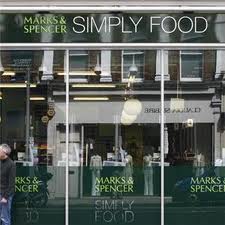
Yesterday, April 18th 2011, Marks & Spencer achieved a new great result opening the retailer’s “greenest-ever” store at Ecclesall Road in Sheffield.

The store is the first of a number of new ‘Sustainable Learning’ stores, that are part of M&S’ drive to become the world’s most sustainable major retailer by 2015.

The new 12,400 sq ft Simply Food store, built from scratch on a former brownfield site, incorporates a host of sustainable design and construction features, including an LED screen giving real-time public transport information, electric car charging points and a green living wall to attract wildlife.

All the bricks used in the build have also been reclaimed from a local mill.

Marc Bolland said:

“We’re delighted to be opening M&S’ greenest-ever store, providing customers with top quality M&S food and drink products in such a convenient location.”

The store is “firmly on course” to achieve a BREEAM rating of Excellent, making it one of the most sustainable retail outlets in the UK.

Its carbon emissions will be 23% lower and energy usage 30% lower than a traditional similarly sized store.

Innovative features include:

  • LED lighting, which is 25% more efficient than standard lighting, is used throughout the store, a first in the UK.
  • Sun pipes bring natural lighting onto the shop floor;
  • 100% of the timber used is FSC certified, a UK first;
  • All the bricks have been reclaimed from an old local mill;
  • Water costs will be reduced by up to 40%, compared with a traditional similarly sized store, by using harvested rainwater;
  • Capturing heat expelled from the store’s refrigeration units to help heat the store;
  • A living green roof of sedum plants and green living wall have created wildlife habitats, as well as insulating the store;
  • Bird boxes have been placed around the perimeter wall of the site;
  • In total, 62 different species of plants have been planted on or around the store;
  • Polished concrete floors have removed the need for floor covering;
  • 100% of the construction waste has been recycled.

All employees at the store have also been fully trained to understand its environmental features and will be encouraged to share this information with customers. (Source: The Food and Drink innovation Network)

Business Retail: a global view

Retail is big, but how big it is and is it equally distributed worldwide or are there countries where retail is at its best?  

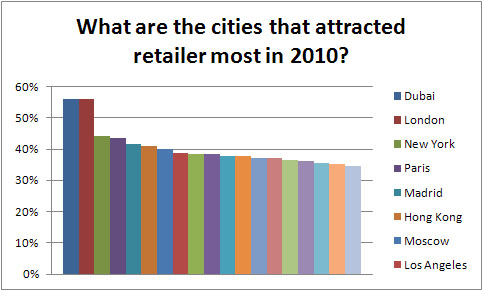
The last CB Richard Ellis Survey  about the business of Retail, reveals how fluctuating this market is, measuring how the most important 323 retailers changed their strategies in 73 countries during the last year.

The survey findings are very interesting, showing us that Dubai is the most favorite city for both American (61%) and European (63%) retailers, while only 23% of retailers from the Asia-Pacific area are present in that city – not because of lack of interest, but just because the Asia-Pacific consumer market is the fastest growing, therefore retailers from those countries do not need to branch out abroad.

Retail expansion rate saw a decrease during 2010, only a 2%, compared with 4% in 2009 and 12% in 2008, with new target countries being India (8 new retailers) and Turkey (7). United Arab Emirates (UAE), Kuwait, Ireland, Romania, and Belgium all attracted six new retailers.

Online retail is becoming more and more important for retailers: 82% of the brands in the survey do have an online catalogue, even though only a smaller percentage (46%) offers to consumers the chance to purchase goods online, with Value&Denim being the most active (43%) followed by mid-range fashion  (26%) and Luxury & Business Fashion (32%). To have an online retail shop is the favored choice by those brands who already have a physical store (46%), while in more advanced market such as the U.S.A., there is a slight percentage of online seller (24%) who do not have a physical store, and that are using online sales platform to test the market before opening a physical point of sale.

Beverage industry and sustainability: TATA beverages

We have previously wrote about how the beverage industry is getting more and more Sustainable, with more sustainable packaging like the Coca-Cola Company PlantBottle packaging, or by taking greater attention to the supply chain, as PepsiCo is doing with its recent committment to purchase only 100% Mexico sustainably grown sunflower crops.

 
Today, we will take a quick insight in what TATA Global Beverages is doing regarding sustainability. But first, a couple of information about the Company: TATA Global Beverages is part of the TATA Group, it currently employs 3,000 people around the world and it reported a 28% profit increase on Q3 2010, with profits being Rs 471.5 million (more than 74 million Euros).
 
If you take a look at Tata beverages website, it is clear that TATA Global Beverages is deeply involved in sustainability: from its mission “to make the world a better place through ‘life enhancing sustainable hydration’ to its long term goals and its collaborating with the Rainforest Alliance.
In a recent interview with The Guardian, TATA Global Beverages Director of Sustainibility Sara Howe, talked about the challenge to balance sustainability with the Company’s present short-term financial and commercial pressures.
She stated to be optimistic about the number of big companies who are now seriously and credibly engaging with the sustainability agenda, setting ambitious sustainability targets and demonstrating progress towards achieving them.
 ” As more companies come to understand the risks and opportunities that issues like climate change, water stress, population growth, health and wealth disparity, represent, then the necessary capacity and capability building will follow” Howe states.
But what is the role of consumers in the process towards a more sustainable business? Howe’s reply: “In a consumer-focused business like ours a particular challenge is getting permission from consumers to act for the future. Traditional research and insight methodologies tend to drive responses based on their current experience and understanding. We need to find a way of showing consumers what the future might look like from a sustainability point of view. Then they can then help us design products and services fit for that future” yet adding that her main concern about the ability to create a more sustainable world is that “That too many people won’t get it until it’s too late“.

A greener wine for happier wine connaisseurs

Vinitaly 2011 ended with excellent results, an increase of 10% in visitors confirmed once again that good wine never goes out of fashion. Good wines, not only for the undisputed quality of the products, but also because of its being good for the environment and  for the community. The bio wine, produced by following the precepts of organic agriculture, with no sulfur and, above all, free of chemical residues and pesticides, is not new thing on the market.
But what is innovative is that sustainability in the wine industry is becoming more and more popular and required by wine consumers. A recent WineNews / Vinitaly survey showed that “green” labelled wine, the one ensuring the environmental commitment of the winery, would be an added value for 55% of the interviewed. The survey results were collected in a sort of handbook of the sustainable wine drinking, whose must are: locally grown wine, organic and biodynamic viticulture, ISO 14001 or EMAS certified wineries, lighter bottles, recycled paper labels, use of recycled or recyclable packaging, low-impact in terms of carbon footprint of production.
There are several Italian producers who understand the importance of sustainability to adequately respond to consumer demands. Zonin for instance, is already eliminating herbicides, fertilizers and chemical treatments, using only those permitted by the organic or biodynamic agriculture. “Approaching a more sustainable production also requires us to use a more precise viticulture, an aspect that we can no longer overlook in the vineyards where we bring this new philosophy. A lot of attention is paid to the fertility of the soil which must not only be maintained but improved over time without the use of chemicals, “says Franco Giacosa, technical director of the Zonin company in Gambellara (Vicenza, Italy).
It is not a suprise to find the Zonin name amont the list of the 73 Italian companies participating to the Bayer CropScience Magis project  for social and economic sustainability in the wine industry: from Caviro to Planeta,  Barone Ricasoli and Castello Banfi, to name some of the companies appearing in the Magis list. The aim of the Magis project is to provide companies with a common objective and measurable parameters and elements of communication to meet the demands of industry and consumers in terms of sustainability.
Obviously, the added value of a wine produced accordingly to the Magis criteria, will be lost if the supply chain and bars, restaurants and hotels do not abide to the same sustainable and responsible criteria. And this is what the ECOFFEE project is working at!

The Coca Cola Company and the new PlantBottle® packaging: sustainability comes from sugarcane!

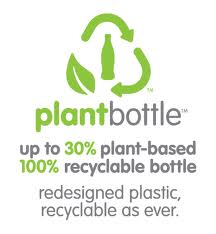
Beginning April 4, 2011 the first 100 percent recyclable beverage packages made with plants are readily available to people across the U.S. If you want to enjoy the fresh taste of DASANI, or a nourishing Odwalla beverage in a more environmentally responsible package made from plants, now you can. There’s no more waiting.

PlantBottle® packaging for both brands was developed with the planet in mind by PlantBottle® Packaging Platform, The Coca Cola Company.  Single-serve Odwalla packages are made from up to 100 percent plant-based materials with high-density polyethylene (HDPE) plastic. PET bottles for DASANI are made with up to 30 percent plant-based materials.

“It’s our goal to make traditional plastic bottles a thing of the past and ensure that every beverage we produce is available in 100 percent plant-based, fully recyclable packaging,” said Scott Vitters, General Manager, PlantBottle® Packaging Platform, The Coca-Cola Company. “The national launch of DASANI PlantBottle® packaging represents an important step toward reducing our carbon footprint, and the up to 100 percent plant-based, recyclable packaging used for Odwalla is the first of its kind in the beverage industry.”

Traditional PET bottles are made from petroleum and other nonrenewable fossil fuels. Incorporating a blend of petroleum-based materials with up to 30 percent plant-based materials allows PlantBottle® packaging for DASANI to reduce potential intrinsic carbon dioxide emissions when compared with PET plastic bottles

“DASANI is designed to make a difference by offering a better designed package for a more sustainable future,” said John Roddey, Vice President and General Manager, Water, Tea and Coffee, Coca-Cola North America. “Because DASANI PlantBottle® packaging is up to 30 percent made from plants and still 100 percent recyclable, it was designed with the planet in mind by helping to reduce the impact of our packaging on the environment.”

The plant-based materials for both DASANI and Odwalla PlantBottle® packaging are produced through a process that turns sugarcane into a key component for PET and HDPE plastic. Currently, PlantBottle® packaging is made using sugarcane ethanol from Brazil, the only source widely recognized globally for its unique environmental and social performance. Brazilian sugarcane is primarily rain fed and industrially grown on abundant, arable land using organic fertilizers. The plantations from which PlantBottle materials are sourced are located far away from Amazon rain forests, and their impact on biodiversity is reduced thanks to advanced farming practices and sound public policy.

Unlike other plant-based plastics, PlantBottle® packaging is entirely recyclable and can be processed through existing systems. This ensures PlantBottle® packaging can be repeatedly used, recycled and reused. In addition, there are no differences in shelf life, weight, composition or appearance between traditional PET plastic bottles and PlantBottle® plastic bottles.

In late 2009, PlantBottle® packaging was launched in the western U.S. and eight other markets around the world. To date, PlantBottle® packaging is estimated to have eliminated the equivalent of 30,000 metric tons of carbon dioxide, or three million gallons of gasoline used to produce PET plastic bottles. Currently, The Coca-Cola Company is working to further technology so other plant materials can be used in future PlantBottle® packaging. The ultimate long-term goal is to turn waste into a resource, resulting in a carbon neutral, 100 percent renewable, responsibly sourced bottle that is fully recyclable.

“Several approaches to a PET package made entirely from plants have been successfully demonstrated in laboratory testing. We’re working to advance this breakthrough science to ensure it is commercially viable,” said Vitters. “PlantBottle® packaging means only good things for everybody. We welcome others in the industry joining us in advancing the science behind packaging made from plants.”

The technology used to make PlantBottle® packaging already has been adopted by Heinz, which recently announced it will begin packaging its ketchup using that technology this summer under license from The Coca-Cola Company.

The rollout of PlantBottle® packaging for DASANI will be supported by a national television spot breaking in April. Additional executions will include enhanced packaging graphics, as well as out-of-home, print, digital and point-of sale-advertising to build awareness for PlantBottle® packaging. Odwalla’s marketing program includes coupons, print advertising, digital programs and new labeling Point-of-sale materials for in-store displays will feature attention-grabbing messages such as “Paper or Plastic? Try Plant!” (Source: Businesswire)

Vinitaly opens its doors with interesting data

Vinitaly focus on export and on the Italian market decline.

How to seize the new opportunities coming from abroad, particularly from Asian markets, and how to support the internal Italian market are the two main themes of the 2011 Vinitaly, the most important Italian Wine exhibition,  which is taking place in Verona (Italy), and will end on April 12 .

The Italian wine business is quite a big one, worth € 13.5 billion plus  a €2 billion deriving from induced activities. But there are lights and shadows. For example, on the exports side, 2010 experienced a growth  reaching a +12% equal to 3.93 billion euro, while domestic consumption is decreasing.
For the first time, reports Coldiretti (the Italian association of Agriculture farmers), 2010 showed a stagnation in the internal sales, now at € 3.89 billion. 

Riello, the President of Veronafiere, has stressed even more the wine business critical situation, the decline in domestic consumption, which continues, “was between 100 liters per capita in the Seventies, up to 45 liters in 2007, about 40 liters per person nowadays” showing a “further decreasing trend by 2015. ” The problem, recently highlighted by Giuseppe Martelli, director general of Assoenologi (the Italian Association of oenologists), is that “an oenology structured like the Italian one, cannot rely only on export.”

A couple of data: “in Australia only ten companies produce more than 90% of the wine exported, in Chile of 120 wineries, 100 are working only for export. In Italy, however, companies are more than 450 thousand, with an average size that is below the three hectares, compared to 300 in Chile and Australia. ”

Even a survey Vinitaly Winenews-emerges as foreign markets are critical to revenue growth, a situation that can cope with the larger companies, but few compared to many small enterprises that characterize the Italian production scenario and still have turnover rather weak.

A Vinitaly-Winenews survey on 50 companies among the most representative of the Italian business, show that 2010 ended with an average revenue increase of 8%, driven in particular by exports  (+14%).  As per 2011, the report show a degree of optimism: 75% of the interviewed said to be quite positive, 15% positive while a 10% of wineries that still feels the situation to be critical. The most critical points highlighted by the survey are economy instability, weak consumption, the loss of international competitiveness, the hars internatioanl competition.

The boom in exports, according to Coldiretti, is due largely to the U.S., which in 2010 became the country with the highest consumption of wine in the world. The American market, which is worth about $ 30 billion, is covered for 61% of production in California, but Italian wines are the most consumed ones, growing in value by 11%.

The most important destination of Italian wines are Germany, +4% in 2010, China – exports to this country doubled in 2010 – India, +65%, and Russia, +58%, equal to €104 million.

Coldiretti also analyzed the important value of the employment world of wine: the 250,000 Italian companies create jobs for for 1.2 million people. There are about half a million owners of vineyards, which have about 210,000 employees, of which over 50,000 are young and 30,000 are foreigners. And the wine business does not end in the vineyard, opportunities being in adjacent sectors like trade and catering, glass, cork, label and packaging, as well as research, publishing, finance, wine tourism, health, bio-energy. (Source:manageronline.it)

Illycaffè Earns the First DNV Responsible Supply Chain Process Certification

On March 18, 2011 illycaffè became the world’s first company to receive a Det Norske Veritas (DNV) Responsible Supply Chain Process certification, attesting to the company’s long-running sustainable approach to production and its relations with stakeholders throughout the production chain, particularly with green coffee suppliers.

The illycaffè model is innovative in assigning critical roles to quality and value creation. The certification was officially conferred at illycaffè’s twentieth annual meeting in Brazil, recognizing suppliers for coffee production meeting the company’s industry-leading quality standards.

DNV, an international, independent leader in product and process certification, in part modeled its new certification standard on the illycaffè supply chain model, buttressing it with current and emerging stringent guidelines for sustainability and corporate responsibility, and with standards of reference for certification and accreditation activities. The certification incorporates both pan-industry standards and industry specific standards. Officially, illycaffè received the DNV Green Coffee Responsible Supply Chain Process certification.

The standard developed by DNV is innovative because it marks the passage from the certification of an organization’s supply chain to the certification of an organization’s ability to create value that benefits everyone involved.

“We are proud to have obtained this certification, which recognizes and validates how we have operated over the past 20 years, through protocols and procedures that guarantee the excellence of our final product,” said Andrea Illy, President and Managing Director of illycaffè. “illycaffè has always been a stakeholder company, based on ethics and with the objective of improving quality of life. Quality is a key concept in our company philosophy. Our continuous search for quality creates a virtuous cycle that creates value for everyone involved, from coffee growers to coffee drinkers, in growing magnitude over time.”

Quality and sustainability are for illycaffè inseparable: a truly excellent product cannot be anything but sustainable in three critical aspects: economic, social and environmental. Economic sustainability is achieved through the creation of value for all those involved, from the grower to the final consumer. Social sustainability rests on the concepts of individual growth and self-realization. Environmental sustainability means respect for the ecosystem, through, for example, the use of recyclable shipping and packaging materials and the application of non-polluting practices.

“This supply chain certification standard is particularly innovative in demonstrating a company’s ability to create value over the long term,” said Thomas Vogth-Eriksen, Chief Executive Officer DNV Business Assurance. “The schema focuses on the building of shared value in a context where social development stimulates economic development, recognizing that a business grows in large part through its ability to help its partners and suppliers grow.”

Over the past two decades illycaffè has perfected a system of direct relationships with its suppliers, based on three main pillars: selecting the best growers in coffee producing countries; transferring to these growers, through the company’s Università del Caffè and the daily field work of specialized agronomists, comprehensive knowledge accumulated over 80 years of practical experience and research to produce coffee meeting illy’s high quality standards; and purchasing the best production directly from growers, paying them a premium over the going market price to reward quality achieved, and incentivize ongoing improvement. (Source: BusinessWire)

China retail luxury: a long-term insight

China: a market that is continuously growing, a very rich but still unknown to the many. What is clear is that China is set to become the most powerful economy in the world, and this will happen in a very short time. Many are the companies that have already sucessfully entered the Chinese market, luxury good brands being the pioneers.

A McKinsey survey over 1.500 Chinese luxury consumers during spring 2010, shows interesting trends which are basically telling to the world that the “consumer culture” is changing at a very high speed, following the changes in the society and urban landscape. For those who are interested, the whole report can be downloaded here, but three are main facts:

  • “Rapid increases in wealth, and shifting social mores that sanction the display of that wealth, are driving a growing infatuation for luxury goods among Chinese consumers.”
  • “Access to an explosion of information on the Internet, an increasing penchant for overseas travel, and first-hand experience purchasing and consuming luxury goods are contributing to a substantial rise in sophistication among luxury consumers in China. Contrary to popular belief, a growing number of Chinese luxury consumers are exhibiting a noticeable trend away from overt displays of wealth, and towards more understated forms of luxury consumption.”
  • “Rapid urbanization and growing wealth outside of China’s largest cities is driving the emergence of several new geographic markets with sizable pools of luxury goods consumers. Over the next 5 years, [McKinsey] expects that the number of such cities will double from 30 to 60.”

Other key findings are social-demographics related. Not only traditional luxury brands consumers, but also 13 million upper-middle-class households (earning $15,000 to $30,000), which are stretching their budgets to buy luxury watches, jewelry, handbags, shoes and clothing. This segment represented 12% of Chinese luxury consumption in 2010, but is expected to reach 22% by 2015.

The survey also shows that approximately 73% of luxury consumers in China are under age 45, significantly younger than their counterparts in western nations or even nearby Japan. 

All these findings essentially reinforce the widespread idea that if this trend is going to be followed in 2011 too, China will become the biggest retal luxury market in the close future. (Source: McKinsey, Picture credits: TheChinaObserver)