Tag Archives: sustainability

A new sustainable design policy for Fairmont Hotels & Resorts

Fairmont Hotels & Resorts is expanding its green commitments through a new sustainable design policy. In addition to promoting the use of recognized green building certification systems such as LEED, the policy includes new environmental criteria and checklists for renovation and retrofit projects, environmental consultation during the design brief and construction process, and the creation of a green-build best practices repository for use by Fairmont’s hotels, engineers, developers, project leads, and architects.

“We literally wrote the book on hotel sustainability and have been focused on making our properties as environmentally sound as possible, says president, Chris Cahill. “Now, we’re instituting formal design and construction guidelines for our pipeline of new hotel projects and ongoing capital agenda. Environmental stewardship is part of Fairmont’s DNA and we want to ensure it’s evident in all phases of our business.”

The program has been implemented at two Fairmont hotels. Fairmont Pittsburgh, the brand’s first LEED-certified hotel, incorporates energy efficient lighting and appliances; enzyme waste systems; furnishings and other guestroom amenities made from recycled, organic, or sustainable material; and the use of paints, adhesives, sealants, carpets, and fabrics with no or low emissions. Meanwhile, the Savoy in London (pictured) has a waste management system, as well as a heat and power plant that reduces the hotel’s reliance on the national grid by approximately 50 percent.

The policy is part of The Fairmont Green Partnership program, allowing the Group to meet and exceed guest expectations of operational sustainability. It focuses on improvements in waste management, sustainability, and energy and water conservation at Fairmont’s properties, and innovative community outreach programs involving local groups and partnership. (Source: Hospitality design.com)

Ben & Jerry’s Fair Tweets for World Fair Trade Day


May 14th is the World Fair Trade Day, the first global campaign for The Fair Trade movement connecting producers and customers around the world and is endorsed by WFTO.
Ben & Jerry’s, known for its activism, has just launched this great campaign. The video explains how the “Fair Tweets” campaign works, a very simple but effective use of Twitter to help promote the Fair Trade Day.  
Just download the Fair Tweets application from www.fairtweets.com and the unused characters in your tweets will be automatically create relevant messages, or better, “Fair Tweets”!

How to implement grocery retaling and e-tailing in India

We found this article by Avinder Batra, published on IndianRetailer.com very interesting because of its very detailed approach to the implementation of a home delivery service for those small groceries retailers that are facing the competition with by multinational like Wal-Mart. This is also a business model which is very sustainable, by lowering CO2 transportation emissions and by mainting vital the traditional small retail grocery business.

Batra identifies a big trend in the grocery business- home delivery- due to two main reasons:

-High fuel price: Indian families are not interested in spending time on these products
-Families want more leisure time for themselves: Since both the partners are working, shoppers find this activity as waste of time to collect groceries in weekends

“When most of the big retailers are fighting for larger space, opportunities can be foreseen where you do not have compact space and can still run successfully through Etailing the Grocery model” Batra says.

The solution could be a mix of website, mobile, IVR.

High rental costs have made the retail business cumbersome for the independent players.  As told by Ragib Hussain, VP, Vice President Strategy at e.Soft Technologies,  “This type of model does not need much of investments. Etailing models (having virtual shop) can help retailers in expanding the business thus by covering larger area & reap good volumes.”

Small independent retailers need to increase their customer base: Online services and then home deliveries would fetch revenues only when you have large customer base. Margins are the rewards which an investor gets and this is what he has to work on to have with minimum liable cost.

Develop tie-ups/partners: Developing partnership agreements with the kirana shopkeepers and others nearby shops in the area that would reach the consumers through home delivery systems. This should  be the initial step of building a strong network in the areas concerned you want to cover.

 Also, it would decrease the liability on the retailer—warehouse cost, maintenance cost, procurement cost, etc. 

Develop your own site and make a strong viable back-end system for smooth functioning of the business model: either by creating your own hosted website or by opting for cloud services, this is a very important step. Cloud services would play a vital role to make updated connections with your suppliers, logistics suppliers, CRM updates and drop shipping suppliers. Because time is a critical factor, efficient distribution is of utmost importance. Technology plays a key role in enabling an efficient dairy distribution model.

 This is the back bone of the whole concept when the business starts working and it is the most challenging part of the business to make real-time connectivity with them.

Home delivery services: By tying up with the partners in the local areas, investor can direct the orders to those shops and through delivery boys; the task can be executed smoothly. This would even increase the revenue prospects of the local partners.

 If the business model is churning profits, there is no harm in having your own warehouses and company owned shops in the localities. This could be the way to expand your business model and make it stronger.

Each small outlet should be centrally connected to the warehouse to record the sale and updates are on real time basis. This would help to replenish the goods which are going out of stock.

Delivery system: Tempos and other mini trucks can be used to provide deliveries in the located areas if orders come in bulk in particular area. (Source: IndiaRetailer.com)

Cosmetics industry faces sustainability

We always talk about sustainability in the retail sector dealing with products such as food and apparel, but what about cosmetics? There has been increased interest from the cosmetics industry toward sustainability, the reason why a  Sustainable Cosmetics Summit, is going to be held in New York from May 12 – 14.

In the cosmetics business too, sustainability has become very important to help companies to steer their way out of the recession and tap into the big opportunities that are likely to arise over the next five years.

As stated by Irina Barbalova, head of beauty and personal care for Euromonitor, the four key trends in the cosmetic industry include focusing on the ever-growing emerging markets, new media in western markets, offering better value for money to consumers who continue to be hard hit by the economic downturn in western markets and communicating sustainability through brands.

As stated by Aveda‘s VP, Chuck Bennet “The environmental footprint of a cosmetic, or any product, must account for the full ‘life cycle’ of the product. This includes many factors such as energy and water consumption, emissions to the environment. It can significantly misrepresent the actual footprint of a product if the focus is limited to, for example, manufacturing only.”

According to market researcher Accenture, co-operation with packaging suppliers in efforts to reduce the overall carbon footprint of products. Pressure to reduce environmental impact, and to reduce costs generally, is forcing companies to take sustainable packaging seriously. A supply chain view of packaging provides the breadth of vision required to develop optimal solutions: for example, the recycling of some packaging materials and the switch to reusable packaging. To address sustainability, Accenture recommends companies scan their supply chains to determine the true value proposition of different strategies to reduce, reuse, and recycle.

The research firm estimates that companies can save 3 to 5 percent in supply chain costs by adopting green packaging initiatives, in addition to the revenue uplift from green consumers.

In the US, L’Oreal for example made inroads to reduce the environmental impact of its beauty product packaging by introducing two new assessment tools to its package design process, while Unilever has looked to reduce the amount of waste used in the packaging of a product, yet maintain protection. Unilever has minimised the packaging on its stick deodorants as well as making them more lightweight, to reduce the impact of transporting the goods.

In France, Clarins has built an alternative model, such as agreeing long term Fairtrade contracts with producers of katafray in Madagascar, offering 5% of the sales price from relevant brands to help local communities. “I believe consumers today are more knowledgeable than before, thanks to the media, so they can see through companies that greenwash,” said Yvette James, head of Clarins‘ responsible development division. (Source: CosmeticDesign.com, warc.com. Picture credits: Americanspamag)

Chinese consumers are willing to pay for sustainability

We have already talked about China as one of the fastest growing markets in terms of customer awareness towards sustainability: Chinese do appreciate and search for sustainability.

A study released on April 18th by global advertising and international marketing firm Ogilvy & Mather answer to the question that our customers usually ask: “Do consumers are willing to pay more for sustainable products?”. The study shows that the answer is “Yes, Chinese consumers are willing to pay a small premium for environmentally friendly products”, but they place responsibility to fix China’s environmental woes on the government.

Convenience is the main factor driving shopping decisions for more than half of the 1,300 Chinese consumers across China, but 71 percent said they would pay up to 10 percent more or higher for some “green” products.

“Within about a 15 percent price band, if two items have comparable brand image, people will go for the sustainable option,” Kunal Sinha, the lead author of the study and head of the company’s sustainability practice in China, told Reuters.

“But if you were going to sell it purely on its sustainability credentials, it wouldn’t fly,” he said, referring to the range of green products and sustainable behaviors covered in the study, from toiletries to food and vacations.

Shoppers were willing to open their wallets the widest for sustainably produced milk, at premiums of 17 to 20 percent, the study said, an indication of how severely scandals involving tainted milk have damaged China’s dairy industry.

The study noted large gaps between the sustainable behavior Chinese consumers profess to and their actual consumption habits, a trend that also exists in developed markets such as the United States.

One measure of their optimism: more than 90 percent of those surveyed said they thought the sustainability movement was growing. But fewer than a fourth or respondents said they felt empowered to solve environmental problems on their own, and instead looked to the government to fix the country’s environmental woes.

Chinese consumers have long been hesitant to loosen their purse strings, more so than consumers in other countries at a similar stage of development. But domestic consumption is picking up quickly and many analysts think it has reached a turning point.

That means Chinese consumers’ buying power may be out-pacing their green ethos. The survey said the concept of sustainable living is not yet mainstream, with respondents saying those leading the movement in China are seen as idealists.

Joel Backaler, a director at the consulting firm Frontier Strategy Group who blogs on Chinese consumption trends, says mainstream Chinese consumers are focused on aspirational purchases in the short to medium-term and will not begin focusing on green and sustainable consumption for years.

“The vast majority of China’s middle class are for the first time learning how to spend and join the consumption phenomenon that their counterparts in the U.S. and Western Europe have long enjoyed,” he told Reuters in an email. (Source: Reuters)

McDonald’s opens its first green restaurant in Italy

Ho.Re.Ca and sustainability: in Italy there are still people who do not like to match these two words or that asserts that “the time has not yet come,” and this is the great challenge we are – successfully – addressing  with ECOFFEE. We strongly believe that the Italian consumer is able to perceive and reward the added value of sustainable products and services, and the news that McDonald’s has just opened its first green restaurant in Italy, in Lainate (near Milan) do prove that we are not wrong. This green McDonald’s was designed to be completely self-sufficient in energy: thanks to solar, wind and biomass. The project costed € 5 million, 20% more than a traditional restaurant but at the end of the year it will certainly pay off in terms of increased brand reputation, reduced  environmental and social impact, not to add the reduced costs due to the energy saving architecture and technological process. 
At the end of 2011, the results coming from the adoption of these policies will be evaluated by an Italian green environmental consulting company ECOFFEE has already established a business connection with a while ago.  Meanwhile, McDonald’s aims to achieve the European certification EN 16001, which will help the company to organize systems and processes aimed at improving the economic benefits of energy efficiency and reducing emissions of greenhouse gases.

But let’s talk about the “McGreen” in Lainate – a project whose details are available at the McDonald’s site www.persapernedipiu.info Currently, the restaurant is able to produce up to 90% of the energy needed, but within three months it is said to reach 100%, thanks to a pioneering trigeneration plant that use the exhausted cooking oil as fuel. The building structure is earthquake resistant, and thanks to the “Einstein”system  customers are always updated with real-time data regarding energy consumption and savings thanks to a monitor positioned at the entrance of the restaurant. Particular attention was paid to the restaurant supply chain and to the ingredients used in the menu, where customers can also find “local” ingredients belonging to the traditional Italian cuisine, like the Alto Adige IGP Speck, Parmigiano-Reggiano DOP, IGP oranges from Sicily, to name a few. The coffee served will not be the one of the Italian companies Illy or Lavazza, which are known for their sustainable products, but the one certified by the international organization Rainforest Alliance.

On the outside of the building, ecoattivo asphalt – when struck by sunlight it triggers a  reduction of pollutants- energy-efficient refrigerators and incentives for the customers using electric cars.
“Lainate is not a departure or arrival point, but a stage of a journey that McDonald’s sets out a while ago. For the Expo 2015 we will be able to implement a reduction of 15% of our CO2 emissions, an increase of 15% of our energy savings and another 15% increase of the energy we use from renewable sources. In 2020, these percentages will rise up to 20% allowing us to meet the Kyoto Protocol parameters”said Roberto Masi, McDonald’s Italy CEO.

In fact, McDonald’s Italy is not new to these kind of sustainable initiatives. As early as 2010, in fact, it adopted new standards for construction and renovation, with the use of building materials with high environmental sustainability, solar panels, heat pumps, roof ventilation and, where it was possible, photovoltaic. But not only that: technologically advanced machinery, power management systems, occupancy sensors, insulation and LED lighting fixtures to reduce air pollutant emissions. All new openings have already been planned to include some or all of these technologies. The 2012 politics has already been planned aiming at using certified renewable energy in all McDonald’s restaurants, building a fleet of delivery vehicles composed by 100% biodiesel  and a company’s car pool with low dioxide carbon emissions . (Source: MarketingOggi)

Greenburgers guide: Greenopia

EVOS, Le Pain Quotidien and Pizza Fusion received the highest marks of any fast food restaurants in the latest ratings issued by Greenopia.
 
The three chains each received four green leafs, meaning they met at least 90% of the criteria across five categories: green building design, supply chain, recycling/take-back programs, stock and sustainability reporting.
 
Greenopia said EVOS is the “greenest burger chain in the US.” The company sells a variety of organic and fair trade products; incorporates green building design into its locations; uses recycled-content items; and purchases wind credits to offset its energy footprint.
 
Bakery and sandwich shop Le Pain Quotidien uses organic and local ingredients; incorporates green building design; composts food waste; and uses its spent food oil for biodiesel.
 
Pizza Fusion “tackled an incredible amount of green projects for a food chain” Greenopia said. All of its projects are LEED certified; their pizza is made with organic ingredients and delivered by hybrid delivery vehicles; employees wear organic cotton uniforms; and they have a take back incentive for their used pizza boxes.
 
Further down in the rankings Chipotle and Starbucks received three leafs, and McDonald’s improved to two leafs this year. With more than 32,000 stores worldwide other major chains should look to McDonald’s to see how to properly begin to incorporate green initiatives, Greenopia said.
 
Below is the full description of the company’s efforts and shortcomings, as cited by Greenopia:
 
Green Efforts:
McDonald’s has begun to incorporate some green elements into its culture. McDonald’s has 2 green stores, with more on the way. In fact, McDonald’s has been one of the more aggressive chains in incorporating green building designs into its locations. McDonald’s uses some recycled content in their packaging and has a comprehensive waste diversion program. It also only gets its beef from responsible sources (especially in regard to rainforest degradation) and has taken steps to green its seafood and coffee sourcing. Finally, McDonald’s has begun analyzing and scoring its supply chain to search for environmental efficiencies (as well as conducting audits) and publishes one of the better sustainability reports in the industry.
 
Green Issues:
In the green spectrum, McDonald’s is at least light green in every category. What we have listed above is good, but there is still room for improvement. For starters it would be nice to see natural and/or organic products offered and some more widespread and consistent green building design elements as well as some renewable energy sourcing. McDonald’s deserves to be applauded for what it has done (especially when compared with other major burger chains) and we hope to see improved commitment as time goes on.

Retail, web 2.0 and sustainability:an analysis

A recent Zumer and Sustainable Life Media research is helping medium to small size retailers to better understand what is the connection among sustainability, consumers and web 2.0 tools.

The survey analizes the behaviour of 50 of the biggest companies leader in sustainability, at a worlwide level. Names such as Chevron, McDonald’s, PepsiCo, Coca-Cola, Campbell’s Soup, Microsoft, Toyota, Starbucks appear in the list of the companies whose online conduct on the three top social media, Facebook, Twitter and YouTube was analyzed for six weeks between December 2010 and January 2011.

We have found three key points that can be summerized as follows:

1. Authenticity: sustainability must permeate the whole company and must involve the company’s stakeholders so that ensure an authentic online communication, a more effective management of external reputation and brand perception. This is perfectly in line with the Cone research we have posted a while ago: consumers DO PUNISH not authentic communication about sustainability.

2. Sustainability helps acquiring new market share: almost three quarters of the professional interviewed stated that sustainability-themed social media are the channels to be in in order to get the attention of new market segment and reinforce the company’s position in the more traditional ones

3.Mix platforms to get the best results: although Facebook is still the most favourite platform among the big 50 companies in the survey, with investments rising in 2011 too. Tweeting about sustainability is becoming very common too -investments will double by 2015, as well as are CSR dedicated company’s websites, while YouTube actions are still fragmented. Blogging about sustainability might be a very powerful tool, not yet fully implemented by companies (1-2% of total blog posts).

Starbucks Launches 10th Global Responsibility Report

On April 18, 2011 Starbucks Coffee Company has announced the launch of its tenth annual Global Responsibility Report, which outlines fiscal 2010 performance in ethical sourcing, environmental stewardship and community involvement. The interactive report is now available online at www.starbuck.com/2010report

“Our ten years of reporting demonstrates not only commitment to global responsibility, but also to transparency in our business practices,” said Vivek Varma, Starbucks executive vice president of Public Affairs.

The report shows that Starbucks has made significant strides towards the bold goals it set in 2008. In particular, Starbucks exceeded its goals in the following areas:

  • Renewable Energy: Starbucks reached its goal to purchase renewable energy equivalent to half of the electricity used in its North American company-owned stores, by purchasing 58% in 2010; and has been named by the U.S. Environmental Protection Agency as the fourth-largest purchaser of renewable energy in the U.S. The company is raising its sights with a new goal to make 100% of the electricity used in global company-owned stores renewable energy equivalent by 2015.
  • Youth Action Grants: Starbucks exceeded its 2015 community goal to engage 50,000 young people in community activities by engaging more than 53,600 in 2010.

“Starbucks has made significant and meaningful improvements in key areas, and recognizes the need for greater innovation, customer engagement, and policy leadership,” said Ben Packard, Starbucks vice president of Global Responsibility. “We will continue to set new performance standards, reach our ambitious goals and sharpen our focus on areas of greatest impact in communities and the environment.”

In 2010 Starbucks demonstrated progress toward reaching its long term coffee purchasing goals, bringing the company closer to achieving its long-term goal of purchasing 100 percent responsibly grown and ethically traded coffee by 2015.

The company made advances in three key areas:

  • Coffee Purchasing: Increased purchases of coffee sourced under C.A.F.E. Practices from 81% to 84% in 2010.
  • Farmer Support: Provided $14.6 million to organizations that make loans to coffee farmers, nearing its goal of $20 million by 2015.
  • Forest Carbon Programs: Expanded pilots in coffee-growing communities in Chiapas, Mexico and Sumatra, Indonesia through Starbucks partnership with Conservation International to demonstrate how coffee farmers can adapt to and be a solution to addressing climate change while increasing their incomes.

Starbucks also made meaningful improvements in 2010 toward reaching its goals related to renewable energy purchases, recycling, water conservation, and green building. Starbucks is currently on track to reach goals in a number of key areas including:

  • Recyclable Cup Solution: Making progress to develop comprehensive recycling solutions for its paper and plastic cups by 2012 by testing recyclability of cups in a New York pilot.
  • Water Conservation: Reduced water consumption by 21.6% over 2008 levels, nearing the goal 25% reduction.
  • LEED® Certified Stores: Completed pilot phase for the U.S. Green Building Council’s LEED® Volume Certification pilot program. It is the company’s goal to build all new, company-owned stores to achieve LEED® certification beginning in December 2010.

Although much progress has been made, the company still faces challenges in progress against some goals, and is working to achieve them:

  • Community Service: Starbucks partners and customer around the world contributed more than 191,000 hours of community service in 2010. Although this is well short of the company’s 2015 goal of generating one million hours, Starbucks has put new structures in place to improve in 2011, and is dedicating April as a global month of community service in celebration of the company’s 40th anniversary.
  • Front-of-Store Recycling: Starbucks continues to support local market testing and implementation to accelerate future front-of-store recycling.
  • Reusable Cups: Although Starbucks served 6.4 million more beverages in reusable cups in 2010 than 2009, there is a need for considerable innovation and customer engagement to reach the 2015 goal of 25% of beverages made in reusable cups. Starbucks is working to increase awareness by offering a free cup of brewed coffee or tea at participating Starbucks in the U.S. and Canada to customers who bring in a reusable tumbler on Earth Day 2011.
  • Energy Conservation: Starbucks did not achieve its goal to reduce energy consumption by 25% in company-owned stores by 2010. The company is now planning to achieve this goal for 25% energy reduction in 2015. (Source: Businesswire)

Mark’s and Spencer opens greenest store ever

On March 1st, 2010 Marks & Spencer announced a programme to be the world’s most sustainable retailer by 2015 launching 80 major new commitments under M&S’ eco and ethical plan, Plan A.

Plan A, started on 2007, had already proven its efficacy achieving these great results in 2009/2010:
• Cost savings of around £50m for M&S;
• New products and services, including 250,000 customers from M&S Energy;
• Cut CO2 emissions by 40,000t;
• Recycled 2 million used garments via Oxfam;
• Reduced 10,000 tonnes of packaging;
• Diverted 20,000 tonnes of waste from landfill;
• Saved 387 million food carrier bags;
• Used 1,500 tonnes of recycled polyester (equivalent to 37 million bottles);
• Saved 100 million litres of water;
• Recycled or re-used over 130 million clothing hangers;
• £15m for charities.

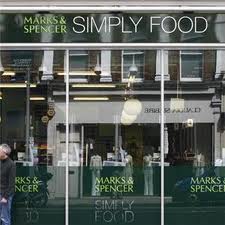
Yesterday, April 18th 2011, Marks & Spencer achieved a new great result opening the retailer’s “greenest-ever” store at Ecclesall Road in Sheffield.

The store is the first of a number of new ‘Sustainable Learning’ stores, that are part of M&S’ drive to become the world’s most sustainable major retailer by 2015.

The new 12,400 sq ft Simply Food store, built from scratch on a former brownfield site, incorporates a host of sustainable design and construction features, including an LED screen giving real-time public transport information, electric car charging points and a green living wall to attract wildlife.

All the bricks used in the build have also been reclaimed from a local mill.

Marc Bolland said:

“We’re delighted to be opening M&S’ greenest-ever store, providing customers with top quality M&S food and drink products in such a convenient location.”

The store is “firmly on course” to achieve a BREEAM rating of Excellent, making it one of the most sustainable retail outlets in the UK.

Its carbon emissions will be 23% lower and energy usage 30% lower than a traditional similarly sized store.

Innovative features include:

  • LED lighting, which is 25% more efficient than standard lighting, is used throughout the store, a first in the UK.
  • Sun pipes bring natural lighting onto the shop floor;
  • 100% of the timber used is FSC certified, a UK first;
  • All the bricks have been reclaimed from an old local mill;
  • Water costs will be reduced by up to 40%, compared with a traditional similarly sized store, by using harvested rainwater;
  • Capturing heat expelled from the store’s refrigeration units to help heat the store;
  • A living green roof of sedum plants and green living wall have created wildlife habitats, as well as insulating the store;
  • Bird boxes have been placed around the perimeter wall of the site;
  • In total, 62 different species of plants have been planted on or around the store;
  • Polished concrete floors have removed the need for floor covering;
  • 100% of the construction waste has been recycled.

All employees at the store have also been fully trained to understand its environmental features and will be encouraged to share this information with customers. (Source: The Food and Drink innovation Network)