Tag Archives: retail

Leadership and Innovation in Retail Sustainability: a Research

“As one of the leading industries to embrace sustainability, it is becoming a core consideration for the retail industry,” said Adam Siegel, RILA vice president of sustainability and retail operations. “Retailers are working to incorporate sustainability into their strategy, operations, workforce engagement, and connection to consumers and communities. This report is a first look at the broader industry’s accomplishments, challenges, and future directions. It lays a foundation to determine where we can go from here.”

The following are four key trends identified in the report.

Retailers are:

  • Working across sectors to achieve sustainability goals. Because expertise is not yet available within their respective organizations, retailers are reaching out to nonprofits, academics, and governments, as well as suppliers, consumers and investors to accelerate sustainable innovation.
  • Turning from sustainability as a cost- and risk-reduction measure to an opportunity for business growth. Retailers leading the sustainability charge recognize that the benefits extend well beyond achieving business efficiencies. Sustainability programs are increasingly viewed as a source of innovation and differentiation and a platform for new product and market development.
  • Developing systems for continuous improvement. As retailers build sustainability programs, they have developed management, measurement and IT systems for continuous improvement. Such mechanisms include environmental management systems, supplier “scorecarding” and management training, employee training and engagement, energy and waste reduction goals and sustainability reporting.
  • Fostering transparency in operations and the supply chain. Opportunities for risk mitigation, coupled with increased public scrutiny, are driving the need for additional disclosure. Reporting on financial information alone can no longer articulate the complexities and intricacies of retail operations and global supply chains.

Data for the report was collected from 2011 sustainability reports of 30 RILA member companies, including grocery and drug stores, general merchandise and department stores, and spanning both large and small formats. Information was also compiled through multiple industry surveys, industry meetings, and company interviews, across all segments of retail. Business for Social Responsibility (BSR) was a key partner in the development of the report.

“RILA’s first sustainability report is an important step forward for the retail industry,” Ted Howes, director of advisory services for Business for Social Responsibility. “Our hope is that RILA’s efforts will inspire retailers around the globe to take action and engage in sustainability more deeply and strategically — to ensure a healthier bottom line as well as a healthier planet. BSR looks forward to collaborating with industry leaders to ensure that sustainability stays top of mind in the years to come.”

RILA members were also invited to submit case studies for the report, and interviews were conducted with 20 companies – Belk, Best Buy, Gap Inc., H-E-B, The Home Depot, Ikea, J.C. Penney, Lowe’s, Meijer, Petco, PetSmart, Publix, Safeway, Sears, Staples, Target, VF Corporation, Walgreen, Walmart and Whole Foods Markets.

The following are future directions retailer’s say they will explore over the next five to 10 years:

  • Sustainability will become integrated into all aspects and departments of the business;
  • The drive to manage supply chain impacts will transform retailer-supplier relationships;
  • Industry collaboration will become the standard; and
  • Business models will evolve as consumption habits change.

Retailers identify many benefits while pursuing more sustainable operations and products including efficiency, risk mitigation, new innovations, a way to recruit and retain top talent, a means to develop new product and enter new markets, as well as improved reputation with customers and industry stakeholders.

“One of the biggest takeaways from the report is that creating lasting change in retail sustainability is not something the industry can do alone,” Siegel said. “Retailers are reaching out to nonprofits, academics, and governments as well as to their suppliers, consumers, investors, and communities to provide their diverse perspectives and partnerships and help accelerate sustainable innovation for all.” Author: Adam Siegel

via Research Identifies Retail Sustainability Leadership and Innovation – Green Retail Decisions.

The Future of Retail: trends to be aware of

The following is an anstract from a great article “The Future of Retail” by IDEO‘s Dana Cho and Beau Trincia published on “The Rotman Magazine”, Jan.2012. Full version available here. Enjoy and comments are welcomed!

“TOUGH ECONOMIC TIMES have hit traditional retailers hard, particularly in North America. Circuit City and Borders have filed for bankruptcy; Ann Taylor and Home Depot have closed hundreds of stores; and American Apparel is reportedly millions of dollars in the red, to name but a few. The official reasons for these failures range from overly-aggressive expansion strategies to unfortunate investment decisions – but, in reality, a big driver of this retail upheaval is old-fashioned belt-tightening

Store owners have long believed that the ‘thrill’ of shopping – that visceral, emotional rush that people get when touching or interacting with a product before they buy it – would uphold their popularity. But e-commerce Web sites are disproving this axiom by generating similar excitement online with concepts such as ‘flash sales’ and ‘social shopping’. For example, GILT Groupe offers its members daily flash sales, which feature luxury goods in low quantities for an extremely limited time, giving people only a few minutes to make purchase decisions. The site, which launched in 2007, now has a valuation of US$1 billion. Meanwhile,  Svpply has built a social network around shopping, letting its users track trends, including the items their friends buy. Its popularity has grown seven-fold since its introduction in late 2009.

As online retailers slash shipping times and costs to next to nothing, bricks-and-mortar retailers can no longer depend upon instant gratification as a competitive edge. Online giants Zappos and Amazon now send purchases overnight at a discount and provide second-day service for free. The success of these tactics suggests that virtual storefronts can be at least as effective as physical ones, if not more so. So, how can bricks-and-mortar retailers survive – and thrive – as consumer attitudes and buying habits change?

Although digital channels may be better positioned to provide short-term transactional value, bricks-and-mortar stores still give retailers the best space in which to establish long-term connections with customers. Let’s look at how a few companies are shifting their mindsets and moving from driving transactions to encouraging inspiration and discovery; from featuring ‘expert staff’ to ‘informed enthusiasts’; from targeting shoppers to targeting product owners; and from focusing on revenue generation to R&D.

During the 2010 holiday shopping season, 48 per cent of consumers who used a smartphone in some way said they purchased goods in retail stores, while nearly as many – 45 per cent – bought items online via computer. However, the majority also said that, regardless of how they ultimately acquired the product, they had visited an actual store to browse. This suggests that although consumers often opt for the convenience of digital channels to make purchases, bricks-and-mortar stores continue to play an important role in the shopping journey – primarily where product discovery and inspiration are concerned.

From Driving Transactions to Encouraging Inspiration

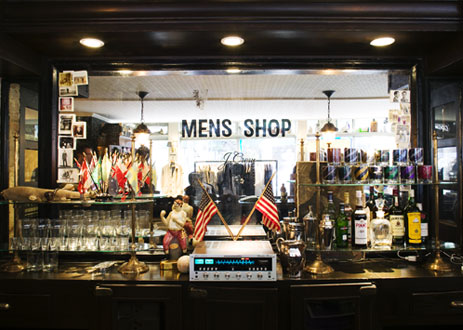
J.Crew’s Liquor Store provides a prime example of doing exactly that. J.Crew opened its first men’s clothing store in 2008 with the goal of inspiring exploratory shoppers – people who weren’t current customers of the brand. At the time, J.Crew’s menswear had little following, and the retailer sought to raise its profile through a dedicated storefront. It took over a historicwatering hole in New York’s TriBeCa neighborhood, and rather than focus on packing in as many items into the 935-square-foot.

Customers today want retailers to be less about well-orchestrated brands and carefully rehearsed answers and more about transparency, authenticity and passion.  Rotman Magazine Winter 2012 / 49 store as possible, J.Crew kept the bar’s atmosphere intact, stocking shelves with bottles and filling the room with vintage furniture and non-J.Crew brands such as Timex,  Red Wing and Mackintosh. Retailers who believe in conventional wisdom would consider this a waste of precious floor space that could have been devoted to as many sellable brand-specific products as possible. However, J.Crew’s goal was to raise awareness of its men’s line – and pique the interest of potential customers. The concept appears to be working: J.Crew has subsequently opened three more Men’s Shops, and although the company declines to provide sales figures for individual stores, CEO Micky Drexler recently told investors, “We are beyond thrilled with the performance of our stand-alone men’s stores.” J.Crew earned $44.7 million in the first quarter of 2010, up from $20.4 million during the same period a year ago. In addition, its chief menswear designer, Frank Muytens, was ranked among the top in his field in GQ’s 2010 Best New Menswear Designers competition.

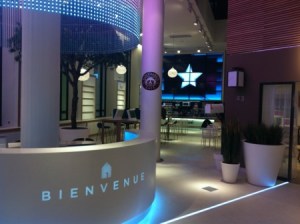
Using physical spaces to drive inspiration rather than transactions isn’t limited to the retail industry. In 2010 Crédit Foncier, a mortgage lender in France, invested in a high-profile store in Paris’s Opera district to inspire people to want to own a home. Most lenders make in-person visits from prospective borrowers as perfunctory and short as possible, gearing information toward people who plan to buy a home in the near future. In contrast, Foncier Home targets anyone who might be thinking about home ownership – even if it’s just a long-term goal or dream. The store includes a café, where people can meet casually with a real estate agent while looking over residential listings. It also includes a section with information about renovations and remodeling – services that Foncier Home doesn’t yet offer but are an exciting, aspirational aspect of home ownership. Although the company sells nothing tangible and has no real need to maintain a large retail space, Foncier is banking on the notion that a discoverybased experience such as the one made possible in its flagship store will encourage more people to become home buyers. And when they do, Foncier Home will be top-of-mind as the go-to lender. Crédit Foncier expects this concept to drive growth in the future and has plans for expansion.
From Expert Staff to Informed Enthusiasts

Powered by social media, peer recommendations are gaining ground in power and influence. The fact is, as consumers rely on friends, social networks and other independent resources for expert information, the role of the store associate is shifting dramatically.

The new purpose of a retail store lies in its ability to represent an organization’s actual culture and values, captured and rendered by its sales associates. Customers today want retailers to be  less about well-orchestrated brands and carefully rehearsed answers and  more about transparency, authenticity and passion. Store associates, therefore, need to evolve from ‘expert staff’ into informed brand enthusiasts who are proud of their organization.

The shift from being an expert to being an enthusiast – someone who believes in the brand and organization they work for and can speak passionately about the products at hand – has less to do with scripted service and more to do with organizational design. Many leading-edge U.S. retailers have taken similar personnel-oriented approaches. Perhaps the best known is Apple, which transformed consumer technology retail with its retail stores. For the Apple Store’s tenth anniversary ‘refresh’ this year, the company invested heavily in supporting its enthusiastic store associates with service-enabling technology rather than in a redesign of the bricks-and-mortar interior

From Targeting Shoppers to Targeting Owners

Retail stores have traditionally been designed for shoppers with the intention to buy and, perhaps as a result, retailers have long depended on in-store marketing and communications to sell the quality and other worthy attributes of their products. Under the new paradigm we are describing, bricks-and-mortar retailers have an opportunity to acknowledge the value of the  product owner’s role as a brand ambassador and key influencer on other shoppers.

As a result, designing the bricks-and-mortar store for the consumer who already owns your products (versus the consumer who is shopping) can have profound effects on a brand. By focusing on participation in the store – through education, trials and membership experiences rather than marketing, promotion and sales – retailers are positioning themselves for a longer-term, more open relationship with customers, helping them successfully evolve with the 21st century.

Nike’s branded stores pull in repeat visits from owners via its Nike+ Run Clubs, which meet at designated shops worldwide. Building on its platform of performance-tracking products and Web site, Nike+ is now the largest running club in the world, with more than three million members. In 2009 alone, membership grew by 50 per cent. Athletes of all skill levels train together and are privy to product trials and expert clinics. Nike motivates owners to use its products as a group, and the group inspires other curious runners to join them – and buy Nike gear – through camaraderie and knowledge-sharing. Taking the concept a step further, in 2010, Nike opened its first ‘category experience store’ dedicated solely to the sport, Nike Running Stanford, in Palo Alto, California.

From Revenue-Generator to R&D Engine

The paradigm shift we are describing questions, at a fundamental level, the role of the physical store in a retail organization’s business. As the channels to buy continue to multiply – from new e-commerce models to mobile-phone payments – traditional retailers face more competition than ever before. If consumers can buy anything anywhere at anytime from anyone, bricks-andmortar stores needs to derive new meaning and value for their business in order to remain a strategic asset.

Fortunately for bricks-and-mortar, not all channels are created equal, and the traditional retail store maintains an important edge over the digital realm: the physical space provides a direct, personal connection with consumers. Smart retailers have begun using the storefront to foster relationships with people, which means going beyond selling products or presenting a well-orchestrated brand experience to understand existing and potential customers and their needs. In short, they are using the retail floor as a platform for learning.

These retailers realize that developing a new offering behind the scenes until it is exactly right is a slow strategy that doesn’t allow for quick adaptation in a rapidly-shifting market. Instead, they ‘beta test’ new offerings and experiences and quickly pivot the offering on the fly as dictated by actual customers. For example, at the height of the recession, Urban Outfitters opened an experimental store in Los Angeles called  Space 15Twenty, which aims to attract – and study – customers other than its typical college student. Brand collaborations with Santa Monica bookseller Hennessey + Ingalls and New York vintage shops What Comes Around Goes Around and Generic Man act as magnets for people who don’t typically shop at Urban Outfitters.

In a sense, it’s a store for tomorrow’s customer, rather than today’s sales. The store is an investment in market reconnaissance, rather than solely a means toward hitting revenue targets and achieving profitability; its primary goal is gathering customer information from which Urban Outfitters can learn. While recession has hit some retailers very hard, in the first quarter of 2010, Urban Outfitters saw a 72 per cent increase in profits.

CEO Glen Senk credits creativity and experimentation. “We don’t go about revenue and profit as a goal. Rather, we focus our energies on the customer experience: innovating, making beautiful products, really pushing the limits of our brand expression and constantly refining how we operate. Revenue per square foot is the result of that focus, rather than the starting point or motivation.”
Will Sustainability be mainstream by 2020? New Report says yes.

Household brands and retailers will play a key role in supporting sustainable lifestyles, helping them become mainstream by 2020, according to a new study.

Sainsbury’s and Unilever launched the Consumer Futures 2020 research in partnership with Forum for the Future, in order to gain insight into how sustainable products and services will impact on global trends and consumer behaviour over the next decade.

As part of the 18-month study, designed as a practical tool to help retailers, brands and manufacturers plan for the future, four fictional scenarios that consider how sustainable consumption could become mainstream were explored, with the aim of ascertaining whether social and environmental pressures drive sustainable goods into the mainstream, or whether consumers actively demand them.

It found that global challenges such as climate change, scarcity of key resources, rapid population growth were likely to affect consumer attitudes and the consumer goods industry. As a result, sustainable practices will become more mainstream as key resources become more highly valued, while and recycling and re-use would increase, the study concluded.

A weak global economy is unlikely to hamper the progression of sustainability, according to Forum for the Future’s chief executive Dr Sally Uren, who said that “smart brands and businesses will make money today by accelerating the transition to a sustainable future”.

Meanwhile, Dr Uren added that the industry must make it easier for consumers to go green by “offering products and services which are not just better for the environment, but healthier, cheaper and longer-lasting.”

However, the study warned that consumer brands will need to innovate to develop sustainable products, services and business models to overcome financial challenges, while also working with consumers to make them a success.

Sainsbury’s and Unilever said they plan to use the results as a platform for collaboration and innovation to develop jointly profitable and sustainable initiatives to help meet commitments in Unilever’s Sustainable Living Plan and Sainsbury’s five corporate responsibility values.

Sainsbury’s chief executive, Justin King, said: “Sustainability will continue to rise higher up the agenda over the coming years, so it is key that brands work to ensure they can respond to consumer demand. Being a sustainable company is not about box ticking, it’s about future-proofing your business and building trust and brand loyalty that will last for years to come.”

The Consumer Futures 2020 toolkit and accompanying resources are available to download free here.

via Will Sustainability be mainstream by 2020? New Report says yes. | Caelus Green Room.

The People’s Supermarket

Located in the heart of London this cooperative non-profit is unique. Managed and owned by the members, the shop operates on a membership system, it offers local and seasonal products for the lowest prices possible.

Design agency Unreal was responsible for developing its branding, with in mind the low budget constraint of the cooperative. For the people, by the people.

Set up in Spring 2010 by chef Arthur Potts-Dawson, retailer Kate Wickes-Bull and an army of others, The People’s Supermarket is a community-based shop that’s managed and owned by members and open to all. It’s based just around the corner from Unreal’s studio, on Lamb’s Conduit St, London WC1 and takes its format from the popular co-operative ‘Park Slope’ in Brooklyn, NYC.

In addition to the membership scheme, much of the produce in the shop is locally sourced, seasonal and sustainable, meaning they stock the best food at the lowest possible prices. The story of the supermarket will be broadcast in its own Channel 4 documentary, due to air in early 2011.

The People’s BrandAfter approaching the Supermarket to design some launch posters, we were tasked with developing the brand, which needed to reflect the co-op’s core values of being communal, affordable and democratic without appearing too virtuous or elitist. A full identity program was required including logo, stationery suite, advertising, packaging and brand guidelines.

(All photography shot on location at The People’s Supermarket by supermarket members Liz and Max of Haarala Hamilton photography. More information at http://www.thepeoplessupermarket.org & http://www.unreal-uk.com)

via The People’s Supermarket [Branding] | Trendland: Fashion Blog & Trend Magazine.

Are virtual walls the future of retail?

The use of digital technology to enhance high-street shopping took a step forward last month when Ocado and Tesco unveiled initiatives aimed at creating a seamless retail experience.

Ocado opened a pop-up shop in London’s One New Change shopping centre in the Square Mile. It featured a printed window display, or ‘virtual wall’, showcasing some of the retailer’s most-bought items and their barcodes.

Consumers who had downloaded Ocado’s ‘On the Go’ app can visit the window display to order the items – by scanning the barcodes with their smartphone – and book a delivery time. The retailer says it will roll out more displays across the country if the trial is successful.

Jason Gissing, co-founder of Ocado, claims that the experiment is a bold move. “We hope this trial is a hit and, based on its success, we’ll be looking at options around continuing this ‘virtual window shopping’ approach in other locations UK-wide,” he says.

Consumers have already been exposed to this new way of shopping.

Tesco has been experimenting there with an interactive shopping wall for its Homeplus brand, by opening a virtual store in a busy underground railway station in South Korea’s capital, Seoul.

More than 500 products are on offer, and all are displayed in a shelf-like appearance, prompting shoppers to scan them with their smartphones.

A spokeswoman for Tesco says: “You place an order when you go to work in the morning and can have the items delivered when you come home at night. This will help increase our sales via smartphones, which will be the next big sales generator.”

Ocado in the UK, then, seems to be catching on to Far Eastern technologies ahead of its domestic retail rivals. But James Tagg, mobile services director for MPG’s Mobext, is unsure that the technology can be implemented successfully in cities such as London.

“I think it’s clear that, here in London, the main value of a similar campaign would be as an awareness-raising tool, rather than an improvement on our everyday shopping experience,” he says. “The lack of mobile reception on large parts of the Tube system would prevent most people from downloading the app in response to seeing the virtual shopping aisles, and placing an order would have to wait until you were above ground at the end of your journey.”

Tesco says it doesn’t plan to launch similar services in the UK, but with Ocado leading the charge, the ‘big four’ supermarkets of Tesco, Asda, Morrisons and Sainsbury’s could well be tempted to follow suit in the future.

Increasing smartphone adoption will help, along with plans to install mobile broadband on London’s Tube network. It could be a while, however, before interactive walls feature significantly in retailers’ growth plans. (Source: Andrew Mccormik/Wallblog.co.uk)

ECOFFEE and DESITA on air!

For those of you who do not follow me on Twitter @norman_cescut and have not yet been notified about this great news, I am very glad to inform you that last September 4th I was interviewed by Vincenzo Argante of Ferry Boat, a successful radio program broadcasted on Italy’s Radio24.

Ferry Boat deals with issues such as responsibility and sustainability applied to many fields, from education to automotive to fashion and..Retail. During the interview I was asked to introduce ECOFFEE and to explain why the ECOFFEE approach is such an innovative one in the Retail business.

The whole interview is available here, unfortunately Italian only!

Fairtrade Italia and ECOFFEE: a sustainable partnership for a better future

I am very happy to announce that last Tuesday, July 19th DESITA and Fairtrade Italia have signed a bilateral agreement providing mutual support for the dissemination of the principles of environmental sustainability, fair trade and social responsibility on the entire Italian market  through a focus on in-store actions.

DESITA, thanks to its ECOFFEE project, will promote Fairtrade products and will support  Fairtrade licensees through its wide range of retail-oriented services and solutions: from architectural design, branding, process analysis, franchise creation. The Fairtrade certified products will also find a privileged placement among the products available at the ECOFFEE franchise cafés.

On the other hand, Fairtrade Italia has committed to share with its stakeholders- Retail business licensees, Association members and consumers – all the services offered by DESITA and   ECOFFEE.

“I am very happy to have reached this agreement,” states Paolo Pastore, Managing Director of Fairtrade Italia “This agreement is very different from the usual one and I am  sure that it will bring a much wider scope and visibility to Fairtrade certified products, the only Fair Trade certification that has deserved consumers’ trust all around the world. “

Being supported by such an important organization as Fairtrade Italia has once again confirmed that what I have created, the ECOFFEE service platform, is a requirement for a better future.This gives me the strength to keep on working in what is still an immature industry, that of sustainability in the Italian Retail and Horeca panorama. I am convinced that this partnership will actually contribute to the creation and dissemination of a more responsible consumption on the Italian market.

Retailers, get ready for tablet computer shopping revolution!

Shopping search engine Shopzilla recently published a research showing that the “tablet revolution”, as online shopping via iPads and similar tablet devices is set to climb high in popularity, just as it has done in the US.
 
The research reveals that although the iPad was only launched 12 months ago, 6% of European shoppers already own a tablet and a further 20% are considering buying a device in the next year. The majority of owners said it was as easy to use for online purchases as a personal computer.
 
This trend is set to mirror the US where the iPad is driving a revolution in e-commerce.  A recent US Shopzilla study showed that 12% of consumers now have a tablet device, and a further quarter plan to buy one in the next year. In the European survey, an overwhelming 5-to-1 ratio name the iPad as their tablet of choice.

The Shopzilla research was conducted in Europe’s three largest online retail markets: the UK, France and Germany.  It also revealed that almost 80% of current tablet owners view their device as an addition to their technology arsenal rather than as a replacement for an existing device.
 
The research by Shopzilla of almost 5,000 online shoppers, also revealed:
 
– Nearly two thirds (61%) of iPad or tablet users said it was as easy to shop online with their hand-held device as it was with their personal computer;
– The majority, 71%, had bought or would buy online using their device;
– Dual-screen technology meant 70% of tablet users even watch TV while browsing shopping sites simultaneously, which is really interesting from a cross-platform marketing point of view;
– 53% of iPad or tablet users surveyed used their device to browse shopping sites and share shopping experiences with friends, showing that social shopping has extented its power in real life too;
– 27% of online shoppers currently used a smartphone to browse shopping sites with friends

Rachel Smith, business services senior director at Shopzilla, said:
“Since their launch in April last year, an astonishing 25 million iPads have been sold worldwide, and with one in five online shoppers telling us they plan to buy a tablet in the next 12 months, this is clearly set to be a huge trend for UK  shoppers.”
 
Smith added: “The year of mobile commerce, which has been predicted for some time, is finally here. With the explosion of the tablet market we are seeing a seismic change, and the opportunity will be for the retailers who are first to get it right.” (Source: The Retail Bulletin, image courtesy of The Belton Group)

A comparative analysis about Multichannel Retail in US and UK

Last month Econsultancy surveyed 2,000 consumers in the UK and 2,000 consumers in the US, to unearth attitudes to multichannel shopping and service.

The majority of consumers would find it useful to have a choice of retail channels, and a significant 33.5% felt this was very important. The results were very similar for both US and UK respondents, so the charts show aggregated data.

How important is it to be able to purchase from a retailer using different channels?

Quite a difference between US and UK consumers, with the latter far more likely to reserve items for in-store collection. Many of the biggest multichannel retailers in the UK are offering this service, (Argos, John Lewis, Halfords etc) with some success. For example, Argos’ multichannel sales grew to £1.9bn in the year up to February 26 2011, representing almost half (46%) of its total sales. The reserve and collect iPhone app accounted for 1% of total sales.

Do you reserve products online before collecting them from an offline store?

The use of mobile when shopping offline represents a growing challenge for retailers, as these stats show.

Use of Mobile Websites

US consumers are slightly more likely to use barcode scanners and compare prices via mobile, but a significant minority of US and UK respondents are using mobile as an offline shopping aid. Multichannel returns The vast majority of both US and UK respondents expect to be able to return items bought online to a local store.

However, as Snow Valley’s recent Online Returns Report found, just half of the multichannel retailers studied allow customers to do this. 

If you buy something online, do you expect to be able to return it to a local store?

Use of catalogues Percentage of customers that have used catalogues at least once in the past year before buying online or in store – aggregated US and UK results. (Source: Econsultancy)

How to engage consumers?

Dealing with customer engagement has never been easy – especially today when customers are all inter-connected and receive all kind of information from all kind of media. This is why the rules that apply to old media such as TV and press can not work with nowadays  consumers.

CDJ by McKinsey

McKinsey devised a model, the Consumer Decision Journey (CDJ), whose simple four steps can be applied to companies belonging to different fields, retail too. Its implementation is not easy but as stressed by McKinsey, rewards can be worth the effort.

But let’s get into the four CDJ steps a little deeper, quoting the McKinsey study which can be fully downloaded on their website.

“Align: Invest marketing resources where consumers spend their time. In most cases, this will involve shifting resources from the “consider” and “buy” stages of the CDJ to the “evaluate” and “advocate” stages. Many companies will also have to shift their investments from paid media (channels owned by other companies, such as print or online newspapers) to self-owned media (such as the brand’s Web sites) and earned media (customer-created channels, such as communities of brand enthusiasts).

Link: Make sure that your messages reinforce each another. Given the proliferation of channels, this can be challenging and many companies have been disconcerted to discover that information about their products— including model numbers, descriptions, images, and promotions—isn’t the same across online channels and even within their stores. Coordinating your message might require new techniques. Apple, for example, took steps to eliminate jargon, align product descriptions, create a rich library of explanatory videos, and institute off-line Genius Bars to ensure consistency, accuracy, and integration across touchpoints.

Lock: Keeping your customers’ attention is key. To do so, companies need to develop direct, opt-in channels, such as e-mail promotions, Twitter and Facebook feeds, and apps. One good example comes from Nike, which progressed from simply exhorting consumers to “just do it” to helping them act on its motto. Nike+ gear records and transmits customer workout data, holds global fund-raising races, and provides customized online training programs. For its part, McDonald’s has enticed millions of Japan’s mobile-savvy consumers to sign up for mobile alerts with discount coupons, contest opportunities, special-event invitations, and other brand-specific content.

Loop: Mine content created by consumers and experts for insights into customers and the brand, and use data collected about customers to create content that will engage them. Consumer-generated content is particularly valuable because it reveals their wants and needs. A classic example comes from Amazon, which allows customers to rate products, and makes these ratings available to shoppers. Amazon doesn’t stop there, though; it also uses this data to decide how it presents its products. This creates an information-rich loop—from data to content and back to data—that strengthens Amazon’s value chain and contributes to product development and customer support. Data loops can also help companies personalize communications, thus deepening the customer relationship.”