Category Archives: sustainability

Sustainability in Italy: what big retail players are doing.

Italians are virtuous, with a constantly growing attention towards the environment among young people. This is the picture that emerges from the research about Italian Sustainability and emerging lifestyles: 2,500 interviews, a sample of the Italian population aged between 15 and 74 years. Objective: To identify the most common habits among Italians to reduce their environmental impact.

“The majority of Italians, 50.9%, is sensitive to issues related to sustainability, 48.6% said they buy environmentally friendly products. There is a 36.4% claiming to not care and a 12.7% which is almost hostile to the subject”, “explains Monica Fabris, sociologist, currently president of the Episteme institute of research. “Sustainability is primarily a response to unconscious needs: fear, for example. And the international crisis in this sense was crucial because it demonstrated the unsustainability of many behaviors, limited resources and has spread the importance of having more conservative attitudes. ”

This explanation of Fabris, that the sensitivity of the Italian added: “We are not the most attentive of Europe, but we have a different kind of sustainability. In the research we have identified four types of “green” attitudes. There are “promoters of a shared involvment” (10.9%) who practice a sort of militant environmentalism, they think that everyone can do something and that sustainability is a value. Then there are the “those who judge” (10.4%), people who feel the need to see polluters and waste producers being legally punished. The vision of “eco-nostalgic” (14.8%) is about a return to the past and considering saving and reducing consumption real goals. Finally, there is “the vanguard of sustainable consumption” (63,9%) who have a key to modern, pragmatic and are willing to pay for more virtuous behaviours” This last category direct their purchases mainly to products of the big market, identified as guarantors of attitudes ecofriendly.

“All the big brands have sustainable programs. The projects are very varied and range from research to packaging more easily disposable and recyclable materials to reduce water consumption, the increasing presence of photovoltaic systems to supplement the energy needs of the factories to the use of new production technologies with low environmental impact ” says Ivo Ferrario, director of communications Centromarca, the association of the most important companies active in Italy brand. “Huge efforts are also undertaken to provide consumers with a better information, and to educate companies’employees thanks to specific activities regarding the environmental and sustainability issues.” In this direction is the Total Quality Day organized by Coca-Cola HBC Italy: each year, employees spend a day and a half attending comprehensive educational programs about safety and environment. “We talk about the correct control of raw materials, top quality production processes, optimization of cargo handling and a more effective waste management,” says Alessandro Magnoni, Communication and External Relations Manager. “About sustainability, last June we put into operation a large cogeneration plant in Nogales (Vr), which has already reduced CO2 emissions by 66% and increased energy efficiency up to 83%. But this is just the beginning, we plan to equip all eight Italian plants with photovoltaic systems, an operation that will avoid the emission of 11,500 tons of CO2. ”

Another international brand is following the same path, Heineken, which in 2010 presented a ten-year plan Brewing a better future. “The aim is to reduce CO2 emissions resulting from production processes by 40% and to fall by 25% on water consumption. All by 2020 “explains Alfredo Pratolongo, Communication and Institutional Affairs Manater at Heineken Italy. A strong commitment to social responsibility is also the mission of Procter & Gamble, a leader in consumer products which collects 300 brands: “We have halved the production of waste and CO2 in our plants and use alternative energy generated by wind and photovoltaic systems “says the head of Italy’s sustainability policies, Renato Sciarrillo. He adds: “For those of us who handles many products – we have 140 factories in 80 countries -logistics is crucial: we want to move 30% by rail transport. But that’s not all. “Concentrated” products ensure reductions in packaging up to 45% and the research is aiming at finding new materials to replace plastics. ”

About packaging, Nestlé has a dedicated team that study sizes and materials to reduce environmental impact. “In 2010, in Italy we have avoided the use of 147 tons of materials including metal, paper and plastic. Our objective is to optimize weight and volume, to use materials that you can recover properly, to develop materials from renewable sources and to support initiatives to recycle and recover energy from used packaging “explains Manuela Kron, Nestlé Group Italy Corporate Affairs manager. “To do this we have added a cogeneration and regeneration power plant in San Sisto (PG) and Moretta (CN), which allow us to cut the emission of around 13 000 tonnes of CO2 per year.”

Investments in the study of eco packaging and using alternative energy are also key points for L’Oréal. “We have been working on green chemistry for over ten years and thanks to our research we have recently discovered cosmetic effects of natural sugars. This year we launched a major center for predictive evaluation in Gerland (Lyon) where more than 99% of our ingredients are animal-free tested. Our packaging use a high percentage of recyclable material, we only use wood fiber from certified forests. The Garnier brand, for example, in 2012 will cut the weight of packaging by 15%, “says Giorgina Gallo, managing director of L’Oréal Italy. And the future? “The global goal for 2015 is a reduction of 50% in CO2 emissions, 50% of water consumption and waste generated per unit of finished product. In particular, our factory in Settimo Torinese, in the forefront on sustainability issues, is finalizing two projects that use alternative energy to become, by the end of 2012, a zero emissions plant. ”

Always in Italy, another brand which is very attentive to sustainability is Barilla. “Over 92% of our packaging is recyclable and now we want to exceed 95% in advance to target set for 2014. In recent years we have supplied cogeneration pasta plants, developed energy saving projects and replaced the electricity used in the production of Mulino Bianco products by Renewable Energy Certificate System certificates. This has reduced by about 10% the CO2 emissions for each unit of finished product, “explains Barilla’s Head of Communications and Media, Giuseppe Cocconi. This anticipates the future: “We want to reduce the impact of our products in a timely manner ensuring production processes throughout the supply chain.”

And as we have already informed you about, another worlwide known Italian company, Illy, have been awarded for its sustainable approach during the production processes, receiving the DNV Green Coffee Responsible Supply Chain Process certification. A certificate that emphasizes respect for the ecosystem through the use of recycled packaging and non-polluting practices.
In Danone are applying a very tight control system too. “In 2011 we will reach the goal of being the only company in this market segment to use thermoformed plastic, a new generation made much lighter and with less plastic, for the entire range of products ” explains Gianluca Mormino, director of Danone factory in Casale Cremasco . “This system also allows you to sell the pots which are welded together, avoiding the secondary packaging. And we are studying biodegradable packaging. ”

There is another sector which is very eco-friendly, and Philips is one of the brands involved. “We have to meet annual targets tied to packaging, water and energy savings,” explains Sergio Tonfi head of communications. “In 2010, the” green “products accounted for 38% of our total revenues, in 2007 were 20%: this is the result of three years long investment in innovation worth about 1 billion euros” (Source: Manuela Croci -Corriere.it)
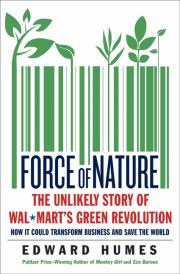
Walmart and its Green Revolution: a book talks about it

A new book, published this month, reveals Walmart’s struggle to redefine what it means to be green in the world of big business.

“Force of Nature: The Unlikely Story off Wal-Mart’s Green Revolution” by Pulitzer Prize-winning journalist and bestselling author Edward Humes, recounts the collaboration between Walmart’s former CEO H. Lee Scott, and later Mike Duke, Scott’s successor as CEO, and white water expert-turned Blu Skye sustainability consultant Jib Ellison.

20110531-154357.jpg

Humes, author of Eco Barons, tells of a small project initially intended to insulate Walmart from environmental criticism into a massive sustainability makeover, which now has snowballed beyond the retailer to influence whole industries, from apparel to dairy to banking, according to Amazon.com.

Ellison instituted a project at Walmart called “The Index” that challenged suppliers to root out inefficiency and waste, which the book details. Packaging shrank, saving millions of gallons of water, millions of pounds of cardboard, not to mention diesel fuel. Walmart’s sheer size, coupled with its lowest-pricing mission, means that producers are forced to take steps toward sustainability — and make natural, organic, and earth-friendly products widely available, according to Publisher’s Weekly.

Walmart’s switch to common household products in smaller packaging saved cardboard and the diesel fuel necessary to transport larger boxes.

Other changes including switching from non-recyclable boxes for frozen food to recyclable packaging that then could be sold as a commodity to recyclers.

The collaboration with Ellison engendered far-reaching changes as executives at the world’s largest retail company realized that a clean, green, efficient, less-wasteful, less polluting way of doing business can also be the most profitable way of doing business. (Source: GreenRetail Decisions)

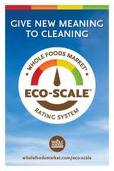
Introducing the Eco-Scale rating system for cleaning products

Wholefoods has recently introduced its new Eco-Scale rating system, a color-coded system under which products will be rated, red, orange, yellow or green based on the sp

ecific set of environmental and sourcing standards each product meets.

The company said it is committed to working with vendors to evaluate and independently audit every product in its cleaning category.  Red-rated products do not meet the Eco-Scale standards and will not be sold at Whole Foods Market.

Naturally, the green color code is the highest possible rating, ensuring that products have all of these features:

  • ✓ Full transparency, disclosure of ingredients on packaging by April 2012
  • ✓ Independent 3rd party verified compliance to standards
  • ✓ No ingredients with significant environmental or safety concerns
  • ✓ No formaldehyde-donors, preservatives which have the potential to release formaldehyde
  • ✓ No phosphates, chlorine, or synthetic colors
  • ✓ No animal testing
  • ✓ 100% natural fragrances
  • ✓ No ingredients with moderate environmental or safety concerns
  • ✓ No DEA, MEA or TEA—surfactants that have the potential to contain nitrosamines and other impurities
  • ✓ No synthetic, petroleum-derived thickeners made from nonrenewable sources
  • ✓ Only 100% natural ingredients
  • ✓ No petroleum- derived ingredients

Under current law, manufacturers do not have to disclose all ingredients in cleaning products. Under the Eco-Scale Rating System, Whole Foods Market’s household cleaning vendors will be required to list every ingredient on product packaging. To ensure compliance of the standards, all products will be audited through an independent third-party for verification before they are color-rated and labeled on shelves.

“Shoppers have a right to know what’s actually in the products they use to clean their homes,” said Jim Speirs, global vice president of procurement for Whole Foods Market. “We’ve always carefully monitored ingredients. Now, with Eco-Scale, we’re able to help shoppers buy eco-friendly products with confidence and provide safer alternatives for their households and for the planet as a whole.”

What is striking in fact is that almost three out of four (73 percent) adults falsely believe that the U.S.  government requires household cleaning products to provide a list of ingredients on the label, according to an online survey commissioned by Whole Foods and conducted by Harris Interactive in April among 2,483 U.S. adults aged 18 and older. Another two-thirds (64 percent) believe that many household cleaning brands opt to disclose the full list of ingredients on packaging, when in fact few provide this information on product labels. (Source: GreenRetail decisions, Wholefoods)

Sustainability Certifications and Reporting Tools: an overview

What follows is a great article published a while ago by CarbonPig that we suggest to all of you who are searching for a detailed list of the most important sustainability Certification Programs and sustainability Reporting Tools.
Obviously these are not the only ones available worldwide, but as correctly stated by Carbon Pig “(the listed certifications programs ) have had considerable traction in a variety of sectors including, green buildings, general sustainability reporting, etc“.

The Global Reporting Initiative

The Global Reporting Initiative was created through the work of thousands of individual stakeholders internationally who seek to establish the number one sustainability certification program in the world. Their work has culminated in what is called the GRI Reporting Framework, which is currently released as Version 3.0, and is accordingly referred to as the G3 by those familiar with the framework used in sustainability reporting protocol.

The G3 Sustainability Reporting Framework focuses on key aspects of institutional sustainability and can be used by all types of organizations including private sector companies, governmental bodies, non-governmental organizations (NGOs), and non-profits. The reporting framework is organized around three main areas and includes 79 individual sustainability performance indicators. The main topic areas covered by the sustainability certification program are economic, social, and environmental.

In addition to the framework that all organizations must used, there are a number of sector-specific supplements including:

  • Electric Utilities
  • Financial Services
  • Food Processing
  • Mining and Metals
  • NGO
  • Airport Operators
  • Construction and Real Estate
  • Event Organizers
  • Media
  • Oil and Gas
  • Automotive
  • Logistics and Transportation
  • Public Agency
  • Telecommunications
  • Apparel and Footwear

Overall, the GRI is a very robust and well run sustainability reporting protocol for organizations wishing to disclose their sustainability performance. In fact, more than 1,700 organizations reported on their sustainability using the G3 in 2010. You can download a comprehensive list here  for all years. The reporting organizations include some big names like 3M, Clorox, Hitachi, Nestle, Siemens, and Xerox and there are sustainability reports available for them all.

The Greenhouse Gas Protocol Initiative

The World Resources Institute and the World Business Council on Sustainable Development  jointly released the Greenhouse Gas Protocols  in 1998, that have since become the standard protocol for greenhouse gas accounting internationally. This sustainability reporting protocol used to measure greenhouse gas emissions is often a prerequisite for other sustainability certification programs.

When large institutions, governments, and companies need to measure their “carbon footprint”, they turn to this widely used two-phase methodology. Most organizations measure their scope I and scope II greenhouse gas emissions using this protocol and then, in the second phase, have their “greenhouse gas inventory” verified by a third party organization who provides oversight that the protocols were followed correctly and that the overall estimate is within 5% of the true value.

Product Life Cyle Accounting and Reporting Standard for Sustainable Product Certification

This “standard” is a recent addition to the Greenhouse Gas Protocol Initiative and allows companies to measure the carbon footprint of individual products, thereby serving as a sustainable product certification. It is currently in a draft phase. Remember that you learned about this sustainability reporting protocol on CarbonPig because it finally creates a way for organizations to account for their scope III emissions.
 

The Leadership in Energy and Environmental Design (LEED) Green Building Rating System

The LEED green building certification system is focused on third party sustainability certification of buildings based on the LEED protocols contained in various manuals. The sustainability certification program is a consensus-based program drawing on the work of many stakeholders, industry leaders, and a dedicated staff. The system is currently in version III and covers the following general development types:

  • New Construction
  • Existing Buildings: Operations & Maintenance
  • Commercial Interiors
  • Core & Shell
  • Schools
  • Retail
  • Healthcare
  • Homes
  • Neighborhood Development

For each of these categories there is a considerable amount of documentation that must be provided in order to meet the LEED Sustainability Certification Program requirements. Project managers typically turn to LEED consultants to help give input during a project and help meet the sustainability certification program requirments for the given new or existing building, hospital, school, and more.

This sustainability certification program is by far one of the most advanced and comprehensive, although, many Europeans, who consider their government run sustainability performance targets to be more stringent and yield higher performing buildings, would disagree.

Forest Stewardship Council Sustainable Forest Certification
You may recognize the Forestry Stewardship Council (FSC) label from everyday objects like reams of office paper and furniture boxes. The FSC sustainable forest certification indicates that the forests used to make the product are sustainably managed. This sustainability reporting protocol helps consumers to make better choices about what forests internationally will be harmed.

The FSC sustainable forest certification is one of the most well established sustainability certification systems internationally. They have a very useful database where users cansearch for FSC certified products and vendors.

The FSC mark on product is a very useful tool for consumers trying to decide between sustainable product certifications on their purchases.

Carbonfree® Product Certification
CarbonFund offers a sustainable product certification that allows manufacturers to offset the greenhouse gas emissions created during the manufacturing process by purchasing carbon offsets from CarbonFund.org’s portfolio of renewable energy projects.

For each product that is certified, CarbonFund calculates the carbon footprint of the product and/or the life-cycle of the product using a methodology similar to the Greenhouse Gas Protocol Initiative.

Green Seal Certified

Green Seal is a common household sustainable products certification program that started in the late 1980’s. The program supports 30 standards and covers more than 190 different product and service areas.

Green Seal bases their claims on life cycle assessment research and has a robust multi-stakeholder approach geared towards constant improvement. Green Seal has a sliding scale based on the revenue of organizations that determines the annual costs of maintaining the Green Seal.

The sustainable product certification provided by Grean Seal is a specific and targeted program. For example, categories like paints, household cleaners, occupancy sensors, and more are included within the sustainability standards.

Recently Grean Seal created a program for certifying organizations that could prove interesting. Especially their pilot program specifically targeting the sustainability of product manufacturers.

USDA National Organic Program

The USDA National Organic Program is essentially an agricultural sustainable product certification is one of hundreds of organic certifications globally.

The USDA program is a very heavily used framework used by agricultural producers to certify the products that they’re sending to market. In the U.S. market, this organic certification generally creates a hight price point for the item attached to it.

It is likely that this certification measure, although relatively easy to adhere to, will become more entrenched as the prominent organic logo found in supermarkets across the United States that are stocking sustainably certified food.

Low-carbon products: when there will be a mass mass-market demand for them?

As stated in the last CBI report about UK consumers and low-carbon products, three quarters of the UK’s greenhouse gas emissions either directly or indirectly attributable to consumer actions. Companies are taking action to drive up standards and setting up pilot initiatives for green products. Energy efficiency and carbon labels and descriptions currently adorn many of our shopping shelves, increasing transparency. But many consumers do remain skeptical about sustainability being a MUST for our future.

The report shows that there is no trade-off between sustainability and profitability but, as we are always stressing in our ECOFFEE communication projects,”(Many business leaders acknowledge that) it is not sufficient to operate in a sustainable way – they also have a responsibility to inform consumers about green choices”. Business cannot boost demand for low-carbon products without the appropriate communication. Let’s take for instance Procter & Gamble’s successful Turn to 30 campaign with Ariel linked the financial benefits to consumers of washing at lower temperatures with the positive environmental impact. This campaign successfully create a link between a product, a consumer personal behaviour and the resulting more sustainable impact on environment.
Once a company has created a demand for its green products, gains arrive very fast.

Philips’ success in energy efficient lighting is an excellent example: the strategic decision to develop the energy efficient lighting side of its business led to successful positioning
at the forefront of innovation.

Retail plays a very important role in raising awareness among consumers and empower them to make greener choices. Tesco for example has worked to highlight the carbon
footprint of its products to help consumers understand the impact of their purchasing decisions. And it worked great.

Now the question is: why there is not such a mass-market demand for green products? It seems that there is a missing link between the consumer and the environmental impact of purchasing a green product versus a not-so green one. When asked about the top three or four factors shaping their choice of purchase, UK consumers top rated one is cost to buy, followed by quality and reliability and brand. The environmental impact is ranked 10 (8%). It seems that there is a disconnection between consumers and the environmental impact of their choices, especially when carbon emissions are concerned. Nearly half (48%) of survey respondents could see the link between low-carbon and helping to tackle climate change, whereas less than a third (30%) identified the link between climate change and energy efficiency.

Labelling plays an important role in raising consumers’ awareness and A-G labelling has been a particular success, being well recognised among those aged between 35-64 (76%) and those earning over £25,000 a year (83%). It is no coincidence that products where the energy efficiency story is most developed for consumers tend to be those where the A-G label is displayed, such as fridges.

To answer to the question “When there will be a mass-market demand for green products?”, it all relies on clear communication and on educating consumers about the impact of their shopping and daily habits on the environment.

New Terms of Engagement for Levi Strauss & Co. Global Supply Chain

Yesterday, Levi Strauss & Co.  announced a new Terms of Engagement for its global supply chain, moving beyond compliance to help improve the lives of workers in factories around the world. Under the new approach, LS&Co. will require contract factories to help make employees’ lives better by supporting programs for their workers that align with UN Millennium Development goals.

In a speech delivered today at the CERES annual conference, CEO and President John Anderson said: “We are proposing a new apparel industry standard of social, economic, and environmental sustainability that focuses on improving workers’ lives. If our ultimate goal is to improve not just factory conditions, but to make a material difference to the people and communities in our supply chain, then we need a more holistic approach and a more human perspective.”

The speech comes twenty years after Levi Strauss & Co. announced a Terms of Engagement that set a new standard of compliance for vendor factories in the apparel industry. The TOE required manufacturing factories to follow health, safety and environmental standards set by Levi Strauss & Co. This standard – considered pioneering at the time – rapidly became the norm for most companies with a global supply chain.

Anderson argued that companies need to do more to create progress and move the industry forward: “Compliance has us focused on two things: a legalistic standard of “do no harm” and factory-level monitoring and reporting,” said Anderson. “While we’ve made progress in a number of areas over twenty years, the hard truth is that we haven’t made enough progress on improving the everyday lives of the people who make our products.”

A New Terms of Engagement
The company’s new approach will focus on programs that align with the UN Millennium Development Goals http://www.un.org/millenniumgoals/ specifically: improving maternal and child health; combating HIV/AIDs, and other diseases; promoting gender equality and empowering women; eradicating extreme poverty and hunger; and ensuring environmental sustainability.

LS& Co. committed to a nine-month advisory process with NGOs, other brands, labor unions and suppliers around the world. At the end of the process, Levi Strauss & Co. will release a white paper for public comment and then will begin implementing the new terms of engagement with suppliers in May 2012.

The company argued that a new terms of engagement is not only the right thing to do, but is good for business: “We are sure that if companies focus not just on the minimum legal requirements, but on a broader vision of social, economic, and environmental sustainability, they will be rewarded,” said Anderson.

Levi Strauss & Co. is a participant in the CERES Investor Business Roundtable for a Sustainable Economy announced this morning. The company made the commitment as part of a keynote speech delivered at the 2011 CERES Conference. For more information about the Roundtable, visit: ceres.org.

For the full John Anderson speech and more background information, please visit:http://www.levistrauss.com/new-termsofengagement. (Source: CSRwire PR)

A new sustainable design policy for Fairmont Hotels & Resorts

Fairmont Hotels & Resorts is expanding its green commitments through a new sustainable design policy. In addition to promoting the use of recognized green building certification systems such as LEED, the policy includes new environmental criteria and checklists for renovation and retrofit projects, environmental consultation during the design brief and construction process, and the creation of a green-build best practices repository for use by Fairmont’s hotels, engineers, developers, project leads, and architects.

“We literally wrote the book on hotel sustainability and have been focused on making our properties as environmentally sound as possible, says president, Chris Cahill. “Now, we’re instituting formal design and construction guidelines for our pipeline of new hotel projects and ongoing capital agenda. Environmental stewardship is part of Fairmont’s DNA and we want to ensure it’s evident in all phases of our business.”

The program has been implemented at two Fairmont hotels. Fairmont Pittsburgh, the brand’s first LEED-certified hotel, incorporates energy efficient lighting and appliances; enzyme waste systems; furnishings and other guestroom amenities made from recycled, organic, or sustainable material; and the use of paints, adhesives, sealants, carpets, and fabrics with no or low emissions. Meanwhile, the Savoy in London (pictured) has a waste management system, as well as a heat and power plant that reduces the hotel’s reliance on the national grid by approximately 50 percent.

The policy is part of The Fairmont Green Partnership program, allowing the Group to meet and exceed guest expectations of operational sustainability. It focuses on improvements in waste management, sustainability, and energy and water conservation at Fairmont’s properties, and innovative community outreach programs involving local groups and partnership. (Source: Hospitality design.com)

Social responsibility, food and Government: the responsibility deal

The responsibility deal signed by the UK governement, backed by 170 companies such as Tesco, Unilever, Sainsbury’s, Carlsberg and Mars and Diageo, is going to rise a lot of controversy for a long time.

A key pledge outlined in the deal is the development of a new sponsorship code on responsible drinking while McDonald’s, Pizza Hut and KFC have agreed to place calories on their menus from September this year.

Other pledges include:
– Reducing salt in food so people eat 1g less per day by the end of 2012
– Removal of artificial trans-fats by the end of the year
– Rolling out Change4Life branding to 1,000 convenience stores

Achieving clear unit labelling on more than 80% of alcohol by 2013 is also pledged but this was a commitment made last year by drinks brands under work initiated by the last government.

Health secretary Andrew Lansley said: ‘Public health is everyone’s responsibility and there is a role for all of us, working in partnership, to tackle these challenges.’ He claimed that regulation is ‘costly and is often only determined at an EU-wide level anyway’.

ISBA’s director of public affairs Ian Twinn also adds “It has also been inclusive – businesses have volunteered to reinforce public health through their product development and marketing and health pressure groups have pledged to contribute through their campaigning activities.

The responsibility deal seems a great step toward the introduction of a more socially responsible fast-food industry, but not all the companies do have the same advise. Cafe Rouge, Bella Italia and Strada are expected to follow Subway and PizzaExpress by not signing up to the government’s health initiative. Subway, which already provides calorie counts on in-store posters, said the scheme was unsuitable for its stores. It is conducting a trial intended to establish the most effective way of displaying the information.

Meanwhile, a PizzaExpress source argued that displaying calorie levels is not consumer-friendly and clutters its menus.

One factor that will no doubt deter businesses, particularly smaller inde-pendents, is the costs involved. London restaurant chain The Real Greek says that, on average, it costs about £100 to test and certify each dish.

Being one of the first to make a move has its risks, not least the fear of being criticized in the press for selling high-calorie-content food. On the other side, being part of a movement that gives consumers greater transparency can deliver positive press coverage.

Toby Southgate, managing director of branding agency The Brand Union, believes the risks are worth taking. ‘Those brands that adopt early could win out, provided they handle the move carefully,’ he says.

Southgate cites McDonald’s, which has made efforts to ‘re-educate’ its con-sumers about healthier eating, arguing that disclosing calories on its menu board could provide incentive to consumption. (Source: BrandRepublic)

Ben & Jerry’s Fair Tweets for World Fair Trade Day


May 14th is the World Fair Trade Day, the first global campaign for The Fair Trade movement connecting producers and customers around the world and is endorsed by WFTO.
Ben & Jerry’s, known for its activism, has just launched this great campaign. The video explains how the “Fair Tweets” campaign works, a very simple but effective use of Twitter to help promote the Fair Trade Day.  
Just download the Fair Tweets application from www.fairtweets.com and the unused characters in your tweets will be automatically create relevant messages, or better, “Fair Tweets”!

How to implement grocery retaling and e-tailing in India

We found this article by Avinder Batra, published on IndianRetailer.com very interesting because of its very detailed approach to the implementation of a home delivery service for those small groceries retailers that are facing the competition with by multinational like Wal-Mart. This is also a business model which is very sustainable, by lowering CO2 transportation emissions and by mainting vital the traditional small retail grocery business.

Batra identifies a big trend in the grocery business- home delivery- due to two main reasons:

-High fuel price: Indian families are not interested in spending time on these products
-Families want more leisure time for themselves: Since both the partners are working, shoppers find this activity as waste of time to collect groceries in weekends

“When most of the big retailers are fighting for larger space, opportunities can be foreseen where you do not have compact space and can still run successfully through Etailing the Grocery model” Batra says.

The solution could be a mix of website, mobile, IVR.

High rental costs have made the retail business cumbersome for the independent players.  As told by Ragib Hussain, VP, Vice President Strategy at e.Soft Technologies,  “This type of model does not need much of investments. Etailing models (having virtual shop) can help retailers in expanding the business thus by covering larger area & reap good volumes.”

Small independent retailers need to increase their customer base: Online services and then home deliveries would fetch revenues only when you have large customer base. Margins are the rewards which an investor gets and this is what he has to work on to have with minimum liable cost.

Develop tie-ups/partners: Developing partnership agreements with the kirana shopkeepers and others nearby shops in the area that would reach the consumers through home delivery systems. This should  be the initial step of building a strong network in the areas concerned you want to cover.

 Also, it would decrease the liability on the retailer—warehouse cost, maintenance cost, procurement cost, etc. 

Develop your own site and make a strong viable back-end system for smooth functioning of the business model: either by creating your own hosted website or by opting for cloud services, this is a very important step. Cloud services would play a vital role to make updated connections with your suppliers, logistics suppliers, CRM updates and drop shipping suppliers. Because time is a critical factor, efficient distribution is of utmost importance. Technology plays a key role in enabling an efficient dairy distribution model.

 This is the back bone of the whole concept when the business starts working and it is the most challenging part of the business to make real-time connectivity with them.

Home delivery services: By tying up with the partners in the local areas, investor can direct the orders to those shops and through delivery boys; the task can be executed smoothly. This would even increase the revenue prospects of the local partners.

 If the business model is churning profits, there is no harm in having your own warehouses and company owned shops in the localities. This could be the way to expand your business model and make it stronger.

Each small outlet should be centrally connected to the warehouse to record the sale and updates are on real time basis. This would help to replenish the goods which are going out of stock.

Delivery system: Tempos and other mini trucks can be used to provide deliveries in the located areas if orders come in bulk in particular area. (Source: IndiaRetailer.com)