Category Archives: retail

India Lets Starbucks, Ikea Open Wholly Owned Stores After Wal-Mart Reverse

India abandoned a rule against foreign single-brand retailers operating stores without a local partner, paving the way for global companies including Starbucks Corp. and Ikea.

The government ratified a Nov. 24 cabinet decision to raise the ownership limit to 100 percent from 51 percent for single- brand, Trade Minister Anand Sharma said in a statement yesterday. The new rules take effect immediately and require the companies to use smaller Indian companies for at least 30 percent of procurement, he said.

Wal-Mart Stores Inc. , Carrefour SA and other foreign chains are still excluded from India’s $400 billion retail market after an attempt last year to change the law failed. Prime Minister Manmohan Singh’s administration has struggled to advance its initiatives amid opposition from its own allies and a corruption scandal that paralyzed parliament.

“This is a welcome move with a clear potential to lift the general mood in the economy,” Rajan Bharti Mittal, managing director at Bharti Enterprises, Wal-Mart’s Indian partner for wholesale hypermarkets, said in an e-mailed statement. “We hope the initiative is a precursor to further liberalization in the sector in the days to come.”

Pantaloon Retail India Ltd., India’s largest retailer, gained in Mumbai trading after the announcement. The stock rose as much as 10 percent, the most since Nov. 25, while Shoppers Stop Ltd.  surged 20 percent. Trent Ltd., which has a franchise agreement with Tesco Plc, rose as much as 6.9 percent. India’s benchmark Sensitive Index rose 0.4 percent.

Waiting for Multi-Brand

“People think that this would lead to a positive stance on multi-brand retail soon,” Sameer Narang, an Mumbai-based analyst with HDFC Securities Ltd. said in a telephone interview. “My opinion is that it’s not coming any time soon, given the way things went the last time the government tried to introduce it, I doubt a lot of traction will be seen on it.”

Starbucks would compete in India with operators including Lavazza SpA’s Barista Coffee Co. and closely held Cafe Coffee Day. The Seattle-based coffee chain said in November it intended to open its first store in India this year.

“Ikea welcomes the decision from the Indian government to allow 100 percent FDI in single-brand retail,” Nivedeeta Moirangthem, the furniture and housewares retailer’s India spokeswoman said in an e-mailed statement. India is a very interesting potential retail market for the Ikea Group.’’

Calls and e-mails to the Starbucks public-relations team in Seattle weren’t immediately answered. Starbucks signed an agreement with India’s Tata Coffee Ltd. in January 2011 to source beans and consider opening stores.

via India Lets Starbucks, Ikea Open Wholly Owned Stores After Wal-Mart Reverse – Bloomberg.

In Detroit, community soup dinners fund local creative projects

It’s no longer uncommon to see creative endeavors funded by the crowds. What is unusual about Detroit Soup’s approach, however, is that the funding — and selecting — of projects takes place via a monthly public dinner.

Those in the Detroit area who are interested in participating can simply turn up for one of Detroit Soup’s dinners on the second Sunday of the month. For USD 5 they get soup, salad, bread and pie, as well as the opportunity to hear four creative project proposals and vote for the one they think most deserves to be funded. The money raised that night — typically between USD 600 and USD 900 — is then given to the proposal that wins the most votes.

There are actually several other like-minded efforts in the Detroit area, such as The Dearborn Soup, and there is a guide to similar granting dinners around the world at SundaySoup.org. Social entrepreneurs far and wide: time to get involved!

via In Detroit, community soup dinners fund local creative projects | Springwise.

U.S.A Supermarket Food Trends for 2012

Americans love their foods – in supermarkets, on television, at restaurants and now even on their mobile phones.  But there is little doubt that in the coming years, we will continue to see food prices rise based on environmental conditions as well as higher production costs. 

Many of the savings tactics most shoppers deployed in 2007 as the recession began are still being used each time they shop for groceries – using coupons, frequent shopper cards, shopping lists, shopping at non-traditional foods stores and even trading down their choices to less expensive brands are part of the regular routine.  Following are the top ten food trends predicted for 2012, according to Supermarket Guru Phil Lempert.

TREND #1: FOOD PRICES

Look for consumers to shave costs by augmenting their recipes by decreasing the amount of the more expensive meats and seafood and adding more non-meat proteins that are filling and less expensive, including whole-wheat pasta, tofu, lentils, brown rice and vegetables to recipe.  Expect shoppers to use their mobile devices to calculate a price per portion cost rather than the unit price of individual products listed on the shelves. Just as the younger generation uses social networking as part of their everyday lives, expect this generation to be the “forever frugal consumer” using more coupons (higher than any other demographic) and searching for deals on line (63% spend 3 hours or more each week – double that of any other group).

TREND #2: SHARED FOOD EXPERIENCES

Apps like Foursquare, GoWalla, Living Social and Yelp have shown how “group” is better than “self.” Expect to see super food apps that bring previously unknown people together with common likes; to eat, prepare and shop together.

TREND #3: BOOMERS CONTINUE TO INFLUENCE

The generation of 76 million who started turning 65 years old last year will control 52% of the total $706 billion spend on groceries by 2015 – making them the largest food influencers and purchasers.  Expect supermarkets to cater to the Boomers, not only by offering the foods, beverages and services to satisfy their growing interest (and need) for health — but to take a good look at the physical shopping experience, to make sure that the aisles are wide, to lower the shelves and most importantly to make them feel welcome and respected.

TREND #4: INCREASED EMPHASIS ON ‘FARM-TO-FORK’

Shoppers have become increasingly interested in knowing where their food comes from and how it is produced, which is why 2012 will bring an added emphasis to a different kind of food celebrity — the farmer.   Expect to see more advertising and television programs starring these real food experts (vs. actors pretending to know their food).

TREND #5: THE END OF THE CHECKOUT LANE

Many shoppers are learning to appreciate the tech-savvy nature of self-checkout – the ability to compare prices at nearby retailers, cell phone scanners, in-store interactive media devices, QR codes, RFID and mobile coupons.  For many shoppers high-tech adds to personalization with suggested purchases and targeted offers based on their histories in the store, which is typically delivered in a functional way.

TREND #6: ETHNIC FOOD REVOLUTION

Food trucks are replacing gourmet and specialty stores as the channel to experiment and discover new food experiences — especially when it comes to ethnic foods.  More often than not, these ethnic food trucks are actually manned by descendants of the actual cuisines and cultures being offered; with the ability and knowledge to share the heritage and romance of the food — a benefit many shoppers have come to enjoy and expect from shopping at Farmers’ Markets for produce.

TREND #7: THE MALE SHOPPER

According to the Bureau of Labor Statistics, 41% of men are now doing the food preparation as compared to just about half that amount in 2003.  Because of the economy, more men are at home, suggesting there is an opportunity for marketers to engage men who are taking on the role of family caregiver.

TREND #8: EATING AT HOME, WITH A TWIST

With continued pressure on the economy more men and women will be choosing to eat at home to save money, which has happened before – but this time around expect a twist. Think of it as Xtreme Home Cooking where, following the lead of Extreme Couponers, these everyday cooks pride themselves on making the most for the least.  Look for food groups to form that cook together, crowd sourcing in the kitchen if you will, with the same primary focus on cost – shopping, cooking, eating and storing leftovers in bulk.

TREND #9: REDUCED SUGAR INTAKE

Sugar has been an ingredient that has been the center of a lot of debates, especially as the latest update on the Dietary Guidelines for Americans recommends reducing the amount of added sugars of all kinds (especially in soft drinks.)  Look for reduced-sugar products to be the biggest health claim in the coming year along with a revised Nutrition Facts Panel.

TREND #10: THE SOUND OF FOOD

Consumers judge the readiness of foods like microwave popcorn or burgers on the grill by the sounds that these foods make. They judge the freshness of carbonated beverages based on the sound of the gas escaping the container as it opens, and the duration of the sound of the bubbles as they pour. Multisensory perception will be one of the new “food sciences” in 2012 as psychologists and food scientists join forces to design, create and influence the sounds of our foods to convey freshness, taste and even health attributes.

via Supermarket Guru Predicts Top Ten Food Trends for 2012 | Marketing Forecast from Ad-ology.

Green Mountain Aims to Brew Energy with Coffee Waste

Green Mountain Coffee has teamed with the University of North Dakota and bioenergy specialist Wynntryst LLC to convert waste from its coffee processing plant to energy.

Specifically, the coffee company — best known for its single-serve Keurig brewers and coffee pods — is working with the Energy & Environmental Research Center (EERC) at the university, which is leading a project to develop an efficient renewable electricity technology for coffee-processing plants. Wynntryst, LLC, based in South Burlington, Vt., will develop a gasification power system to utilize the waste from a coffee-processing plant to produce energy.

In addition to its Keurig brand, Green Mountain Roasters also distributes many other coffee products to companies around the world, including Starbucks and McDonald’s. Its waste stream includes coffee residues, plastic packaging, paper, cloth or burlap and plastic cups.

“This project is an extension of work performed by the EERC for NASA, which explored the conversion of waste from a space station and future Martian and lunar bases into heat and power,” said Deputy Associate Director for Research Chris Zygarlicke. “This project will similarly utilize a mostly renewable and bio-based waste and convert it into electricity for the coffee industry.”

“The first step of the project is to demonstrate that we can gasify the complex mixture of waste and produce clean synthetic gas, or syngas, by utilizing the EERC’s novel advanced fixed-bed gasifier (AFBG) system on the biomass-residue mixture,” said Project Manager and Research Scientist Nikhil Patel.

The syngas will then either be utilized in an internal combustion engine (or a fuel cell) for efficient production of electricity and heat, or be converted to high-value biofuels or chemicals. The pilot-scale tests will evaluate the quality of syngas that can be produced from the Green Mountain waste.

“Over the years, the EERC has developed and tested numerous small gasifier systems like this on a variety of biomass feedstocks,” Zygarlicke said. “The EERC system has already produced power by gasifying forest residues, railroad tie chips, turkey litter, and other biomass feedstocks and burning the produced syngas in an on-site engine generator. The coffee industry residues will be similarly tested.”

via Green Mountain Aims to Brew Energy with Coffee Waste – Green Retail Decisions.

The Future of Retail: trends to be aware of

The following is an anstract from a great article “The Future of Retail” by IDEO‘s Dana Cho and Beau Trincia published on “The Rotman Magazine”, Jan.2012. Full version available here. Enjoy and comments are welcomed!

“TOUGH ECONOMIC TIMES have hit traditional retailers hard, particularly in North America. Circuit City and Borders have filed for bankruptcy; Ann Taylor and Home Depot have closed hundreds of stores; and American Apparel is reportedly millions of dollars in the red, to name but a few. The official reasons for these failures range from overly-aggressive expansion strategies to unfortunate investment decisions – but, in reality, a big driver of this retail upheaval is old-fashioned belt-tightening

Store owners have long believed that the ‘thrill’ of shopping – that visceral, emotional rush that people get when touching or interacting with a product before they buy it – would uphold their popularity. But e-commerce Web sites are disproving this axiom by generating similar excitement online with concepts such as ‘flash sales’ and ‘social shopping’. For example, GILT Groupe offers its members daily flash sales, which feature luxury goods in low quantities for an extremely limited time, giving people only a few minutes to make purchase decisions. The site, which launched in 2007, now has a valuation of US$1 billion. Meanwhile,  Svpply has built a social network around shopping, letting its users track trends, including the items their friends buy. Its popularity has grown seven-fold since its introduction in late 2009.

As online retailers slash shipping times and costs to next to nothing, bricks-and-mortar retailers can no longer depend upon instant gratification as a competitive edge. Online giants Zappos and Amazon now send purchases overnight at a discount and provide second-day service for free. The success of these tactics suggests that virtual storefronts can be at least as effective as physical ones, if not more so. So, how can bricks-and-mortar retailers survive – and thrive – as consumer attitudes and buying habits change?

Although digital channels may be better positioned to provide short-term transactional value, bricks-and-mortar stores still give retailers the best space in which to establish long-term connections with customers. Let’s look at how a few companies are shifting their mindsets and moving from driving transactions to encouraging inspiration and discovery; from featuring ‘expert staff’ to ‘informed enthusiasts’; from targeting shoppers to targeting product owners; and from focusing on revenue generation to R&D.

During the 2010 holiday shopping season, 48 per cent of consumers who used a smartphone in some way said they purchased goods in retail stores, while nearly as many – 45 per cent – bought items online via computer. However, the majority also said that, regardless of how they ultimately acquired the product, they had visited an actual store to browse. This suggests that although consumers often opt for the convenience of digital channels to make purchases, bricks-and-mortar stores continue to play an important role in the shopping journey – primarily where product discovery and inspiration are concerned.

From Driving Transactions to Encouraging Inspiration

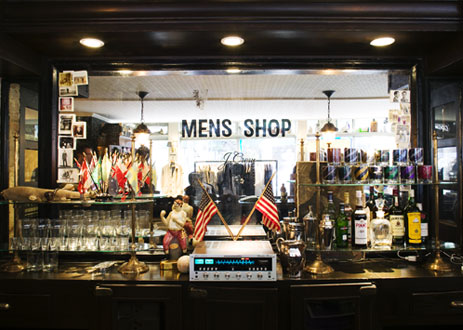
J.Crew’s Liquor Store provides a prime example of doing exactly that. J.Crew opened its first men’s clothing store in 2008 with the goal of inspiring exploratory shoppers – people who weren’t current customers of the brand. At the time, J.Crew’s menswear had little following, and the retailer sought to raise its profile through a dedicated storefront. It took over a historicwatering hole in New York’s TriBeCa neighborhood, and rather than focus on packing in as many items into the 935-square-foot.

Customers today want retailers to be less about well-orchestrated brands and carefully rehearsed answers and more about transparency, authenticity and passion.  Rotman Magazine Winter 2012 / 49 store as possible, J.Crew kept the bar’s atmosphere intact, stocking shelves with bottles and filling the room with vintage furniture and non-J.Crew brands such as Timex,  Red Wing and Mackintosh. Retailers who believe in conventional wisdom would consider this a waste of precious floor space that could have been devoted to as many sellable brand-specific products as possible. However, J.Crew’s goal was to raise awareness of its men’s line – and pique the interest of potential customers. The concept appears to be working: J.Crew has subsequently opened three more Men’s Shops, and although the company declines to provide sales figures for individual stores, CEO Micky Drexler recently told investors, “We are beyond thrilled with the performance of our stand-alone men’s stores.” J.Crew earned $44.7 million in the first quarter of 2010, up from $20.4 million during the same period a year ago. In addition, its chief menswear designer, Frank Muytens, was ranked among the top in his field in GQ’s 2010 Best New Menswear Designers competition.

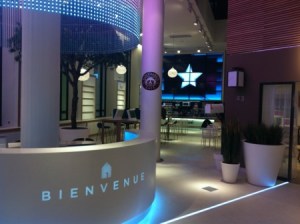
Using physical spaces to drive inspiration rather than transactions isn’t limited to the retail industry. In 2010 Crédit Foncier, a mortgage lender in France, invested in a high-profile store in Paris’s Opera district to inspire people to want to own a home. Most lenders make in-person visits from prospective borrowers as perfunctory and short as possible, gearing information toward people who plan to buy a home in the near future. In contrast, Foncier Home targets anyone who might be thinking about home ownership – even if it’s just a long-term goal or dream. The store includes a café, where people can meet casually with a real estate agent while looking over residential listings. It also includes a section with information about renovations and remodeling – services that Foncier Home doesn’t yet offer but are an exciting, aspirational aspect of home ownership. Although the company sells nothing tangible and has no real need to maintain a large retail space, Foncier is banking on the notion that a discoverybased experience such as the one made possible in its flagship store will encourage more people to become home buyers. And when they do, Foncier Home will be top-of-mind as the go-to lender. Crédit Foncier expects this concept to drive growth in the future and has plans for expansion.
From Expert Staff to Informed Enthusiasts

Powered by social media, peer recommendations are gaining ground in power and influence. The fact is, as consumers rely on friends, social networks and other independent resources for expert information, the role of the store associate is shifting dramatically.

The new purpose of a retail store lies in its ability to represent an organization’s actual culture and values, captured and rendered by its sales associates. Customers today want retailers to be  less about well-orchestrated brands and carefully rehearsed answers and  more about transparency, authenticity and passion. Store associates, therefore, need to evolve from ‘expert staff’ into informed brand enthusiasts who are proud of their organization.

The shift from being an expert to being an enthusiast – someone who believes in the brand and organization they work for and can speak passionately about the products at hand – has less to do with scripted service and more to do with organizational design. Many leading-edge U.S. retailers have taken similar personnel-oriented approaches. Perhaps the best known is Apple, which transformed consumer technology retail with its retail stores. For the Apple Store’s tenth anniversary ‘refresh’ this year, the company invested heavily in supporting its enthusiastic store associates with service-enabling technology rather than in a redesign of the bricks-and-mortar interior

From Targeting Shoppers to Targeting Owners

Retail stores have traditionally been designed for shoppers with the intention to buy and, perhaps as a result, retailers have long depended on in-store marketing and communications to sell the quality and other worthy attributes of their products. Under the new paradigm we are describing, bricks-and-mortar retailers have an opportunity to acknowledge the value of the  product owner’s role as a brand ambassador and key influencer on other shoppers.

As a result, designing the bricks-and-mortar store for the consumer who already owns your products (versus the consumer who is shopping) can have profound effects on a brand. By focusing on participation in the store – through education, trials and membership experiences rather than marketing, promotion and sales – retailers are positioning themselves for a longer-term, more open relationship with customers, helping them successfully evolve with the 21st century.

Nike’s branded stores pull in repeat visits from owners via its Nike+ Run Clubs, which meet at designated shops worldwide. Building on its platform of performance-tracking products and Web site, Nike+ is now the largest running club in the world, with more than three million members. In 2009 alone, membership grew by 50 per cent. Athletes of all skill levels train together and are privy to product trials and expert clinics. Nike motivates owners to use its products as a group, and the group inspires other curious runners to join them – and buy Nike gear – through camaraderie and knowledge-sharing. Taking the concept a step further, in 2010, Nike opened its first ‘category experience store’ dedicated solely to the sport, Nike Running Stanford, in Palo Alto, California.

From Revenue-Generator to R&D Engine

The paradigm shift we are describing questions, at a fundamental level, the role of the physical store in a retail organization’s business. As the channels to buy continue to multiply – from new e-commerce models to mobile-phone payments – traditional retailers face more competition than ever before. If consumers can buy anything anywhere at anytime from anyone, bricks-andmortar stores needs to derive new meaning and value for their business in order to remain a strategic asset.

Fortunately for bricks-and-mortar, not all channels are created equal, and the traditional retail store maintains an important edge over the digital realm: the physical space provides a direct, personal connection with consumers. Smart retailers have begun using the storefront to foster relationships with people, which means going beyond selling products or presenting a well-orchestrated brand experience to understand existing and potential customers and their needs. In short, they are using the retail floor as a platform for learning.

These retailers realize that developing a new offering behind the scenes until it is exactly right is a slow strategy that doesn’t allow for quick adaptation in a rapidly-shifting market. Instead, they ‘beta test’ new offerings and experiences and quickly pivot the offering on the fly as dictated by actual customers. For example, at the height of the recession, Urban Outfitters opened an experimental store in Los Angeles called  Space 15Twenty, which aims to attract – and study – customers other than its typical college student. Brand collaborations with Santa Monica bookseller Hennessey + Ingalls and New York vintage shops What Comes Around Goes Around and Generic Man act as magnets for people who don’t typically shop at Urban Outfitters.

In a sense, it’s a store for tomorrow’s customer, rather than today’s sales. The store is an investment in market reconnaissance, rather than solely a means toward hitting revenue targets and achieving profitability; its primary goal is gathering customer information from which Urban Outfitters can learn. While recession has hit some retailers very hard, in the first quarter of 2010, Urban Outfitters saw a 72 per cent increase in profits.

CEO Glen Senk credits creativity and experimentation. “We don’t go about revenue and profit as a goal. Rather, we focus our energies on the customer experience: innovating, making beautiful products, really pushing the limits of our brand expression and constantly refining how we operate. Revenue per square foot is the result of that focus, rather than the starting point or motivation.”

Meet us at SIGEP!

The next days are going to be very busy ones for us at DESITA, ECOFFEE and showfood. SIGEP – the 33rd International Exhibition for the Artisan Production of Gelato, Pastry, Confectionery and Bakery – will take place in Rimini from Jan.21st to 25th and we will participate meeting our current customers and prospects.

Artisan confectionery is one of the sectors for which Italy is famous worldwide. According to Confartigianato, between January and August 2011, Italian companies in this sector exported products for a value of 224 million euros, with an increase of 8.6% compared to the first eight months of 2010. The country that is fondest of Italian delicacies is France, followed by Germany and Austria. Since the beginning of the year, Italy´s ´cousins´ from the other side of the Alps have bought 50.3 million euros of confectionery (equal to 22.4% Italian exports of this type of product). Italy exported 35.8 million euros of pastry produce t o Germany (15.9% of total exports), whereas exports of confectionery to Austria totalled 16.8 million euros (7.5% of the total).

These results were achieved also thanks to the contribution of SIGEP, the world´s most important artisan confectionery expo, with its 90,000 m2 of exhibition space 850 companies taking part and approximately 20,000 foreign trade visitors over the five days.

The international success is the result of a precise strategy in event organization, with participants from the five continents, in sales communication and advertising and in the widespread network of relations set up through the years. A precise project is dedicated to internationalization activity – Top Buyers from 5 continents – which focuses on the qualified attendance of trade members from nations selected along with the exhibitors. Plus, to schedule effective business meetings before SIGEP, by means of the online Marketplace platform, precise daily agendas of meetings are programmed between Italian and foreign trade members, bringing together supply and demand.

With a view to SIGEP 2012 and to favour the arrival of foreign buyers, Rimini Fiera foreign marketing office concentrated on the so-called BRICST countries (Brazil, Russia, India, China, South Africa, Turkey), as well as on the neighbouring nations: Azerbaijan, Kazakhstan, Ukraine, Bulgaria, Egypt, Ecuador, Singapore, United States, Malaysia and Qatar.

Further promotional activity was carried out in Morocco, France, Arab Emirates and Canada

Also worth stressing are the numerous contacts made by the Italian Chamber of Commerce for Germany for the promotion of the SIGEP Neo program during SIGEP 2012. The major German Chambers of Commerce and Artisan Business were contacted and several of them expressed interest in divulging Rimini Fiera´s invitation among their ´young´ member companies. Also on behalf of the most important German associations there is willingness to distribute invitations to the sector´s new ´recruits´: many regional bakers associations, such as the Verband des Rheinischen BBckerhandwerks, BBckerinnungsverband Hessen and associations that include large-scale bakeries such as the Verband Deutscher Groobbckereien, just like the Uniteis e.V., whose members are all the ice cream parlours in Germany, have confirmed that they will distribute the program among their members.

Please feel free to contact me normanatdesitadotit if you want to arrange an appointment – our schedule is very busy but we will do our best to get to know you in person.

A new Kinetic-based tool to track shoppers interactions

Nintendo’s Wii platform has already sparked applications well beyond the world of gaming, so it’s not entirely surprising to see Microsoft’s Kinect do much the same thing. Enter Shopperception, a Kinect-based tracking system that gathers data on shoppers’ interactions with the products on retail shelves.

The brainchild of Argentinian development company Agile Route, Shopperception uses Kinect sensors to bring 3D spatial recognition capabilities to market research applications that have traditionally relied on costly and error-prone human observers. Brands, researchers and retailers can then continuously monitor the way shoppers interact with the products on the shelves, including metrics such as how long they spend, which products they touch, which are put back and which are ultimately purchased. They can also use the technology to compare the success of competing shelf layouts or point-of-sale promotions, for example. “Heat map” reports, meanwhile, are available to depict consumers’ interest in different products or shelves. The video below demonstrates Shopperception in action:

One would be hard-pressed to think of a better way to study consumer behavior than by unobtrusively tracking real-world shoppers in a natural retail setting. Brands, retailers and researchers: one to get involved in!

via In retail stores, research tool uses Kinect to track shoppers’ behavior | Springwise.

Healthy meals for more active students thanks to an Abu Dhabi cafe’s initiavite

Alexander Clavel, managing director and founder of the Federal Restaurant Corporation which runs Mirabel cafe in Abu Dhabi has undertaken the task of creating healthy lunch options for kids.

It is a subject that’s close to Clavel’s heart, so when he was approached by Aldar Academies Al Muna school to create convenient, nutritious meals in a box, he jumped at the chance.

“I think children in the UAE are generally unhealthy, and as an expectant father, I’m very much worried about this,” he said. “Obesity among children across the UAE is on the rise – as it is in the USA and Europe – due to changing dietary habits and limited physical activity. All this can be changed, much of it reversed, with good, healthy eating.

“This, combined with limited physical activity leads to a whole host of problems including diabetes, allergy development, erratic energy levels and mood swings.

“In the UAE you can literally find anything to eat and anything to do so there are no excuses for being lazy! Yet many pay more at the pump for Premium petrol for their cars but less for the quality of their food for their children. That logic can only change with education.”

via Abu Dhabi cafe creates healthy meals for schools | HotelierMiddleEast.com.

Start Today: UK brands join forces supporting sustainability

At the beginning of November, each UK based brand participating to the Start Today sustainability initiative has begun rolling out marketing campaigns, carrying the Start Today branding, urging consumers to take ‘one simple step’ toward being more environmentally friendly.

Start Today, which was conceived by integrated agency Meteorite, is led by Start, an initiative to encourage sustainable living, overseen by HRH the Prince of Wales, Business in the Community and The Marketing Society.

Insurer More Th>n, which has signed up to the project, is running activity focusing on ‘greener gardening’.

Through a partnership with broadcaster Classic FM, it is using Blue Peter gardener Chris Collins in a direct, social-media and digital campaign based on offering consumers tips that can make gardening more sustainable.

‘We wanted to do something that was simple and tangible,’ said Pete Markey, chief marketing officer at RSA, which owns More Th>n. He insisted that there was a ‘clear relevance’ to the drive because the insurer has policies covering garden and house plants.

‘This is a real chance to make a statement about how progressive and forward-thinking we are,’ added Markey.

Meanwhile, DIY retailer B&Q is running an in-store and digital promotion aimed at encouraging consumers to switch off household electrical items, and to buy products that can help reduce utility use.

Ian Cheshire, chief executive of B&Q-owner Kingfisher, said: ‘The days of paying a massive premium for sustainability are probably gone. Consumers are interested in helping to save the planet but (want to) save money as well.’

When the plan for the day of action – originally dubbed One Day, 1/11/11 – was revealed earlier this year, the stated aim was for every piece of marketing communications running on 1 November in the UK to include a green message. However, just 10 companies signed up to the scheme.

Cheshire defended the take-up, stating: ‘It’s a great selection of brands. This is only year one; it came around a bit too quickly for many brands to build it into their marketing plans.’

START TODAY CAMPAIGN THEMES

via Major brands join forces in Start Today sustainability initiative – Brand Republic News.

Using Social Networks to Improve Operations

For decades the mystery shopper was the main way retailers assessed operations from a customer’s point of view. By sending in a fake shopper, typically once a month, an individual store essentially was buying a dozen performance snapshots per year.

Then telephone surveys began to supplement mystery shopping. Today, digital technologies are supplanting both, with online customer surveys providing an exponentially greater number of performance snapshots per day.

A well-managed loop that links customer experience feedback with recommendations on social networks like Facebook, Twitter, and Yelp, can boost service quality and operational performance, increase traffic and create more happy customers — people who crow about a retailer online for free, turning their friends into new customers too.

A new mini-industry has emerged using these techniques, known as “customer experience management,” or CEM. Our company, Empathica — as well as a number of competitors — are providing customer feedback to operations, while partnering with “web-scraping” companies to listen to random chatter online.

Now we’re turning attention to linking operations to marketing through “social CEM.” The aim is not to drive online advertising impressions, but to explicitly and transparently drive the behavior of customers, front line service staff and retail managers. The aim is to create a true dialogue, not simply a listening post for customer kudos and complaints. And by doing so, this loop can drive meaningful operations and customer satisfaction gains.

An example: At Debenhams, a major international department store chain based in London, a customer complained through an online survey about a poor meal they received at the store’s restaurant. “Ordered turkey dinner. Very dried out. Overcooked vegetables in greasy, cold gravy.” The store manager called the customer that night, apologized, and sent a coupon for two free meals. The customer was invited to post their happiness with the problem’s resolution on Facebook, and did. The store manager made sure the kitchen turned out better turkey dinners. The result: a satisfied customer, better kitchen operations, and free social network advertising. Debenham’s effectively took what would have been a one-off customer experience problem and turned that customer into an Debenham’s advocate online and improved its operations to reduce the possibility of future disgruntled customers.

A social network feedback loop starts with information gleaned from customer surveys conducted online. Those survey-takers are then linked directly to social networks like Facebook through a link on the survey.

So how many customers will actually bother to move from surveys to socializing their experience? We have some data that suggests a healthy amount. We conducted 25 million surveys last year; more than 80 percent of respondents said they’d recommend the brand they were being quizzed about. We’ve then seen 10 to 20 percent of customers follow through with social network postings after the survey.

Some recommendations for retailers considering tying together their feedback, social, and operations loops: Customers need some nudging: incentives like coupons do the job. At 100 Boston Market restaurants, customer advocates got $3 coupons for a recommendation. In a three-month period, Boston Market received 100,000 Facebook newsfeed recommendations; advocates redeemed more than 4,000 coupons.

Finding customer advocates isn’t the only goal. Unhappy customers need to be channeled through a “customer rescue” process to help solve problems and mend relationships, and provide feedback on problems for operations to solve.

At Citibank branches in New York City, for example, every customer who completes a survey receives a call back from their bank manager within one to two days. The manager uses survey feedback and software intelligence to determine whether complaints need resolution or whether the manager should provide a simple “thank you” to reinforce the local branch’s commitment to customer service — like old fashioned retail and small local banks or credit unions still do.

The advocate process is proving far more powerful than regular social network advertising. The key is authenticity: we listen to our friends and colleagues for advice and recommendations. So while retailers and restaurant owners can buy social media advertising, the real place to drive growth is on the consumer newsfeeds. Not only are those kinds of clickthroughs more numerous. They are also more powerful. Beyond simple word of mouth advertising, poor-performing outlets get suggestions for improvement, which they use to guide better operational performance.

via Using Social Networks to Improve Operations – Gary Edwards and Mike Amos – Harvard Business Review.