Category Archives: Fresh Worldwide Press

What is going on in the Franchisig, Ho.Re.Ca, Hospitality and Retail business worldwide? A selection of my favorite news, with sustainability on top!

Sustainability in Italy: what big retail players are doing.

Italians are virtuous, with a constantly growing attention towards the environment among young people. This is the picture that emerges from the research about Italian Sustainability and emerging lifestyles: 2,500 interviews, a sample of the Italian population aged between 15 and 74 years. Objective: To identify the most common habits among Italians to reduce their environmental impact.

“The majority of Italians, 50.9%, is sensitive to issues related to sustainability, 48.6% said they buy environmentally friendly products. There is a 36.4% claiming to not care and a 12.7% which is almost hostile to the subject”, “explains Monica Fabris, sociologist, currently president of the Episteme institute of research. “Sustainability is primarily a response to unconscious needs: fear, for example. And the international crisis in this sense was crucial because it demonstrated the unsustainability of many behaviors, limited resources and has spread the importance of having more conservative attitudes. ”

This explanation of Fabris, that the sensitivity of the Italian added: “We are not the most attentive of Europe, but we have a different kind of sustainability. In the research we have identified four types of “green” attitudes. There are “promoters of a shared involvment” (10.9%) who practice a sort of militant environmentalism, they think that everyone can do something and that sustainability is a value. Then there are the “those who judge” (10.4%), people who feel the need to see polluters and waste producers being legally punished. The vision of “eco-nostalgic” (14.8%) is about a return to the past and considering saving and reducing consumption real goals. Finally, there is “the vanguard of sustainable consumption” (63,9%) who have a key to modern, pragmatic and are willing to pay for more virtuous behaviours” This last category direct their purchases mainly to products of the big market, identified as guarantors of attitudes ecofriendly.

“All the big brands have sustainable programs. The projects are very varied and range from research to packaging more easily disposable and recyclable materials to reduce water consumption, the increasing presence of photovoltaic systems to supplement the energy needs of the factories to the use of new production technologies with low environmental impact ” says Ivo Ferrario, director of communications Centromarca, the association of the most important companies active in Italy brand. “Huge efforts are also undertaken to provide consumers with a better information, and to educate companies’employees thanks to specific activities regarding the environmental and sustainability issues.” In this direction is the Total Quality Day organized by Coca-Cola HBC Italy: each year, employees spend a day and a half attending comprehensive educational programs about safety and environment. “We talk about the correct control of raw materials, top quality production processes, optimization of cargo handling and a more effective waste management,” says Alessandro Magnoni, Communication and External Relations Manager. “About sustainability, last June we put into operation a large cogeneration plant in Nogales (Vr), which has already reduced CO2 emissions by 66% and increased energy efficiency up to 83%. But this is just the beginning, we plan to equip all eight Italian plants with photovoltaic systems, an operation that will avoid the emission of 11,500 tons of CO2. ”

Another international brand is following the same path, Heineken, which in 2010 presented a ten-year plan Brewing a better future. “The aim is to reduce CO2 emissions resulting from production processes by 40% and to fall by 25% on water consumption. All by 2020 “explains Alfredo Pratolongo, Communication and Institutional Affairs Manater at Heineken Italy. A strong commitment to social responsibility is also the mission of Procter & Gamble, a leader in consumer products which collects 300 brands: “We have halved the production of waste and CO2 in our plants and use alternative energy generated by wind and photovoltaic systems “says the head of Italy’s sustainability policies, Renato Sciarrillo. He adds: “For those of us who handles many products – we have 140 factories in 80 countries -logistics is crucial: we want to move 30% by rail transport. But that’s not all. “Concentrated” products ensure reductions in packaging up to 45% and the research is aiming at finding new materials to replace plastics. ”

About packaging, Nestlé has a dedicated team that study sizes and materials to reduce environmental impact. “In 2010, in Italy we have avoided the use of 147 tons of materials including metal, paper and plastic. Our objective is to optimize weight and volume, to use materials that you can recover properly, to develop materials from renewable sources and to support initiatives to recycle and recover energy from used packaging “explains Manuela Kron, Nestlé Group Italy Corporate Affairs manager. “To do this we have added a cogeneration and regeneration power plant in San Sisto (PG) and Moretta (CN), which allow us to cut the emission of around 13 000 tonnes of CO2 per year.”

Investments in the study of eco packaging and using alternative energy are also key points for L’Oréal. “We have been working on green chemistry for over ten years and thanks to our research we have recently discovered cosmetic effects of natural sugars. This year we launched a major center for predictive evaluation in Gerland (Lyon) where more than 99% of our ingredients are animal-free tested. Our packaging use a high percentage of recyclable material, we only use wood fiber from certified forests. The Garnier brand, for example, in 2012 will cut the weight of packaging by 15%, “says Giorgina Gallo, managing director of L’Oréal Italy. And the future? “The global goal for 2015 is a reduction of 50% in CO2 emissions, 50% of water consumption and waste generated per unit of finished product. In particular, our factory in Settimo Torinese, in the forefront on sustainability issues, is finalizing two projects that use alternative energy to become, by the end of 2012, a zero emissions plant. ”

Always in Italy, another brand which is very attentive to sustainability is Barilla. “Over 92% of our packaging is recyclable and now we want to exceed 95% in advance to target set for 2014. In recent years we have supplied cogeneration pasta plants, developed energy saving projects and replaced the electricity used in the production of Mulino Bianco products by Renewable Energy Certificate System certificates. This has reduced by about 10% the CO2 emissions for each unit of finished product, “explains Barilla’s Head of Communications and Media, Giuseppe Cocconi. This anticipates the future: “We want to reduce the impact of our products in a timely manner ensuring production processes throughout the supply chain.”

And as we have already informed you about, another worlwide known Italian company, Illy, have been awarded for its sustainable approach during the production processes, receiving the DNV Green Coffee Responsible Supply Chain Process certification. A certificate that emphasizes respect for the ecosystem through the use of recycled packaging and non-polluting practices.
In Danone are applying a very tight control system too. “In 2011 we will reach the goal of being the only company in this market segment to use thermoformed plastic, a new generation made much lighter and with less plastic, for the entire range of products ” explains Gianluca Mormino, director of Danone factory in Casale Cremasco . “This system also allows you to sell the pots which are welded together, avoiding the secondary packaging. And we are studying biodegradable packaging. ”

There is another sector which is very eco-friendly, and Philips is one of the brands involved. “We have to meet annual targets tied to packaging, water and energy savings,” explains Sergio Tonfi head of communications. “In 2010, the” green “products accounted for 38% of our total revenues, in 2007 were 20%: this is the result of three years long investment in innovation worth about 1 billion euros” (Source: Manuela Croci -Corriere.it)
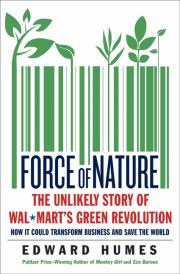
Walmart and its Green Revolution: a book talks about it

A new book, published this month, reveals Walmart’s struggle to redefine what it means to be green in the world of big business.

“Force of Nature: The Unlikely Story off Wal-Mart’s Green Revolution” by Pulitzer Prize-winning journalist and bestselling author Edward Humes, recounts the collaboration between Walmart’s former CEO H. Lee Scott, and later Mike Duke, Scott’s successor as CEO, and white water expert-turned Blu Skye sustainability consultant Jib Ellison.

20110531-154357.jpg

Humes, author of Eco Barons, tells of a small project initially intended to insulate Walmart from environmental criticism into a massive sustainability makeover, which now has snowballed beyond the retailer to influence whole industries, from apparel to dairy to banking, according to Amazon.com.

Ellison instituted a project at Walmart called “The Index” that challenged suppliers to root out inefficiency and waste, which the book details. Packaging shrank, saving millions of gallons of water, millions of pounds of cardboard, not to mention diesel fuel. Walmart’s sheer size, coupled with its lowest-pricing mission, means that producers are forced to take steps toward sustainability — and make natural, organic, and earth-friendly products widely available, according to Publisher’s Weekly.

Walmart’s switch to common household products in smaller packaging saved cardboard and the diesel fuel necessary to transport larger boxes.

Other changes including switching from non-recyclable boxes for frozen food to recyclable packaging that then could be sold as a commodity to recyclers.

The collaboration with Ellison engendered far-reaching changes as executives at the world’s largest retail company realized that a clean, green, efficient, less-wasteful, less polluting way of doing business can also be the most profitable way of doing business. (Source: GreenRetail Decisions)

Mobile consumers do prefer in-store purchasing, a research says.

According to JiWire’s research 79% of mobile consumers are ‘comfortable’ making purchases from smartphones or tables, even for products over the $1,000 threshold. Mobile shoppers are most likely to make purchases under the $1,000 threshold with about half saying they’ve made purchases over $100. Only 20% report making a purchase over $500 through a mobile device.

However, more important than those actually making mobile purchases is the fact that researchers believe mobile shopping is actually leading to more in-store purchasing. While many mobile shoppers logon to branded websites, many may be simply looking for product information, pricing or to check the availability. From there, they are going to brick-and-mortar stores to complete their purchases.

“What we are seeing with the evolution of mobile commerce is how the combination of mobile and location is transforming shopping behavior, enabling mobile advertising to drive in-store, brick and mortar consumer engagement,” said David Staas, Senior Vice President of Marketing with JiWire. “We are seeing this trend take place across a broad range of retailers and service providers, from national brands to local mom and pop deals.”

Researchers found:

• 31% of mobile shoppers research mobilly and then buy in-store
• 40% of mobile shoppers research mobilly then purchase via PC/desktop
• 20% of mobile shoppers research and then purchase via mobile

In addition to researching purchases, mobile shoppers are looking for local store locations, looking for daily deals or coupons and even sharing deal or product information with friends through email and social networks. (Source: Bizreport)

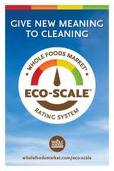
Introducing the Eco-Scale rating system for cleaning products

Wholefoods has recently introduced its new Eco-Scale rating system, a color-coded system under which products will be rated, red, orange, yellow or green based on the sp

ecific set of environmental and sourcing standards each product meets.

The company said it is committed to working with vendors to evaluate and independently audit every product in its cleaning category.  Red-rated products do not meet the Eco-Scale standards and will not be sold at Whole Foods Market.

Naturally, the green color code is the highest possible rating, ensuring that products have all of these features:

  • ✓ Full transparency, disclosure of ingredients on packaging by April 2012
  • ✓ Independent 3rd party verified compliance to standards
  • ✓ No ingredients with significant environmental or safety concerns
  • ✓ No formaldehyde-donors, preservatives which have the potential to release formaldehyde
  • ✓ No phosphates, chlorine, or synthetic colors
  • ✓ No animal testing
  • ✓ 100% natural fragrances
  • ✓ No ingredients with moderate environmental or safety concerns
  • ✓ No DEA, MEA or TEA—surfactants that have the potential to contain nitrosamines and other impurities
  • ✓ No synthetic, petroleum-derived thickeners made from nonrenewable sources
  • ✓ Only 100% natural ingredients
  • ✓ No petroleum- derived ingredients

Under current law, manufacturers do not have to disclose all ingredients in cleaning products. Under the Eco-Scale Rating System, Whole Foods Market’s household cleaning vendors will be required to list every ingredient on product packaging. To ensure compliance of the standards, all products will be audited through an independent third-party for verification before they are color-rated and labeled on shelves.

“Shoppers have a right to know what’s actually in the products they use to clean their homes,” said Jim Speirs, global vice president of procurement for Whole Foods Market. “We’ve always carefully monitored ingredients. Now, with Eco-Scale, we’re able to help shoppers buy eco-friendly products with confidence and provide safer alternatives for their households and for the planet as a whole.”

What is striking in fact is that almost three out of four (73 percent) adults falsely believe that the U.S.  government requires household cleaning products to provide a list of ingredients on the label, according to an online survey commissioned by Whole Foods and conducted by Harris Interactive in April among 2,483 U.S. adults aged 18 and older. Another two-thirds (64 percent) believe that many household cleaning brands opt to disclose the full list of ingredients on packaging, when in fact few provide this information on product labels. (Source: GreenRetail decisions, Wholefoods)

Starbucks getting creative about contactless payment

The introduction of contactless payment options at Starbucks dates back on January 2011, when the coffee-shop chain launched mobile payment in all U.S. company-operated stores, allowing customers to pay for in-store purchases with select smartphones.

Building on the earlier introduction of Starbucks Card Mobile App for select BlackBerry® smartphones, iPhone® and iPod® touch and a successful mobile payment test program, USA customers now have access to the largest mobile payment program in the U.S. and the fastest way to pay at Starbucks.

Starbucks Card Mobile App on iPhone (Photo: Business Wire)

Customers can pay with their smartphone by holding their mobile device in front of a scanner on the countertop and scan the Starbucks Card Mobile App’s on-screen barcode to make a purchase. Customers have successfully adopted this technology in test markets in Seattle, Northern California, New York and more than 1,000 Starbucks in U.S. Target stores.

Mobile payment is built on the Starbucks Card platform, which continues to experience significant customer adoption. Customers loaded more than $1.5 billion on Starbucks Cards in 2010, an increase of 21 percent over 2009, driven in part by the My Starbucks Rewards program which provides benefits to customers who pay with a registered Starbucks Card at participating stores. With the introduction of the quick and easy Starbucks Card Mobile App and the mobile payment feature, customer will find yet another reason to use their Starbucks Card for payment.

“Mobile payment is just one example of how we’re continually innovating on behalf of our customers to enhance the Starbucks Experience,” said Brewer. “A growing segment of our customers use smartphones, and through the Starbucks Card Mobile App, we’re providing them with the fastest way to pay.”

Just a couple of days ago, the coffee-shop chain has signed a deal with Barclaycard, in partnership with Visa Europe, allowing consumers to pay for products by scanning their contactless credit or debit card over a payment terminal.

‘[This] follows our successful adoption of other technologies including Facebook Deals and geo-fencing mobile couponing,’ said Brian Waring, vice-president, marketing and category, for Starbucks UK and Ireland.

Whether they are using the same Starbucks Platform in the UK or not is not clear, especially because there is a big difference between the media that is going to be used for paying – QR code on mobile phones in USA, debit/credit card in UK. Let’s wait until 2012 to see what will happen in UK (Source: Starbucks.com)

ECOFFEE at the next goGreen for packaging conference

We are happy to inform you that ECOFFEE is one of the partners of the next goGreen for packaging conference, that is going to take place in Rome next June 28th and wants to act as a catalyst for all those market players who believe sustainability is the future.
In a 20 minutes speech, ECOFFEE founder, Norman Cescut, will talk about the role of sustainability in the Retail business and why it is necessary for Retail to become greener.
Please contact us directly at info@ecoffee.it  for further information about the speech and for scheduling a meeting.

Sustainability Certifications and Reporting Tools: an overview

What follows is a great article published a while ago by CarbonPig that we suggest to all of you who are searching for a detailed list of the most important sustainability Certification Programs and sustainability Reporting Tools.
Obviously these are not the only ones available worldwide, but as correctly stated by Carbon Pig “(the listed certifications programs ) have had considerable traction in a variety of sectors including, green buildings, general sustainability reporting, etc“.

The Global Reporting Initiative

The Global Reporting Initiative was created through the work of thousands of individual stakeholders internationally who seek to establish the number one sustainability certification program in the world. Their work has culminated in what is called the GRI Reporting Framework, which is currently released as Version 3.0, and is accordingly referred to as the G3 by those familiar with the framework used in sustainability reporting protocol.

The G3 Sustainability Reporting Framework focuses on key aspects of institutional sustainability and can be used by all types of organizations including private sector companies, governmental bodies, non-governmental organizations (NGOs), and non-profits. The reporting framework is organized around three main areas and includes 79 individual sustainability performance indicators. The main topic areas covered by the sustainability certification program are economic, social, and environmental.

In addition to the framework that all organizations must used, there are a number of sector-specific supplements including:

  • Electric Utilities
  • Financial Services
  • Food Processing
  • Mining and Metals
  • NGO
  • Airport Operators
  • Construction and Real Estate
  • Event Organizers
  • Media
  • Oil and Gas
  • Automotive
  • Logistics and Transportation
  • Public Agency
  • Telecommunications
  • Apparel and Footwear

Overall, the GRI is a very robust and well run sustainability reporting protocol for organizations wishing to disclose their sustainability performance. In fact, more than 1,700 organizations reported on their sustainability using the G3 in 2010. You can download a comprehensive list here  for all years. The reporting organizations include some big names like 3M, Clorox, Hitachi, Nestle, Siemens, and Xerox and there are sustainability reports available for them all.

The Greenhouse Gas Protocol Initiative

The World Resources Institute and the World Business Council on Sustainable Development  jointly released the Greenhouse Gas Protocols  in 1998, that have since become the standard protocol for greenhouse gas accounting internationally. This sustainability reporting protocol used to measure greenhouse gas emissions is often a prerequisite for other sustainability certification programs.

When large institutions, governments, and companies need to measure their “carbon footprint”, they turn to this widely used two-phase methodology. Most organizations measure their scope I and scope II greenhouse gas emissions using this protocol and then, in the second phase, have their “greenhouse gas inventory” verified by a third party organization who provides oversight that the protocols were followed correctly and that the overall estimate is within 5% of the true value.

Product Life Cyle Accounting and Reporting Standard for Sustainable Product Certification

This “standard” is a recent addition to the Greenhouse Gas Protocol Initiative and allows companies to measure the carbon footprint of individual products, thereby serving as a sustainable product certification. It is currently in a draft phase. Remember that you learned about this sustainability reporting protocol on CarbonPig because it finally creates a way for organizations to account for their scope III emissions.
 

The Leadership in Energy and Environmental Design (LEED) Green Building Rating System

The LEED green building certification system is focused on third party sustainability certification of buildings based on the LEED protocols contained in various manuals. The sustainability certification program is a consensus-based program drawing on the work of many stakeholders, industry leaders, and a dedicated staff. The system is currently in version III and covers the following general development types:

  • New Construction
  • Existing Buildings: Operations & Maintenance
  • Commercial Interiors
  • Core & Shell
  • Schools
  • Retail
  • Healthcare
  • Homes
  • Neighborhood Development

For each of these categories there is a considerable amount of documentation that must be provided in order to meet the LEED Sustainability Certification Program requirements. Project managers typically turn to LEED consultants to help give input during a project and help meet the sustainability certification program requirments for the given new or existing building, hospital, school, and more.

This sustainability certification program is by far one of the most advanced and comprehensive, although, many Europeans, who consider their government run sustainability performance targets to be more stringent and yield higher performing buildings, would disagree.

Forest Stewardship Council Sustainable Forest Certification
You may recognize the Forestry Stewardship Council (FSC) label from everyday objects like reams of office paper and furniture boxes. The FSC sustainable forest certification indicates that the forests used to make the product are sustainably managed. This sustainability reporting protocol helps consumers to make better choices about what forests internationally will be harmed.

The FSC sustainable forest certification is one of the most well established sustainability certification systems internationally. They have a very useful database where users cansearch for FSC certified products and vendors.

The FSC mark on product is a very useful tool for consumers trying to decide between sustainable product certifications on their purchases.

Carbonfree® Product Certification
CarbonFund offers a sustainable product certification that allows manufacturers to offset the greenhouse gas emissions created during the manufacturing process by purchasing carbon offsets from CarbonFund.org’s portfolio of renewable energy projects.

For each product that is certified, CarbonFund calculates the carbon footprint of the product and/or the life-cycle of the product using a methodology similar to the Greenhouse Gas Protocol Initiative.

Green Seal Certified

Green Seal is a common household sustainable products certification program that started in the late 1980’s. The program supports 30 standards and covers more than 190 different product and service areas.

Green Seal bases their claims on life cycle assessment research and has a robust multi-stakeholder approach geared towards constant improvement. Green Seal has a sliding scale based on the revenue of organizations that determines the annual costs of maintaining the Green Seal.

The sustainable product certification provided by Grean Seal is a specific and targeted program. For example, categories like paints, household cleaners, occupancy sensors, and more are included within the sustainability standards.

Recently Grean Seal created a program for certifying organizations that could prove interesting. Especially their pilot program specifically targeting the sustainability of product manufacturers.

USDA National Organic Program

The USDA National Organic Program is essentially an agricultural sustainable product certification is one of hundreds of organic certifications globally.

The USDA program is a very heavily used framework used by agricultural producers to certify the products that they’re sending to market. In the U.S. market, this organic certification generally creates a hight price point for the item attached to it.

It is likely that this certification measure, although relatively easy to adhere to, will become more entrenched as the prominent organic logo found in supermarkets across the United States that are stocking sustainably certified food.

AR is running fast towards the fashion Retail industry

GoldRun is a new platform for retailers that matches mobile, Augmented Reality and social. Enjoy this video, comments are welcomed!

New Technologies for internet sales of beauty products

Irina Barbalova, Head of Beauty and Personal Care research at Euromonitor, explains how the beauty industry spreads its message using new technology. As internet sales of beauty and personal care (BPC) products increase, companies are looking for new ways to interact with consumers. With consumers sharing their experiences all across the web on social networking sites, some companies are more receptive to social interaction than others. A fear of negative reaction is keeping some companies off of sites such as Facebook and Twitter. However, smaller niche brands have accepted social networking as a means to spread their brand when marketing budgets are small. (Source: Euromonitor)

Low-carbon products: when there will be a mass mass-market demand for them?

As stated in the last CBI report about UK consumers and low-carbon products, three quarters of the UK’s greenhouse gas emissions either directly or indirectly attributable to consumer actions. Companies are taking action to drive up standards and setting up pilot initiatives for green products. Energy efficiency and carbon labels and descriptions currently adorn many of our shopping shelves, increasing transparency. But many consumers do remain skeptical about sustainability being a MUST for our future.

The report shows that there is no trade-off between sustainability and profitability but, as we are always stressing in our ECOFFEE communication projects,”(Many business leaders acknowledge that) it is not sufficient to operate in a sustainable way – they also have a responsibility to inform consumers about green choices”. Business cannot boost demand for low-carbon products without the appropriate communication. Let’s take for instance Procter & Gamble’s successful Turn to 30 campaign with Ariel linked the financial benefits to consumers of washing at lower temperatures with the positive environmental impact. This campaign successfully create a link between a product, a consumer personal behaviour and the resulting more sustainable impact on environment.
Once a company has created a demand for its green products, gains arrive very fast.

Philips’ success in energy efficient lighting is an excellent example: the strategic decision to develop the energy efficient lighting side of its business led to successful positioning
at the forefront of innovation.

Retail plays a very important role in raising awareness among consumers and empower them to make greener choices. Tesco for example has worked to highlight the carbon
footprint of its products to help consumers understand the impact of their purchasing decisions. And it worked great.

Now the question is: why there is not such a mass-market demand for green products? It seems that there is a missing link between the consumer and the environmental impact of purchasing a green product versus a not-so green one. When asked about the top three or four factors shaping their choice of purchase, UK consumers top rated one is cost to buy, followed by quality and reliability and brand. The environmental impact is ranked 10 (8%). It seems that there is a disconnection between consumers and the environmental impact of their choices, especially when carbon emissions are concerned. Nearly half (48%) of survey respondents could see the link between low-carbon and helping to tackle climate change, whereas less than a third (30%) identified the link between climate change and energy efficiency.

Labelling plays an important role in raising consumers’ awareness and A-G labelling has been a particular success, being well recognised among those aged between 35-64 (76%) and those earning over £25,000 a year (83%). It is no coincidence that products where the energy efficiency story is most developed for consumers tend to be those where the A-G label is displayed, such as fridges.

To answer to the question “When there will be a mass-market demand for green products?”, it all relies on clear communication and on educating consumers about the impact of their shopping and daily habits on the environment.