Category Archives: foodservice

FOOD is all around: last day (part 3 of 3)

Third and last day in London.

Too bad, I must confess that I was really enjoying it, and JD was a very special host. We got on really well and share the same “passion” for great foodservice.

I was really happy when JD asked me to act as a photographer (my other passion) during our first morning meeting: ladies and gentlemen, welcome to Harrods huge distribution center in Thatcham, which hosts a staff canteen, that according to the management, has to be improved. 

Food is all around: the need for a foodservice consultant is not limited only to the restaurant business, and this site was a great example.
Harrods staff canteen in Thatcham showed a very large seating area, while the area dedicated to the self-service counter, to the food, is pretty oppressive. I found the green hospital-style colored walls and other details not that appropriate for the case. While I was absorbed with my photography task, JD asked my advice about how to create a more welcoming and functional environment.  Based both on my first impression and on my experience, I immediately suggested three changes.

The first one: change the color of the walls! Color is very important, leads to a better experience, especially in an environment where you eat and you are supposed to spend relaxing time each day.

The second change: switch the location of the dirty trays trolley from the entrance of the food area to the vending machines area or to a more secluded area. It is not really nice to be welcomed by dirty trays in an area where you are going to eat food.

Third change: the creation of a dedicated area for those people who wanted to eat home-made food. I noticed that there were several people eating meals from Tupperware, stored in the refrigerator and then heated in microwave ovens. That was a great example of culture and freedom of choice, but I found more appropriate not to mix the two different kind of meal consumption – homemade and purchased at the canteen – therefore I recommended to create a separate area for the homemade meals consumption.

JD agreed, sharing my insights with the canteen’s manager. It was very rewarding to have given the opportunity to give my contribution.
This experience once again confirmed my opinion about the need to create better canteens in Italian companies too, where often pasta is offered too much and the interior design is not studied or considered at all. It looks like eating in an appropriate and comfortable environment is not that important to the employers as it is for the employees productivity.

After the meeting at Harrods, it was time to thank JD for his hospitality. I made the most of what I saw, now being able to offer to my clients around the world, new and exciting ideas. We both got a lot out of our “exchange”.

I spent the last hours of the day at Westfield London, a huge shopping center where I enjoyed acting as a mystery shopper, checking the organization, service, value, hygiene and courtesy of the shopping center various eateries. I must admit I found some very interesting concepts, as the following photos. 

This slideshow requires JavaScript.

My London experience was positive: I learned a lot and this renewed my desire to bring back to Italy such professionalism and attention to details, skills that only an professional consultant has, moved our love for food, in all its forms and its implications.
Contrary to what you might think, Italy is a very difficult market, where professional foodservice consultants have to prove each and every day to entrepreneurs that there is a great difference between the service – and the consequence and outcome in terms of profit, provided by a professional and the service provided by an “extempore” professional. The two are very different.

I am really interested to know whether this kind of challenge does exist in other countries too, and how you deal with it as foodservice professional consultant. Please leave your comments. Thanks!
FOOD is all around – second day with Coverpoint and Managing Director, Jonathan Doughty – (part 2 of 3)

6.30 am. Wake up call, shower then breakfast. Waiting for JD my thoughts were all about the reason I was there in England, about how I ended up in London and then back over now, in my last professional years. A long flashback. Maybe I just needed an Italian coffee, a good espresso, to be able to think more clearly. Actually, I was hungry. Yes, I was hungry to act, hungry to discover and learn new things. A consultant has that kind of very visceral curiosity towards their mission, especially in our field, because food is culture, art, research AND passion.

7.30 JD arrived. First customer, first meeting: The British Library. At the desk there was a badge waiting for me, another sign of Coverpoint’s team great organizational ability. Nothing is left to good luck with this company. A two-hours long meeting to dissect the unthinkable with divisional managers and representatives of partner companies who work at the British Library. Great teamwork. It showed the job Coverpoint does there is based on a fully confident business relationship between JD and his client, something which is very important and that I have personally experienced with my clients, especially with Saadeddin. It is all about trust, and how people respect you.

How long does it take to create a project such as the one at the British Library or such as the creation of food venues inside a shopping mall? Let me tell you: it takes a lot!            The context analysis, the customer analysis, demographics, research and comparison and buying habits are just some of many basic steps towards a winning proposal and concept.

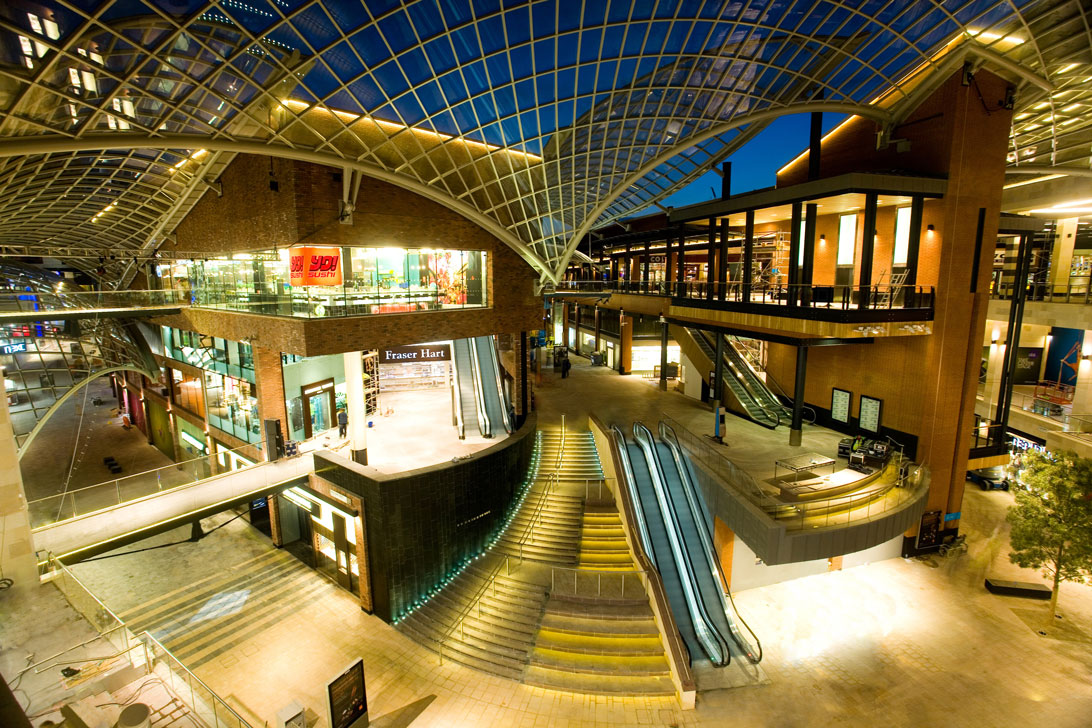
The second meeting of the day: Cabot Circus, a big shopping centre in Bristol, an Old city of England famous for boats and railways. With the ambitious goal to reassess the concepts related to food, the meeting was there to challenge “is it possible to do better, and how?”. These are the issues the consultant gets excited about and gives his/her best. To analyze the present to predict the future, the consultant in this case also acts as a trendsetter.

Morley Stores was the last stop. We went to Elys, that’s located in Wimbledon and the leisure atmosphere,  the “I eat fast and go back to the game” concept could be deeply experienced, at least that was impression. To my disappointment I visited the department store. Everything looked old and not looked after, and for the first time since the beginning of my journey, I would have gladly added a touch of Italian design- made by DESITA, of course!

JD has presented a rather interesting, Coverpoint’ style, analysis: “Where are we now”, leaving the presentation of “Future Roadmap” to the next meeting. It was a pity the meeting ended so soon, ideas had just started to come to my mind.

A comment about my second day? Thumbs up!

Important clients, complex organizations that really care about the effective functioning of the area they devoted to food. I start thinking about Italy, with its incredible potential, which we often do not make the most of it, because of improvisation and of tight regulations. It is in a country such as Italy that FCSI, with its professional consultants, can really make an important difference to support the food retail industry with strategy and direction.

The day ended at a hotel restaurant, where I quickly had a mega cheeseburger and fries  too tired for a real dinner. End of second day.

Oliva e Marino – The pop-up store of Pavesi, Barilla.

It sometimes happens to find something new just around the corner.  Just think about Bottega di Oliva e Marino, Pavesi pop-up store that opened in Riccione on June 28.  At first glance, it seemed interesting to me for both its stylish design and brilliant business marketing strategy.

Everything revolves around “aperitivo”, the happy hour.
A very successful Italian format that is currently being copied everywhere else abroad.  But how did Pavesi pop-up store by Barilla impact Riccione?  Tourists certainly enjoy it because of its highly competitive promotional prices, but the managers of nearby restaurants and bathing establishments are far from being happy.

In fact, the pop-up store is situated just in front of two beach bars and next to a highly popular restaurant. But there is more.  It is located just in the heart of one of the most convenient paying car parks of the sea front, the best place for tourists to leave their car without worrying.  

Was local government good at promoting equality? What would have happened if the same proposal had been presented by an ordinary citizen rather than by Barilla?   Would the proposal have been welcomed?

I don’t think so.

FOOD is all around – three days in London with Jonathan Doughty, Managing Director of Coverpoint Foodservice Consultants – (part 1 of 3)

Food and foodservice? A perfect relationship – a foodservice consultant must take into account many things. What customers eat, the correct support provided by the right chair, the colour and presentation of the food, how to be enhance and not alter the ambience and lighting and how to provide a pleasant and empathetic welcome from the staff. We also have to carefully design balanced spaces, use appropriate furnishing to create the perfect atmosphere, giving substance to the initial idea, or better, to the finished concept.
I have always wondered whether it is really possible to split the relationship between food and the tools used in its processing, its creation, its packaging, its availability and what gives it a meaning and a key to its interpretation.

I have been working in the design concept field since 1997, and to me the word “food” has a very extensive and multi-faceted meaning, touching the highest peaks of the “philosophy of life” and the “pleasure of taste and sharing” to be transferred in design and in projects and finally, in emotions. The challenge is to be able to mix the tools and know- how to improve the work of what I call the “food master” (bartender, chef, sommelier, consultant, etc.) thus amplifying the pleasure of the guest, the foodies.

This must be why I loved the three days I was invited to spend in London together with Jonathan Doughty, Coverpoint Managing Director and FCSI EAME President.
Coverpoint offers highly professional advice in the foodservice sector, supporting its customers with a wide range of services, from consumer behavior trend analysis to location services. Coverpoint services are complementary to what I am actually offering with my company DESITA.

But how I ended up in London? At the end of March 2012 I was visiting Hostech 2102 in Istanbul, representing Italy at the FCSI EAME booth. During that event, I had the chance to meet Jonathan Doughty again, and it reminded me of the idea I had during our previous meeting at the Gulfood Dubai expo, I asked him whether it was possible to organize a visit to his company’s headquarter to watch him and his team at work. To me it was like going back to school and act as an “intern”, but to Jonathan my request had an all together different meaning: “You’ll come to work”.
JD agreed and this made me wonder a lot about the differences between the Italian entrepreneurial approach, sometimes so self-flattering, and the one of other countries, very often less formal and more professional.

On Monday, May 21st I was at Heathrow, where James, one of JD’s consultants, was waiting for me to drive me to Coverpoint’s headquarter. I did not know what to expect, but I was sure I was going to spend three days at their office. (Office? Coverpoint’s heart beats in a charming renovated 200 years old barn in the middle of the country!

Once I arrived at the headquarters, I was warmly welcomed by the Coverpoint team. I immediately felt at home, settling into such a professional “vision” and environment. It was there that my learning process began: I was invited to study some of their more interesting projects. Data is of primary importance to Coverpoint’s work: data collection, analysis, interviews with customers, best practices implementation. I could not believe I was allowed to see all that information, and time passed very quickly.

Between a chat and a coffee, I was handed a four-page detailed visit schedule. I was speechless: I was invited to follow Jonathan during his meetings. I became very excited by reading the name of the clients I was suppose to meet: The British Library, Cabot Circus, Harrods to name a few.
At the end of that exciting day, I had a delicious dinner together with Adam and Ian, JDs Senior Consutlants at The Royal Oak, where I had the chance to enjoy the atmosphere of the traditional British pub, which has a Michelin star!

When is a restaurant’s atmosphere good? It is when you do not feel out of place, when the environment seems familiar, but at the same time you are getting curious to discover each and every single location detail. You never get bored in a great restaurant.

At The Royal Oak we were immediately greeted by a beautiful girl in traditional uniform. We settled in the lounge for a cocktail – a beer of course, then went to have dinner in the main hall. The food was very good; Diver Caught Scottish Scallops with celeriac puree and Hazelnut Vinaigrette – 8oz Black Angus Sirloin Steak, “on the bone” Chips, Bone Marrow and Madeira Sauce and as a dessert Chocolate Fondant, Toffee Sauce, Almond Biscuit, Coffee Ice Cream. All beautifully prepared but in a relaxed and informal environment.

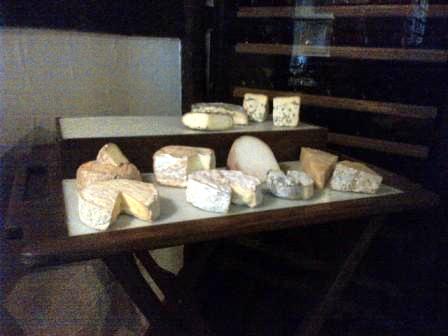
There was only one negative point for me. That was the cheese trolley behind us. Quite often, the air became unbreathable with the smell of cheese! I would highly recommend that the restaurant owners never leave cheese on a trolley for too long without some form of cover. It is not that beautiful to see and even less to feel and smell, but most of all it is not particularly hygienic. What would the HACCP manager say?

It was a very cheerful evening. And that was only my first day and the fun was yet to come … (to be continued)

Chefs asked: how green is your kitchen?

Does a British apple have a smaller carbon footprint than an imported one if it has to be refrigerated for up to a year after harvest? And how do you design a kitchen so your chefs are naturally working in an energy efficient manner?

These are just some of the questions explored in a new guide launched on May 31st by the Sustainable Restaurant Association (SRA) and Space Catering to help the catering industry reduce its energy bills and drive down greenhouse gas emissions.

According to The Carbon Trust, energy used in catering accounts for 4-6 per cent of operating costs, while around 20 million tonnes of food waste is created every year in the UK food service sector.

The National Restaurant Association 2008 survey also found that 62 per cent of diners would prefer to eat in an environmentally-friendly restaurant.

“Chefs and restaurateurs are always looking for simple solutions to difficult challenges,” said Mark Linehan, managing director of the SRA.

“This guide provides them with a straightforward, easy to read guide to sustainable kitchen equipment that the SRA believes will be of huge interest and practical use to any restaurant that takes seriously its environmental responsibilities.”

The 20-page guide will be free for anyone to download from the Space Catering website, covering topics such as food waste, water consumption, energy efficiency and “green cuisine.”

via Chefs asked: how green is your kitchen?  News from BusinessGreen.

FoodDrink Europe targets sustainability

FoodDrinkEurope has launched a report outlining its goals to move towards more sustainable food and drink production by 2030.

The report came following an event in Brussels yesterday featuring stakeholders such as Members of the European Parliament, UN representatives and key food industry players such as Nestle. 

FoodDrinkEurope’s ‘Environmental Sustainability Vision Towards 2030 ’ details three core areas of focus: sustainable sourcing, resource efficiency along the food chain and sustainable consumption and production.

Sustainable sourcing

Europe’s food and drink industry accounts for 70% of all EU agricultural produce, said FoodDrinkEurope, which showcased examples from companies that could help to promote sustainable sourcing and contribute towards food security.

The report praised Ferrero, General Mills, Mars, Nestlé and Unilever, which all pledged to source 100% certified sustainable palm oil by 2015. Mars and Ferrero have also committed to used only sustainable certified cocoa by 2020.

The report also lauded the development of harmonised assessment methods through the European Food Sustainable Consumption and Production (SCP) Round Table.

Energy

FoodDrinkEurope encouraged the industry to collaborate to reduce greenhouse gas emissions (GHG). Between 1999, food and drink manufacturers in Europe cut GHG emissions by 18%, while production value rose 29%.

The report endorsed using low carbon technologies, such as Combined Heat and Power (CHP). “The best way to provide heat is from a CHP plant as this provides maximum primary energy saving opportunities,” it said.

Kellogg is one large company using CHP. Its plant in Manchester, UK, has a 4.9 MWe CHP Plant that supplies 85% of the plant’s current steam demand and approximately 50% of electricity demand, which it claims reduces CO2 emissions by approximately 12% annually.

Alternate refrigerants

FoodDrinkEurope is also promoting refrigerant alternatives. “Some of the refrigerant gases commonly used by food and drink manufacturers, such as hydrofluorocarbons (HFC), contribute to climate change if they escape to the atmosphere,” it said.

While no viable alternative is currently available, the EU trade body said that it supports a multi-stakeholder initiative by Coca-Cola, Unilever, McDonald’s and PepsiCo to find a solution.

Water use

The report estimated that the industry’s water use accounts for 1.8% of the European total. It encouraged employing tools to measure water use through a Life Cycle Analysis, but said the method was not ideal for communication with consumers.

Several FoodDrinkEurope companies are involved in developing a new ISO standard (14046) on water footprint based on a life-cycle approach which is expected to be completed by 2014.

Other initiatives

FoodDrinkEurope’s report also details ways manufacturers have converted waste into energy to power operations. Nestlé and Kraft for example have been recycling coffee grounds to power production processes, which has contributed 12% to Nestlé’s on-site renewable energy resources in plants in the UK, Germany and France.

FoodDrinkEurope also supports using biofuels for transport operations to limit the environmental impact. Nestlé, for example has been using liquid methane powered trucks in the UK.

European Commissioner for the Environment Janez Potocnik said: “It is also clear that consumers should be increasingly informed via modern communication channels, such as smart phones applications and social media.”

The French food and drink industry association (ANIA) has developed the smart phone app ProxiProduit, which allows consumers to scan barcodes and obtain environmental information such as GHG emissions, biodiversity and water use.

The report concluded that its ‘vision’ was not a benchmark for the industry as “no one-size fits all”, but it could give inspiration to companies to promote sustainable growth.

via FoodDrink Europe targets sustainability.

Say it with an espresso!

We’ve seen numerous ways to add personalized messages to products ranging from chocolate bars to cookies to cans of soup, but recently we came across one that has an interesting new twist.

Created by Seattle cloud texting company Zipwhip, Textspresso is an espresso machine that can not only send and receive text messages, but can also print those messages on coffee foam using edible ink.

To create the Textspresso device, Zipwhip installed a Jura Impressa Xs90 espresso machine with SMS and printing capabilities using an Android app, servo motors, an Arduino microcontroller and a retrofitted Canon printer. Users can text their order to the device, which will then brew their coffee and keep it hot on a warming plate until they pick it up. Perhaps most interesting of all, though, is that the machine can use edible ink to print text on the coffee’s foam, opening the door to a world of personalization possibilities. For example, the machine can be used to text the last digits of a customer’s phone number, enabling them to easily identify their coffee when they go to pick it up. The video below explains the premise in more detail:

Zipwhip actually created its Textspresso machine as a way to showcase its cloud texting service, and it has no plans to produce more of them, it says. The code and plans for making the device are open source, however, and available to anyone seeking to make their own. Tech-minded entrepreneurs and coffee shop owners worldwide: time to build one for yourself?

via Espresso machine can print text messages on coffee foam with edible ink | Springwise.

Social Responsibility: raising awareness of world hunger thanks to a deliberately late pizza


We have already seen food outlets in the US doing their bit to tackle global hunger with the Halfsies initiative, which donates to charity when customers order half-sized meals. Now a risky advertising campaign cooked up by agency ONIRIA/TBWA has seen two pizzerias in Paraguay provide a deliberately slow service to raise awareness of hunger.

Teaming up with the Food Bank Foundation, the agency persuaded the “two most important pizzerias in Asuncion” to accept delivery requests from customers, advising them that the food would arrive within 45 minutes. Feigning bad service, all the pizzas were delivered much later than this specified time frame, prompting angry calls from those who had placed an order. However, when the food finally arrived, each box came with a note explaining: “When you’re hungry, you understand hunger.”

Couriers then told each customer that the pizza was free of charge, but any money they did give would be donated to the Food Bank Foundation to help those for whom hunger is a genuine fear, rather than an irritation. The idea behind the concept was to help those who can afford takeaway food to put their complaint into perspective, in return offering them a pizza for free as a thank you for taking part in the experience.

Where traditional campaigns may appeal to rational thought or emotion to convince viewers to help, the ONIRIA/TBWA campaign gave pizza customers an unusual experience they are not likely to forget. According to a Fast Company report, the campaign helped collect 50 tons of food for the Food Bank Foundation, but would you be prepared to risk permanently dissatisfying your customers for a single campaign?

via Deliberately late pizza deliveries raise awareness of world hunger and money for charity | Springwise.

Hoppit: highly curated recommendations for restaurants based on ambience

Tourists already have a variety of options when trying to work out what to do based on their mood. In the US, UK and Canada the I Feel London site, which groups activities by participant mood — energetic, sophisticated, hungover — is one such example. hoppit

Taking a similar concept and applying it to restaurants, Hoppit is the first site to provide a dining-out search engine which filters its results based on the ambience of venues.

Based in Manhattan and currently available in 25 cities in the US, each restaurant in the Hoppit database is tagged with one of ten “vibes” or types of atmosphere. These include ‘classy & upscale’, ‘hipster’, ‘romantic’ and ‘cozy & quaint’, among others. Users can manage their search results based on these categories, as well as the type of people they will be dining with – whether friends, family, business associate or date — the food they would like to eat, and the noise volume they would like to experience. Hoppit then displays a list of the nearby restaurants suited to the user’s plans and mood.

The service uses “natural language processing technology and algorithms” to sort its data, which draws on existing online reviews. Search results are complemented by food and drink deals through sites such as Groupon and Gilt City, which are shown beside the restaurant options.

via Site helps users choose restaurants based on atmosphere | Springwise.

Join DESITA at the FOOD REVOLUTION DAY!

May 19th is the FOOD REVOLUTION DAY and DESITA has obviously joined the Jaime Oliver Foundation’s campaign for a healthier food on public places – schools and workplaces.

Food Revolution Day on 19 May is a chance for people who love food to come together to share information, talents and resources; to pass on their knowledge and highlight the world’s food issues. All around the globe, people will work together to make a difference. Food Revolution Day is about connecting with your community through events at schools, restaurants, local businesses, dinner parties and farmers’ markets. We want to inspire change in people’s food habits and to promote the mission for better food and education for everyone.

We at DESITA feel very close to Jaime Oliver Foundation‘s mission – “(..) educating, empowering and inspiring people to make better food choices” – being our ECOFFEE project also about healthier food choices based on sustainability.

So what are you waiting for? Join us at the FOOD REVOLUTION DAY!

And if you are passing by Milan from next 19 to 27 May, you will be welcomed by the fourth edition of the the Milan Food Week, celebrating the pleasures of the table at selected shops, art galleries, showrooms, bars and restaurants in the heart of the city.

Art, music and debates on the theme of food accompany a huge variety of tastings. This festival devoted to quality foods and wines counts more than 200 events and activities also involving some public organizations. Visit the event website for more information about this “tasty” event! www.milanofoodweek.com