Do you Eataly?

Many people have called me to ask me a review about Eataly. Many times I said that I would rather not comment, because I have the utmost respect for Farinetti’s vision and his hard work.

However, if I met him personally, a couple of things I would argue willingly.

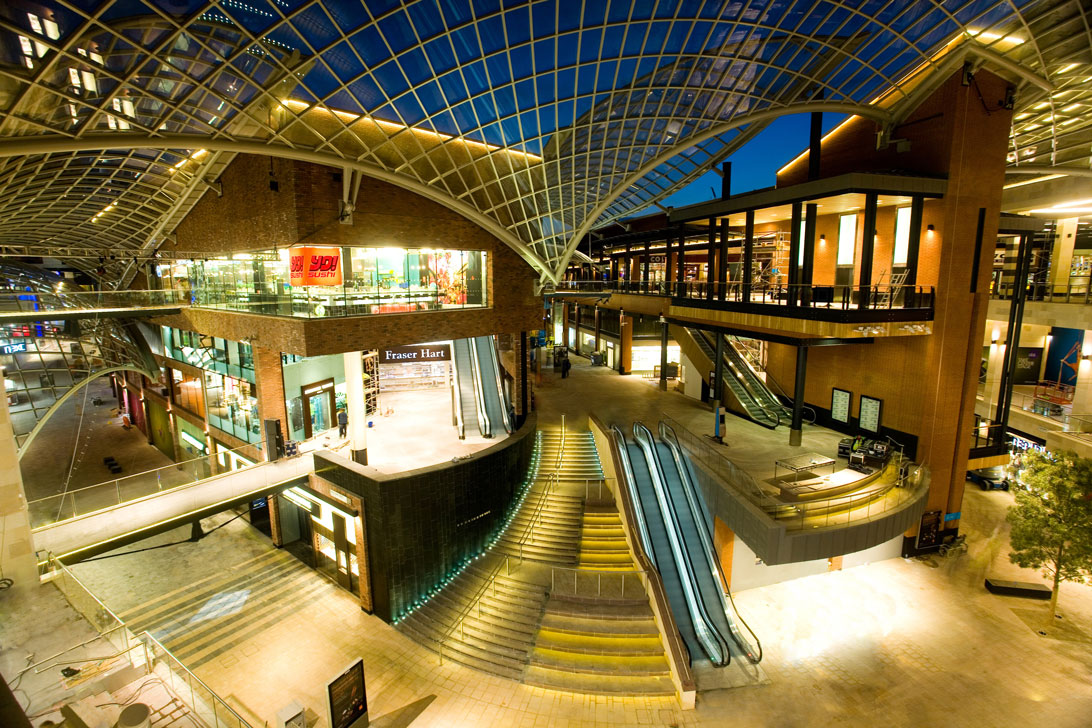
Eataly is to visit, to live and to understand. For you some pictures of my visit to Rome site. Enjoy.

This slideshow requires JavaScript.

Kitchen nano garden

I never thought of buying a Hyundai!

Trust me, if this beautiful concept will be soon available, I will be the first out of the store and I guess, the first of a long queue. 

This slideshow requires JavaScript.

I can already think about the same concept applied also to our business. Whatever will be an hotel, a restaurant or just a coffee shop, this could be a very revolutionary equipment that could solve lots of environmental and economic problems.

That’s for sure: I will surely add it to the ECOFFEE equipment list.

This cool concept could be the best way to sensibilities the people about sustainability and responsibility, especially young generation, enabling you to add a real vegetable garden to your apartment kitchen or coffee shop, without too much of trouble!

There’s anybody of Hyundai management reading this post? Please contact me, thanks!

Verso la sostenibilità: on-line il blog del Progetto ParCO2

Il Progetto ParCO2 nasce da un’idea di SERINT GROUP e DESITA. Sviluppata con l’apporto di L’UMANA DIMORA, è stato condiviso ed approvato da MEETING DI RIMINI, che vi partecipa a supporto nella fase di start-up, con l’intento di intraprendere un percorso verso la sostenibilità, al fine di diminuire gli impatti ambientali prodotti durante l’evento Meeting di Rimini, comunicando l’attenzione dell’organizzazione verso le tematiche ambientali, la responsabilità e la sostenibilità. Realizzare uno spazio permanentemente e polifunzionale che riporti alla realtà del Meeting ed il suo impegno a beneficio del territorio. Generare cultura ed incrementare l’offerta marketing offrendo contemporaneamente ai potenziali sponsor la possibilità di condividere la propria attenzione verso i temi trattati.

Maggiori informazioni su www.progettoparco2.it

Vi ricordo che sarò presente al Meeting di Rimini dal 19 al 25 agosto presso l’Area della Sostenibilità chiamata Meeting Hearth, sia con uno stand DESITA che con lo stand dedicato al Progetto PArCO2.

ECOFFEE produce le magliette per il Meeting di Rimini

Sono contento di annunciarvi che la linea di magliette eco-friendly di ECOFFEE di DESITA, con i suoi     eco-mindful message attached (di cui l’acronimo è riferito ad Emma, mia figlia), è stata scelta come partner da un cliente speciale: il Meeting di Rimini.

In occasione della prossima edizione del Meeting, che si terrà dal 19 al 25 agosto, ed in riferimento all’Area della Sostenibilità, denominata “Meeting Hearth“, abbiamo prodotto le Polo ufficiali per lo staff.

Le Polo, di color bianco, sono di cotone piquet organico al 100%, certificate OE100, realizzate stampando direttamente con inchiostri a base acqua.  I colori ad acqua presentano un’ ottima morbidezza sul tessuto e sono ideali per creare effetti di stampa più tenui e meno appariscenti. Gli inchiostri a base acqua hanno finitura opaca, quasi come se il colore avesse tinto il tessuto a differenza degli inchiostri plastisol che hanno finitura più lucida e superficie più plasticosa, del tutto impermeabile e non fanno traspirare il sudore. Inoltre il plastisol non asciuga in fase di stampa e quindi necessita assolutamente di una sorgente di calore a 150°C per polimerizzare, a differenza degli inchiostri ad acqua che possono asciugare a temperatura ambiente.

Come potete vedere, il logo è stato posto in corrispondenza del cuore, mentre la scritta staff, sulla schiena. Vi Piacciono? 

This slideshow requires JavaScript.

Vi ricordo che sarò presente sull’Area Meeting Hearth, con lo stand DESITA, sia come espositore, sia come co-ideatore assieme a Serint, della stessa Area e del “Progetto ParCO2“.

FOOD is all around: last day (part 3 of 3)

Third and last day in London.

Too bad, I must confess that I was really enjoying it, and JD was a very special host. We got on really well and share the same “passion” for great foodservice.

I was really happy when JD asked me to act as a photographer (my other passion) during our first morning meeting: ladies and gentlemen, welcome to Harrods huge distribution center in Thatcham, which hosts a staff canteen, that according to the management, has to be improved. 
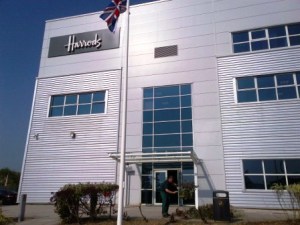
Food is all around: the need for a foodservice consultant is not limited only to the restaurant business, and this site was a great example.
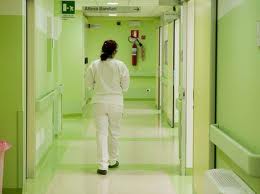
Harrods staff canteen in Thatcham showed a very large seating area, while the area dedicated to the self-service counter, to the food, is pretty oppressive. I found the green hospital-style colored walls and other details not that appropriate for the case. While I was absorbed with my photography task, JD asked my advice about how to create a more welcoming and functional environment.  Based both on my first impression and on my experience, I immediately suggested three changes.

The first one: change the color of the walls! Color is very important, leads to a better experience, especially in an environment where you eat and you are supposed to spend relaxing time each day.
The second change: switch the location of the dirty trays trolley from the entrance of the food area to the vending machines area or to a more secluded area. It is not really nice to be welcomed by dirty trays in an area where you are going to eat food.

Third change: the creation of a dedicated area for those people who wanted to eat home-made food. I noticed that there were several people eating meals from Tupperware, stored in the refrigerator and then heated in microwave ovens. That was a great example of culture and freedom of choice, but I found more appropriate not to mix the two different kind of meal consumption – homemade and purchased at the canteen – therefore I recommended to create a separate area for the homemade meals consumption.

JD agreed, sharing my insights with the canteen’s manager. It was very rewarding to have given the opportunity to give my contribution.
This experience once again confirmed my opinion about the need to create better canteens in Italian companies too, where often pasta is offered too much and the interior design is not studied or considered at all. It looks like eating in an appropriate and comfortable environment is not that important to the employers as it is for the employees productivity.

After the meeting at Harrods, it was time to thank JD for his hospitality. I made the most of what I saw, now being able to offer to my clients around the world, new and exciting ideas. We both got a lot out of our “exchange”.

I spent the last hours of the day at Westfield London, a huge shopping center where I enjoyed acting as a mystery shopper, checking the organization, service, value, hygiene and courtesy of the shopping center various eateries. I must admit I found some very interesting concepts, as the following photos. 

This slideshow requires JavaScript.

My London experience was positive: I learned a lot and this renewed my desire to bring back to Italy such professionalism and attention to details, skills that only an professional consultant has, moved our love for food, in all its forms and its implications.
Contrary to what you might think, Italy is a very difficult market, where professional foodservice consultants have to prove each and every day to entrepreneurs that there is a great difference between the service – and the consequence and outcome in terms of profit, provided by a professional and the service provided by an “extempore” professional. The two are very different.

I am really interested to know whether this kind of challenge does exist in other countries too, and how you deal with it as foodservice professional consultant. Please leave your comments. Thanks!
H&M in the quicksand – A very short pop-up story

When H&M unexpectedly opened a new store on the beach of Riccione (Rimini – Italy) I thought this was a smart marketing action. Then I started wondering if this could work.   Of course the store would have benefited from massive visibility, but was this enough?

The great adventure of the pop-up store only lasted one week. It seems that those in charge of developing the concept did not have all relevant licenses.

The Italian Guardia di Finanza sealed off the area and confiscated property.           Someone thinks H&M violated some provisions, while others state inspections were too severe. It seems evident to me that someone chose to turn a blind eye in order to authorize the opening of this beautiful pop-up store on the beach. 

I think that if some licenses were missing works could not have been authorized.  And I’m also convinced that if inspections were too severe the shop couldn’t have been inaugurated.

Do you want to know my opinion? I don’t care who is right or wrong, nor which business activities were damaged the most. What really infuriates me is that in order to place the new pop-up store several square metres of “dunes” were destroyed, thus damaging an enchanting protected area gathering fine sand and lush vegetation.

Just for another shop! And I’m saying this in a conflict of interest. This behaviour is really not acceptable, especially because H&M has always been involved in sustainability and conscious collection campaigns, we also spoke about.

I think everyone involved in this matter should deeply reflect on it. Don’t you think so?

FOOD is all around – second day with Coverpoint and Managing Director, Jonathan Doughty – (part 2 of 3)

6.30 am. Wake up call, shower then breakfast. Waiting for JD my thoughts were all about the reason I was there in England, about how I ended up in London and then back over now, in my last professional years. A long flashback. Maybe I just needed an Italian coffee, a good espresso, to be able to think more clearly. Actually, I was hungry. Yes, I was hungry to act, hungry to discover and learn new things. A consultant has that kind of very visceral curiosity towards their mission, especially in our field, because food is culture, art, research AND passion.

7.30 JD arrived. First customer, first meeting: The British Library. At the desk there was a badge waiting for me, another sign of Coverpoint’s team great organizational ability. Nothing is left to good luck with this company. A two-hours long meeting to dissect the unthinkable with divisional managers and representatives of partner companies who work at the British Library. Great teamwork. It showed the job Coverpoint does there is based on a fully confident business relationship between JD and his client, something which is very important and that I have personally experienced with my clients, especially with Saadeddin. It is all about trust, and how people respect you.

How long does it take to create a project such as the one at the British Library or such as the creation of food venues inside a shopping mall? Let me tell you: it takes a lot!            The context analysis, the customer analysis, demographics, research and comparison and buying habits are just some of many basic steps towards a winning proposal and concept.

The second meeting of the day: Cabot Circus, a big shopping centre in Bristol, an Old city of England famous for boats and railways. With the ambitious goal to reassess the concepts related to food, the meeting was there to challenge “is it possible to do better, and how?”. These are the issues the consultant gets excited about and gives his/her best. To analyze the present to predict the future, the consultant in this case also acts as a trendsetter.

Morley Stores was the last stop. We went to Elys, that’s located in Wimbledon and the leisure atmosphere,  the “I eat fast and go back to the game” concept could be deeply experienced, at least that was impression. To my disappointment I visited the department store. Everything looked old and not looked after, and for the first time since the beginning of my journey, I would have gladly added a touch of Italian design- made by DESITA, of course!

JD has presented a rather interesting, Coverpoint’ style, analysis: “Where are we now”, leaving the presentation of “Future Roadmap” to the next meeting. It was a pity the meeting ended so soon, ideas had just started to come to my mind.

A comment about my second day? Thumbs up!

Important clients, complex organizations that really care about the effective functioning of the area they devoted to food. I start thinking about Italy, with its incredible potential, which we often do not make the most of it, because of improvisation and of tight regulations. It is in a country such as Italy that FCSI, with its professional consultants, can really make an important difference to support the food retail industry with strategy and direction.

The day ended at a hotel restaurant, where I quickly had a mega cheeseburger and fries  too tired for a real dinner. End of second day.

Oliva e Marino – The pop-up store of Pavesi, Barilla.

It sometimes happens to find something new just around the corner.  Just think about Bottega di Oliva e Marino, Pavesi pop-up store that opened in Riccione on June 28.  At first glance, it seemed interesting to me for both its stylish design and brilliant business marketing strategy.

Everything revolves around “aperitivo”, the happy hour.
A very successful Italian format that is currently being copied everywhere else abroad.  But how did Pavesi pop-up store by Barilla impact Riccione?  Tourists certainly enjoy it because of its highly competitive promotional prices, but the managers of nearby restaurants and bathing establishments are far from being happy.

In fact, the pop-up store is situated just in front of two beach bars and next to a highly popular restaurant. But there is more.  It is located just in the heart of one of the most convenient paying car parks of the sea front, the best place for tourists to leave their car without worrying.  

Was local government good at promoting equality? What would have happened if the same proposal had been presented by an ordinary citizen rather than by Barilla?   Would the proposal have been welcomed?

I don’t think so.

FOOD is all around – three days in London with Jonathan Doughty, Managing Director of Coverpoint Foodservice Consultants – (part 1 of 3)

Food and foodservice? A perfect relationship – a foodservice consultant must take into account many things. What customers eat, the correct support provided by the right chair, the colour and presentation of the food, how to be enhance and not alter the ambience and lighting and how to provide a pleasant and empathetic welcome from the staff. We also have to carefully design balanced spaces, use appropriate furnishing to create the perfect atmosphere, giving substance to the initial idea, or better, to the finished concept.
I have always wondered whether it is really possible to split the relationship between food and the tools used in its processing, its creation, its packaging, its availability and what gives it a meaning and a key to its interpretation.

I have been working in the design concept field since 1997, and to me the word “food” has a very extensive and multi-faceted meaning, touching the highest peaks of the “philosophy of life” and the “pleasure of taste and sharing” to be transferred in design and in projects and finally, in emotions. The challenge is to be able to mix the tools and know- how to improve the work of what I call the “food master” (bartender, chef, sommelier, consultant, etc.) thus amplifying the pleasure of the guest, the foodies.

This must be why I loved the three days I was invited to spend in London together with Jonathan Doughty, Coverpoint Managing Director and FCSI EAME President.
Coverpoint offers highly professional advice in the foodservice sector, supporting its customers with a wide range of services, from consumer behavior trend analysis to location services. Coverpoint services are complementary to what I am actually offering with my company DESITA.

But how I ended up in London? At the end of March 2012 I was visiting Hostech 2102 in Istanbul, representing Italy at the FCSI EAME booth. During that event, I had the chance to meet Jonathan Doughty again, and it reminded me of the idea I had during our previous meeting at the Gulfood Dubai expo, I asked him whether it was possible to organize a visit to his company’s headquarter to watch him and his team at work. To me it was like going back to school and act as an “intern”, but to Jonathan my request had an all together different meaning: “You’ll come to work”.
JD agreed and this made me wonder a lot about the differences between the Italian entrepreneurial approach, sometimes so self-flattering, and the one of other countries, very often less formal and more professional.

On Monday, May 21st I was at Heathrow, where James, one of JD’s consultants, was waiting for me to drive me to Coverpoint’s headquarter. I did not know what to expect, but I was sure I was going to spend three days at their office. (Office? Coverpoint’s heart beats in a charming renovated 200 years old barn in the middle of the country!

Once I arrived at the headquarters, I was warmly welcomed by the Coverpoint team. I immediately felt at home, settling into such a professional “vision” and environment. It was there that my learning process began: I was invited to study some of their more interesting projects. Data is of primary importance to Coverpoint’s work: data collection, analysis, interviews with customers, best practices implementation. I could not believe I was allowed to see all that information, and time passed very quickly.

Between a chat and a coffee, I was handed a four-page detailed visit schedule. I was speechless: I was invited to follow Jonathan during his meetings. I became very excited by reading the name of the clients I was suppose to meet: The British Library, Cabot Circus, Harrods to name a few.
At the end of that exciting day, I had a delicious dinner together with Adam and Ian, JDs Senior Consutlants at The Royal Oak, where I had the chance to enjoy the atmosphere of the traditional British pub, which has a Michelin star!

When is a restaurant’s atmosphere good? It is when you do not feel out of place, when the environment seems familiar, but at the same time you are getting curious to discover each and every single location detail. You never get bored in a great restaurant.

At The Royal Oak we were immediately greeted by a beautiful girl in traditional uniform. We settled in the lounge for a cocktail – a beer of course, then went to have dinner in the main hall. The food was very good; Diver Caught Scottish Scallops with celeriac puree and Hazelnut Vinaigrette – 8oz Black Angus Sirloin Steak, “on the bone” Chips, Bone Marrow and Madeira Sauce and as a dessert Chocolate Fondant, Toffee Sauce, Almond Biscuit, Coffee Ice Cream. All beautifully prepared but in a relaxed and informal environment.

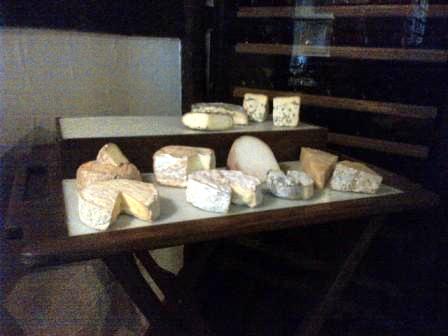
There was only one negative point for me. That was the cheese trolley behind us. Quite often, the air became unbreathable with the smell of cheese! I would highly recommend that the restaurant owners never leave cheese on a trolley for too long without some form of cover. It is not that beautiful to see and even less to feel and smell, but most of all it is not particularly hygienic. What would the HACCP manager say?

It was a very cheerful evening. And that was only my first day and the fun was yet to come … (to be continued)

What a good tasting packaging!

Some people have a lot of ideas. Inventor and chemical engineer David Edwards chronicles the ones he makes happen on his personal website—everything from text books hes written to new companies hes started.

In the past, he figured out a way to make and sell “breathable” food, but his latest idea, and the startup he founded to commercialize it, is one that actually may change the way we eat.

WikiCells is a form of edible packaging that will attempt to eliminate societys wasteful addiction to packaging—millions of tons worth end up in landfills each year, according to the EPA.

According to the new ventures website, the idea for WikiCells is rooted in the way nature has always delivered nutrients: in a digestible skin “held together by healthy ions like calcium.”

Apples, potatoes, tomatoes: they all have an edible exterior that protects the treat within. Even something that isnt exactly delicious—like a citrus peel—finds its way into the kitchen in the form of zest.”This soft skin may be comprised primarily of small particles of chocolate, dried fruit, nuts, seeds, or many other natural substances with delicious taste and often useful nutrients,” writes the WikiCells team.

“Inside the skin may be liquid fruit juice, or thick pudding.” So far Edwards and his collaborators—chief among them the industrial designer François Azambourg—have experimented with a gazpacho-stuffed tomato membrane, a wine-filled grape-like shell, and an orange juice-laden orb with a shell that tastes like, you guessed it, an orange.

Possibilities like an edible milk bottle or yogurt container are not out of the question. This summer WikiCells plans to market ice cream in an edible shell to a French audience—a high-tech version of something the Japanese have long enjoyed: ice cream-stuffed mochi.

via Packaging Never Tasted So Good: The Brave, New World of Edible Wrappers – Lifestyle – GOOD.