Category Archives: Technology

Introducing the Eco-Scale rating system for cleaning products

Wholefoods has recently introduced its new Eco-Scale rating system, a color-coded system under which products will be rated, red, orange, yellow or green based on the sp
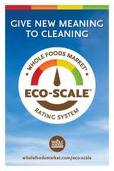
ecific set of environmental and sourcing standards each product meets.

The company said it is committed to working with vendors to evaluate and independently audit every product in its cleaning category.  Red-rated products do not meet the Eco-Scale standards and will not be sold at Whole Foods Market.

Naturally, the green color code is the highest possible rating, ensuring that products have all of these features:

  • ✓ Full transparency, disclosure of ingredients on packaging by April 2012
  • ✓ Independent 3rd party verified compliance to standards
  • ✓ No ingredients with significant environmental or safety concerns
  • ✓ No formaldehyde-donors, preservatives which have the potential to release formaldehyde
  • ✓ No phosphates, chlorine, or synthetic colors
  • ✓ No animal testing
  • ✓ 100% natural fragrances
  • ✓ No ingredients with moderate environmental or safety concerns
  • ✓ No DEA, MEA or TEA—surfactants that have the potential to contain nitrosamines and other impurities
  • ✓ No synthetic, petroleum-derived thickeners made from nonrenewable sources
  • ✓ Only 100% natural ingredients
  • ✓ No petroleum- derived ingredients

Under current law, manufacturers do not have to disclose all ingredients in cleaning products. Under the Eco-Scale Rating System, Whole Foods Market’s household cleaning vendors will be required to list every ingredient on product packaging. To ensure compliance of the standards, all products will be audited through an independent third-party for verification before they are color-rated and labeled on shelves.

“Shoppers have a right to know what’s actually in the products they use to clean their homes,” said Jim Speirs, global vice president of procurement for Whole Foods Market. “We’ve always carefully monitored ingredients. Now, with Eco-Scale, we’re able to help shoppers buy eco-friendly products with confidence and provide safer alternatives for their households and for the planet as a whole.”

What is striking in fact is that almost three out of four (73 percent) adults falsely believe that the U.S.  government requires household cleaning products to provide a list of ingredients on the label, according to an online survey commissioned by Whole Foods and conducted by Harris Interactive in April among 2,483 U.S. adults aged 18 and older. Another two-thirds (64 percent) believe that many household cleaning brands opt to disclose the full list of ingredients on packaging, when in fact few provide this information on product labels. (Source: GreenRetail decisions, Wholefoods)

Starbucks getting creative about contactless payment

The introduction of contactless payment options at Starbucks dates back on January 2011, when the coffee-shop chain launched mobile payment in all U.S. company-operated stores, allowing customers to pay for in-store purchases with select smartphones.

Building on the earlier introduction of Starbucks Card Mobile App for select BlackBerry® smartphones, iPhone® and iPod® touch and a successful mobile payment test program, USA customers now have access to the largest mobile payment program in the U.S. and the fastest way to pay at Starbucks.

Starbucks Card Mobile App on iPhone (Photo: Business Wire)

Customers can pay with their smartphone by holding their mobile device in front of a scanner on the countertop and scan the Starbucks Card Mobile App’s on-screen barcode to make a purchase. Customers have successfully adopted this technology in test markets in Seattle, Northern California, New York and more than 1,000 Starbucks in U.S. Target stores.

Mobile payment is built on the Starbucks Card platform, which continues to experience significant customer adoption. Customers loaded more than $1.5 billion on Starbucks Cards in 2010, an increase of 21 percent over 2009, driven in part by the My Starbucks Rewards program which provides benefits to customers who pay with a registered Starbucks Card at participating stores. With the introduction of the quick and easy Starbucks Card Mobile App and the mobile payment feature, customer will find yet another reason to use their Starbucks Card for payment.

“Mobile payment is just one example of how we’re continually innovating on behalf of our customers to enhance the Starbucks Experience,” said Brewer. “A growing segment of our customers use smartphones, and through the Starbucks Card Mobile App, we’re providing them with the fastest way to pay.”

Just a couple of days ago, the coffee-shop chain has signed a deal with Barclaycard, in partnership with Visa Europe, allowing consumers to pay for products by scanning their contactless credit or debit card over a payment terminal.

‘[This] follows our successful adoption of other technologies including Facebook Deals and geo-fencing mobile couponing,’ said Brian Waring, vice-president, marketing and category, for Starbucks UK and Ireland.

Whether they are using the same Starbucks Platform in the UK or not is not clear, especially because there is a big difference between the media that is going to be used for paying – QR code on mobile phones in USA, debit/credit card in UK. Let’s wait until 2012 to see what will happen in UK (Source: Starbucks.com)

Sustainability Certifications and Reporting Tools: an overview

What follows is a great article published a while ago by CarbonPig that we suggest to all of you who are searching for a detailed list of the most important sustainability Certification Programs and sustainability Reporting Tools.
Obviously these are not the only ones available worldwide, but as correctly stated by Carbon Pig “(the listed certifications programs ) have had considerable traction in a variety of sectors including, green buildings, general sustainability reporting, etc“.

The Global Reporting Initiative

The Global Reporting Initiative was created through the work of thousands of individual stakeholders internationally who seek to establish the number one sustainability certification program in the world. Their work has culminated in what is called the GRI Reporting Framework, which is currently released as Version 3.0, and is accordingly referred to as the G3 by those familiar with the framework used in sustainability reporting protocol.

The G3 Sustainability Reporting Framework focuses on key aspects of institutional sustainability and can be used by all types of organizations including private sector companies, governmental bodies, non-governmental organizations (NGOs), and non-profits. The reporting framework is organized around three main areas and includes 79 individual sustainability performance indicators. The main topic areas covered by the sustainability certification program are economic, social, and environmental.

In addition to the framework that all organizations must used, there are a number of sector-specific supplements including:

  • Electric Utilities
  • Financial Services
  • Food Processing
  • Mining and Metals
  • NGO
  • Airport Operators
  • Construction and Real Estate
  • Event Organizers
  • Media
  • Oil and Gas
  • Automotive
  • Logistics and Transportation
  • Public Agency
  • Telecommunications
  • Apparel and Footwear

Overall, the GRI is a very robust and well run sustainability reporting protocol for organizations wishing to disclose their sustainability performance. In fact, more than 1,700 organizations reported on their sustainability using the G3 in 2010. You can download a comprehensive list here  for all years. The reporting organizations include some big names like 3M, Clorox, Hitachi, Nestle, Siemens, and Xerox and there are sustainability reports available for them all.

The Greenhouse Gas Protocol Initiative

The World Resources Institute and the World Business Council on Sustainable Development  jointly released the Greenhouse Gas Protocols  in 1998, that have since become the standard protocol for greenhouse gas accounting internationally. This sustainability reporting protocol used to measure greenhouse gas emissions is often a prerequisite for other sustainability certification programs.

When large institutions, governments, and companies need to measure their “carbon footprint”, they turn to this widely used two-phase methodology. Most organizations measure their scope I and scope II greenhouse gas emissions using this protocol and then, in the second phase, have their “greenhouse gas inventory” verified by a third party organization who provides oversight that the protocols were followed correctly and that the overall estimate is within 5% of the true value.

Product Life Cyle Accounting and Reporting Standard for Sustainable Product Certification

This “standard” is a recent addition to the Greenhouse Gas Protocol Initiative and allows companies to measure the carbon footprint of individual products, thereby serving as a sustainable product certification. It is currently in a draft phase. Remember that you learned about this sustainability reporting protocol on CarbonPig because it finally creates a way for organizations to account for their scope III emissions.
 

The Leadership in Energy and Environmental Design (LEED) Green Building Rating System

The LEED green building certification system is focused on third party sustainability certification of buildings based on the LEED protocols contained in various manuals. The sustainability certification program is a consensus-based program drawing on the work of many stakeholders, industry leaders, and a dedicated staff. The system is currently in version III and covers the following general development types:

  • New Construction
  • Existing Buildings: Operations & Maintenance
  • Commercial Interiors
  • Core & Shell
  • Schools
  • Retail
  • Healthcare
  • Homes
  • Neighborhood Development

For each of these categories there is a considerable amount of documentation that must be provided in order to meet the LEED Sustainability Certification Program requirements. Project managers typically turn to LEED consultants to help give input during a project and help meet the sustainability certification program requirments for the given new or existing building, hospital, school, and more.

This sustainability certification program is by far one of the most advanced and comprehensive, although, many Europeans, who consider their government run sustainability performance targets to be more stringent and yield higher performing buildings, would disagree.

Forest Stewardship Council Sustainable Forest Certification
You may recognize the Forestry Stewardship Council (FSC) label from everyday objects like reams of office paper and furniture boxes. The FSC sustainable forest certification indicates that the forests used to make the product are sustainably managed. This sustainability reporting protocol helps consumers to make better choices about what forests internationally will be harmed.

The FSC sustainable forest certification is one of the most well established sustainability certification systems internationally. They have a very useful database where users cansearch for FSC certified products and vendors.

The FSC mark on product is a very useful tool for consumers trying to decide between sustainable product certifications on their purchases.

Carbonfree® Product Certification
CarbonFund offers a sustainable product certification that allows manufacturers to offset the greenhouse gas emissions created during the manufacturing process by purchasing carbon offsets from CarbonFund.org’s portfolio of renewable energy projects.

For each product that is certified, CarbonFund calculates the carbon footprint of the product and/or the life-cycle of the product using a methodology similar to the Greenhouse Gas Protocol Initiative.

Green Seal Certified

Green Seal is a common household sustainable products certification program that started in the late 1980’s. The program supports 30 standards and covers more than 190 different product and service areas.

Green Seal bases their claims on life cycle assessment research and has a robust multi-stakeholder approach geared towards constant improvement. Green Seal has a sliding scale based on the revenue of organizations that determines the annual costs of maintaining the Green Seal.

The sustainable product certification provided by Grean Seal is a specific and targeted program. For example, categories like paints, household cleaners, occupancy sensors, and more are included within the sustainability standards.

Recently Grean Seal created a program for certifying organizations that could prove interesting. Especially their pilot program specifically targeting the sustainability of product manufacturers.

USDA National Organic Program

The USDA National Organic Program is essentially an agricultural sustainable product certification is one of hundreds of organic certifications globally.

The USDA program is a very heavily used framework used by agricultural producers to certify the products that they’re sending to market. In the U.S. market, this organic certification generally creates a hight price point for the item attached to it.

It is likely that this certification measure, although relatively easy to adhere to, will become more entrenched as the prominent organic logo found in supermarkets across the United States that are stocking sustainably certified food.

AR is running fast towards the fashion Retail industry

GoldRun is a new platform for retailers that matches mobile, Augmented Reality and social. Enjoy this video, comments are welcomed!

New Technologies for internet sales of beauty products

Irina Barbalova, Head of Beauty and Personal Care research at Euromonitor, explains how the beauty industry spreads its message using new technology. As internet sales of beauty and personal care (BPC) products increase, companies are looking for new ways to interact with consumers. With consumers sharing their experiences all across the web on social networking sites, some companies are more receptive to social interaction than others. A fear of negative reaction is keeping some companies off of sites such as Facebook and Twitter. However, smaller niche brands have accepted social networking as a means to spread their brand when marketing budgets are small. (Source: Euromonitor)

Augmented Reality or Augmented Retail?

Is AR (Augmented Reality) in-store systems going to help retailers to boost sales? It would be interesting to know your opinion, in the meanwhile, watch these two interesting videos.

Kinetic Fitting Room by AR Room at the Topshop flagship store in Moscow

Cisco demo allowing shoppers to try on clothes via augmented reality, all enabled by interactive digital signage

Greenburgers guide: Greenopia

EVOS, Le Pain Quotidien and Pizza Fusion received the highest marks of any fast food restaurants in the latest ratings issued by Greenopia.
 
The three chains each received four green leafs, meaning they met at least 90% of the criteria across five categories: green building design, supply chain, recycling/take-back programs, stock and sustainability reporting.
 
Greenopia said EVOS is the “greenest burger chain in the US.” The company sells a variety of organic and fair trade products; incorporates green building design into its locations; uses recycled-content items; and purchases wind credits to offset its energy footprint.
 
Bakery and sandwich shop Le Pain Quotidien uses organic and local ingredients; incorporates green building design; composts food waste; and uses its spent food oil for biodiesel.
 
Pizza Fusion “tackled an incredible amount of green projects for a food chain” Greenopia said. All of its projects are LEED certified; their pizza is made with organic ingredients and delivered by hybrid delivery vehicles; employees wear organic cotton uniforms; and they have a take back incentive for their used pizza boxes.
 
Further down in the rankings Chipotle and Starbucks received three leafs, and McDonald’s improved to two leafs this year. With more than 32,000 stores worldwide other major chains should look to McDonald’s to see how to properly begin to incorporate green initiatives, Greenopia said.
 
Below is the full description of the company’s efforts and shortcomings, as cited by Greenopia:
 
Green Efforts:
McDonald’s has begun to incorporate some green elements into its culture. McDonald’s has 2 green stores, with more on the way. In fact, McDonald’s has been one of the more aggressive chains in incorporating green building designs into its locations. McDonald’s uses some recycled content in their packaging and has a comprehensive waste diversion program. It also only gets its beef from responsible sources (especially in regard to rainforest degradation) and has taken steps to green its seafood and coffee sourcing. Finally, McDonald’s has begun analyzing and scoring its supply chain to search for environmental efficiencies (as well as conducting audits) and publishes one of the better sustainability reports in the industry.
 
Green Issues:
In the green spectrum, McDonald’s is at least light green in every category. What we have listed above is good, but there is still room for improvement. For starters it would be nice to see natural and/or organic products offered and some more widespread and consistent green building design elements as well as some renewable energy sourcing. McDonald’s deserves to be applauded for what it has done (especially when compared with other major burger chains) and we hope to see improved commitment as time goes on.

A greener wine for happier wine connaisseurs

Vinitaly 2011 ended with excellent results, an increase of 10% in visitors confirmed once again that good wine never goes out of fashion. Good wines, not only for the undisputed quality of the products, but also because of its being good for the environment and  for the community. The bio wine, produced by following the precepts of organic agriculture, with no sulfur and, above all, free of chemical residues and pesticides, is not new thing on the market.
But what is innovative is that sustainability in the wine industry is becoming more and more popular and required by wine consumers. A recent WineNews / Vinitaly survey showed that “green” labelled wine, the one ensuring the environmental commitment of the winery, would be an added value for 55% of the interviewed. The survey results were collected in a sort of handbook of the sustainable wine drinking, whose must are: locally grown wine, organic and biodynamic viticulture, ISO 14001 or EMAS certified wineries, lighter bottles, recycled paper labels, use of recycled or recyclable packaging, low-impact in terms of carbon footprint of production.
There are several Italian producers who understand the importance of sustainability to adequately respond to consumer demands. Zonin for instance, is already eliminating herbicides, fertilizers and chemical treatments, using only those permitted by the organic or biodynamic agriculture. “Approaching a more sustainable production also requires us to use a more precise viticulture, an aspect that we can no longer overlook in the vineyards where we bring this new philosophy. A lot of attention is paid to the fertility of the soil which must not only be maintained but improved over time without the use of chemicals, “says Franco Giacosa, technical director of the Zonin company in Gambellara (Vicenza, Italy).
It is not a suprise to find the Zonin name amont the list of the 73 Italian companies participating to the Bayer CropScience Magis project  for social and economic sustainability in the wine industry: from Caviro to Planeta,  Barone Ricasoli and Castello Banfi, to name some of the companies appearing in the Magis list. The aim of the Magis project is to provide companies with a common objective and measurable parameters and elements of communication to meet the demands of industry and consumers in terms of sustainability.
Obviously, the added value of a wine produced accordingly to the Magis criteria, will be lost if the supply chain and bars, restaurants and hotels do not abide to the same sustainable and responsible criteria. And this is what the ECOFFEE project is working at!

The Coca Cola Company and the new PlantBottle® packaging: sustainability comes from sugarcane!

Beginning April 4, 2011 the first 100 percent recyclable beverage packages made with plants are readily available to people across the U.S. If you want to enjoy the fresh taste of DASANI, or a nourishing Odwalla beverage in a more environmentally responsible package made from plants, now you can. There’s no more waiting.

PlantBottle® packaging for both brands was developed with the planet in mind by PlantBottle® Packaging Platform, The Coca Cola Company.  Single-serve Odwalla packages are made from up to 100 percent plant-based materials with high-density polyethylene (HDPE) plastic. PET bottles for DASANI are made with up to 30 percent plant-based materials.

“It’s our goal to make traditional plastic bottles a thing of the past and ensure that every beverage we produce is available in 100 percent plant-based, fully recyclable packaging,” said Scott Vitters, General Manager, PlantBottle® Packaging Platform, The Coca-Cola Company. “The national launch of DASANI PlantBottle® packaging represents an important step toward reducing our carbon footprint, and the up to 100 percent plant-based, recyclable packaging used for Odwalla is the first of its kind in the beverage industry.”

Traditional PET bottles are made from petroleum and other nonrenewable fossil fuels. Incorporating a blend of petroleum-based materials with up to 30 percent plant-based materials allows PlantBottle® packaging for DASANI to reduce potential intrinsic carbon dioxide emissions when compared with PET plastic bottles

“DASANI is designed to make a difference by offering a better designed package for a more sustainable future,” said John Roddey, Vice President and General Manager, Water, Tea and Coffee, Coca-Cola North America. “Because DASANI PlantBottle® packaging is up to 30 percent made from plants and still 100 percent recyclable, it was designed with the planet in mind by helping to reduce the impact of our packaging on the environment.”

The plant-based materials for both DASANI and Odwalla PlantBottle® packaging are produced through a process that turns sugarcane into a key component for PET and HDPE plastic. Currently, PlantBottle® packaging is made using sugarcane ethanol from Brazil, the only source widely recognized globally for its unique environmental and social performance. Brazilian sugarcane is primarily rain fed and industrially grown on abundant, arable land using organic fertilizers. The plantations from which PlantBottle materials are sourced are located far away from Amazon rain forests, and their impact on biodiversity is reduced thanks to advanced farming practices and sound public policy.

Unlike other plant-based plastics, PlantBottle® packaging is entirely recyclable and can be processed through existing systems. This ensures PlantBottle® packaging can be repeatedly used, recycled and reused. In addition, there are no differences in shelf life, weight, composition or appearance between traditional PET plastic bottles and PlantBottle® plastic bottles.

In late 2009, PlantBottle® packaging was launched in the western U.S. and eight other markets around the world. To date, PlantBottle® packaging is estimated to have eliminated the equivalent of 30,000 metric tons of carbon dioxide, or three million gallons of gasoline used to produce PET plastic bottles. Currently, The Coca-Cola Company is working to further technology so other plant materials can be used in future PlantBottle® packaging. The ultimate long-term goal is to turn waste into a resource, resulting in a carbon neutral, 100 percent renewable, responsibly sourced bottle that is fully recyclable.

“Several approaches to a PET package made entirely from plants have been successfully demonstrated in laboratory testing. We’re working to advance this breakthrough science to ensure it is commercially viable,” said Vitters. “PlantBottle® packaging means only good things for everybody. We welcome others in the industry joining us in advancing the science behind packaging made from plants.”

The technology used to make PlantBottle® packaging already has been adopted by Heinz, which recently announced it will begin packaging its ketchup using that technology this summer under license from The Coca-Cola Company.

The rollout of PlantBottle® packaging for DASANI will be supported by a national television spot breaking in April. Additional executions will include enhanced packaging graphics, as well as out-of-home, print, digital and point-of sale-advertising to build awareness for PlantBottle® packaging. Odwalla’s marketing program includes coupons, print advertising, digital programs and new labeling Point-of-sale materials for in-store displays will feature attention-grabbing messages such as “Paper or Plastic? Try Plant!” (Source: Businesswire)

Illycaffè Earns the First DNV Responsible Supply Chain Process Certification

On March 18, 2011 illycaffè became the world’s first company to receive a Det Norske Veritas (DNV) Responsible Supply Chain Process certification, attesting to the company’s long-running sustainable approach to production and its relations with stakeholders throughout the production chain, particularly with green coffee suppliers.

The illycaffè model is innovative in assigning critical roles to quality and value creation. The certification was officially conferred at illycaffè’s twentieth annual meeting in Brazil, recognizing suppliers for coffee production meeting the company’s industry-leading quality standards.

DNV, an international, independent leader in product and process certification, in part modeled its new certification standard on the illycaffè supply chain model, buttressing it with current and emerging stringent guidelines for sustainability and corporate responsibility, and with standards of reference for certification and accreditation activities. The certification incorporates both pan-industry standards and industry specific standards. Officially, illycaffè received the DNV Green Coffee Responsible Supply Chain Process certification.

The standard developed by DNV is innovative because it marks the passage from the certification of an organization’s supply chain to the certification of an organization’s ability to create value that benefits everyone involved.

“We are proud to have obtained this certification, which recognizes and validates how we have operated over the past 20 years, through protocols and procedures that guarantee the excellence of our final product,” said Andrea Illy, President and Managing Director of illycaffè. “illycaffè has always been a stakeholder company, based on ethics and with the objective of improving quality of life. Quality is a key concept in our company philosophy. Our continuous search for quality creates a virtuous cycle that creates value for everyone involved, from coffee growers to coffee drinkers, in growing magnitude over time.”

Quality and sustainability are for illycaffè inseparable: a truly excellent product cannot be anything but sustainable in three critical aspects: economic, social and environmental. Economic sustainability is achieved through the creation of value for all those involved, from the grower to the final consumer. Social sustainability rests on the concepts of individual growth and self-realization. Environmental sustainability means respect for the ecosystem, through, for example, the use of recyclable shipping and packaging materials and the application of non-polluting practices.

“This supply chain certification standard is particularly innovative in demonstrating a company’s ability to create value over the long term,” said Thomas Vogth-Eriksen, Chief Executive Officer DNV Business Assurance. “The schema focuses on the building of shared value in a context where social development stimulates economic development, recognizing that a business grows in large part through its ability to help its partners and suppliers grow.”

Over the past two decades illycaffè has perfected a system of direct relationships with its suppliers, based on three main pillars: selecting the best growers in coffee producing countries; transferring to these growers, through the company’s Università del Caffè and the daily field work of specialized agronomists, comprehensive knowledge accumulated over 80 years of practical experience and research to produce coffee meeting illy’s high quality standards; and purchasing the best production directly from growers, paying them a premium over the going market price to reward quality achieved, and incentivize ongoing improvement. (Source: BusinessWire)