Category Archives: sustainability

Seventeen Retailers awarded World’s Most Ethical Companies

The Ethisphere Institute, an international think-tank dedicated to the creation, advancement and sharing of best practices in business ethics, corporate social responsibility, anti-corruption and sustainability, named 145 companies to its sixth annual selection of the World’s Most Ethical (WME) Companies, 17 of which are retailers.world-most-ethical companies

In the retail food stores category are Safeway, Wegmans, Whole Foods Market, SONAE of Portugal, Kesko of Finland and the U.K.’s The Co-operative Group. Named in the general retail category are Costco, Target and the U.K.’s Marks and Spencer. In the specialty retail category are Best Buy, OfficeMax, Petco and Ten Thousand Villages, and in the apparel category Gap, Patagonia, Timberland and Comme Il Fau of Israel were recognized.

This year’s list covers more than three dozen industries, from aerospace to wind power, with 43 of the WME winners headquartered outside the U.S. Each 2012 honoree was chosen for promoting ethical business standards and practices by exceeding legal minimums for compliance, introducing innovative ideas that benefit the public and forcing their competitors to follow suit, according to Ethisphere Institute.

They demonstrate how corporate citizenship is undoubtedly tied to the success of a company’s brand and bottom line. “Each year the competition for World’s Most Ethical Companies intensifies as the number of nominations submitted for consideration grows,” said Alex Brigham, executive director of Ethisphere.

“This year’s winners know that a strong ethics program is a key component to a successful business model, and they continue to scrutinize their ethical standards to keep up with an ever-changing regulatory environment. Corporate ethics has become much more important globally, as well, and that is reflected in the truly global nature of this year’s honorees.”

Twenty-three companies have been honored each of the six years the WME has been awarded, including Patagonia and Starbucks. The evaluation and selection process for the WME Companies is based on a proprietary rating system, the corporate Ethics Quotient, consisting of five core categories — Ethics and Compliance Program (25 percent), Reputation, Leadership and Innovation (20 percent), Governance (10 percent), Corporate Citizenship and Responsibility (25 percent) and Culture of Ethics (20 percent). New York City-based Ethisphere Institute is dedicated to the creation, advancement and sharing of best practices in business ethics, corporate social responsibility, anti-corruption and sustainability.

via Seventeen Retailers Recognized as the World’s Most Ethical Companies – Green Retail Decisions.

Now available for purchase on selected stores in Italy and
on our Facebook store!

We were amazed by the final result – and even though these ECOFFEE tShirts were meant to be a concept, we received so many requests from our customers and supporters so that we were “compelled” to create a limited edition, capsule collection to be sold in selected stores and on our Facebook store.

T-shirts are available in khaki and brown colors for both male and female sizes. We also printed a very small quantity on yellow t-shirts, just for kids!

This slideshow requires JavaScript.

As we previously mentioned, for each t-shirt sale we will proceed 1 euro to  GreenAdsBlue.org Foundation, thus supporting  water sanitation projects in 10 Masai villages.

And we are glad we decided to do that!
Hurry up or you will miss the opportunity to buy one (or more) of these unique ECOFFEE tShirts!

How to make your hotel greener: 40 easy steps to follow

Hotel Management Asia recently published a list supplied by Pineapple Hospitality we found really interesting and useful if you aim to make your hotel a greener one.green_hotel_image

1. Programmable and digital control of your HVAC systems: Use electronic thermostats in guestrooms with pre-set settings to minimize energy consumption.

2. Key Card Energy Management System turn off lights when guests are not in room.

3. A linen and towel reuse program is a must.

4. Consider either Organic Cotton Linens or Linens made with Tencel+Plus™

5. Ozone laundry systems reduce the Water, Energy and Chemicals used by the wash.

6. Advance Laundry Solutions also has new drying technology that reduces energy consumption by up to 90%, yet requires no vent and extends textile life.

7. In-room recycling.

8. Recycling containers in all public areas.

9. Use compact florescent light (CFL) bulbs and energy-saving lighting fixtures

10. Install motion sensor-activated lights in areas that are infrequently used.

11. Use natural light as much as possible in common areas, restaurants and meeting rooms. Consider changing window coverings or installing skylights to improve to reduce artificial lighting.

12. “Green roofs” create energy savings by acting as super insulators, keeping buildings warm in the winter and cool in the summer. They also serve as a storm water management systems, catching pollutants as they drain off the roofs.

13. If not plants, how about installing solar panels on your roof?

14. Improve window and door seals. You will save on heating and cooling costs, reduce noise levels and decrease dust circulation.

15. Improve air quality by circulating outside air into guestrooms.

16. Identify something that is being discarded and find re-use for that item – such as reusing old tablecloths to make napkins.

17. Turn off all lighting/equipment/computers when not in use.

18. Make guest registration paperless.

19. Scan and email instead of fax.

20. When you do need to print, use recycled paper, soy-based inks and print double-sided.

21. Biodegradable 100% recycled room keys.

22. Use biodegradable and all-natural bathroom amenities, such as soaps, lotions, shampoos and conditioners.

23. Use bathroom amenity dispensers rather than individually packaged amenities.

24. Buy amenities, food and cleaning products in bulk to reduce waste and transportation costs.

25. 1.6 gallon per flush toilets installed in all rooms and guest areas.

26. Low-flow faucet aerators installed throughout the building and in all guestrooms.

27. Use of environmentally friendly (low VOC) paints.

28. Check with your pest management company to ensure use of integrated pest management (IPM) products and policies that are environmentally friendly and reduce the use of chemicals.

29. Use groundcover and drought-resistant plants to reduce amount of mow-able grass on your properties.

30. Go Smoke-Free!

31. Serve meals buffet style to reduce packaging and waste.

32. Use electric buffet warmers rather than canned fuels.

33. Serve water by each guest’s request rather than pre-pouring.

34. Stop using plastic water bottles.

35. Offer guests bicycles for short trips instead of driving.

36. Consider hybrid or electric vehicles for your fleet.

37. Used recycled rubber for the cardio room floor, or recycled tiles for pool floors.

38. Upcycle or recycle items you no longer need or use for their original purpose – such as in-room furnishings.

39. Give leftover food and/or amenities to charities.

40. Plant a garden and harvest organically-grown vegetables for your restaurant.

This is a a very Good and Generous Pop-Up store!

Chocolatier Anthon Berg recently enabled customers to pay with a good deed, rather than cash, at a pop-up location called The Generous Store.

Conceived by ad agency Robert/Boison & Like-minded, the project featured a temporary outlet in Denmark – open for one day only – which labeled each of its products with a task the consumer must perform in order to ‘buy’ the chocolate.

Designed to spread generosity, the tasks typically included a good deed to someone else, such as ‘Serve breakfast in bed to your loved one’ or ‘Help clean a friend’s house’.
Cashiers were replaced by staff carrying iPads, where chocolate-buyers could log into their Facebook accounts and pledge to carry out the favor via a branded post on their wall.

Anthon Berg was able to view the results of the promises when visitors to the store then posted pictures and comments on the company Facebook Page. The video below features footage from the pop-up shop:

The Generous Store’s innovative payment system, while only employed for one day, helped to portray Anthon Berg as a generous and socially-minded brand. An idea to adapt for your own projects, possibly over a longer period of time or in conjunction with a pay-what-you-want pricing system?

via Pop-up store sells chocolate for good deeds, not money | Springwise.

At Babochki Anticafé, patrons pay by the minute

At Babochki Anticafé consumers pay nothing for their refreshments. Instead, they arebabochki anticafe 1 charged by the minute for the time they spend there.

The Concept

The concept is quite simple yet striking: customers pay one ruble and 50 kopecks for each minute they stay. Drinks and snacks, on the other hand, are free.

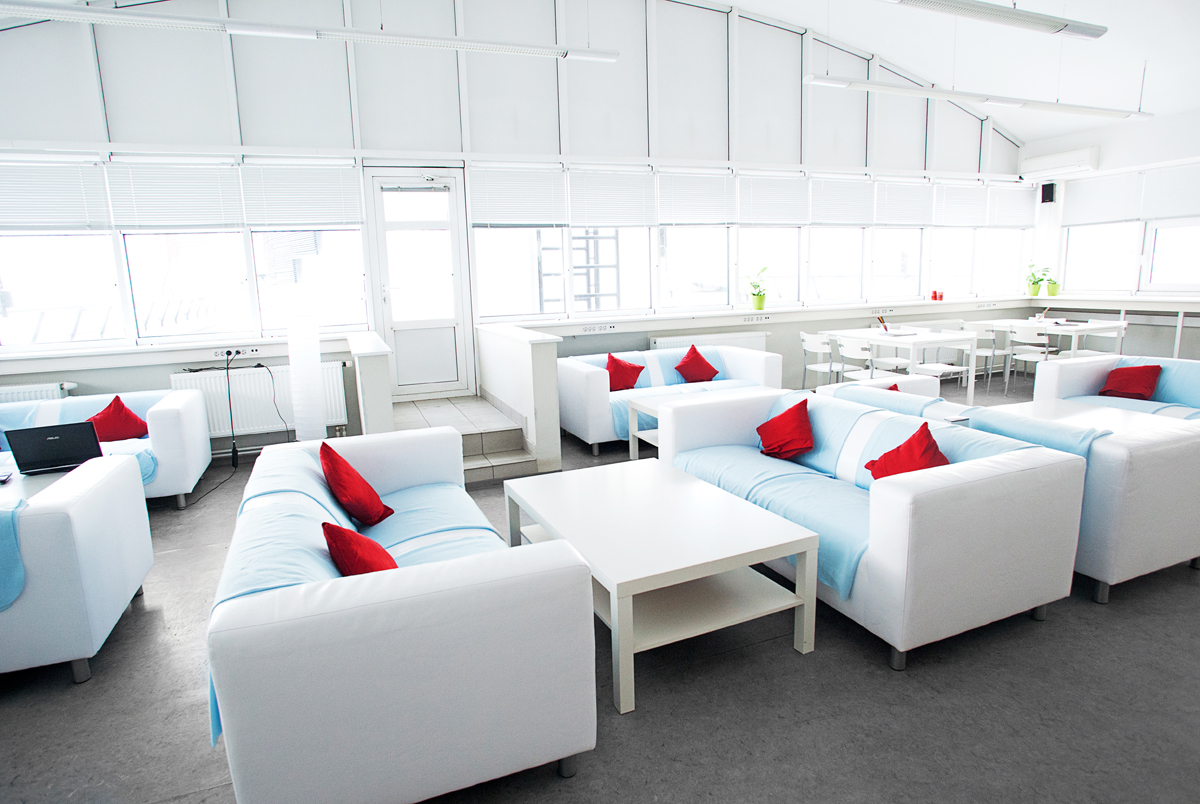
Aiming to create a space where consumers can relax and pursue their favorite diversions, the venue offers tea, coffee and desserts at no charge, and patrons can bring their own refreshments as well. An assortment of board games are on hand for entertainment, meanwhile, as are Xbox games, wifi and a cinema hall.

As in our ECOFFEE’s projects, the café (or Anticafé) has been designed as a place where conversation is central and where people can meet and spend time together – a place where people pay for entertaining themselves.

via Free food and drinks at Moscow café, where patrons pay by the minute | Springwise.

Marks & Spencer Opens Sustainable Learning Store in India – Green Retail Decisions

Marks & Spencer (M&S) opened its first high street (main street) sustainable learning store in India at South Extension Market in Delhi – as part of the company’s drive to become the world’s most sustainable major retailer by 2015.

The three-floor, 20,000 square foot store hosts a range of sustainable construction and design features to reduce energy usage and waste, according to a company statement. The store will provide M&S with valuable insight into sustainable building practices in India, which it will use to support future projects in the country.

The store is one of only a few retail outlets in India to build to American standards: it has applied for a Gold LEED* rating, which recognizes its sustainable features including:

Heat transmitting glass, helping to maintain in-store temperatures and cut UV ray penetration by 90 percent

  • Solar reflective tiles that keep the store cool
  • Use of ENERGY STAR certified equipment
  • Energy meters to monitor the store’s energy performance
  • Rain water harvesting
  • Dedicated recycling bins
  • The use of rapidly renewable raw materials, such as engineered wood
  • Excellent public transport links and reserved parking spaces for car pools

“We’re delighted to open our new store at Delhi’s premier shopping destination,” said Yogesh Yadav, M&S Store Manager at South Extension Market. “It’s a pleasure to welcome customers across Delhi to our first sustainable high street store, which not only helps the environment but also provides us with invaluable learnings as we continue to build our presence in India.”

M&S has committed to opening two new sustainable learning stores in the UK each as a part of its “Plan A,” M&S’ environmental and ethical program, launched in 2007 and extended in March 2010. M&S opened its first sustainable learning store in Sheffield in April 2011, followed by its Stratford City store in London in September 2011. Plan A takes a holistic approach to sustainability focusing on involving customers, involving all areas of the business and tackling issues such as climate change, waste, raw materials, health and being a fair partner.

In November 2011, M&S opened its first international sustainable learning store at Market City Mall in Bangalore. The 20,000 square-foot clothing, home and gifts store features energy efficient lighting, using 15 per cent less energy, energy efficient air conditioning, water saving technology and high levels of construction waste has been recycled. The store is aiming for a LEED rating of Silver.

Marks & Spencer opened its first store in India in 2001 and in April 2008 signed a Joint Venture with Reliance Retail to form Marks & Spencer Reliance India Pvt Ltd. M&S now has 25 stores located in Delhi, Gurgaon, Noida, Amritsar, Mumbai, Pune, Kolkata, Bangalore, Chennai and Hyderabad.

via Marks & Spencer Opens Sustainable Learning Store in India – Green Retail Decisions.

Tesco and RSPB to protect rainforests around the world

UK retailer Tesco has formed a partnership with Europe’s largest wildlife conservation charity – the Royal Society for the Protection of Birds (RSPB) – that aims to protect rainforests around the world.

In addition to raising funds, the “Together For Trees” campaign includes a competition to identify a “Rainforest Reporter,” who will travel to one of the projects in the RSPB’s rainforest program and experience first-hand the efforts to slow deforestation.

Together For Trees aims to raise over £1million for the RSPB in its first year. Every time a Tesco customer brings in a re-usable shopping bag, he or she will be able to donate the vouchers or points Tesco awards through its green Clubcard membership. Additionally, customers have the option to donate cash, and Tesco will contribute £75,000 from the sale of its new Together For Trees reusable bags.

Funds raised by the partnership will support conservation work such as the replanting of native trees in areas damaged by illegal logging, providing equipment for researchers and conservationists, and helping local, forest-dependent people to improve their livelihoods in a sustainable way.

“Our customers will trust this scheme because it brings together the UK’s most popular retailer with the UK’s most popular conservation organization,” said David North, Tesco UK Corporate Affairs Director.

The money raised by Together For Trees will be spent on the RSPB’s rainforest projects across the world, including Harapan Rainforest in Indonesia, Gola Rainforest in West Africa and Centre Hills National Park in Montserrat, a UK Overseas Territory in the West Indies. Rainforests such as these are home to more than two thirds of the planet’s land-based creatures, three quarters of all endangered bird species and have more than one billion of the world’s poorest people depending on them to survive.

In the search for the Rainforest Reporter, Together for Trees has partnered with Amazon explorer and European Adventurer of the Year, Ed Stafford. (Stafford participated in a live web chat Thursday morning, hosted by The Guardian.) People can apply to be the Rainforest Reporter on the Together for Trees website.

Tesco has set a goal to become a zero carbon business by 2050. In 2011, the Carbon Disclosure Project named Tesco the top retailer in the world for its efforts in tackling climate change. However, last month, Tesco abandoned its industry leading effort to place carbon labels on all of its products

via Tesco Raises Funds for RSPB, Opens Competition for ‘Rainforest Reporter’ | Sustainable Brands.

A more natural Coles for healthier consumers

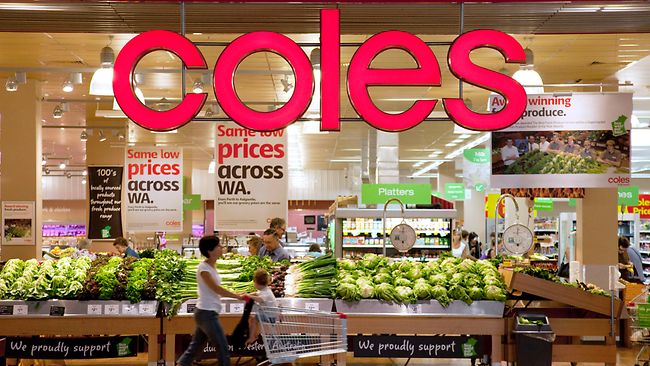
Despite extensive research conducted by the Food Standards Australia proving there are no adverse affects to consuming products with added MSG (monosodium glutamate) and artificial colourings, Coles has removed both ingredients in direct response to consumer concerns.

Lydia Buchtmann, communication adviser at Food Standards Australia, told FoodNavigator-Asia that the government food regulator has conducted “rigorous safety reviews of MSG and colours showing that they are safe for the general population.”

She added that it is possible a few consumers may experience intolerances but that they would not be life threatening like major allergies.

The retail giant’s private label range is now entirely free from artificial colours and MSG, following a five-year project to reformulate all of its own food and beverage brands.

‘Listening to our consumers’
“Our customers are clearly concerned by food additives and the effect they believe they have on their health. A significant number have indicated that they or their children have experienced reactions to artificial colours and MSG,” Jackie Healing, quality manager for Coles said.

This move is simply a reaction to this, Healing added.

The supermarket noted that research showed 91% of customers were worried about consuming products with added MSG and artificial colours, with 76% avoiding such products.

Vanessa Walles, marketing manager at natural ingredients supplier Chr Hansen Australia, said “Coles are being pro-active by taking this stance, it is not because they have to,” and consumers will appreciate this.“It certainly sends a very positive message that Coles is listening to consumer needs and moving with the market expectation of natural colours,” Walles said.

Natural moves
There are no laws against the use of MSG and artificial colourings in food and beverage products in Australia.

Food manufacturers are just required to label a food when MSG is added, either by name or by its food additive code number 621. Walles noted however, that consumer pressure fuelled by media focus on artificial colours and MSG has created a market demand for products free from these additives.

“Natural is the way the colours market is moving”, Walles said.

Add to this, the Southampton Six ruling in the EU where manufacturers using artificial colours have to provide the warning label, ‘may have an adverse effect on activity and attention in children’, and there is a burgeoning pressure towards natural products, she said.

Similarly Aldi’s removal of artificial colours may have been an influencing factor, she added.

“Many branded products have already made the switch from artificial to natural colours, however there are still many products to follow suit,” Walles said.

via Coles ‘goes natural’ for consumers.

Leadership and Innovation in Retail Sustainability: a Research

“As one of the leading industries to embrace sustainability, it is becoming a core consideration for the retail industry,” said Adam Siegel, RILA vice president of sustainability and retail operations. “Retailers are working to incorporate sustainability into their strategy, operations, workforce engagement, and connection to consumers and communities. This report is a first look at the broader industry’s accomplishments, challenges, and future directions. It lays a foundation to determine where we can go from here.”

The following are four key trends identified in the report.

Retailers are:

  • Working across sectors to achieve sustainability goals. Because expertise is not yet available within their respective organizations, retailers are reaching out to nonprofits, academics, and governments, as well as suppliers, consumers and investors to accelerate sustainable innovation.
  • Turning from sustainability as a cost- and risk-reduction measure to an opportunity for business growth. Retailers leading the sustainability charge recognize that the benefits extend well beyond achieving business efficiencies. Sustainability programs are increasingly viewed as a source of innovation and differentiation and a platform for new product and market development.
  • Developing systems for continuous improvement. As retailers build sustainability programs, they have developed management, measurement and IT systems for continuous improvement. Such mechanisms include environmental management systems, supplier “scorecarding” and management training, employee training and engagement, energy and waste reduction goals and sustainability reporting.
  • Fostering transparency in operations and the supply chain. Opportunities for risk mitigation, coupled with increased public scrutiny, are driving the need for additional disclosure. Reporting on financial information alone can no longer articulate the complexities and intricacies of retail operations and global supply chains.

Data for the report was collected from 2011 sustainability reports of 30 RILA member companies, including grocery and drug stores, general merchandise and department stores, and spanning both large and small formats. Information was also compiled through multiple industry surveys, industry meetings, and company interviews, across all segments of retail. Business for Social Responsibility (BSR) was a key partner in the development of the report.

“RILA’s first sustainability report is an important step forward for the retail industry,” Ted Howes, director of advisory services for Business for Social Responsibility. “Our hope is that RILA’s efforts will inspire retailers around the globe to take action and engage in sustainability more deeply and strategically — to ensure a healthier bottom line as well as a healthier planet. BSR looks forward to collaborating with industry leaders to ensure that sustainability stays top of mind in the years to come.”

RILA members were also invited to submit case studies for the report, and interviews were conducted with 20 companies – Belk, Best Buy, Gap Inc., H-E-B, The Home Depot, Ikea, J.C. Penney, Lowe’s, Meijer, Petco, PetSmart, Publix, Safeway, Sears, Staples, Target, VF Corporation, Walgreen, Walmart and Whole Foods Markets.

The following are future directions retailer’s say they will explore over the next five to 10 years:

  • Sustainability will become integrated into all aspects and departments of the business;
  • The drive to manage supply chain impacts will transform retailer-supplier relationships;
  • Industry collaboration will become the standard; and
  • Business models will evolve as consumption habits change.

Retailers identify many benefits while pursuing more sustainable operations and products including efficiency, risk mitigation, new innovations, a way to recruit and retain top talent, a means to develop new product and enter new markets, as well as improved reputation with customers and industry stakeholders.

“One of the biggest takeaways from the report is that creating lasting change in retail sustainability is not something the industry can do alone,” Siegel said. “Retailers are reaching out to nonprofits, academics, and governments as well as to their suppliers, consumers, investors, and communities to provide their diverse perspectives and partnerships and help accelerate sustainable innovation for all.” Author: Adam Siegel

via Research Identifies Retail Sustainability Leadership and Innovation – Green Retail Decisions.