Category Archives: foodservice

6 steps towards a healthier Google Cafeteria

Much has changed since Google earned a reputation for fattening its staffers with food on demand. These days, the company is focused on advancing its healthy eating initiatives. Explains Jennifer Kurkoski, who has a PhD in organizational behavior and runs a division of Google’s HR department called People Analytics, “When employees are healthy, they’re happy. When they’re happy, they’re innovative.” google cafeteria

In pursuit of that healthiness, happiness, and innovation, Google has turned to “nudges”: simple, subtle cues that prompt people to make better decisions. Behavioral economists have shown the idea works, but Google has taken it out of the lab and into the lunchroom. This is a sampling of the encouragement you’d get during trips through the company’s eateries–and naturally, Google is measuring the results.

HARD CANDY

No longer are M&Ms in clear hanging dispensers. If you’re in Google’s New York office, you now have to reach into opaque bins. The grab takes effort; the obscuring vessel quells enticement. The switch led to a 9% drop in caloric intake from candy in just one week.

SALAD GAZE

Waiting for you as you enter the cafeteria is the salad bar. According to Jessica Wisdom, a member of the People Analytics team, studies show that people tend to fill their plates with whatever they see first. Thus, leafy greens get the most visible real estate. Desserts, meanwhile, are down another line of sight.

SIZING DOWN

While grabbing a plate to load up on grub, you see a sign informing you that people with bigger dishes are inclined to eat more. It doesn’t tell you what to do, but it affects your behavior. This simple “meta nudge” caused small plate usage to increase by half, to 32% of all plate traffic.

COLORING OPINIONS

Harvard recently revamped its food pyramid, and those lessons in metered portions have translated into a colored tag system in the cafeterias. you see green labels paired with veggies, giving you liberty to dig in. Most desserts have red ones, warning potential gluttons to proceed in moderation.

DESERTING DESSERTS

So you’ve had a bad day, and even a glaring red tag isn’t enough to discourage you from indulging in a treat. Fortunately, desserts are designed to be downed in just three bites. By making people think about having to take a second dessert plate, Google is nixing potential binges.

WATERWORKS

You’re back at your desk and thirst is setting in. You head to the kitchen. In the past, water was on tap and soda was in the fridge. Now bottled water is at eye level in the cooler, while soda has been moved to the bottom. That shift in placement increased water intake by 47%, while calories from drinks fell by 7%. Taking a sip of agua, you feel better already.


via 6 Ways Google Hacks Its Cafeterias So Googlers Eat Healthier | Co.Design: business + innovation + design.

How to achieve Sustainability in the Restaurant Industry

The notion of sustainability will remain for countless years to come. No matter if you’re talking about the product design, agriculture, construction, food or restaurant industries, sustainability is at the forefront.

While most industries are developing more sustainable approaches to products and services, the food and restaurant industries are making tremendous headway, in alliance with health and environmentally-conscious consumers.

Nowadays, consumers are taking note of how they eat and are taking strides to make changes. Not only do they want healthier foods on their tables, they want a cleaner, healthier planet. In fact, an increased portion of food dollars are being spent at local farmers markets, as well as an overwhelming number of consumers taking part in Community-Supported Agriculture (CSA) programs.

Furthermore, the One Green Score for One Earth sustainability research study revealed some 63% of those surveyed said they were extremely committed to buying sustainable goods. It doesn’t stop there. More and more, consumers are taking on the task of self-farming. In fact, Forbes predicts that by the year 2018, 20% of all food consumed in U.S. cities will come from rooftop and parking lot farms.

The restaurant industry, one of the most wasteful industries in the world, as a whole is seemingly tackling sustainability in its own way as well. By adopting certain practices such as utilizing solutions like Foodem to purchase sustainable, organic food products, putting food education at the heart of their businesses, realizing industry partnerships are mandatory, creating ways to reduce and reuse food waste and being environmentally-conscious when designing and building dining locations, the restaurant industry has finally wrapped its head around what needs to be done, even though there remains tons to accomplish.

To put the vision of sustainability and the restaurant industry into perspective, check out Chef Arthur Potts-Dawson’s enlightening Ted Talk.

via Sustainability and the Restaurant Industry: It Can Be Achieved | Foodem.com.

Accor launches PLANET 21 Sustainability Program

Accor is taking sustainable development to new heights, with the launch of PLANET 21.

The name is a direct reference to Agenda 21, the environmental action plan signed at the Rio Earth  Summit in 1992, and reminds us of the urgent concern that face our planet in the 21st century and the  need to change our methods of production and consumption logo_planet21_accor_hotelspatterns to preserve human beings and  eco-systems. With PLANET 21, Accor is making 21 commitments and the same number of quantified  goals for the year 2015, including:

  • employees trained in disease prevention in 95% of hotels;
  • 80% of  properties promoting balanced meals ;
  • 85% of hotels using eco-labelled products;
  • a 15% reduction in  water consumption;
  • 10% decrease in energy use at Accor’s owned and leased hotels worldwide.

“At a time when the Group is embarking on a phase of brisk expansion, with the aim of becoming the  global reference in hotel industry, we are reaffirming our choice of responsible growth capable of  generating shared value for all”, said Denis Hennequin, Chairman and Chief Executive Officer of  Accor.

“With the PLANET 21 program, we are putting sustainable hospitality at the core of the
Group’s strategy, development and innovation. I am convinced that sustainable development will  lead us towards a new business model. PLANET 21 gives us a fantastic driver of competitiveness for  our brands, attractiveness for our customers and partners and loyalty for our employees”.

Since 1994, when Accor first established its Environment Department, the Group has adopted  numerous solutions to contribute to the development of local communities, reduce water and energy  consumption and limit the environmental footprint of its hotels. With PLANET 21, Accor is reinforcing  its determination to put sustainable development at the heart of its activities: 21 commitments that  involve customers, partners and employees in order to improve Accor’s sustainability performance.

For these reasons, the new PLANET 21 strategy includes a program to engage customers, inviting  them to contribute to the hotels’ actions and achievements. From making a reservation to staying  and or dining in Accor hotels, customers will discover a rich and diverse array of messages that will  encourage them to contribute actively to the hotel’s action through a few simple gestures.

The tone of the messages will be friendly and thoughtful, aimed at encouraging customers to participate without  ever making them feel guilty.

S. Pellegrino’s 2011 World’s 50 Best Restaurants

The 2011 S. Pellegrino “World’s 50 Best Restaurants List” is out, with Denmark’s Noma landing on top for the second year in a row, and Spain’s El Celler de Can Roca and Mugaritz capturing second and third.

The annual award, organized by Restaurant magazine and now in its tenth year, is widely considered to be the Oscars of the restaurant world. Results are voted by a 837-member panel of industry experts from 27 regions around the world, including chefs, food writers and restaurateurs. There are no set criteria for judging and votes are cast based on personal dining experiences.

Noma, headed by chef Rene Redzepi, is famed for its imaginative treatment of regional ingredients. CNN reported that a day after the best restaurants list came out in 2010, Noma received more than 100,000 requests for a table.

The list is dominated by restaurants in Europe, with only five restaurants in Asia-Pacific cracking the top 50 list.

China made its first appearance on the list: Chef Richard Ekkebus’ modern French restaurant Amber at Landmark Mandarin Oriental in Hong Kong was placed 37th.

Japan’s Les Creations De NARISAWA, which serves unorthodox French cuisine cooked with organic soil and charcoal, is placed at number 12, claiming the Best in Asia award for the third year running.

Nihonryori Ryugin, at number 20, is the fasting rising restaurant on the list, up 28 places from last year.

Other entrants in the Asia-Pacific region including Quay Restaurant in Sydney, placed 26th, and Iggy’s in Singapore following close behind at number 27.

Restaurants from Peru and Russia also made the list for the first time. Peruvian restaurant Astrid Y Gaston was placed at number 42 and restaurant Varvary in Moscow, Russia, appears at 48.

Five-time chart topper elBulli in Spain is missing from the list this year as chef Ferran Adrià will serve its last meal as a restaurant on July 20, 2011.

It will reopen as a nonprofit gastronomy think tank in 2014.

The top 50 list:

1. Noma (Copenhagen, Denmark)

2. El Celler de Can Roca (Girona, Spain)

3. Mugaritz (Errenteria, Spain)

4. Osteria Francescana (Modena, Italy)

5. The Fat Duck (Bray, England)

6. Alinea (Chicago, Illinois)

7. D.O.M. (São Paulo, Brazil)

8. Arzak (San Sebastián, Spain)

9. Le Chateaubriand (Paris, France)

10. Per Se (New York)

11. Daniel (New York)

12. Les Créations de Narisawa (Tokyo, Japan)

13. L’Astrance (Paris, France)

14. L’Atelier de Joël Robuchon (Paris, France)

15. Hof Van Cleve (Kruishoutem, Belgium)

16. Pierre Gagnaire (Paris, France)

17. Oud Sluis (Sluis, Netherlands)

18. Le Bernardin (New York)

19. L’Arpege (Paris, France)

20. Nihonryori RyuGin (Tokyo, Japan)

21. Vendôme (Bergisch Gladbach, Germany)

22. Steirereck (Vienna, Austria)

23. Schloss Schauenstein (Fürstenau, Switzerland)

24. Eleven Madison Park (New York)

25. Aqua (Bath, England)

26. Quay Restaurant (Sydney, Australia)

27. Iggy’s (Singapore)

28. Combal Zero (Rivoli, Italy)

29. Martín Berasategui (Lasarte-Oria, Spain)

30. Bras (Laguiole, France)

31. Biko (Mexico City, Mexico)

32. Le Calandre (Rubano, Italy)

33. Il Ristorante Cracco (Milan, Italy)

34. The Ledbury (London, England)

35. Chez Dominique (Helsinki, Finland)

36. Le Quartier Français (Franschhoek, South Africa)

37. Amber (Hong Kong, China)

38. Dal Pescatore (Mantova, Italy)

39. Il Canto (Siena, Italy)

40. Momofuku Ssäm Bar (New York)

41. St. John (London, England)

42. Astrid y Gastón (Lima, Perú)

43. Hibiscus (London, England)

44. La Maison Troisgros (Roanne, France)

45. Alain Ducasse Au Plaza Athénée (Paris, France)

46. De Librije (Zwolle, Netherlands)

47. Restaurant de l’Hôtel de Ville (Crissier, Switzerland)

48. Varvary (Moscow, Russia)

49. Pujol (Mexico City, Mexico)

50. Asador Etxebarri (Atxondo-Bizkaia, Spain)

via S. Pellegrino’s 2011 World’s 50 Best Restaurants | CNNGo.com.

How to make your hotel greener: 40 easy steps to follow

Hotel Management Asia recently published a list supplied by Pineapple Hospitality we found really interesting and useful if you aim to make your hotel a greener one.green_hotel_image

1. Programmable and digital control of your HVAC systems: Use electronic thermostats in guestrooms with pre-set settings to minimize energy consumption.

2. Key Card Energy Management System turn off lights when guests are not in room.

3. A linen and towel reuse program is a must.

4. Consider either Organic Cotton Linens or Linens made with Tencel+Plus™

5. Ozone laundry systems reduce the Water, Energy and Chemicals used by the wash.

6. Advance Laundry Solutions also has new drying technology that reduces energy consumption by up to 90%, yet requires no vent and extends textile life.

7. In-room recycling.

8. Recycling containers in all public areas.

9. Use compact florescent light (CFL) bulbs and energy-saving lighting fixtures

10. Install motion sensor-activated lights in areas that are infrequently used.

11. Use natural light as much as possible in common areas, restaurants and meeting rooms. Consider changing window coverings or installing skylights to improve to reduce artificial lighting.

12. “Green roofs” create energy savings by acting as super insulators, keeping buildings warm in the winter and cool in the summer. They also serve as a storm water management systems, catching pollutants as they drain off the roofs.

13. If not plants, how about installing solar panels on your roof?

14. Improve window and door seals. You will save on heating and cooling costs, reduce noise levels and decrease dust circulation.

15. Improve air quality by circulating outside air into guestrooms.

16. Identify something that is being discarded and find re-use for that item – such as reusing old tablecloths to make napkins.

17. Turn off all lighting/equipment/computers when not in use.

18. Make guest registration paperless.

19. Scan and email instead of fax.

20. When you do need to print, use recycled paper, soy-based inks and print double-sided.

21. Biodegradable 100% recycled room keys.

22. Use biodegradable and all-natural bathroom amenities, such as soaps, lotions, shampoos and conditioners.

23. Use bathroom amenity dispensers rather than individually packaged amenities.

24. Buy amenities, food and cleaning products in bulk to reduce waste and transportation costs.

25. 1.6 gallon per flush toilets installed in all rooms and guest areas.

26. Low-flow faucet aerators installed throughout the building and in all guestrooms.

27. Use of environmentally friendly (low VOC) paints.

28. Check with your pest management company to ensure use of integrated pest management (IPM) products and policies that are environmentally friendly and reduce the use of chemicals.

29. Use groundcover and drought-resistant plants to reduce amount of mow-able grass on your properties.

30. Go Smoke-Free!

31. Serve meals buffet style to reduce packaging and waste.

32. Use electric buffet warmers rather than canned fuels.

33. Serve water by each guest’s request rather than pre-pouring.

34. Stop using plastic water bottles.

35. Offer guests bicycles for short trips instead of driving.

36. Consider hybrid or electric vehicles for your fleet.

37. Used recycled rubber for the cardio room floor, or recycled tiles for pool floors.

38. Upcycle or recycle items you no longer need or use for their original purpose – such as in-room furnishings.

39. Give leftover food and/or amenities to charities.

40. Plant a garden and harvest organically-grown vegetables for your restaurant.

This is a a very Good and Generous Pop-Up store!

Chocolatier Anthon Berg recently enabled customers to pay with a good deed, rather than cash, at a pop-up location called The Generous Store.

Conceived by ad agency Robert/Boison & Like-minded, the project featured a temporary outlet in Denmark – open for one day only – which labeled each of its products with a task the consumer must perform in order to ‘buy’ the chocolate.

Designed to spread generosity, the tasks typically included a good deed to someone else, such as ‘Serve breakfast in bed to your loved one’ or ‘Help clean a friend’s house’.
Cashiers were replaced by staff carrying iPads, where chocolate-buyers could log into their Facebook accounts and pledge to carry out the favor via a branded post on their wall.

Anthon Berg was able to view the results of the promises when visitors to the store then posted pictures and comments on the company Facebook Page. The video below features footage from the pop-up shop:

The Generous Store’s innovative payment system, while only employed for one day, helped to portray Anthon Berg as a generous and socially-minded brand. An idea to adapt for your own projects, possibly over a longer period of time or in conjunction with a pay-what-you-want pricing system?

via Pop-up store sells chocolate for good deeds, not money | Springwise.

At Babochki Anticafé, patrons pay by the minute

At Babochki Anticafé consumers pay nothing for their refreshments. Instead, they arebabochki anticafe 1 charged by the minute for the time they spend there.

The Concept

The concept is quite simple yet striking: customers pay one ruble and 50 kopecks for each minute they stay. Drinks and snacks, on the other hand, are free.

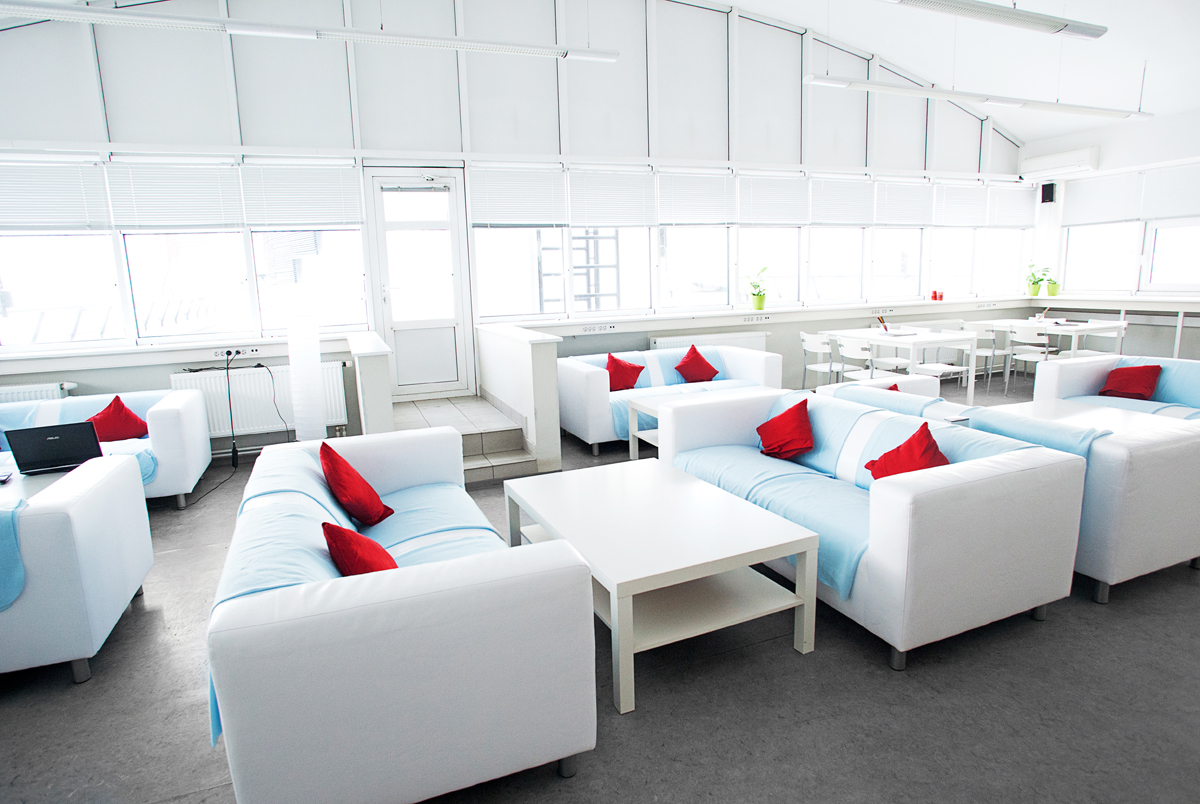
Aiming to create a space where consumers can relax and pursue their favorite diversions, the venue offers tea, coffee and desserts at no charge, and patrons can bring their own refreshments as well. An assortment of board games are on hand for entertainment, meanwhile, as are Xbox games, wifi and a cinema hall.

As in our ECOFFEE’s projects, the café (or Anticafé) has been designed as a place where conversation is central and where people can meet and spend time together – a place where people pay for entertaining themselves.

via Free food and drinks at Moscow café, where patrons pay by the minute | Springwise.

Where is the future of coffee shops? EVERYWHERE!!

We have never agreed that much to a future scenario such as the one depicted by Steven Gordon of the Speculist. Gordon writes about the “coffeeshopification” of many public venues –  bookstores, museums, libraries and retail stores. His point of view is very interesting to the projects we have been developing so far with DESITA and ECOFFEE.

Here it is what Gordon writes in his very interesting article

Universities Will Become Coffee Shops

As reported by TreeHugger “The traditional university lecture is a completely anachronistic institution; there is no reason my Ryerson University students couldn’t watch my lectures on their computers at home or in a coffee shop. Most do; rarely more than 50% of the class shows up, because they know I post the lectures on the school website. As you can see in the photo above, even the students that show up have their noses in their computers. It is all a silly leftover from the days before books were printed and were too expensive for students, so the lecturer would stand up at the front and read from them. The reason for showing up these days is for, as Gordon notes, to “seek tutoring, network, and socialize.”- pretty much a big coffee shop.”

Book Stores Will Shrink to Coffee Shops

Ebooks are coming of age – for many reasons. You can keep your library in your pocket. You can annotate and share your thoughts within social networks. Writers can publish more directly to their audience. Once completed, the unit cost of each ebook sold is essentially $0. Those savings can (and sometimes are) passed on to the customer. Also, an ebook doesn’t have to be limited to the written word. An ebook can incorporate video, audio and other methods of presentation. Your book store is always with you and has every book ready to sell. Nothing ever goes out of print because there are no print runs.

Compare that with your local Barnes and Nobel. Those stores are huge but can accommodate only a small fraction of the titles available in the Kindle store. They require expensive real estate, buildings, and employees.

If you don’t like reading from an ereader, there are new on-demand printing options like the Espresso Book Machine that can print a book within minutes.

Between ebooks and print-on-demand, Barnes and Nobel sized stores shrink down to just their coffee shops – or maybe Starbucks takes over their business. Either way, custormers keep the experience of reading with coffee and those big comfortable chairs.

The Coffee Shop Will Displace Most Retail Shops

My Christmas shopping this year was 90% through Amazon Prime. Not having to fight the crowds and having it delivered free of charge to my home is a big plus, but as with the Kindle store, the online retail selection is much better that even the largest retail outlet.

Which is more enjoyable: Starbucks or Walmart?  For the sane: Starbucks.  So if you can accomplish your Walmart shopping at Starbucks, why do it any other way?

Also, imagine the 3D print shop of the future. You put in your order, probably from your smart phone, and then go pick it up. What does the lobby of such a business look like?  Again: a coffee shop.

Offices Become Coffee Shops… Again

We’re going back to the future: the modern office was birthed in 17th century coffee shops. Steven Johnson has argued that coffee fueled the enlightenment. It was certainly a more enlightening beverage than the previous choice of alcohol.

The need for offices grew as the equipment for mental work was developed starting in the late 19th centuries. That need appears to have peaked about 1980. It was a rare person who could afford the computers, printers, fax machines, and mailing/shipping equipment of that time.

Now a single person with $500 can duplicate most of those functions with a single laptop computer.  So the remaining function of the office is to be that place that clients know to find you… and that kids and the other distractions of home can’t.

Going forward the workplace will need the same sort of flexibility that I described for education. Groups for one project will form and then disband and then reform with new members for the next project. What will that workplace look like? Probably closer to Starbucks than Bob Par’s cubicle.

What will remain other than coffee shops? Upscale retail will remain – people paying as much for the experience as for the goods purchased. Restaurants remain. Grocery stores remain.

Brick and mortar retail stores will be converted to public spaces. Multi-use space will be in increasing demand as connectivity tools allow easy coordination of impromptu events. Some large retail stores will be converted to industrial 3D printer factories. These heavy-duty fab labs will fabricate products that are too big or complicated to fabricate at home.