Category Archives: retail

Virtual Stores Prove a Hit

The virtual store wall in a South Korea Metro Station by Tesco/Homeplus was last year big hit. Now the concept has evolved, and World’s first virtual shopping store – using the walls of Seonreung subway station in downtown Seoul – displays over 500 product, ranging from food to tissue papers.

Customers can choose the delivery time and date – for orders placed before 1 p.m delivery can  be effected the same day – and delivery cost is the same as  more traditional online stores.

“A major perk of this concept is that consumers don’t have to be anywhere near the virtual store to place an order. So, if you want to order replacements of a bottle of water that you have in your hand, you don’t have to stop by the subway station’s store. You just have to scan the bottle’s barcode with the Homeplus app., and then the products are delivered later to home or office.”- Quoted Sitch News

We are sure consumers in Far East markets – like Korea and Japan – welcome this kind of technology and are at their ease with mobile barcode scanning and m-payments, but what about all the other markets? Would for istance consumers in France or Spain quickly adopt this kind of purchasing behaviour? What is your opinion about this?

Seventeen Retailers awarded World’s Most Ethical Companies

The Ethisphere Institute, an international think-tank dedicated to the creation, advancement and sharing of best practices in business ethics, corporate social responsibility, anti-corruption and sustainability, named 145 companies to its sixth annual selection of the World’s Most Ethical (WME) Companies, 17 of which are retailers.world-most-ethical companies

In the retail food stores category are Safeway, Wegmans, Whole Foods Market, SONAE of Portugal, Kesko of Finland and the U.K.’s The Co-operative Group. Named in the general retail category are Costco, Target and the U.K.’s Marks and Spencer. In the specialty retail category are Best Buy, OfficeMax, Petco and Ten Thousand Villages, and in the apparel category Gap, Patagonia, Timberland and Comme Il Fau of Israel were recognized.

This year’s list covers more than three dozen industries, from aerospace to wind power, with 43 of the WME winners headquartered outside the U.S. Each 2012 honoree was chosen for promoting ethical business standards and practices by exceeding legal minimums for compliance, introducing innovative ideas that benefit the public and forcing their competitors to follow suit, according to Ethisphere Institute.

They demonstrate how corporate citizenship is undoubtedly tied to the success of a company’s brand and bottom line. “Each year the competition for World’s Most Ethical Companies intensifies as the number of nominations submitted for consideration grows,” said Alex Brigham, executive director of Ethisphere.

“This year’s winners know that a strong ethics program is a key component to a successful business model, and they continue to scrutinize their ethical standards to keep up with an ever-changing regulatory environment. Corporate ethics has become much more important globally, as well, and that is reflected in the truly global nature of this year’s honorees.”

Twenty-three companies have been honored each of the six years the WME has been awarded, including Patagonia and Starbucks. The evaluation and selection process for the WME Companies is based on a proprietary rating system, the corporate Ethics Quotient, consisting of five core categories — Ethics and Compliance Program (25 percent), Reputation, Leadership and Innovation (20 percent), Governance (10 percent), Corporate Citizenship and Responsibility (25 percent) and Culture of Ethics (20 percent). New York City-based Ethisphere Institute is dedicated to the creation, advancement and sharing of best practices in business ethics, corporate social responsibility, anti-corruption and sustainability.

via Seventeen Retailers Recognized as the World’s Most Ethical Companies – Green Retail Decisions.

Now available for purchase on selected stores in Italy and
on our Facebook store!

We were amazed by the final result – and even though these ECOFFEE tShirts were meant to be a concept, we received so many requests from our customers and supporters so that we were “compelled” to create a limited edition, capsule collection to be sold in selected stores and on our Facebook store.

T-shirts are available in khaki and brown colors for both male and female sizes. We also printed a very small quantity on yellow t-shirts, just for kids!

This slideshow requires JavaScript.

As we previously mentioned, for each t-shirt sale we will proceed 1 euro to  GreenAdsBlue.org Foundation, thus supporting  water sanitation projects in 10 Masai villages.

And we are glad we decided to do that!
Hurry up or you will miss the opportunity to buy one (or more) of these unique ECOFFEE tShirts!

This is a a very Good and Generous Pop-Up store!

Chocolatier Anthon Berg recently enabled customers to pay with a good deed, rather than cash, at a pop-up location called The Generous Store.

Conceived by ad agency Robert/Boison & Like-minded, the project featured a temporary outlet in Denmark – open for one day only – which labeled each of its products with a task the consumer must perform in order to ‘buy’ the chocolate.

Designed to spread generosity, the tasks typically included a good deed to someone else, such as ‘Serve breakfast in bed to your loved one’ or ‘Help clean a friend’s house’.
Cashiers were replaced by staff carrying iPads, where chocolate-buyers could log into their Facebook accounts and pledge to carry out the favor via a branded post on their wall.

Anthon Berg was able to view the results of the promises when visitors to the store then posted pictures and comments on the company Facebook Page. The video below features footage from the pop-up shop:

The Generous Store’s innovative payment system, while only employed for one day, helped to portray Anthon Berg as a generous and socially-minded brand. An idea to adapt for your own projects, possibly over a longer period of time or in conjunction with a pay-what-you-want pricing system?

via Pop-up store sells chocolate for good deeds, not money | Springwise.

At Babochki Anticafé, patrons pay by the minute

At Babochki Anticafé consumers pay nothing for their refreshments. Instead, they arebabochki anticafe 1 charged by the minute for the time they spend there.

The Concept

The concept is quite simple yet striking: customers pay one ruble and 50 kopecks for each minute they stay. Drinks and snacks, on the other hand, are free.

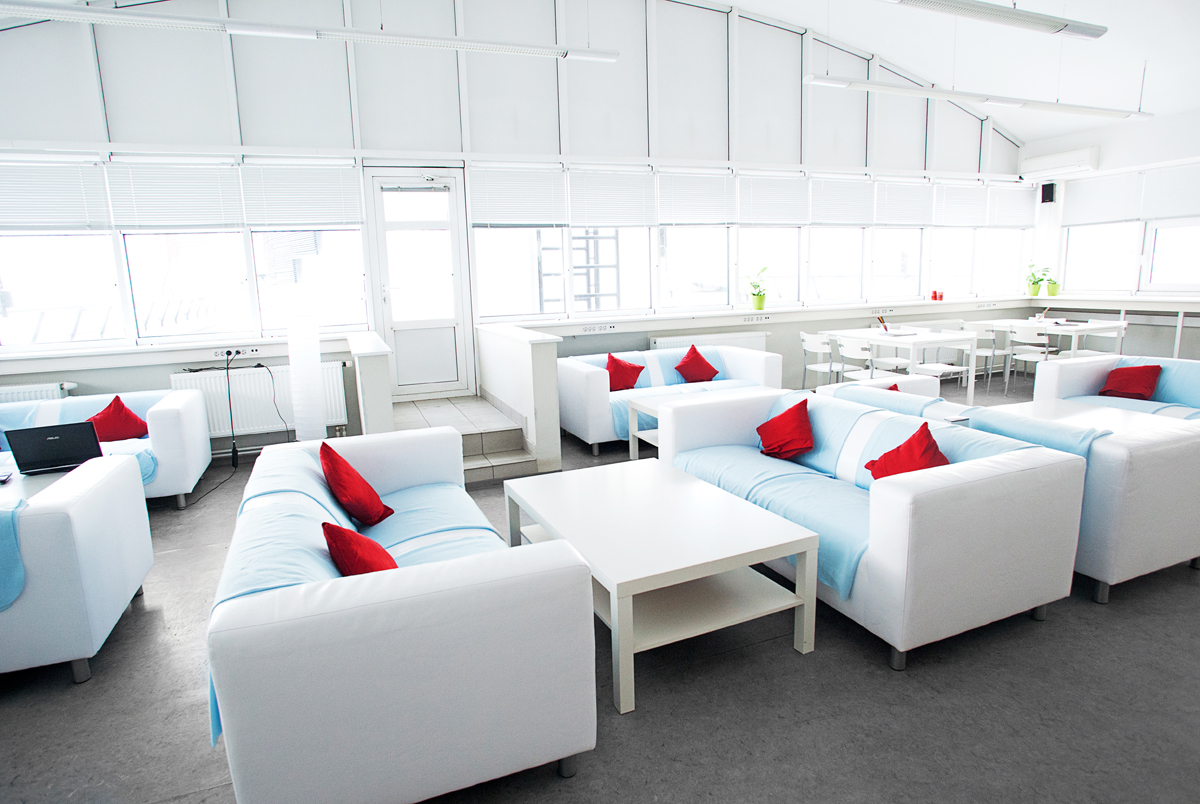
Aiming to create a space where consumers can relax and pursue their favorite diversions, the venue offers tea, coffee and desserts at no charge, and patrons can bring their own refreshments as well. An assortment of board games are on hand for entertainment, meanwhile, as are Xbox games, wifi and a cinema hall.

As in our ECOFFEE’s projects, the café (or Anticafé) has been designed as a place where conversation is central and where people can meet and spend time together – a place where people pay for entertaining themselves.

via Free food and drinks at Moscow café, where patrons pay by the minute | Springwise.

NEW: Objects without barcodes scanned at supermarkets

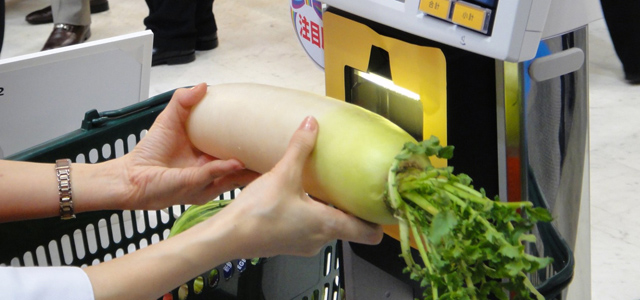
Toshiba Tec has recently created the Object Recognition Scanner, which reads items without the use of barcodes.

According to the Japanese company, barcodes can sometimes fail to register with scanners in supermarkets, leading to longer waiting times for customers and requiring checkout assistants to enter the code by hand. DigInfo report that the Toshiba Tec scanner, which is still in development, uses alternative technology which scans items based on their appearance, doing away with the need for barcodes altogether.

This is particularly useful for fresh produce, where barcodes are often absent. The firm says the device processes items based on color and pattern and is nuanced enough to tell the difference between two types of apples. It can rapidly separate the object from its surroundings and can scan items when they are in motion.

The video below from DigInfo offers a demonstration of the device in action:

via Supermarket scanner recognizes objects without barcodes | Springwise.

What will be the 10 new malls coming to the Middle East? Here they are!

Cairo Festival Centre is one of the new retail developments in the pipeline.

Major retail complexes in countries including the UAE, Qatar, Egypt and Lebanon are among new shopping malls set to open in the Middle East over the next three years.

From the new Fujairah City Centre mall in the UAE to Muscat’s Grand Mall in Oman, each promises to offer the region’s consumers a vast array of shopping, restaurant and entertainment amenities.

Among the major new developments are Al Futtaim Group’s US$1.65bn Doha Festival City, slated for completion in 2014, which will feature well-known retail names including Toys R Us and Marks & Spencer. The complex will cover 433,847sqm and includes parking for 8,500 vehicles.

This slideshow requires JavaScript.

Despite missing its initial delivery date of 2011, the 235,000 sqm Yas Mall in Abu Dhabi has signed up a number of heavyweight retail partners, including the Landmark Group, Dubai Holding Group and Liwa Trading.

While the economic situation may be faltering, consumers’ retail appetites are not, it would seem

via Revealed: 10 new malls coming to the Middle East – Retail – ArabianBusiness.com.

Where is the future of coffee shops? EVERYWHERE!!

We have never agreed that much to a future scenario such as the one depicted by Steven Gordon of the Speculist. Gordon writes about the “coffeeshopification” of many public venues –  bookstores, museums, libraries and retail stores. His point of view is very interesting to the projects we have been developing so far with DESITA and ECOFFEE.

Here it is what Gordon writes in his very interesting article

Universities Will Become Coffee Shops

As reported by TreeHugger “The traditional university lecture is a completely anachronistic institution; there is no reason my Ryerson University students couldn’t watch my lectures on their computers at home or in a coffee shop. Most do; rarely more than 50% of the class shows up, because they know I post the lectures on the school website. As you can see in the photo above, even the students that show up have their noses in their computers. It is all a silly leftover from the days before books were printed and were too expensive for students, so the lecturer would stand up at the front and read from them. The reason for showing up these days is for, as Gordon notes, to “seek tutoring, network, and socialize.”- pretty much a big coffee shop.”

Book Stores Will Shrink to Coffee Shops

Ebooks are coming of age – for many reasons. You can keep your library in your pocket. You can annotate and share your thoughts within social networks. Writers can publish more directly to their audience. Once completed, the unit cost of each ebook sold is essentially $0. Those savings can (and sometimes are) passed on to the customer. Also, an ebook doesn’t have to be limited to the written word. An ebook can incorporate video, audio and other methods of presentation. Your book store is always with you and has every book ready to sell. Nothing ever goes out of print because there are no print runs.

Compare that with your local Barnes and Nobel. Those stores are huge but can accommodate only a small fraction of the titles available in the Kindle store. They require expensive real estate, buildings, and employees.

If you don’t like reading from an ereader, there are new on-demand printing options like the Espresso Book Machine that can print a book within minutes.

Between ebooks and print-on-demand, Barnes and Nobel sized stores shrink down to just their coffee shops – or maybe Starbucks takes over their business. Either way, custormers keep the experience of reading with coffee and those big comfortable chairs.

The Coffee Shop Will Displace Most Retail Shops

My Christmas shopping this year was 90% through Amazon Prime. Not having to fight the crowds and having it delivered free of charge to my home is a big plus, but as with the Kindle store, the online retail selection is much better that even the largest retail outlet.

Which is more enjoyable: Starbucks or Walmart?  For the sane: Starbucks.  So if you can accomplish your Walmart shopping at Starbucks, why do it any other way?

Also, imagine the 3D print shop of the future. You put in your order, probably from your smart phone, and then go pick it up. What does the lobby of such a business look like?  Again: a coffee shop.

Offices Become Coffee Shops… Again

We’re going back to the future: the modern office was birthed in 17th century coffee shops. Steven Johnson has argued that coffee fueled the enlightenment. It was certainly a more enlightening beverage than the previous choice of alcohol.

The need for offices grew as the equipment for mental work was developed starting in the late 19th centuries. That need appears to have peaked about 1980. It was a rare person who could afford the computers, printers, fax machines, and mailing/shipping equipment of that time.

Now a single person with $500 can duplicate most of those functions with a single laptop computer.  So the remaining function of the office is to be that place that clients know to find you… and that kids and the other distractions of home can’t.

Going forward the workplace will need the same sort of flexibility that I described for education. Groups for one project will form and then disband and then reform with new members for the next project. What will that workplace look like? Probably closer to Starbucks than Bob Par’s cubicle.

What will remain other than coffee shops? Upscale retail will remain – people paying as much for the experience as for the goods purchased. Restaurants remain. Grocery stores remain.

Brick and mortar retail stores will be converted to public spaces. Multi-use space will be in increasing demand as connectivity tools allow easy coordination of impromptu events. Some large retail stores will be converted to industrial 3D printer factories. These heavy-duty fab labs will fabricate products that are too big or complicated to fabricate at home.

Multichannel retail strategy survey: the high street is central

The stats come from Shoppercentric’s ‘Shopping in a Multichannel World’ survey, and the results show that customers are using a wide variety of channels.

Mary Portas may have managed to produce a retail review containing just three references to digital, but online and mobile is vital for the future of the high street.

Channels used by customers during the purchase process

As the stats show, shops feature strongly in the channels used by survey respondents, followed by laptop and PC:

Multichannel Strategy Survey

The high street store still remains the most used channel, though for younger age groups, laptops and netbooks come pretty close.

In general, younger shoppers are more likely to use smartphones (and, to a lesser extent, tablets) as part of the purchase process.

Penetration of new technologies

Smartphones have now reached 45% penetration, but for the under 34 age groups, this rises to 62%.

Penetration of new technologies

Use of tablets and smartphones

As we’ve covered before, iPads can deliver impressive conversion rates and average order values (AOVs) but they are used by just 7% of shoppers.

Use of Tablet and Smartphones

At the moment, since the relatively expensive iPad is the dominant tablet, it may be that the wealth of the average owner means higher spend. However, tablet use is set to grow, so retailers should look at adapting their websites and marketing for this device.

The importance of the high street

The high street will always have a place. In fact, 45% of shoppers said they will ‘always love going to the shops, no matter what new technologies are available’.

These, and other multichannel retail stats, show that customers are rapidly adopting new channels such as mobile, and also that they will choose the one that suits their needs most at the time.

Offline retailers that are able to adapt to customers’ use of multiple channels will be best placed to prosper. This means things like launching mobile optimised sites, putting wi-fi in stores (to allow customers to view reviews, compare prices etc), having easy reserve and collect services, and in-store kiosks.

According to Danielle Pinnington, Managing Director at Shoppercentric: “Marketers should be excited about the prospect of being able to make an impact on the purchasing journey in many more ways than before. The opportunity to change shopper behaviour is better than it has ever been. The retailer or brand that is able to use all the channels at its disposal to meet shoppers’ needs is the business that will reap the rewards

Retailers shouldn’t necessarily assign fixed roles for channels. Customers may well research online before heading to a store to make a purchase, but the reverse is equally likely.

The trick is to understand that customers will use channels for a variety of purposes, and to deliver a smooth and seamless experience whichever one the customer chooses.

via The high street is central to multichannel retail strategy: stats | Econsultancy.