Tag Archives: consumers

Are virtual walls the future of retail?

The use of digital technology to enhance high-street shopping took a step forward last month when Ocado and Tesco unveiled initiatives aimed at creating a seamless retail experience.

Ocado opened a pop-up shop in London’s One New Change shopping centre in the Square Mile. It featured a printed window display, or ‘virtual wall’, showcasing some of the retailer’s most-bought items and their barcodes.

Consumers who had downloaded Ocado’s ‘On the Go’ app can visit the window display to order the items – by scanning the barcodes with their smartphone – and book a delivery time. The retailer says it will roll out more displays across the country if the trial is successful.

Jason Gissing, co-founder of Ocado, claims that the experiment is a bold move. “We hope this trial is a hit and, based on its success, we’ll be looking at options around continuing this ‘virtual window shopping’ approach in other locations UK-wide,” he says.

Consumers have already been exposed to this new way of shopping.

Tesco has been experimenting there with an interactive shopping wall for its Homeplus brand, by opening a virtual store in a busy underground railway station in South Korea’s capital, Seoul.

More than 500 products are on offer, and all are displayed in a shelf-like appearance, prompting shoppers to scan them with their smartphones.

A spokeswoman for Tesco says: “You place an order when you go to work in the morning and can have the items delivered when you come home at night. This will help increase our sales via smartphones, which will be the next big sales generator.”

Ocado in the UK, then, seems to be catching on to Far Eastern technologies ahead of its domestic retail rivals. But James Tagg, mobile services director for MPG’s Mobext, is unsure that the technology can be implemented successfully in cities such as London.

“I think it’s clear that, here in London, the main value of a similar campaign would be as an awareness-raising tool, rather than an improvement on our everyday shopping experience,” he says. “The lack of mobile reception on large parts of the Tube system would prevent most people from downloading the app in response to seeing the virtual shopping aisles, and placing an order would have to wait until you were above ground at the end of your journey.”

Tesco says it doesn’t plan to launch similar services in the UK, but with Ocado leading the charge, the ‘big four’ supermarkets of Tesco, Asda, Morrisons and Sainsbury’s could well be tempted to follow suit in the future.

Increasing smartphone adoption will help, along with plans to install mobile broadband on London’s Tube network. It could be a while, however, before interactive walls feature significantly in retailers’ growth plans. (Source: Andrew Mccormik/Wallblog.co.uk)

A comparative analysis about Multichannel Retail in US and UK

Last month Econsultancy surveyed 2,000 consumers in the UK and 2,000 consumers in the US, to unearth attitudes to multichannel shopping and service.

The majority of consumers would find it useful to have a choice of retail channels, and a significant 33.5% felt this was very important. The results were very similar for both US and UK respondents, so the charts show aggregated data.

How important is it to be able to purchase from a retailer using different channels?

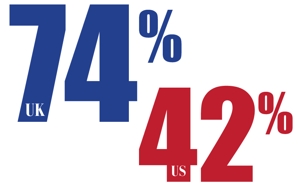
Quite a difference between US and UK consumers, with the latter far more likely to reserve items for in-store collection. Many of the biggest multichannel retailers in the UK are offering this service, (Argos, John Lewis, Halfords etc) with some success. For example, Argos’ multichannel sales grew to £1.9bn in the year up to February 26 2011, representing almost half (46%) of its total sales. The reserve and collect iPhone app accounted for 1% of total sales.

Do you reserve products online before collecting them from an offline store?

The use of mobile when shopping offline represents a growing challenge for retailers, as these stats show.

Use of Mobile Websites

US consumers are slightly more likely to use barcode scanners and compare prices via mobile, but a significant minority of US and UK respondents are using mobile as an offline shopping aid. Multichannel returns The vast majority of both US and UK respondents expect to be able to return items bought online to a local store.

However, as Snow Valley’s recent Online Returns Report found, just half of the multichannel retailers studied allow customers to do this. 

If you buy something online, do you expect to be able to return it to a local store?

Use of catalogues Percentage of customers that have used catalogues at least once in the past year before buying online or in store – aggregated US and UK results. (Source: Econsultancy)

How to engage consumers?

Dealing with customer engagement has never been easy – especially today when customers are all inter-connected and receive all kind of information from all kind of media. This is why the rules that apply to old media such as TV and press can not work with nowadays  consumers.

CDJ by McKinsey

McKinsey devised a model, the Consumer Decision Journey (CDJ), whose simple four steps can be applied to companies belonging to different fields, retail too. Its implementation is not easy but as stressed by McKinsey, rewards can be worth the effort.

But let’s get into the four CDJ steps a little deeper, quoting the McKinsey study which can be fully downloaded on their website.

“Align: Invest marketing resources where consumers spend their time. In most cases, this will involve shifting resources from the “consider” and “buy” stages of the CDJ to the “evaluate” and “advocate” stages. Many companies will also have to shift their investments from paid media (channels owned by other companies, such as print or online newspapers) to self-owned media (such as the brand’s Web sites) and earned media (customer-created channels, such as communities of brand enthusiasts).

Link: Make sure that your messages reinforce each another. Given the proliferation of channels, this can be challenging and many companies have been disconcerted to discover that information about their products— including model numbers, descriptions, images, and promotions—isn’t the same across online channels and even within their stores. Coordinating your message might require new techniques. Apple, for example, took steps to eliminate jargon, align product descriptions, create a rich library of explanatory videos, and institute off-line Genius Bars to ensure consistency, accuracy, and integration across touchpoints.

Lock: Keeping your customers’ attention is key. To do so, companies need to develop direct, opt-in channels, such as e-mail promotions, Twitter and Facebook feeds, and apps. One good example comes from Nike, which progressed from simply exhorting consumers to “just do it” to helping them act on its motto. Nike+ gear records and transmits customer workout data, holds global fund-raising races, and provides customized online training programs. For its part, McDonald’s has enticed millions of Japan’s mobile-savvy consumers to sign up for mobile alerts with discount coupons, contest opportunities, special-event invitations, and other brand-specific content.

Loop: Mine content created by consumers and experts for insights into customers and the brand, and use data collected about customers to create content that will engage them. Consumer-generated content is particularly valuable because it reveals their wants and needs. A classic example comes from Amazon, which allows customers to rate products, and makes these ratings available to shoppers. Amazon doesn’t stop there, though; it also uses this data to decide how it presents its products. This creates an information-rich loop—from data to content and back to data—that strengthens Amazon’s value chain and contributes to product development and customer support. Data loops can also help companies personalize communications, thus deepening the customer relationship.”


Where are Retail’s Hottest Emerging Markets?

Wondering whether to open your new fashion store in China or in Brazil but you don’t have any clue? The annual A.T. Kerney’s Retail Index  provides you with a detailed list of the most emerging countries for apparel retail.

The A.T. Kearney Global Retail Development Index (GRDI)™ ranks the top 30 emerging countries for retail development and identifies windows of opportunity for global retailers to invest in developing markets. The GRDI is unique because it doesn’t just identify which markets are bigger or richer, but rather which markets are hotter and bursting with opportunity. The full annual report can be read at this link, but let’s take a quick look at what the report shows.


China ranks as the most attractive emerging market for apparel retailers according to a study by global management consulting firm A.T. Kearney. Its first place ranking was driven by the country’s large population and the growing disposable income of the middle class. With its compound annual growth rate of more than 20 percent in recent years, apparel retail in China has grown at a rapid pace, and this trend is expected to continue for the next five years.

China was followed in the ranking by two Middle East Countries, U.A.E. and Kuwait, then by Russia and Saudi Arabia.

The United Arab Emirates holds the second position in the 2011 Apparel Index, driven by a population with a high disposable income and immense fashion consciousness. The expatriate populace and tourism in particular are driving forces of consumption in this market. Additionally, the UAE is a regional commerce center in the Middle East, and is a preferred market for entering the Middle East as well as testing new products and retail formats.

Kuwait is ranked #3 in the Apparel Index. Key factors driving retail growth in Kuwait are a favorable long-term economic outlook, a sophisticated consumer base with high levels of disposable income and fashion awareness, more women entering the workforce, and a significant expansion in retail real estate. The gross leasable retail space in Kuwait has expanded from 345,000 square meters in 2006 to 1.15 million square meters in 2010.

The remaining top ten markets in the 2011 A.T. Kearney Retail Apparel Index are Russia, Saudi Arabia, India, Brazil, Turkey, Vietnam and Chile. (Source: A.T.Kerney)

Sustainability in Italy: what big retail players are doing.

Italians are virtuous, with a constantly growing attention towards the environment among young people. This is the picture that emerges from the research about Italian Sustainability and emerging lifestyles: 2,500 interviews, a sample of the Italian population aged between 15 and 74 years. Objective: To identify the most common habits among Italians to reduce their environmental impact.

“The majority of Italians, 50.9%, is sensitive to issues related to sustainability, 48.6% said they buy environmentally friendly products. There is a 36.4% claiming to not care and a 12.7% which is almost hostile to the subject”, “explains Monica Fabris, sociologist, currently president of the Episteme institute of research. “Sustainability is primarily a response to unconscious needs: fear, for example. And the international crisis in this sense was crucial because it demonstrated the unsustainability of many behaviors, limited resources and has spread the importance of having more conservative attitudes. ”

This explanation of Fabris, that the sensitivity of the Italian added: “We are not the most attentive of Europe, but we have a different kind of sustainability. In the research we have identified four types of “green” attitudes. There are “promoters of a shared involvment” (10.9%) who practice a sort of militant environmentalism, they think that everyone can do something and that sustainability is a value. Then there are the “those who judge” (10.4%), people who feel the need to see polluters and waste producers being legally punished. The vision of “eco-nostalgic” (14.8%) is about a return to the past and considering saving and reducing consumption real goals. Finally, there is “the vanguard of sustainable consumption” (63,9%) who have a key to modern, pragmatic and are willing to pay for more virtuous behaviours” This last category direct their purchases mainly to products of the big market, identified as guarantors of attitudes ecofriendly.

“All the big brands have sustainable programs. The projects are very varied and range from research to packaging more easily disposable and recyclable materials to reduce water consumption, the increasing presence of photovoltaic systems to supplement the energy needs of the factories to the use of new production technologies with low environmental impact ” says Ivo Ferrario, director of communications Centromarca, the association of the most important companies active in Italy brand. “Huge efforts are also undertaken to provide consumers with a better information, and to educate companies’employees thanks to specific activities regarding the environmental and sustainability issues.” In this direction is the Total Quality Day organized by Coca-Cola HBC Italy: each year, employees spend a day and a half attending comprehensive educational programs about safety and environment. “We talk about the correct control of raw materials, top quality production processes, optimization of cargo handling and a more effective waste management,” says Alessandro Magnoni, Communication and External Relations Manager. “About sustainability, last June we put into operation a large cogeneration plant in Nogales (Vr), which has already reduced CO2 emissions by 66% and increased energy efficiency up to 83%. But this is just the beginning, we plan to equip all eight Italian plants with photovoltaic systems, an operation that will avoid the emission of 11,500 tons of CO2. ”

Another international brand is following the same path, Heineken, which in 2010 presented a ten-year plan Brewing a better future. “The aim is to reduce CO2 emissions resulting from production processes by 40% and to fall by 25% on water consumption. All by 2020 “explains Alfredo Pratolongo, Communication and Institutional Affairs Manater at Heineken Italy. A strong commitment to social responsibility is also the mission of Procter & Gamble, a leader in consumer products which collects 300 brands: “We have halved the production of waste and CO2 in our plants and use alternative energy generated by wind and photovoltaic systems “says the head of Italy’s sustainability policies, Renato Sciarrillo. He adds: “For those of us who handles many products – we have 140 factories in 80 countries -logistics is crucial: we want to move 30% by rail transport. But that’s not all. “Concentrated” products ensure reductions in packaging up to 45% and the research is aiming at finding new materials to replace plastics. ”

About packaging, Nestlé has a dedicated team that study sizes and materials to reduce environmental impact. “In 2010, in Italy we have avoided the use of 147 tons of materials including metal, paper and plastic. Our objective is to optimize weight and volume, to use materials that you can recover properly, to develop materials from renewable sources and to support initiatives to recycle and recover energy from used packaging “explains Manuela Kron, Nestlé Group Italy Corporate Affairs manager. “To do this we have added a cogeneration and regeneration power plant in San Sisto (PG) and Moretta (CN), which allow us to cut the emission of around 13 000 tonnes of CO2 per year.”

Investments in the study of eco packaging and using alternative energy are also key points for L’Oréal. “We have been working on green chemistry for over ten years and thanks to our research we have recently discovered cosmetic effects of natural sugars. This year we launched a major center for predictive evaluation in Gerland (Lyon) where more than 99% of our ingredients are animal-free tested. Our packaging use a high percentage of recyclable material, we only use wood fiber from certified forests. The Garnier brand, for example, in 2012 will cut the weight of packaging by 15%, “says Giorgina Gallo, managing director of L’Oréal Italy. And the future? “The global goal for 2015 is a reduction of 50% in CO2 emissions, 50% of water consumption and waste generated per unit of finished product. In particular, our factory in Settimo Torinese, in the forefront on sustainability issues, is finalizing two projects that use alternative energy to become, by the end of 2012, a zero emissions plant. ”

Always in Italy, another brand which is very attentive to sustainability is Barilla. “Over 92% of our packaging is recyclable and now we want to exceed 95% in advance to target set for 2014. In recent years we have supplied cogeneration pasta plants, developed energy saving projects and replaced the electricity used in the production of Mulino Bianco products by Renewable Energy Certificate System certificates. This has reduced by about 10% the CO2 emissions for each unit of finished product, “explains Barilla’s Head of Communications and Media, Giuseppe Cocconi. This anticipates the future: “We want to reduce the impact of our products in a timely manner ensuring production processes throughout the supply chain.”

And as we have already informed you about, another worlwide known Italian company, Illy, have been awarded for its sustainable approach during the production processes, receiving the DNV Green Coffee Responsible Supply Chain Process certification. A certificate that emphasizes respect for the ecosystem through the use of recycled packaging and non-polluting practices.
In Danone are applying a very tight control system too. “In 2011 we will reach the goal of being the only company in this market segment to use thermoformed plastic, a new generation made much lighter and with less plastic, for the entire range of products ” explains Gianluca Mormino, director of Danone factory in Casale Cremasco . “This system also allows you to sell the pots which are welded together, avoiding the secondary packaging. And we are studying biodegradable packaging. ”

There is another sector which is very eco-friendly, and Philips is one of the brands involved. “We have to meet annual targets tied to packaging, water and energy savings,” explains Sergio Tonfi head of communications. “In 2010, the” green “products accounted for 38% of our total revenues, in 2007 were 20%: this is the result of three years long investment in innovation worth about 1 billion euros” (Source: Manuela Croci -Corriere.it)

Mobile consumers do prefer in-store purchasing, a research says.

According to JiWire’s research 79% of mobile consumers are ‘comfortable’ making purchases from smartphones or tables, even for products over the $1,000 threshold. Mobile shoppers are most likely to make purchases under the $1,000 threshold with about half saying they’ve made purchases over $100. Only 20% report making a purchase over $500 through a mobile device.

However, more important than those actually making mobile purchases is the fact that researchers believe mobile shopping is actually leading to more in-store purchasing. While many mobile shoppers logon to branded websites, many may be simply looking for product information, pricing or to check the availability. From there, they are going to brick-and-mortar stores to complete their purchases.

“What we are seeing with the evolution of mobile commerce is how the combination of mobile and location is transforming shopping behavior, enabling mobile advertising to drive in-store, brick and mortar consumer engagement,” said David Staas, Senior Vice President of Marketing with JiWire. “We are seeing this trend take place across a broad range of retailers and service providers, from national brands to local mom and pop deals.”

Researchers found:

• 31% of mobile shoppers research mobilly and then buy in-store
• 40% of mobile shoppers research mobilly then purchase via PC/desktop
• 20% of mobile shoppers research and then purchase via mobile

In addition to researching purchases, mobile shoppers are looking for local store locations, looking for daily deals or coupons and even sharing deal or product information with friends through email and social networks. (Source: Bizreport)

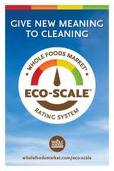
Introducing the Eco-Scale rating system for cleaning products

Wholefoods has recently introduced its new Eco-Scale rating system, a color-coded system under which products will be rated, red, orange, yellow or green based on the sp

ecific set of environmental and sourcing standards each product meets.

The company said it is committed to working with vendors to evaluate and independently audit every product in its cleaning category.  Red-rated products do not meet the Eco-Scale standards and will not be sold at Whole Foods Market.

Naturally, the green color code is the highest possible rating, ensuring that products have all of these features:

  • ✓ Full transparency, disclosure of ingredients on packaging by April 2012
  • ✓ Independent 3rd party verified compliance to standards
  • ✓ No ingredients with significant environmental or safety concerns
  • ✓ No formaldehyde-donors, preservatives which have the potential to release formaldehyde
  • ✓ No phosphates, chlorine, or synthetic colors
  • ✓ No animal testing
  • ✓ 100% natural fragrances
  • ✓ No ingredients with moderate environmental or safety concerns
  • ✓ No DEA, MEA or TEA—surfactants that have the potential to contain nitrosamines and other impurities
  • ✓ No synthetic, petroleum-derived thickeners made from nonrenewable sources
  • ✓ Only 100% natural ingredients
  • ✓ No petroleum- derived ingredients

Under current law, manufacturers do not have to disclose all ingredients in cleaning products. Under the Eco-Scale Rating System, Whole Foods Market’s household cleaning vendors will be required to list every ingredient on product packaging. To ensure compliance of the standards, all products will be audited through an independent third-party for verification before they are color-rated and labeled on shelves.

“Shoppers have a right to know what’s actually in the products they use to clean their homes,” said Jim Speirs, global vice president of procurement for Whole Foods Market. “We’ve always carefully monitored ingredients. Now, with Eco-Scale, we’re able to help shoppers buy eco-friendly products with confidence and provide safer alternatives for their households and for the planet as a whole.”

What is striking in fact is that almost three out of four (73 percent) adults falsely believe that the U.S.  government requires household cleaning products to provide a list of ingredients on the label, according to an online survey commissioned by Whole Foods and conducted by Harris Interactive in April among 2,483 U.S. adults aged 18 and older. Another two-thirds (64 percent) believe that many household cleaning brands opt to disclose the full list of ingredients on packaging, when in fact few provide this information on product labels. (Source: GreenRetail decisions, Wholefoods)

A Pop-up revival in retail marketing

Over the past 12 months, a growing number of brands has turned to pop-up activity to provide a burst of PR activity and another reason for consumers to interact with their brand – hopefully ensuring that the effect of these events are going to last even after the shutters come down. The last news about a pop-up store is related to Marni, the Italian fashion brand, located at the Ocean Centre in Hong Kong and featuring the whole Marni Edition.

The pop-up phenomenon dates back 2004, when fashion brand Comme des Garcons opened a guerrilla store in Berlin, followed by a long list of known brands, such as ony Ericksson, Levi’s, Breil, Uniqlo or the most recent ones of Apple, Nokia, and Adidas Originals.

The pop-up strategy allows brands to tap into new markets at low cost, as rents are cheap and the ‘concept store’ strategy creates a buzz without investing in advertising.

Even thought they are an excellent way to deliver a brand experience there is a question over their reach, as they engage only those consumers who actually visit. Jeremy Rucker, head of Hotel Retail, experiential agency RPM’s pop-up and retail division, says the growth of pop-up activity is partly in response to the levels of empty retail space on high streets. ‘With so many brands turning to online-only channels, pop-up activity helps bring excitement back to the high street,’ he adds.

The big question for brands is how to drive investment beyond the life span of the pop-up store and the PR generated at that time. ‘Data capture is fundamental, but creating engaging ways for the brand to interact with the consumer that can a develop a life of their own should be considered,’ says Owen Cato, creative director of retail agency Live & Breathe. ‘Extending activity in the pop-up store online and into social-media activity would work well.’

Claire Stokes, managing director of experiential agency The Circle Agency, adds: ‘Previously, when brands have talked about experiential, it has been all about being in the live space. Now it is about building new digital layers to ensure the halo effect of any given event stretches beyond just one single event.’ For example, when EA Games promoted its key Christmas video-game releases in shopping centres, it encouraged consumers to ‘check in’ to win titles. More than 3000 consumers took part, promoting the event far beyond the boundaries of the event venue.

However, industry experts warn against investing in digital at the expense of the core event. Trevor Hardy, founder of creative agency The Assembly, contends that pop-up activity should be viewed as another marketing channel. ‘The more sensory and multichannel the experience, the better it becomes,’ he adds. ‘The risk is that interactive and social media may dilute the experience – 100% of the efforts should be dedicated to ensuring the experience is the best it can be.’

However, the fact that even retail brands with a consistent high-street presence are turning to pop-up activity perhaps suggests that brands should be creating the excitement of a pop-up shop in their existing retail space every day. Hardy argues that this is not possible, as the ‘focus is on getting the maximum return per square foot’.

Caroline Wurfbain, client services director at experiential agency Jack Morton Worldwide, predicts that more brands will launch pop-up activity over the next 12 months. ‘The challenge is that if ideas don’t change, there is a risk that the market will become saturated and consumers will get bored,’ she adds.

Many of the most successful pop-up launches and events of recent years have not been the work of commercial brands, but independent chefs and artists. As a result, a raft of brands has attempted to mimic the halo effect of organic movements such as Hidden Kitchen, a private supper club that serves 16 people a seasonal 10-course tasting menu paired with wines. However, if these brands fail to offer consumers a compelling reason to interact with them, their experiential strategy risks being dangerously insubstantial (Source: Marketing Magazine)

Chinese consumers are willing to pay for sustainability

We have already talked about China as one of the fastest growing markets in terms of customer awareness towards sustainability: Chinese do appreciate and search for sustainability.

A study released on April 18th by global advertising and international marketing firm Ogilvy & Mather answer to the question that our customers usually ask: “Do consumers are willing to pay more for sustainable products?”. The study shows that the answer is “Yes, Chinese consumers are willing to pay a small premium for environmentally friendly products”, but they place responsibility to fix China’s environmental woes on the government.

Convenience is the main factor driving shopping decisions for more than half of the 1,300 Chinese consumers across China, but 71 percent said they would pay up to 10 percent more or higher for some “green” products.

“Within about a 15 percent price band, if two items have comparable brand image, people will go for the sustainable option,” Kunal Sinha, the lead author of the study and head of the company’s sustainability practice in China, told Reuters.

“But if you were going to sell it purely on its sustainability credentials, it wouldn’t fly,” he said, referring to the range of green products and sustainable behaviors covered in the study, from toiletries to food and vacations.

Shoppers were willing to open their wallets the widest for sustainably produced milk, at premiums of 17 to 20 percent, the study said, an indication of how severely scandals involving tainted milk have damaged China’s dairy industry.

The study noted large gaps between the sustainable behavior Chinese consumers profess to and their actual consumption habits, a trend that also exists in developed markets such as the United States.

One measure of their optimism: more than 90 percent of those surveyed said they thought the sustainability movement was growing. But fewer than a fourth or respondents said they felt empowered to solve environmental problems on their own, and instead looked to the government to fix the country’s environmental woes.

Chinese consumers have long been hesitant to loosen their purse strings, more so than consumers in other countries at a similar stage of development. But domestic consumption is picking up quickly and many analysts think it has reached a turning point.

That means Chinese consumers’ buying power may be out-pacing their green ethos. The survey said the concept of sustainable living is not yet mainstream, with respondents saying those leading the movement in China are seen as idealists.

Joel Backaler, a director at the consulting firm Frontier Strategy Group who blogs on Chinese consumption trends, says mainstream Chinese consumers are focused on aspirational purchases in the short to medium-term and will not begin focusing on green and sustainable consumption for years.

“The vast majority of China’s middle class are for the first time learning how to spend and join the consumption phenomenon that their counterparts in the U.S. and Western Europe have long enjoyed,” he told Reuters in an email. (Source: Reuters)

Online shoppers welcome home grocery delivery

Though few retail grocers offer home delivery of web orders, a survey from the Food Marketing Institute, a grocery industry trade organization, suggests that consumers respond more to web grocers that offer to deliver online orders compared with grocers that require pickup at their stores.

In 2010, 32% of consumers responding to an FMI survey said their primary grocery store offered online ordering, and 28% said they had done at least some online ordering at those grocers. 4% said they shopped online at those grocers one to three times per month, and 2% said at least once a week. But 22% said they shopped online at those grocers less than once a month, with another 73% saying they never shopped there online.

By comparison, the FMI survey showed that only 17% of respondents said their primary grocery store offered home delivery—but 13% said they ordered home delivery one to three times per month, and 5% said they did so at least once a week, higher figures than for when home delivery was not an option. 17% said they ordered home delivery less than once a month, leaving 65% saying they never did.

Regardless of the demand for it by consumers, however, home delivery of groceries isn’t for all retailers, experts say. “Home delivery is only going to work for really big folks with profitable online grocery operations offered in places where the retailer has a reasonable density of customers,” says Jack Horst, a retail strategist at retail industry consultants Kurt Salmon.

The category of “really big folks” surely includes Amazon.com, the largest web-only retailer, and Wal-Mart Stores Inc., the world’s largest retailer and the leading U.S. grocery merchant. Both Amazon and Wal-Mart are experimenting with home delivery of groceries.

Amazon’s program, dubbed AmazonTote, has been tested by the company’s employees in Seattle for the past six months or so. In its infancy, the service entails weekly delivery of groceries and other items to the user’s home, with the groceries bagged in reusable tote bags, all free of charge.

According to The Financial Times, the service is linked to Amazon’s Fresh grocery delivery service, which currently only operates in the Seattle area but is available to all consumers in that area.

Fresh offers fresh produce and meats in addition to non-perishable grocery items; the service goes beyond food, too, ranging from pet supplies to beauty products and other Amazon.com categories. Granted, the convenience is reflected in the price — would you pay $2.50 for a single grapefruit under any other circumstances? — but you get what you pay for, which in this case amounts to a lot of time and energy saved.

On the other side, the “Walmart To Go” test , just launched in California last Saturday, allows customers to visit Walmart.com to order groceries and consumables found in a Walmart store and have them delivered to their homes, a company’ spokesman said. Products include fresh produce, meat and seafood, frozen, bakery, baby, over-the-counter pharmacy, household supplies and health and beauty items. Wal-Mart also offers a Pick Up Today service, which is limited to select electronics, video games and appliances.

What Amazon also needs to fear is a new initiative from the company called @WalmartLabs.  According to GeekWire, this new Silicon Valley-based arm of the company is stating it has pretty lofty goals: “Walmart plans to expand the @WalmartLabs team and expects this new group will create technologies and businesses around social and mobile commerce that will support Walmart’s global multi-channel strategy, which integrates the shopping experience between bricks and mortar stores and e-commerce.”
In other words, exactly what Amazon does, except with the integration of brick and mortar stores.

Walmart seems to be turning its collective eyes towards technology more and more as of  late, the only real question is what took them so long.  If the discount store giant starts pouring its massive resources into more technology integrations, releasing its own products and taking on the likes of Amazon, we could see the company slowly take over eCommerce just as it did with the retail world.

The majority of grocery retailers still prefer store pickup of online orders, as MyWebGrocer* CEO Rick Tarrant says. But if the Wal-Mart and Amazon test will prove to be successful, we are pretty sure that at-home delivery will be the next big trend.

*MyWebGrocer, a provider of e-commerce and digital marketing technology and services to more than 110 grocery retailers, has supermarket clients including ShopRite that offer home delivery in some markets