Category Archives: trends and forecasts

What will be the 10 new malls coming to the Middle East? Here they are!

Cairo Festival Centre is one of the new retail developments in the pipeline.

Major retail complexes in countries including the UAE, Qatar, Egypt and Lebanon are among new shopping malls set to open in the Middle East over the next three years.

From the new Fujairah City Centre mall in the UAE to Muscat’s Grand Mall in Oman, each promises to offer the region’s consumers a vast array of shopping, restaurant and entertainment amenities.

Among the major new developments are Al Futtaim Group’s US$1.65bn Doha Festival City, slated for completion in 2014, which will feature well-known retail names including Toys R Us and Marks & Spencer. The complex will cover 433,847sqm and includes parking for 8,500 vehicles.

This slideshow requires JavaScript.

Despite missing its initial delivery date of 2011, the 235,000 sqm Yas Mall in Abu Dhabi has signed up a number of heavyweight retail partners, including the Landmark Group, Dubai Holding Group and Liwa Trading.

While the economic situation may be faltering, consumers’ retail appetites are not, it would seem

via Revealed: 10 new malls coming to the Middle East – Retail – ArabianBusiness.com.

Where is the future of coffee shops? EVERYWHERE!!

We have never agreed that much to a future scenario such as the one depicted by Steven Gordon of the Speculist. Gordon writes about the “coffeeshopification” of many public venues –  bookstores, museums, libraries and retail stores. His point of view is very interesting to the projects we have been developing so far with DESITA and ECOFFEE.

Here it is what Gordon writes in his very interesting article

Universities Will Become Coffee Shops

As reported by TreeHugger “The traditional university lecture is a completely anachronistic institution; there is no reason my Ryerson University students couldn’t watch my lectures on their computers at home or in a coffee shop. Most do; rarely more than 50% of the class shows up, because they know I post the lectures on the school website. As you can see in the photo above, even the students that show up have their noses in their computers. It is all a silly leftover from the days before books were printed and were too expensive for students, so the lecturer would stand up at the front and read from them. The reason for showing up these days is for, as Gordon notes, to “seek tutoring, network, and socialize.”- pretty much a big coffee shop.”

Book Stores Will Shrink to Coffee Shops

Ebooks are coming of age – for many reasons. You can keep your library in your pocket. You can annotate and share your thoughts within social networks. Writers can publish more directly to their audience. Once completed, the unit cost of each ebook sold is essentially $0. Those savings can (and sometimes are) passed on to the customer. Also, an ebook doesn’t have to be limited to the written word. An ebook can incorporate video, audio and other methods of presentation. Your book store is always with you and has every book ready to sell. Nothing ever goes out of print because there are no print runs.

Compare that with your local Barnes and Nobel. Those stores are huge but can accommodate only a small fraction of the titles available in the Kindle store. They require expensive real estate, buildings, and employees.

If you don’t like reading from an ereader, there are new on-demand printing options like the Espresso Book Machine that can print a book within minutes.

Between ebooks and print-on-demand, Barnes and Nobel sized stores shrink down to just their coffee shops – or maybe Starbucks takes over their business. Either way, custormers keep the experience of reading with coffee and those big comfortable chairs.

The Coffee Shop Will Displace Most Retail Shops

My Christmas shopping this year was 90% through Amazon Prime. Not having to fight the crowds and having it delivered free of charge to my home is a big plus, but as with the Kindle store, the online retail selection is much better that even the largest retail outlet.

Which is more enjoyable: Starbucks or Walmart?  For the sane: Starbucks.  So if you can accomplish your Walmart shopping at Starbucks, why do it any other way?

Also, imagine the 3D print shop of the future. You put in your order, probably from your smart phone, and then go pick it up. What does the lobby of such a business look like?  Again: a coffee shop.

Offices Become Coffee Shops… Again

We’re going back to the future: the modern office was birthed in 17th century coffee shops. Steven Johnson has argued that coffee fueled the enlightenment. It was certainly a more enlightening beverage than the previous choice of alcohol.

The need for offices grew as the equipment for mental work was developed starting in the late 19th centuries. That need appears to have peaked about 1980. It was a rare person who could afford the computers, printers, fax machines, and mailing/shipping equipment of that time.

Now a single person with $500 can duplicate most of those functions with a single laptop computer.  So the remaining function of the office is to be that place that clients know to find you… and that kids and the other distractions of home can’t.

Going forward the workplace will need the same sort of flexibility that I described for education. Groups for one project will form and then disband and then reform with new members for the next project. What will that workplace look like? Probably closer to Starbucks than Bob Par’s cubicle.

What will remain other than coffee shops? Upscale retail will remain – people paying as much for the experience as for the goods purchased. Restaurants remain. Grocery stores remain.

Brick and mortar retail stores will be converted to public spaces. Multi-use space will be in increasing demand as connectivity tools allow easy coordination of impromptu events. Some large retail stores will be converted to industrial 3D printer factories. These heavy-duty fab labs will fabricate products that are too big or complicated to fabricate at home.

Multichannel retail strategy survey: the high street is central

The stats come from Shoppercentric’s ‘Shopping in a Multichannel World’ survey, and the results show that customers are using a wide variety of channels.

Mary Portas may have managed to produce a retail review containing just three references to digital, but online and mobile is vital for the future of the high street.

Channels used by customers during the purchase process

As the stats show, shops feature strongly in the channels used by survey respondents, followed by laptop and PC:

Multichannel Strategy Survey

The high street store still remains the most used channel, though for younger age groups, laptops and netbooks come pretty close.

In general, younger shoppers are more likely to use smartphones (and, to a lesser extent, tablets) as part of the purchase process.

Penetration of new technologies

Smartphones have now reached 45% penetration, but for the under 34 age groups, this rises to 62%.

Penetration of new technologies

Use of tablets and smartphones

As we’ve covered before, iPads can deliver impressive conversion rates and average order values (AOVs) but they are used by just 7% of shoppers.

Use of Tablet and Smartphones

At the moment, since the relatively expensive iPad is the dominant tablet, it may be that the wealth of the average owner means higher spend. However, tablet use is set to grow, so retailers should look at adapting their websites and marketing for this device.

The importance of the high street

The high street will always have a place. In fact, 45% of shoppers said they will ‘always love going to the shops, no matter what new technologies are available’.

These, and other multichannel retail stats, show that customers are rapidly adopting new channels such as mobile, and also that they will choose the one that suits their needs most at the time.

Offline retailers that are able to adapt to customers’ use of multiple channels will be best placed to prosper. This means things like launching mobile optimised sites, putting wi-fi in stores (to allow customers to view reviews, compare prices etc), having easy reserve and collect services, and in-store kiosks.

According to Danielle Pinnington, Managing Director at Shoppercentric: “Marketers should be excited about the prospect of being able to make an impact on the purchasing journey in many more ways than before. The opportunity to change shopper behaviour is better than it has ever been. The retailer or brand that is able to use all the channels at its disposal to meet shoppers’ needs is the business that will reap the rewards

Retailers shouldn’t necessarily assign fixed roles for channels. Customers may well research online before heading to a store to make a purchase, but the reverse is equally likely.

The trick is to understand that customers will use channels for a variety of purposes, and to deliver a smooth and seamless experience whichever one the customer chooses.

via The high street is central to multichannel retail strategy: stats | Econsultancy.

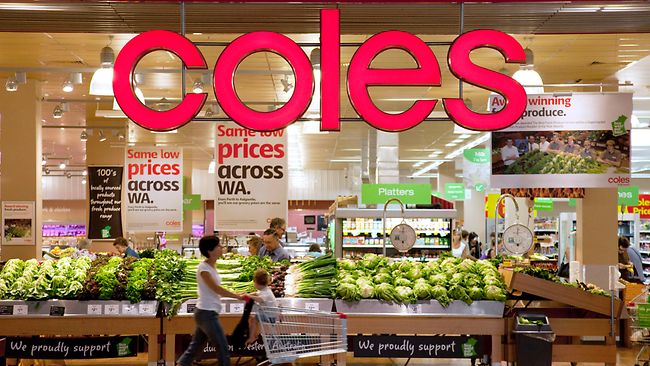
A more natural Coles for healthier consumers

Despite extensive research conducted by the Food Standards Australia proving there are no adverse affects to consuming products with added MSG (monosodium glutamate) and artificial colourings, Coles has removed both ingredients in direct response to consumer concerns.

Lydia Buchtmann, communication adviser at Food Standards Australia, told FoodNavigator-Asia that the government food regulator has conducted “rigorous safety reviews of MSG and colours showing that they are safe for the general population.”

She added that it is possible a few consumers may experience intolerances but that they would not be life threatening like major allergies.

The retail giant’s private label range is now entirely free from artificial colours and MSG, following a five-year project to reformulate all of its own food and beverage brands.

‘Listening to our consumers’
“Our customers are clearly concerned by food additives and the effect they believe they have on their health. A significant number have indicated that they or their children have experienced reactions to artificial colours and MSG,” Jackie Healing, quality manager for Coles said.

This move is simply a reaction to this, Healing added.

The supermarket noted that research showed 91% of customers were worried about consuming products with added MSG and artificial colours, with 76% avoiding such products.

Vanessa Walles, marketing manager at natural ingredients supplier Chr Hansen Australia, said “Coles are being pro-active by taking this stance, it is not because they have to,” and consumers will appreciate this.“It certainly sends a very positive message that Coles is listening to consumer needs and moving with the market expectation of natural colours,” Walles said.

Natural moves
There are no laws against the use of MSG and artificial colourings in food and beverage products in Australia.

Food manufacturers are just required to label a food when MSG is added, either by name or by its food additive code number 621. Walles noted however, that consumer pressure fuelled by media focus on artificial colours and MSG has created a market demand for products free from these additives.

“Natural is the way the colours market is moving”, Walles said.

Add to this, the Southampton Six ruling in the EU where manufacturers using artificial colours have to provide the warning label, ‘may have an adverse effect on activity and attention in children’, and there is a burgeoning pressure towards natural products, she said.

Similarly Aldi’s removal of artificial colours may have been an influencing factor, she added.

“Many branded products have already made the switch from artificial to natural colours, however there are still many products to follow suit,” Walles said.

via Coles ‘goes natural’ for consumers.

Social Commerce and Curated Content for Retailers 2.0

Recently published as part II of a previous part I published on January 31st, this Retail Touchpoints article deals with Social Commerce with a stronger emphasis on social curation, a must to know for all retailers. Enjoy!

“In Part I of this Social Commerce feature, Walmart toldRetail TouchPoints: “The first generation e-Commerce sites brought the store to the web. We think the next generation will be about building a multichannel experience that integrates the store, the web and mobile seamlessly, with social identity being the glue,” Ravi Raj, VP of @WalmartLabs, stated.

Charlie Cole, VP of Online Marketing for Lucky Brand, also shared his viewpoints on social commerce with RTP: “Social commerce is important to us because it allows for a revenue event directly at the point of social interaction. The approach is integral to our other channel strategies: Across social sites we want to make sure we are tracking not only direct revenue attribution but also understanding the ‘view through’ component of the interaction.  Ideally, we want people to interact with products on their own terms and by doing so we heighten the brand relationship.”

However, Cole said he believes social at its core will be a “top of funnel” driver, more so than a direct response vehicle, “but it could be that integrated shopping experiences change that trend in the long term.”

Underscoring Raj’s and Cole’s comments, Facebook’s recent IPO to raise $5 billion, as well as its reported 65% boost in 2011 net income, emphasize that social networking and e-Commerce are fusing to present significant opportunities for retailers to further engage with brand advocates and loyal shoppers on a more intimate level.

In Part II of the Social Commerce Report, several retailers share their social commerce success stories and  insights about its future.


Social Reviews, Curation and Gamification Grab Consumers’ Attention
Social ratings and reviews are key to improving the online shopping experience and subsequent conversion rates at Ice, an online jewelry retailer. Though not a new strategy, Dave Haber, Senior Director of Social Media, told RTP that “Ice continues to focus here because allowing our customers to rate, review and better educate onsite visitors has been one of our most powerful forms of social engagement.

“In fact, we see customers that create, read or share ratings or reviews converting at 2.5-times the rate of an average site visitor ― that’s a 250% improvement in the conversion rate,” he noted.

Another area of social commerce Haber’s team is focusing on is the idea of social curation ― the ability for people to curate selections of products, brands, imagery, etc., in order to create their own personal lens of shopping needs and experiences. Haber points to a site called Pinterest.com, which allows participants to organize web clippings onto a virtual bulletin board and share them with friends. For example, for Valentine’s Day, visitors can create a board called “Jewelry Gift Ideas,” and attach (or “pin”) a necklace or earrings from Ice. Pinterest users can click through “pinned” items to access the product detail page at the Ice homepage and ultimately make a peer-recommended purchase.

Haber also sees online gaming as a huge social commerce opportunity that can impact the ways consumers interact with online retailers and brands. The NRF’s “Social Retailing Blueprint” study looks at “gamification,” defining it as the use of game play mechanics and dynamics for non-game applications, products and related services. This tactic is used in consumer-driven web sites and mobile applications to encourage sustained engagement or incentivize other behaviors.

Gamification in the context of retail operations and social marketing tactics helps drive customer transactions. Online shoe retailer Shoebuy.com, for example, tapped gamification to double advertisement click-throughs and boost share rates via Facebook by 50%. DKNY was among the retail initiators of social gaming. Today that group includes Best Buy, CafePress, Gilt Groupe, H&M, Nike, Rue LaLa, Simon Malls, Sport’s Authority, Valentino and many others.


Telling Stories, Gifting and Social Sweepstakes Win Big
The opportunities for social commerce tactics continue to branch out. In January 2012, Facebook announced 60 new web partners that will appear in the site’s users’ Timeline offering. Timeline is a new profile that gives users an easy way to “share and highlight your most memorable posts, photos and life events on your timeline. This is where you can tell your story from beginning, to middle, to now,” according to Facebook.com.

A number of merchants have recently introduced new social commerce sites and apps:

  • Fab.com — One of the 60 new Facebook partners is Fab.com, an e-Commerce marketplace for design. In a recent blog about its social commerce innovations, Fab.com’s CEO Jason Goldberg, revealed: “Fab is thrilled to be among the first to launch a timeline app. To get started, you can opt-in on Fab to add the app to Facebook Timeline, your future purchases will be shared on your Timeline, and you’ll be able to discover the items most popular among your friends through the Facebook News Feed and ticker. Clicking through on the Fab Member’s username then shows that user’s Fab Profile, which displays all of the items the member has purchased, faved, or added to the Fab Inspiration Wall. [This] Social Shopping launch is just the start. We’ll be continuing to forge ahead and innovating at the intersection of social and commerce,” said Goldberg.
  • @WalmartLabs — @WalmartLabs launched an app on Facebook called Shopycat last December, which recommends gifts for friends and family based on their likes and tastes. Earlier in January it launched Get on the Shelf (getontheshelf.com), “which allows us to crowd source the next great product to carry on our shelves,” Raj told RTP. “Both these initiatives have been off to a great start in terms of usage. You can expect to see more innovative social products from @WalmartLabs in 2012,” he said. “Our scale at Walmart with retail stores, combined with social commerce, positions us well to succeed in the new generation of e-commerce.”
  • Brookstone — Bill Wood, CIO at Brookstone, said the chain’s recent partnership with SWAGG, a gift management app extended Brookstone’s reach into the mobile social commerce space. It did this by allowing consumers to give and redeem gift cards via their mobile device, as well as access offers and promotions from any smartphone. He described the strategy during his presentation entitled “Technology-Enabled Social Media” at the Social Commerce Strategies Convention in Las Vegas late January.

Woods told RTP: “Social commerce is proving to be a valuable tool to enhance storefront appeal. This holiday season, Brookstone conducted a Foursquare promotion offering a $10 discount for check-ins at our retail locations, which blended our online strategies with our brick and mortar consumer engagement.”

  • SquareTrade — A service provider of extended warranties for consumer electronics, SquareTrade leveraged social commerce to promote its services in conjunction with the release of the iPhone 4S. Looking for a cost effective way to spread and track word-of-mouth, SquareTrade launched a hybrid of Social Referral and Social Sweepstakes products. Coupling the two products added a viral aspect to the referral campaign, which was promoted via email and Facebook. The campaign included two offers: $10 for every referral, and $100 for every five referrals, with referrers getting $5 off their warranties as an incentive to buy one. SquareTrade also gave away “50 iPad 2’s in 25 Days,” a program allowing referrers to enhance their chances of winning by sharing, since both the chosen winner and the individual that referred them received an iPad 2.

In the first 10 days of the campaign, more than 10,000 SquareTrade brand advocates were identified. Advocates shared with an average of five friends, and the campaign generated more than 60,000 social shares across Facebook, Twitter and email. Referrals drove 500 new customers, each purchasing a $100 product.

“We wondered whether people would still be sharing after the sweepstakes ― and they did,” reported Will Spencer, Marketing Manager for SquareTrade. “Thousands of organic shares continued when the campaign ended. The sweepstakes and its aftermath succeeded in validating that social commerce is a strategy in which our customers are willing to participate. On the strength of that data and the success we achieved, social commerce will most likely become a bigger part of our overall strategy in 2012, with more product categories eligible and a wider range of customers participating,” reported Spencer” (Source: Retail Touchpoints)
Dozens of vendors have recently entered the social commerce space, including Adgregate, Baynote, Bazaarvoice, 8th Bridge, Extole, IBM, Moontoast, Oracle, Payvment, ShopIgniter, 360i and TurnTo, all helping to distinguish social commerce as the new era of e-Commerce.

Leadership and Innovation in Retail Sustainability: a Research

“As one of the leading industries to embrace sustainability, it is becoming a core consideration for the retail industry,” said Adam Siegel, RILA vice president of sustainability and retail operations. “Retailers are working to incorporate sustainability into their strategy, operations, workforce engagement, and connection to consumers and communities. This report is a first look at the broader industry’s accomplishments, challenges, and future directions. It lays a foundation to determine where we can go from here.”

The following are four key trends identified in the report.

Retailers are:

  • Working across sectors to achieve sustainability goals. Because expertise is not yet available within their respective organizations, retailers are reaching out to nonprofits, academics, and governments, as well as suppliers, consumers and investors to accelerate sustainable innovation.
  • Turning from sustainability as a cost- and risk-reduction measure to an opportunity for business growth. Retailers leading the sustainability charge recognize that the benefits extend well beyond achieving business efficiencies. Sustainability programs are increasingly viewed as a source of innovation and differentiation and a platform for new product and market development.
  • Developing systems for continuous improvement. As retailers build sustainability programs, they have developed management, measurement and IT systems for continuous improvement. Such mechanisms include environmental management systems, supplier “scorecarding” and management training, employee training and engagement, energy and waste reduction goals and sustainability reporting.
  • Fostering transparency in operations and the supply chain. Opportunities for risk mitigation, coupled with increased public scrutiny, are driving the need for additional disclosure. Reporting on financial information alone can no longer articulate the complexities and intricacies of retail operations and global supply chains.

Data for the report was collected from 2011 sustainability reports of 30 RILA member companies, including grocery and drug stores, general merchandise and department stores, and spanning both large and small formats. Information was also compiled through multiple industry surveys, industry meetings, and company interviews, across all segments of retail. Business for Social Responsibility (BSR) was a key partner in the development of the report.

“RILA’s first sustainability report is an important step forward for the retail industry,” Ted Howes, director of advisory services for Business for Social Responsibility. “Our hope is that RILA’s efforts will inspire retailers around the globe to take action and engage in sustainability more deeply and strategically — to ensure a healthier bottom line as well as a healthier planet. BSR looks forward to collaborating with industry leaders to ensure that sustainability stays top of mind in the years to come.”

RILA members were also invited to submit case studies for the report, and interviews were conducted with 20 companies – Belk, Best Buy, Gap Inc., H-E-B, The Home Depot, Ikea, J.C. Penney, Lowe’s, Meijer, Petco, PetSmart, Publix, Safeway, Sears, Staples, Target, VF Corporation, Walgreen, Walmart and Whole Foods Markets.

The following are future directions retailer’s say they will explore over the next five to 10 years:

  • Sustainability will become integrated into all aspects and departments of the business;
  • The drive to manage supply chain impacts will transform retailer-supplier relationships;
  • Industry collaboration will become the standard; and
  • Business models will evolve as consumption habits change.

Retailers identify many benefits while pursuing more sustainable operations and products including efficiency, risk mitigation, new innovations, a way to recruit and retain top talent, a means to develop new product and enter new markets, as well as improved reputation with customers and industry stakeholders.

“One of the biggest takeaways from the report is that creating lasting change in retail sustainability is not something the industry can do alone,” Siegel said. “Retailers are reaching out to nonprofits, academics, and governments as well as to their suppliers, consumers, investors, and communities to provide their diverse perspectives and partnerships and help accelerate sustainable innovation for all.” Author: Adam Siegel

via Research Identifies Retail Sustainability Leadership and Innovation – Green Retail Decisions.

Gulfood, THE Food and Hospitality Event in Middle East

Held in Dubai, Gulfood is perhaps the best trade show available for those in the food and hospitality sector looking to invest in the Middle East, Africa and South Asia.

Held from 19th to 22nd February, Gulfood takes place in Dubai, at the International Convention and Exhibition Centre. One of the largest and most-awaited events that concerns the foodservice and hospitality sectors in the Middle East, it showcases products, equipment and an array of specialist services. Covering the whole food and drink gamut, it also features printing, packaging, baking and the raw materials sector too.

Around 3,800 exhibitors will be taking part in Gulfood, from around 83 countries of origin. This gives Gulfood not only a distinctly Eastern feel, but also an international one too. With over 62,000 buyers from 110 countries present, it is a vast place in which to do business. 81 international pavilions showcase each of the countries’ best food, flavours, foodservice and hospitality sectors in great detail, so you can be sure of leaving with the knowledge or deals you set out to acquire.

Also on the table is the Gulfood Conference, which takes the best the industry has to offer and invites key industry experts to speak on hot topics and international concerns. Speakers this year include Yousuff Ali, Managing Director of Emke Group Lulu International, Eelco Camminga, the Vice President for South Africa, Middle East and Pakistan for Unilever and Sanjeev Chadha, the President for the Middle East and Africa for Pepsico.

Gulfood also aims to celebrate the success of those within the industry, the Gulfood Awards recognise excellence, so are a great indicator for the areas of taste and interest in the world of food and drink. The enormously popular Emirates International Salon Culinaire returns to demonstrate the skills of more than 1,300 young chefs as they compete to become stars of the future. Competitors are evaluated by a panel of 25 experts, mandated by the World Association of Chefs Societies to judge events across the globe, ensuring high competition standards. In another competitive element to Gulfood, the Pastry and Baking Salon is a platform for showcasing professional Pastry Chefs across the UAE and GCC region. The competition is open to all pastry chefs and bakers working in the UAE/GCC, to compete in static display and live baking across twelve categories. Ingredients Middle East runs concurrently with the show, creating a 360-degree industry offering for buyers and vendors. Ingredients Middle East is the only event in the region to address the manufacturing and processing sector.

This year’s exhibition should be one to remember, with four days to explore the delights on offer, you should leave having gained a real insight into not only the way business is done in the East, but also what other countries have to offer.

via Food and Drink International.

India Lets Starbucks, Ikea Open Wholly Owned Stores After Wal-Mart Reverse

India abandoned a rule against foreign single-brand retailers operating stores without a local partner, paving the way for global companies including Starbucks Corp. and Ikea.

The government ratified a Nov. 24 cabinet decision to raise the ownership limit to 100 percent from 51 percent for single- brand, Trade Minister Anand Sharma said in a statement yesterday. The new rules take effect immediately and require the companies to use smaller Indian companies for at least 30 percent of procurement, he said.

Wal-Mart Stores Inc. , Carrefour SA and other foreign chains are still excluded from India’s $400 billion retail market after an attempt last year to change the law failed. Prime Minister Manmohan Singh’s administration has struggled to advance its initiatives amid opposition from its own allies and a corruption scandal that paralyzed parliament.

“This is a welcome move with a clear potential to lift the general mood in the economy,” Rajan Bharti Mittal, managing director at Bharti Enterprises, Wal-Mart’s Indian partner for wholesale hypermarkets, said in an e-mailed statement. “We hope the initiative is a precursor to further liberalization in the sector in the days to come.”

Pantaloon Retail India Ltd., India’s largest retailer, gained in Mumbai trading after the announcement. The stock rose as much as 10 percent, the most since Nov. 25, while Shoppers Stop Ltd.  surged 20 percent. Trent Ltd., which has a franchise agreement with Tesco Plc, rose as much as 6.9 percent. India’s benchmark Sensitive Index rose 0.4 percent.

Waiting for Multi-Brand

“People think that this would lead to a positive stance on multi-brand retail soon,” Sameer Narang, an Mumbai-based analyst with HDFC Securities Ltd. said in a telephone interview. “My opinion is that it’s not coming any time soon, given the way things went the last time the government tried to introduce it, I doubt a lot of traction will be seen on it.”

Starbucks would compete in India with operators including Lavazza SpA’s Barista Coffee Co. and closely held Cafe Coffee Day. The Seattle-based coffee chain said in November it intended to open its first store in India this year.

“Ikea welcomes the decision from the Indian government to allow 100 percent FDI in single-brand retail,” Nivedeeta Moirangthem, the furniture and housewares retailer’s India spokeswoman said in an e-mailed statement. India is a very interesting potential retail market for the Ikea Group.’’

Calls and e-mails to the Starbucks public-relations team in Seattle weren’t immediately answered. Starbucks signed an agreement with India’s Tata Coffee Ltd. in January 2011 to source beans and consider opening stores.

via India Lets Starbucks, Ikea Open Wholly Owned Stores After Wal-Mart Reverse – Bloomberg.

U.S.A Supermarket Food Trends for 2012

Americans love their foods – in supermarkets, on television, at restaurants and now even on their mobile phones.  But there is little doubt that in the coming years, we will continue to see food prices rise based on environmental conditions as well as higher production costs. 

Many of the savings tactics most shoppers deployed in 2007 as the recession began are still being used each time they shop for groceries – using coupons, frequent shopper cards, shopping lists, shopping at non-traditional foods stores and even trading down their choices to less expensive brands are part of the regular routine.  Following are the top ten food trends predicted for 2012, according to Supermarket Guru Phil Lempert.

TREND #1: FOOD PRICES

Look for consumers to shave costs by augmenting their recipes by decreasing the amount of the more expensive meats and seafood and adding more non-meat proteins that are filling and less expensive, including whole-wheat pasta, tofu, lentils, brown rice and vegetables to recipe.  Expect shoppers to use their mobile devices to calculate a price per portion cost rather than the unit price of individual products listed on the shelves. Just as the younger generation uses social networking as part of their everyday lives, expect this generation to be the “forever frugal consumer” using more coupons (higher than any other demographic) and searching for deals on line (63% spend 3 hours or more each week – double that of any other group).

TREND #2: SHARED FOOD EXPERIENCES

Apps like Foursquare, GoWalla, Living Social and Yelp have shown how “group” is better than “self.” Expect to see super food apps that bring previously unknown people together with common likes; to eat, prepare and shop together.

TREND #3: BOOMERS CONTINUE TO INFLUENCE

The generation of 76 million who started turning 65 years old last year will control 52% of the total $706 billion spend on groceries by 2015 – making them the largest food influencers and purchasers.  Expect supermarkets to cater to the Boomers, not only by offering the foods, beverages and services to satisfy their growing interest (and need) for health — but to take a good look at the physical shopping experience, to make sure that the aisles are wide, to lower the shelves and most importantly to make them feel welcome and respected.

TREND #4: INCREASED EMPHASIS ON ‘FARM-TO-FORK’

Shoppers have become increasingly interested in knowing where their food comes from and how it is produced, which is why 2012 will bring an added emphasis to a different kind of food celebrity — the farmer.   Expect to see more advertising and television programs starring these real food experts (vs. actors pretending to know their food).

TREND #5: THE END OF THE CHECKOUT LANE

Many shoppers are learning to appreciate the tech-savvy nature of self-checkout – the ability to compare prices at nearby retailers, cell phone scanners, in-store interactive media devices, QR codes, RFID and mobile coupons.  For many shoppers high-tech adds to personalization with suggested purchases and targeted offers based on their histories in the store, which is typically delivered in a functional way.

TREND #6: ETHNIC FOOD REVOLUTION

Food trucks are replacing gourmet and specialty stores as the channel to experiment and discover new food experiences — especially when it comes to ethnic foods.  More often than not, these ethnic food trucks are actually manned by descendants of the actual cuisines and cultures being offered; with the ability and knowledge to share the heritage and romance of the food — a benefit many shoppers have come to enjoy and expect from shopping at Farmers’ Markets for produce.

TREND #7: THE MALE SHOPPER

According to the Bureau of Labor Statistics, 41% of men are now doing the food preparation as compared to just about half that amount in 2003.  Because of the economy, more men are at home, suggesting there is an opportunity for marketers to engage men who are taking on the role of family caregiver.

TREND #8: EATING AT HOME, WITH A TWIST

With continued pressure on the economy more men and women will be choosing to eat at home to save money, which has happened before – but this time around expect a twist. Think of it as Xtreme Home Cooking where, following the lead of Extreme Couponers, these everyday cooks pride themselves on making the most for the least.  Look for food groups to form that cook together, crowd sourcing in the kitchen if you will, with the same primary focus on cost – shopping, cooking, eating and storing leftovers in bulk.

TREND #9: REDUCED SUGAR INTAKE

Sugar has been an ingredient that has been the center of a lot of debates, especially as the latest update on the Dietary Guidelines for Americans recommends reducing the amount of added sugars of all kinds (especially in soft drinks.)  Look for reduced-sugar products to be the biggest health claim in the coming year along with a revised Nutrition Facts Panel.

TREND #10: THE SOUND OF FOOD

Consumers judge the readiness of foods like microwave popcorn or burgers on the grill by the sounds that these foods make. They judge the freshness of carbonated beverages based on the sound of the gas escaping the container as it opens, and the duration of the sound of the bubbles as they pour. Multisensory perception will be one of the new “food sciences” in 2012 as psychologists and food scientists join forces to design, create and influence the sounds of our foods to convey freshness, taste and even health attributes.

via Supermarket Guru Predicts Top Ten Food Trends for 2012 | Marketing Forecast from Ad-ology.

The Future of Retail: trends to be aware of

The following is an anstract from a great article “The Future of Retail” by IDEO‘s Dana Cho and Beau Trincia published on “The Rotman Magazine”, Jan.2012. Full version available here. Enjoy and comments are welcomed!

“TOUGH ECONOMIC TIMES have hit traditional retailers hard, particularly in North America. Circuit City and Borders have filed for bankruptcy; Ann Taylor and Home Depot have closed hundreds of stores; and American Apparel is reportedly millions of dollars in the red, to name but a few. The official reasons for these failures range from overly-aggressive expansion strategies to unfortunate investment decisions – but, in reality, a big driver of this retail upheaval is old-fashioned belt-tightening

Store owners have long believed that the ‘thrill’ of shopping – that visceral, emotional rush that people get when touching or interacting with a product before they buy it – would uphold their popularity. But e-commerce Web sites are disproving this axiom by generating similar excitement online with concepts such as ‘flash sales’ and ‘social shopping’. For example, GILT Groupe offers its members daily flash sales, which feature luxury goods in low quantities for an extremely limited time, giving people only a few minutes to make purchase decisions. The site, which launched in 2007, now has a valuation of US$1 billion. Meanwhile,  Svpply has built a social network around shopping, letting its users track trends, including the items their friends buy. Its popularity has grown seven-fold since its introduction in late 2009.

As online retailers slash shipping times and costs to next to nothing, bricks-and-mortar retailers can no longer depend upon instant gratification as a competitive edge. Online giants Zappos and Amazon now send purchases overnight at a discount and provide second-day service for free. The success of these tactics suggests that virtual storefronts can be at least as effective as physical ones, if not more so. So, how can bricks-and-mortar retailers survive – and thrive – as consumer attitudes and buying habits change?

Although digital channels may be better positioned to provide short-term transactional value, bricks-and-mortar stores still give retailers the best space in which to establish long-term connections with customers. Let’s look at how a few companies are shifting their mindsets and moving from driving transactions to encouraging inspiration and discovery; from featuring ‘expert staff’ to ‘informed enthusiasts’; from targeting shoppers to targeting product owners; and from focusing on revenue generation to R&D.

During the 2010 holiday shopping season, 48 per cent of consumers who used a smartphone in some way said they purchased goods in retail stores, while nearly as many – 45 per cent – bought items online via computer. However, the majority also said that, regardless of how they ultimately acquired the product, they had visited an actual store to browse. This suggests that although consumers often opt for the convenience of digital channels to make purchases, bricks-and-mortar stores continue to play an important role in the shopping journey – primarily where product discovery and inspiration are concerned.

From Driving Transactions to Encouraging Inspiration

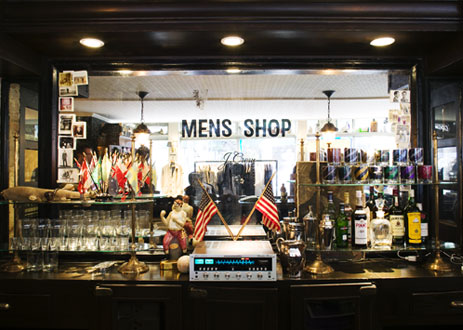
J.Crew’s Liquor Store provides a prime example of doing exactly that. J.Crew opened its first men’s clothing store in 2008 with the goal of inspiring exploratory shoppers – people who weren’t current customers of the brand. At the time, J.Crew’s menswear had little following, and the retailer sought to raise its profile through a dedicated storefront. It took over a historicwatering hole in New York’s TriBeCa neighborhood, and rather than focus on packing in as many items into the 935-square-foot.

Customers today want retailers to be less about well-orchestrated brands and carefully rehearsed answers and more about transparency, authenticity and passion.  Rotman Magazine Winter 2012 / 49 store as possible, J.Crew kept the bar’s atmosphere intact, stocking shelves with bottles and filling the room with vintage furniture and non-J.Crew brands such as Timex,  Red Wing and Mackintosh. Retailers who believe in conventional wisdom would consider this a waste of precious floor space that could have been devoted to as many sellable brand-specific products as possible. However, J.Crew’s goal was to raise awareness of its men’s line – and pique the interest of potential customers. The concept appears to be working: J.Crew has subsequently opened three more Men’s Shops, and although the company declines to provide sales figures for individual stores, CEO Micky Drexler recently told investors, “We are beyond thrilled with the performance of our stand-alone men’s stores.” J.Crew earned $44.7 million in the first quarter of 2010, up from $20.4 million during the same period a year ago. In addition, its chief menswear designer, Frank Muytens, was ranked among the top in his field in GQ’s 2010 Best New Menswear Designers competition.

Using physical spaces to drive inspiration rather than transactions isn’t limited to the retail industry. In 2010 Crédit Foncier, a mortgage lender in France, invested in a high-profile store in Paris’s Opera district to inspire people to want to own a home. Most lenders make in-person visits from prospective borrowers as perfunctory and short as possible, gearing information toward people who plan to buy a home in the near future. In contrast, Foncier Home targets anyone who might be thinking about home ownership – even if it’s just a long-term goal or dream. The store includes a café, where people can meet casually with a real estate agent while looking over residential listings. It also includes a section with information about renovations and remodeling – services that Foncier Home doesn’t yet offer but are an exciting, aspirational aspect of home ownership. Although the company sells nothing tangible and has no real need to maintain a large retail space, Foncier is banking on the notion that a discoverybased experience such as the one made possible in its flagship store will encourage more people to become home buyers. And when they do, Foncier Home will be top-of-mind as the go-to lender. Crédit Foncier expects this concept to drive growth in the future and has plans for expansion.
From Expert Staff to Informed Enthusiasts

Powered by social media, peer recommendations are gaining ground in power and influence. The fact is, as consumers rely on friends, social networks and other independent resources for expert information, the role of the store associate is shifting dramatically.

The new purpose of a retail store lies in its ability to represent an organization’s actual culture and values, captured and rendered by its sales associates. Customers today want retailers to be  less about well-orchestrated brands and carefully rehearsed answers and  more about transparency, authenticity and passion. Store associates, therefore, need to evolve from ‘expert staff’ into informed brand enthusiasts who are proud of their organization.

The shift from being an expert to being an enthusiast – someone who believes in the brand and organization they work for and can speak passionately about the products at hand – has less to do with scripted service and more to do with organizational design. Many leading-edge U.S. retailers have taken similar personnel-oriented approaches. Perhaps the best known is Apple, which transformed consumer technology retail with its retail stores. For the Apple Store’s tenth anniversary ‘refresh’ this year, the company invested heavily in supporting its enthusiastic store associates with service-enabling technology rather than in a redesign of the bricks-and-mortar interior

From Targeting Shoppers to Targeting Owners

Retail stores have traditionally been designed for shoppers with the intention to buy and, perhaps as a result, retailers have long depended on in-store marketing and communications to sell the quality and other worthy attributes of their products. Under the new paradigm we are describing, bricks-and-mortar retailers have an opportunity to acknowledge the value of the  product owner’s role as a brand ambassador and key influencer on other shoppers.

As a result, designing the bricks-and-mortar store for the consumer who already owns your products (versus the consumer who is shopping) can have profound effects on a brand. By focusing on participation in the store – through education, trials and membership experiences rather than marketing, promotion and sales – retailers are positioning themselves for a longer-term, more open relationship with customers, helping them successfully evolve with the 21st century.

Nike’s branded stores pull in repeat visits from owners via its Nike+ Run Clubs, which meet at designated shops worldwide. Building on its platform of performance-tracking products and Web site, Nike+ is now the largest running club in the world, with more than three million members. In 2009 alone, membership grew by 50 per cent. Athletes of all skill levels train together and are privy to product trials and expert clinics. Nike motivates owners to use its products as a group, and the group inspires other curious runners to join them – and buy Nike gear – through camaraderie and knowledge-sharing. Taking the concept a step further, in 2010, Nike opened its first ‘category experience store’ dedicated solely to the sport, Nike Running Stanford, in Palo Alto, California.

From Revenue-Generator to R&D Engine

The paradigm shift we are describing questions, at a fundamental level, the role of the physical store in a retail organization’s business. As the channels to buy continue to multiply – from new e-commerce models to mobile-phone payments – traditional retailers face more competition than ever before. If consumers can buy anything anywhere at anytime from anyone, bricks-andmortar stores needs to derive new meaning and value for their business in order to remain a strategic asset.

Fortunately for bricks-and-mortar, not all channels are created equal, and the traditional retail store maintains an important edge over the digital realm: the physical space provides a direct, personal connection with consumers. Smart retailers have begun using the storefront to foster relationships with people, which means going beyond selling products or presenting a well-orchestrated brand experience to understand existing and potential customers and their needs. In short, they are using the retail floor as a platform for learning.

These retailers realize that developing a new offering behind the scenes until it is exactly right is a slow strategy that doesn’t allow for quick adaptation in a rapidly-shifting market. Instead, they ‘beta test’ new offerings and experiences and quickly pivot the offering on the fly as dictated by actual customers. For example, at the height of the recession, Urban Outfitters opened an experimental store in Los Angeles called  Space 15Twenty, which aims to attract – and study – customers other than its typical college student. Brand collaborations with Santa Monica bookseller Hennessey + Ingalls and New York vintage shops What Comes Around Goes Around and Generic Man act as magnets for people who don’t typically shop at Urban Outfitters.

In a sense, it’s a store for tomorrow’s customer, rather than today’s sales. The store is an investment in market reconnaissance, rather than solely a means toward hitting revenue targets and achieving profitability; its primary goal is gathering customer information from which Urban Outfitters can learn. While recession has hit some retailers very hard, in the first quarter of 2010, Urban Outfitters saw a 72 per cent increase in profits.

CEO Glen Senk credits creativity and experimentation. “We don’t go about revenue and profit as a goal. Rather, we focus our energies on the customer experience: innovating, making beautiful products, really pushing the limits of our brand expression and constantly refining how we operate. Revenue per square foot is the result of that focus, rather than the starting point or motivation.”